


 English
 русский
 Español


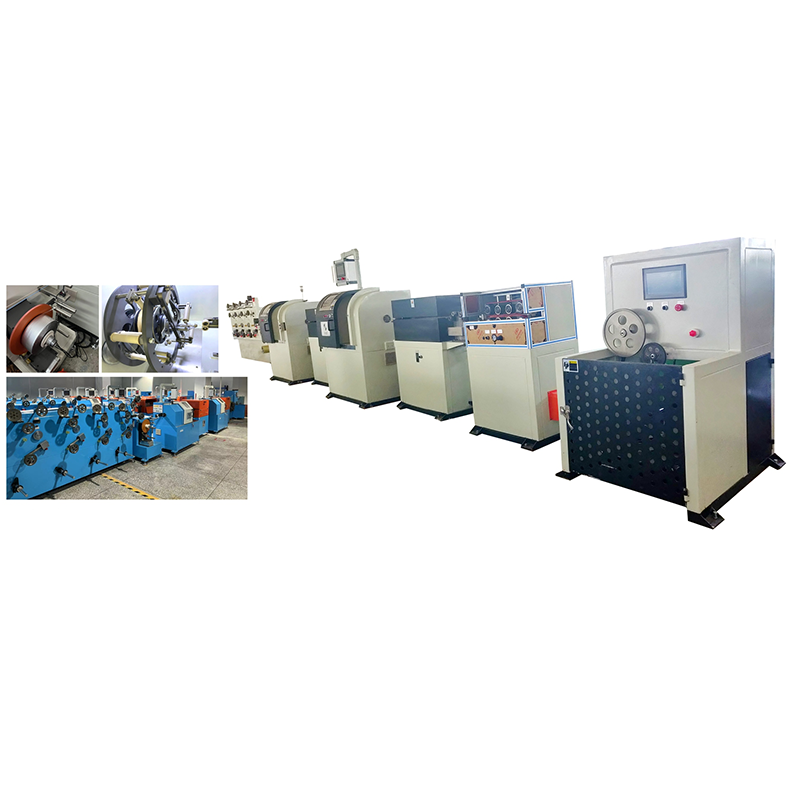
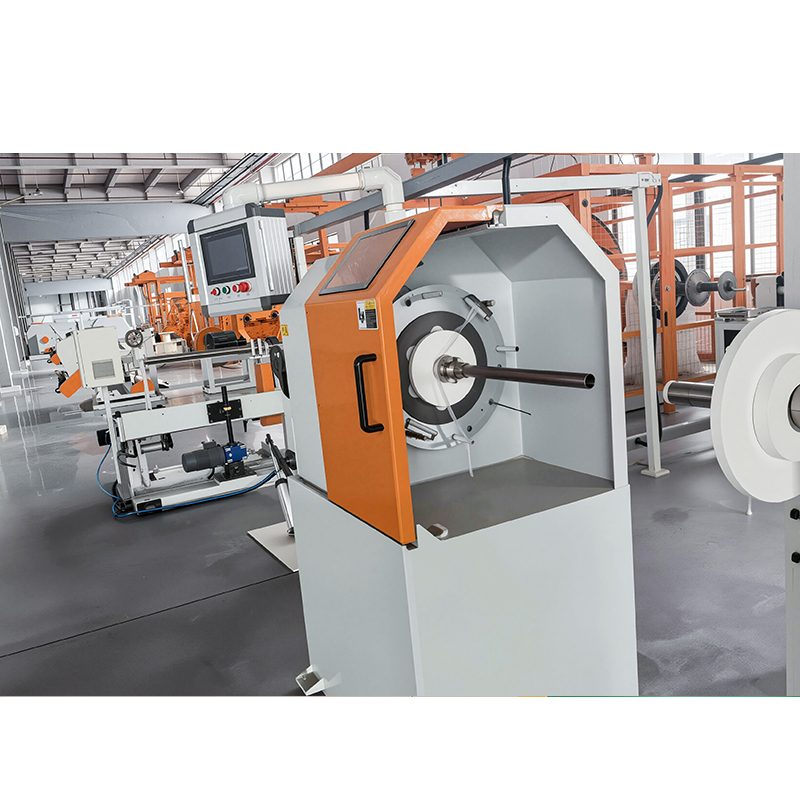
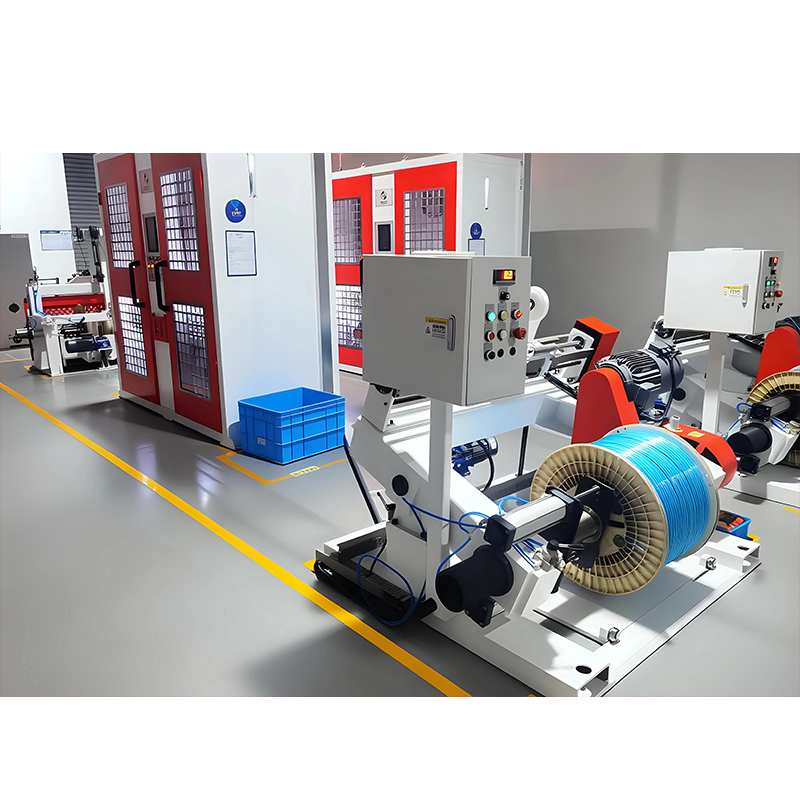


Global standards for conductor stranding include specifications for wire diameter, number...
Specification Parameters
| Number of Taping Heads | 3 – 6 (modular, expandable) |
| Applicable Core OD | 2 mm – 120 mm |
| Tape Width (per head) | 6 mm – 150 mm |
| Reel OD (max per head) | Up to 800 mm |
| Overlap Range | 0% – 60% per head, independent |
| Winding Direction | S, Z, or alternating per head |
| Head Rotation Speed | Up to 2,000 RPM per head |
| Line Speed | Up to 80 m/min (product dependent) |
| Tension Control | Independent servo dancer per head |
| Helix Angle Control | ±0.1° per axis, CNC-grade precision |
| Drive System | Multi-axis servo controller (CNC/PLC) |
| HMI | 15" touchscreen, full recipe library |
| Optional Inline QC | Laser OD gauge, surface camera |
| Power Supply | 380V – 440V / 50–60Hz / 3-phase |
| Machine Length | 4,000 – 8,000 mm (config dependent) |
| Net Weight | Approx. 1,500 – 3,500 kg |
| Certifications | CE, ISO 9001, optional ATEX |
Application
Multi-layer taping machines are designed for high-specification, high-value cable products where multiple functional layers are a design requirement. Primary application areas include:
- Medium Voltage (MV) Power Cables (3.6–36 kV): Typically require a semiconductive tape layer, followed by a metallic screen tape, followed by a longitudinal water barrier tape — all applied in sequence. Multi-layer machines perform all three steps in one pass per cable core.
- High Voltage (HV) Cables: Complex constructions demand precise application of multiple functional tapes (semiconductive, paper insulation, metallic screening) with tight helix angle tolerances that only a CNC-grade multi-axis taping machine can achieve reliably.
- Aerospace & Military Cables (MIL-DTL-27500, etc.): Multiple layers of PTFE tape, glass tape, and heat-shrink barrier tape are applied per MIL-spec cable constructions requiring thermal and mechanical performance in extreme environments.
- Submarine Cables: Optical or copper submarine cables require water-swellable tape, PE buffer tape, and steel/copper armoring tape applied in precise sequence and orientation before the outer jacket extrusion process.
- Composite Tubes & Hoses: Textile reinforcement tapes and barrier tapes applied in alternating S/Z directions over a rubber or polymer core create high-pressure composite hose constructions for oil & gas and hydraulic applications.
- High-Speed Railway Traction Cables: Fire-resistant and electromagnetic-shielded constructions for traction power and signal cables use multiple tape types to meet EN 50264 and similar standards.
- Nuclear & Industrial Control Cables: Radiation-resistant tape materials applied in multiple layers meet the stringent IEC 60544 qualification requirements for nuclear power plant instrumentation and control cables.
Advantage
- Maximum Process Consolidation: Up to six taping operations in one machine pass dramatically reduces total line length, floor space requirements, and the number of operators needed per unit of production output.
- CNC-Grade Precision: Multi-axis servo control with real-time encoder feedback delivers helix angle accuracy of ±0.1° per head, ensuring specification compliance for the most demanding cable standards.
- Full Digital Traceability: All production parameters — tension, speed, head RPM, overlap percentage — are recorded and logged per reel or per production order. This traceability data is exported for customer quality documentation and internal SPC analysis.
- Inline Quality Assurance: Optional laser OD gauges between heads provide real-time diameter verification after each tape layer. Immediate feedback enables parameter correction before the subsequent layer is applied, reducing scrap from compounded errors.
- Flexible Head Configuration: The modular architecture allows the machine to be configured with different head types (standard taping, wide-strip, cross-head) depending on the tape and product mix, enabling one platform to serve multiple product families.
- Reduced Work-in-Progress: By completing multiple tape layers in one pass, the semi-finished cable spends less time in the production queue and less time on intermediate storage reels, reducing the risk of handling damage and improving production lead times.
- Scalable Investment: Modular design allows initial purchase of a 3-head platform with pre-engineered provisions for expanding to 5 or 6 heads as production volume or product complexity increases, protecting capital investment long term.
- Reduced Energy per Meter: Consolidating multiple passes into one significantly reduces the total energy consumed per unit length of finished cable compared to running multiple separate taping machines.
Material & Structure
Structural Frame: The base frame is a heavy-duty welded steel structure designed to handle the combined mass and dynamic forces of 3–6 rotating taping heads under sustained production conditions. Finite element analysis (FEA) is used in the frame design to minimize vibration transmission between heads at operating speed.
Modular Head Cassette Design: Each taping head is mounted in a pre-aligned cassette that can be removed and replaced as a complete unit for maintenance or tape type changeover. Cassette interfaces are precision-machined to ensure repeatable alignment without re-calibration after reinstallation.
Multi-Axis Servo Controller: A high-performance multi-axis servo controller (typically based on Siemens, Fanuc, or Beckhoff platform depending on customer preference) coordinates all head speed axes, the line haul-off, and the tension control loops in a real-time control network with 1 ms cycle time.
Product Support System: Precision roller cradles and steady-rest assemblies are installed between each head pair to maintain the product on its design axis through the entire machine length. Support roller materials are selected based on the product surface sensitivity (rubber for delicate surfaces, UHMWPE for abrasive products).
Inline Instrumentation Ports: Each inter-head gap includes a standardized instrument mounting port for laser gauges, spark testers, or cameras. These ports are pre-wired and pre-connected to the main control system for immediate plug-and-play instrument integration.
Cabinet & Electrical Architecture: A master electrical cabinet houses the PLC, servo amplifiers, safety relay modules, and network switches. A distributed I/O architecture keeps field wiring short and organized. Full CE compliance with category 3 safety functions on all head access doors.
