

 English
 русский
 Español


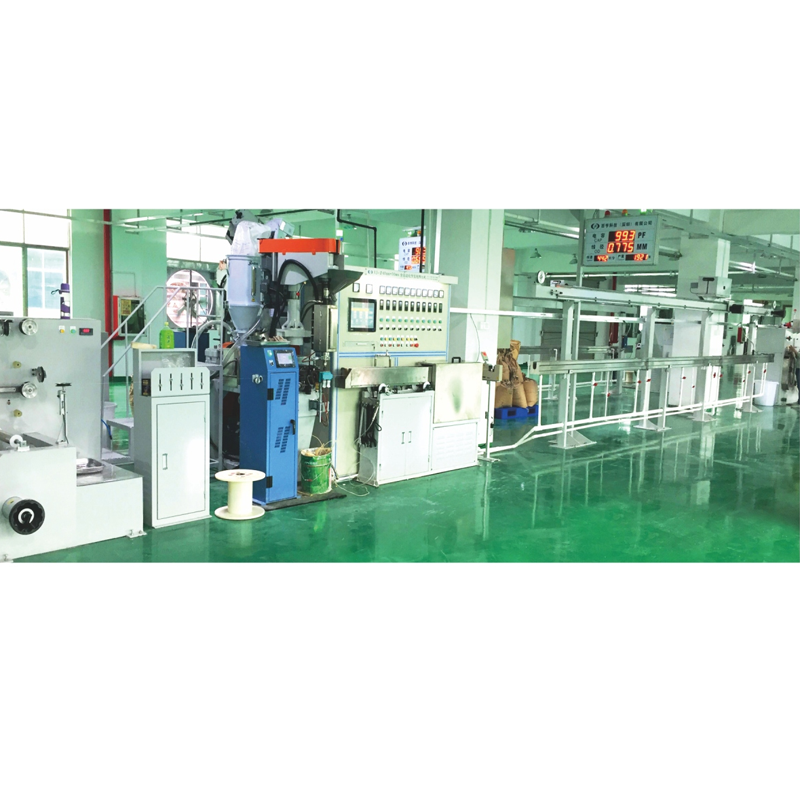
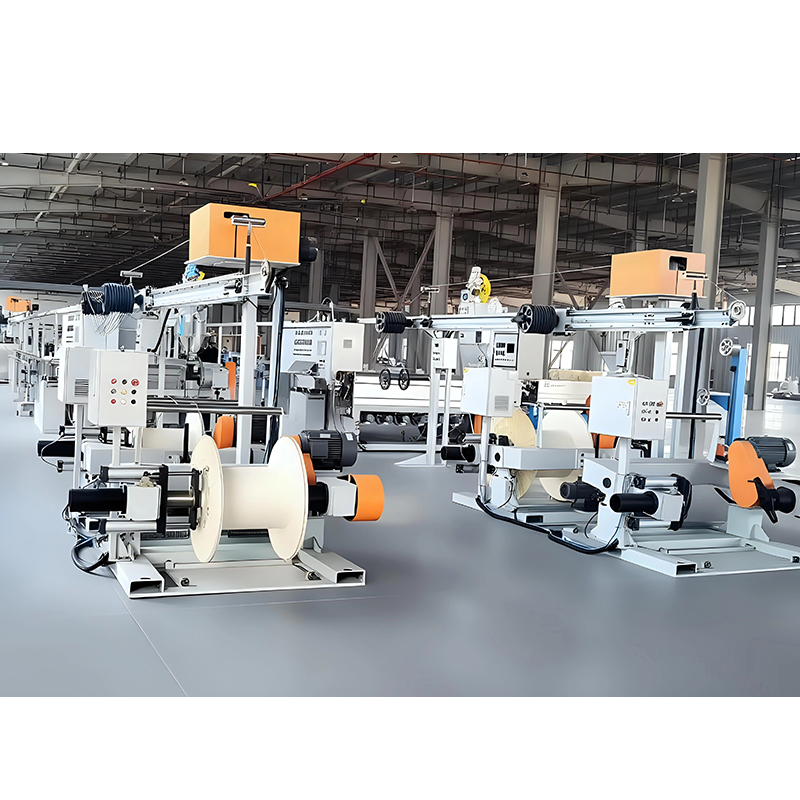
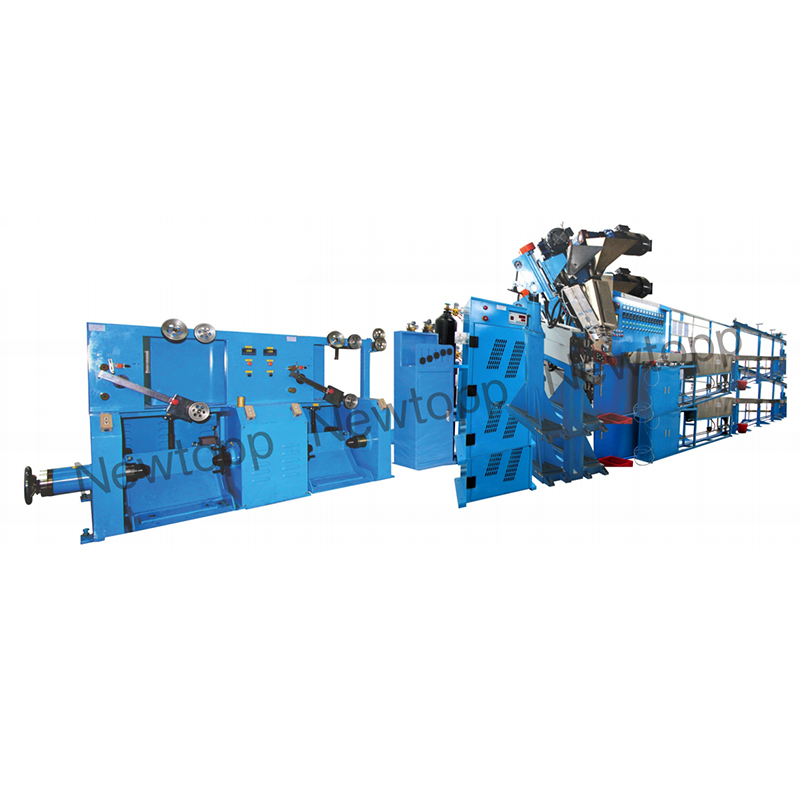
A cable extruder is the core machine in any wire and cable manufacturing line, responsible for applying insulation, jacketing, or sheathing material around a conductor with precise dimensional control and consistent material properties. Choosing the right cable extruder — in terms of screw design, L/D ratio, die configuration, and output capacity — directly determines production efficiency, cable quality, and long-term operating costs.
This guide breaks down how cable extruders function, compares the main types available today, explains which applications each suits best, and answers the most common questions buyers ask before investing in new or upgraded extrusion equipment.
Content
- 1 What Is a Cable Extruder and Why Is It Central to Cable Manufacturing?
- 2 How Does a Cable Extruder Work: The Six-Stage Process
- 3 Which Types of Cable Extruders Are Available? A Complete Comparison
- 4 Why the Screw Design Is the Most Critical Variable in a Cable Extruder
- 5 What Applications Require Different Cable Extruder Configurations?
- 6 How to Evaluate Cable Extruder Performance: Key Metrics Explained
- 7 Why Modern Cable Extruders Integrate Industry 4.0 and Smart Controls
- 8 FAQ: Cable Extruder — Expert Answers to Common Questions
- 9 Conclusion: Choosing the Right Cable Extruder Is a Long-Term Manufacturing Decision
What Is a Cable Extruder and Why Is It Central to Cable Manufacturing?
A cable extruder is a precision thermoplastic processing machine that melts polymer compounds and continuously deposits them as a uniform coating around wire conductors. Without it, there is no insulation, no jacket, and no finished cable — the extruder is the single most influential machine in determining cable electrical performance, mechanical durability, and compliance with international standards such as IEC 60228, UL 44, and RoHS.
At its most fundamental level, a cable extruder converts solid polymer granules or pellets — typically PVC, XLPE, LSZH (Low Smoke Zero Halogen), PE, PP, or fluoropolymers — into a continuous molten stream. This melt is then shaped through a precision crosshead die and deposited onto a moving conductor at line speeds ranging from a few meters per minute for heavy power cables up to 3,000 m/min for fine magnet wire applications.
The global wire and cable market exceeded $280 billion in 2024, driven by grid modernization, EV charging infrastructure, data center expansion, and renewable energy projects. Each of these growth sectors places distinct demands on cable extruder specifications — making equipment selection a critical strategic decision.
How Does a Cable Extruder Work: The Six-Stage Process
A cable extruder processes polymer material through six sequential stages — feeding, conveying, melting, metering, die-forming, and cooling — each of which must be precisely controlled to achieve consistent insulation geometry and material properties.
Stage 1: Material Feeding
Polymer compound enters the extruder barrel through a hopper, typically gravity-fed or force-fed via a screw feeder for materials with poor flow characteristics (e.g., powders or sticky compounds). Loss-in-weight feeders provide gravimetric dosing accuracy of ±0.5% for precise material consumption tracking and recipe management.
Stage 2: Solids Conveying
The rotating screw conveys solid granules forward along the barrel. Friction between granules and the barrel wall generates early heat. Barrel temperature zones — typically 4 to 8 independently controlled zones — progressively raise material temperature from the feed throat toward the die.
Stage 3: Melting and Plasticization
In the compression zone, the screw's decreasing channel depth compresses and shears the polymer, generating viscous heat that completes melting. Barrel heaters (ceramic band or cast aluminum) supplement shear heat. For heat-sensitive materials like LSZH, controlled shear rate is critical to prevent degradation.
Stage 4: Metering and Pressure Buildup
The metering zone delivers a homogeneous melt at constant flow rate and pressure to the die. Melt pressure typically ranges from 100–300 bar at the crosshead. A melt pressure sensor and automatic pressure control loop maintain output consistency at ±1% across shifts.
Stage 5: Crosshead Die and Conductor Guiding
The crosshead die is the defining component of a cable extruder. It guides the conductor (or cable core) through the center of the die while the melt flows around it in a precisely controlled annular gap. Two primary die configurations exist: pressure type (tube-on-die, for intimate bonding) and tube type (for easy strippability). Die concentricity is maintained to tolerances as tight as ±0.01 mm in high-precision applications.
Stage 6: Cooling, Spark Testing, and Take-Up
The freshly coated cable enters a water-cooling trough — typically 6–30 meters long depending on line speed and insulation thickness. Precise trough temperatures (15–40°C) control crystallization in PE/XLPE, directly affecting insulation elongation and tensile properties. Inline spark testers at voltages from 1 kV to 35 kV provide 100% electrical defect detection before the finished cable reaches the take-up reel.
Which Types of Cable Extruders Are Available? A Complete Comparison
Cable extruders are primarily classified by screw configuration — single-screw, twin-screw, or tandem — each suited to different polymer types, throughput requirements, and cable specifications.
| Extruder Type | Screw Config | Best Polymer | Typical L/D Ratio | Output Range | Key Advantage |
| Single-Screw | 1 screw | PVC, PE, XLPE | 20:1 – 30:1 | 50–800 kg/h | Low cost, proven reliability |
| Co-rotating Twin-Screw | 2 screws (same dir.) | LSZH, compound blends | 36:1 – 48:1 | 100–1,200 kg/h | Superior mixing, filler dispersion |
| Counter-rotating Twin-Screw | 2 screws (opp. dir.) | PVC (rigid & flexible) | 16:1 – 22:1 | 80–600 kg/h | Gentle shear for heat-sensitive PVC |
| Tandem Extruder | 2 single-screws in series | XLPE (CV line) | Stage 1: 20:1 / Stage 2: 24:1 | 200–1,500 kg/h | Separate melting/metering, lower melt temp |
| Micro Extruder | Single-screw (small) | PTFE, FEP, specialty | 20:1 – 25:1 | 1–50 kg/h | Precision at very fine wire diameters |
Table 1: Comparison of cable extruder types by screw configuration, polymer compatibility, L/D ratio, output capacity, and primary advantage.
Why the Screw Design Is the Most Critical Variable in a Cable Extruder
Screw geometry — including L/D ratio, compression ratio, flight depth, and mixing element design — determines over 70% of a cable extruder's output quality and processing window.
A poorly matched screw produces melt temperature variations, unmelted gels, or degraded material even when all other line parameters are correctly set. Key screw design parameters include:
- L/D Ratio (Length-to-Diameter): Higher L/D ratios (e.g., 30:1 vs. 20:1) allow more residence time and better homogenization. XLPE and LSZH compounds benefit from L/D of 25:1–30:1. PVC processing is typically done at 20:1–24:1 to avoid thermal degradation.
- Compression Ratio: The ratio of feed channel depth to metering channel depth. For flexible PVC, a compression ratio of 2.5:1–3.0:1 is standard. For rigid HDPE insulation, 3.0:1–4.0:1 is preferred to ensure complete homogenization.
- Mixing Sections: Distributive mixing elements (pineapple, slotted flights) break up agglomerates and ensure colorant or filler homogeneity. Dispersive mixing elements (Maddock, Blister ring) reduce gel count critical for high-voltage cable insulation where gel inclusions can initiate dielectric failure.
- Barrier Screws: Add a secondary barrier flight to the transition zone, creating separate channels for solid and melt phases. This eliminates unmelted solid carry-over into the metering zone and reduces output variation by up to 40% compared to conventional screws.
- Screw Material: Bimetallic screws with tungsten carbide-lined flights resist wear from abrasive mineral fillers used in LSZH compounds, extending screw service life from 2–3 years to 8–12 years.
What Applications Require Different Cable Extruder Configurations?
Different cable types — from building wire to submarine power cables — require fundamentally different extruder configurations in terms of screw diameter, die design, line speed, and downstream equipment.
| Cable Application | Insulation Material | Extruder Type | Screw Ø (mm) | Typical Line Speed |
| Building wire (NYM, H07V) | PVC | Single-screw | 60–120 | 200–600 m/min |
| Medium-voltage power cable | XLPE (3-layer CV) | Triple tandem | 90–150 | 5–25 m/min |
| Data / LAN cable (CAT6/7) | HDPE / FEP | Single-screw precision | 30–60 | 500–2,000 m/min |
| Automotive wire harness | XLPE / LSZH | Twin-screw (co-rotating) | 45–90 | 200–800 m/min |
| Submarine / HVDC cable | XLPE (ultra-clean) | Tandem + VCV tower | 150–250 | 0.5–5 m/min |
| Aerospace / defense wire | PTFE / ETFE | Micro single-screw | 20–45 | 50–300 m/min |
| Fire-resistant cable (FRC) | LSZH + mica tape | Twin-screw (co-rotating) | 60–100 | 50–200 m/min |
Table 2: Cable extruder configuration recommendations by cable application, insulation material, screw diameter, and production line speed.
How to Evaluate Cable Extruder Performance: Key Metrics Explained
When comparing cable extruders, six quantitative metrics — specific energy consumption, output rate stability, concentricity tolerance, melt temperature variance, gel count, and uptime — are the most reliable indicators of long-term production performance.
① Specific Energy Consumption (SEC)
Measured in kWh per kilogram of output. A well-tuned modern cable extruder should achieve an SEC of 0.12–0.20 kWh/kg for standard PVC processing. Older or poorly matched equipment may consume 0.35–0.50 kWh/kg — a difference that accumulates to hundreds of thousands of dollars in electricity cost annually on a high-volume line.
② Output Rate Stability
Expressed as ±% variation from setpoint over a production run. Premium cable extruders maintain output stability within ±0.5%, which is essential for telecommunications cable where impedance is controlled by insulation diameter consistency. Instability beyond ±2% causes systematic diameter variation leading to cable rejection or field failures.
③ Concentricity (Eccentricity)
Concentricity measures how centered the conductor sits within the insulation wall. IEC standards for medium-voltage XLPE cables require concentricity of ≥80% (i.e., eccentricity ≤20%). High-voltage cables demand ≥90%. Poor concentricity creates electrical stress concentration points that can initiate insulation breakdown over time.
④ Melt Temperature Variance
A well-controlled cable extruder should hold melt temperature within ±3°C of setpoint. For XLPE, melt temperature above 230°C can trigger premature crosslinking in the screw — causing screw fouling and line shutdowns. For PVC, melt temperature above 200°C initiates HCl release and thermal degradation.
⑤ Gel Count
Gels are undispersed polymer agglomerates or crosslinked particles that appear as raised defects in the insulation surface. For HV cable, gel count must be near zero (<5 gels per 10 kg of insulation compound) to meet IEC 60840 requirements. Gel count is the primary indicator of screw mixing effectiveness and material handling quality.
⑥ Overall Equipment Effectiveness (OEE)
OEE combines availability, performance, and quality rate into a single metric. World-class cable extruder lines achieve OEE of 75–85%. Lines with frequent screen-change shutdowns, die swaps, or thermal instability often achieve only 40–55%, representing a massive hidden cost in lost capacity.
Why Modern Cable Extruders Integrate Industry 4.0 and Smart Controls
Smart cable extruder systems with inline measurement, closed-loop diameter control, and predictive maintenance capabilities reduce material waste by 15–25% and cut unplanned downtime by over 30% compared to manually controlled lines.
Today's leading cable extrusion lines incorporate:
- Inline Laser Diameter Gauges: Non-contact optical measurement at speeds up to 3,000 m/min with resolution of ±1 µm. Output feeds directly to a closed-loop control that adjusts extruder screw speed or line speed to maintain target diameter within tolerance.
- Inline Capacitance / Wall Thickness Monitors: For multi-layer cables, ultrasonic or capacitance-based thickness gauges verify individual layer wall dimensions in real time, catching concentricity drift before it accumulates into non-conforming material.
- Melt Pressure and Temperature Trending: Time-series data from barrel and die sensors feeds into SPC (Statistical Process Control) dashboards that identify process drift hours before it affects product quality — enabling proactive corrections rather than reactive scrap.
- Vibration-Based Predictive Maintenance: Accelerometers on drive motors, gearboxes, and screw thrust bearings detect abnormal vibration signatures that precede bearing failure or gear wear. AI-based anomaly detection algorithms can provide 72–96 hours advance warning of impending mechanical failures.
- Recipe Management and MES Integration: Modern cable extruder HMI systems store hundreds of product recipes and integrate with Manufacturing Execution Systems (MES) for automatic parameter loading, production tracking, and quality data traceability from conductor to finished reel.
FAQ: Cable Extruder — Expert Answers to Common Questions
Q: What screw diameter should I choose for my cable extruder?
A: Screw diameter primarily determines output capacity and is matched to your required kg/hour throughput. As a general rule: 30–45 mm screws suit fine wire at low throughput (5–50 kg/h); 60–90 mm screws cover medium power and telecom cables (80–400 kg/h); 120–200 mm screws are used for high-capacity jacketing and heavy power cable applications (500–1,500+ kg/h). Always size the screw to run at 70–85% of maximum output for optimal melt quality.
Q: Can one cable extruder process multiple polymer types?
A: Yes, but with limitations. Most single-screw cable extruders can run both PVC and PE/XLPE with a screw change and thorough purging between materials. However, processing LSZH compounds alongside standard thermoplastics requires a dedicated screw optimized for high-filler compounds. Fluoropolymers (PTFE, FEP) require entirely separate equipment due to extreme processing temperatures (300–400°C) and corrosive off-gases.
Q: What is the difference between a pressure die and a tube die in a cable extruder crosshead?
A: A pressure die (also called a "close die" or "tube-on-die") positions the die tip very close to or touching the die sleeve, forcing the melt to flow under pressure around the conductor. This creates intimate bonding between insulation and conductor — preferred for PVC building wire and low-voltage cables. A tube die draws the melt sleeve down onto the conductor after it exits the die gap, creating a looser bond that allows the insulation to be stripped cleanly — preferred for data cables, XLPE insulation, and applications where strippability is required.
Q: How often should a cable extruder screw and barrel be replaced or rebuilt?
A: Service life depends heavily on the abrasiveness of compounds processed. For standard PVC and PE, a nitride-hardened screw and barrel typically last 5–8 years before wear-related output instability develops. With abrasive LSZH (ATH or magnesium hydroxide filled), bimetallic barrel liners and tungsten carbide-coated screws extend service life to 10–15 years. Annual bore diameter measurement is recommended; replacement is typically triggered when barrel clearance exceeds 1% of nominal screw diameter.
Q: What causes surface defects on cable insulation from a cable extruder?
The most common causes are: melt fracture (too high shear rate at the die — reduce line speed or increase die temperature); shark-skin effect (cyclic surface roughness — increase melt temperature or add processing aid); gels (undispersed agglomerates — check screw mixing section and material storage conditions); die lines (scratches inside the die bore — inspect and polish die surfaces); and pinholes (moisture in compound — pre-dry material or add barrel vent).
Q: How much energy does a cable extruder consume, and how can it be reduced?
A typical 90 mm single-screw cable extruder consumes 45–75 kW at full output. Key energy reduction measures include: replacing resistive band heaters with cast aluminum heaters (up to 35% heating energy saving); installing VFD (variable frequency drives) on all motors; adding barrel insulation jackets to reduce radiant heat loss; optimizing screw RPM to the minimum needed for target output; and using servo-driven take-up units instead of older DC drives. These measures combined can reduce total line energy consumption by 25–40%.
Conclusion: Choosing the Right Cable Extruder Is a Long-Term Manufacturing Decision
The cable extruder you select today will shape your production costs, product quality ceiling, and compliance capabilities for the next 10–20 years.
The decision is not simply about purchase price. A cable extruder that delivers ±0.5% output stability instead of ±2% eliminates thousands of meters of off-spec cable annually. A screw design matched precisely to your compound reduces energy consumption and gel defects simultaneously. Smart controls that integrate with your MES transform raw production data into actionable quality intelligence.
As cable specifications tighten — driven by EV charging standards (IEC 62196), offshore wind installation requirements, and data center signal integrity demands — manufacturers who invest in properly specified, high-performance cable extruder equipment will carry a durable competitive advantage. Those running underspecified or worn equipment face mounting scrap rates, increasing rework costs, and the risk of losing qualification on high-value cable programs.
Whether you are specifying a new cable extrusion line from scratch, upgrading an existing line to handle new materials, or evaluating replacement of an aging machine, the framework above provides the technical foundation for making a well-informed, high-confidence decision.