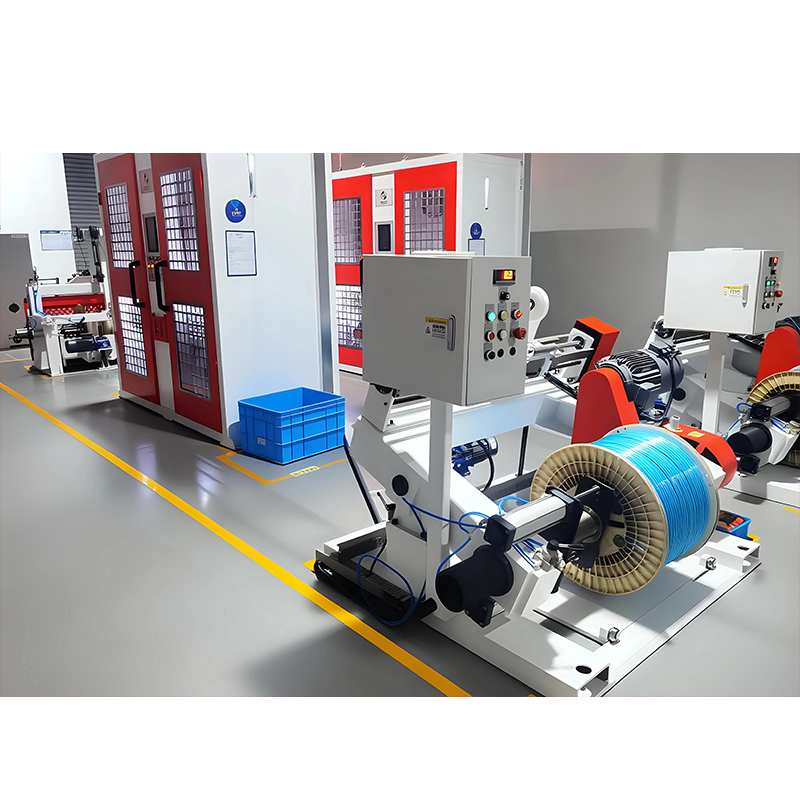
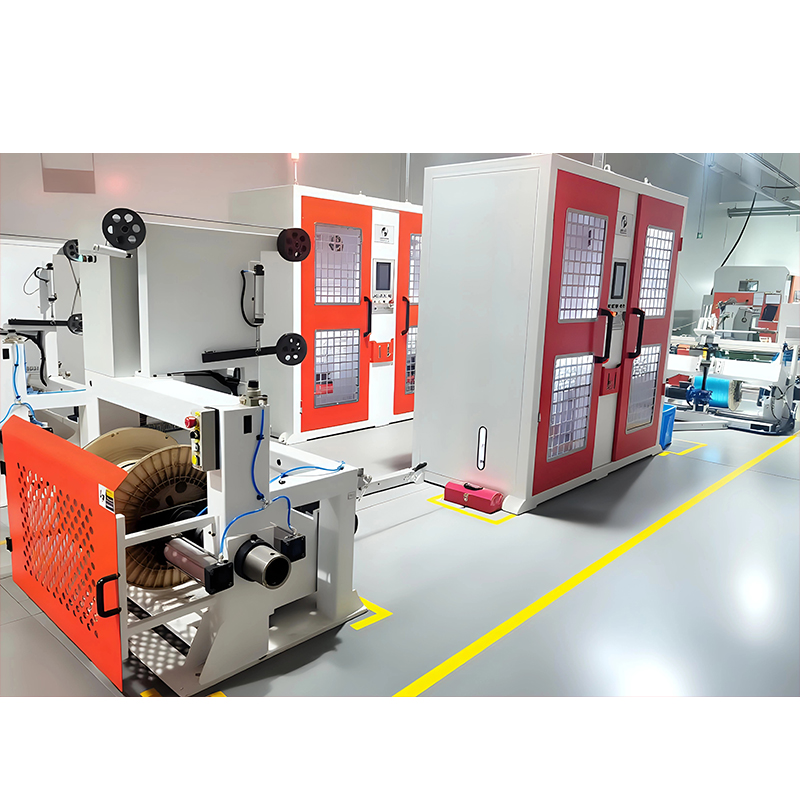
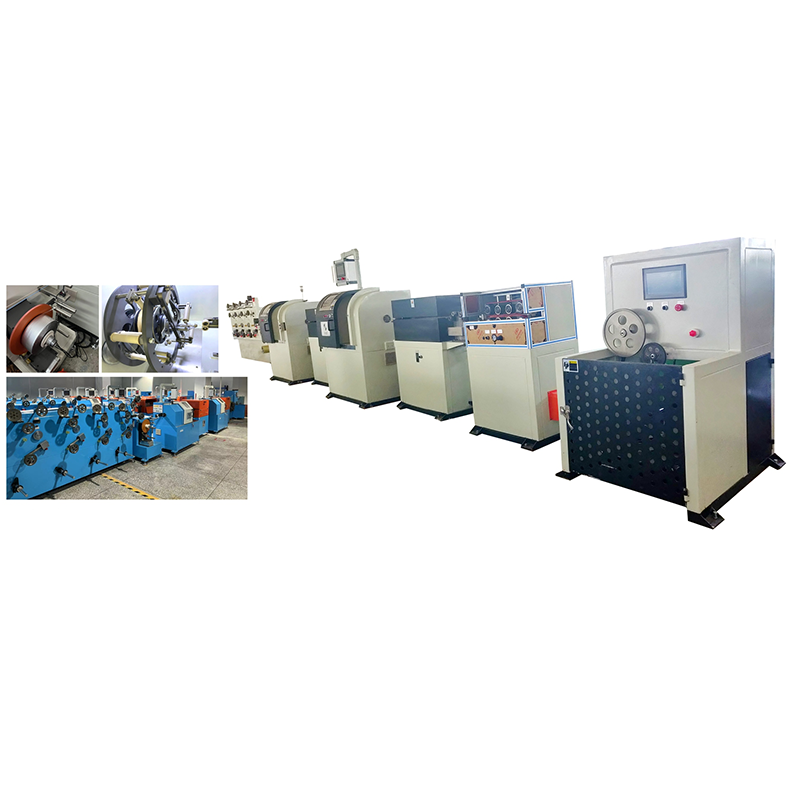
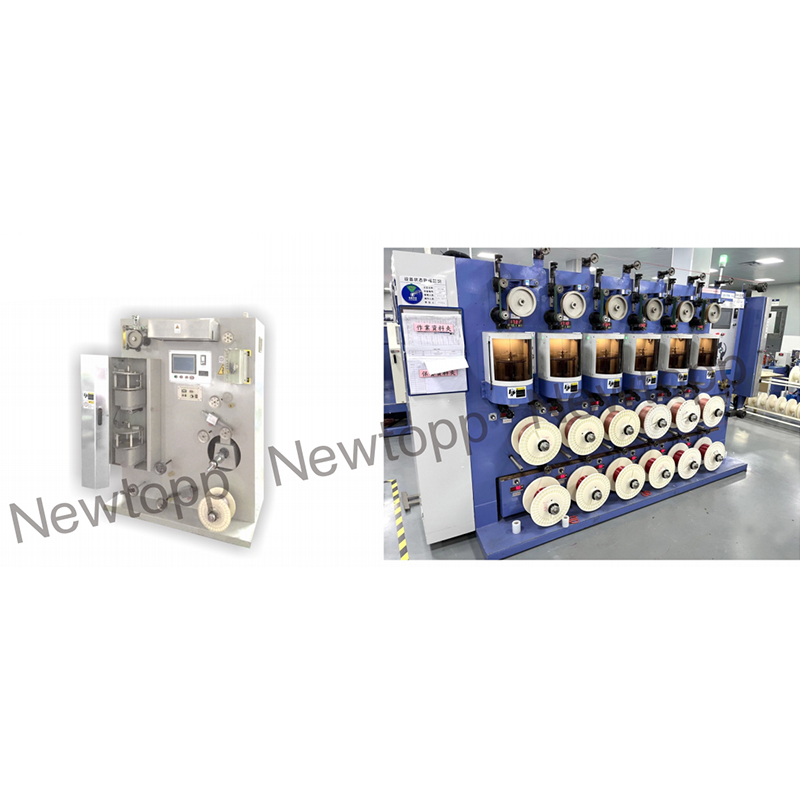
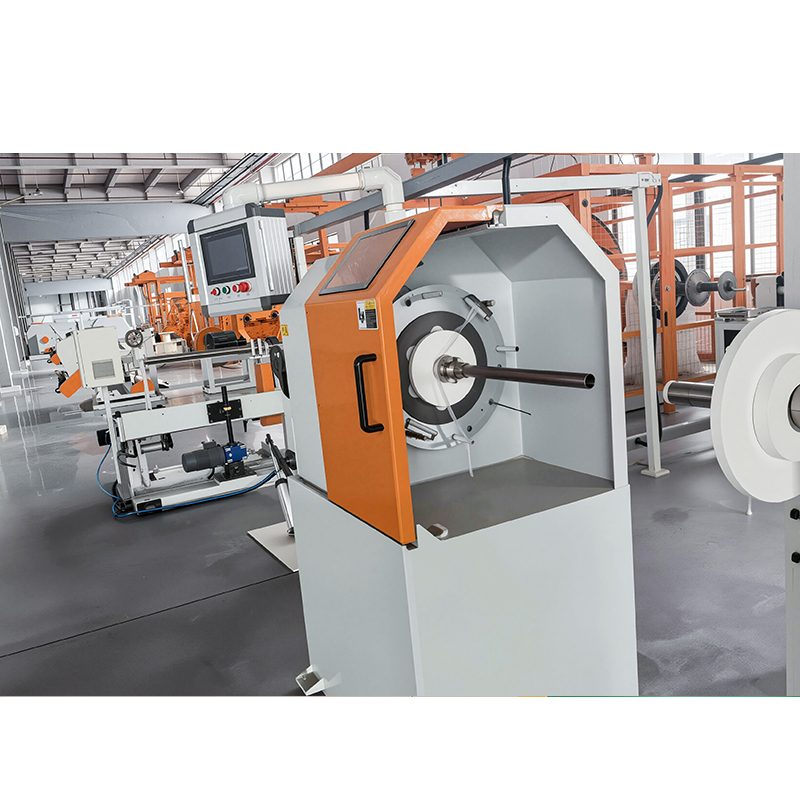
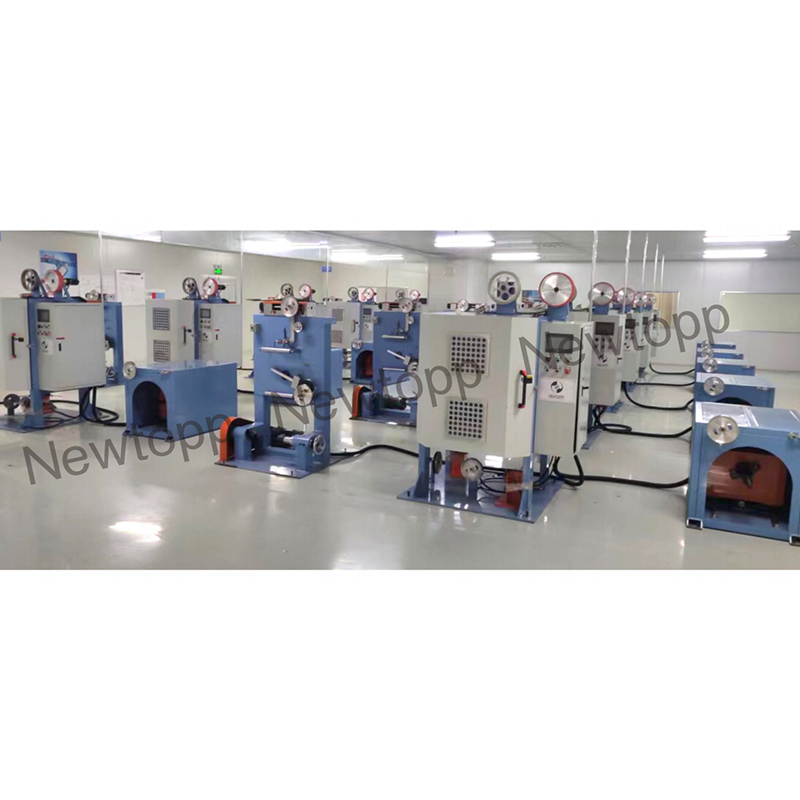
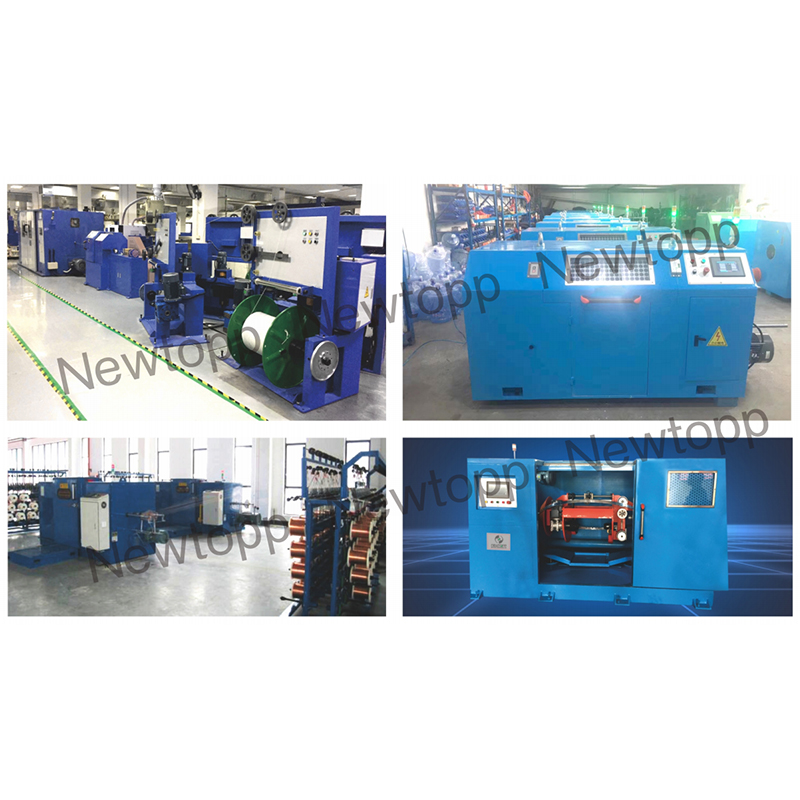
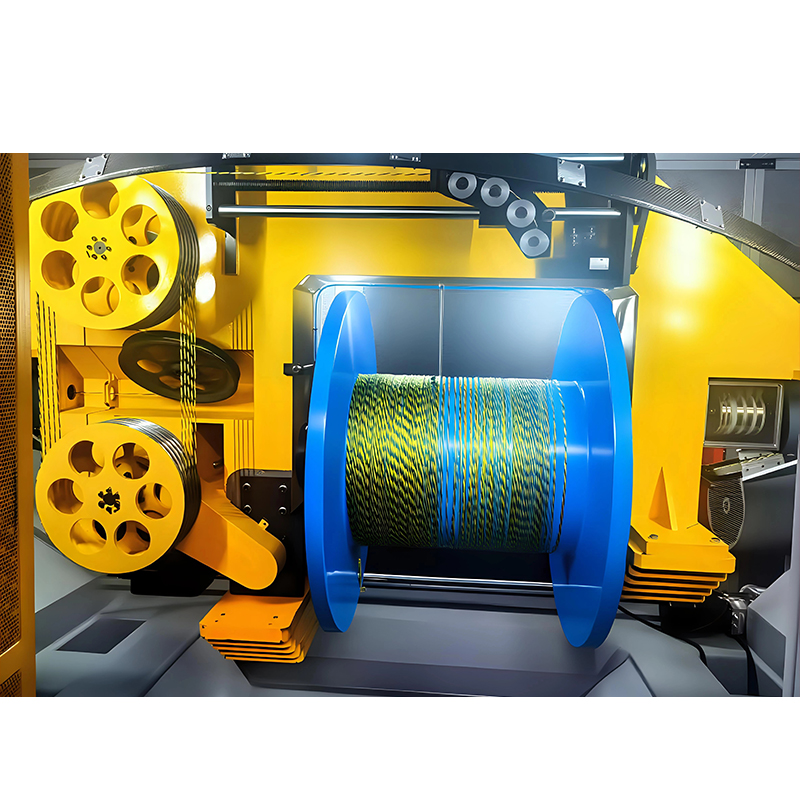
The cable manufacturing industry faces intensifying demands for higher performance, greater reliability, and more complex designs, particularly for applications in data transmission, automotive, robotics, and new energy sectors. At the heart of manufacturing specialized cables—such as high-frequency signal wires, robotic cables, or automotive harnesses—lies a critical and precision-dependent process: insulation taping or wrapping. This process builds uniform, gap-free insulation layers around conductors, which is fundamental for electrical integrity, signal fidelity, and long-term durability.
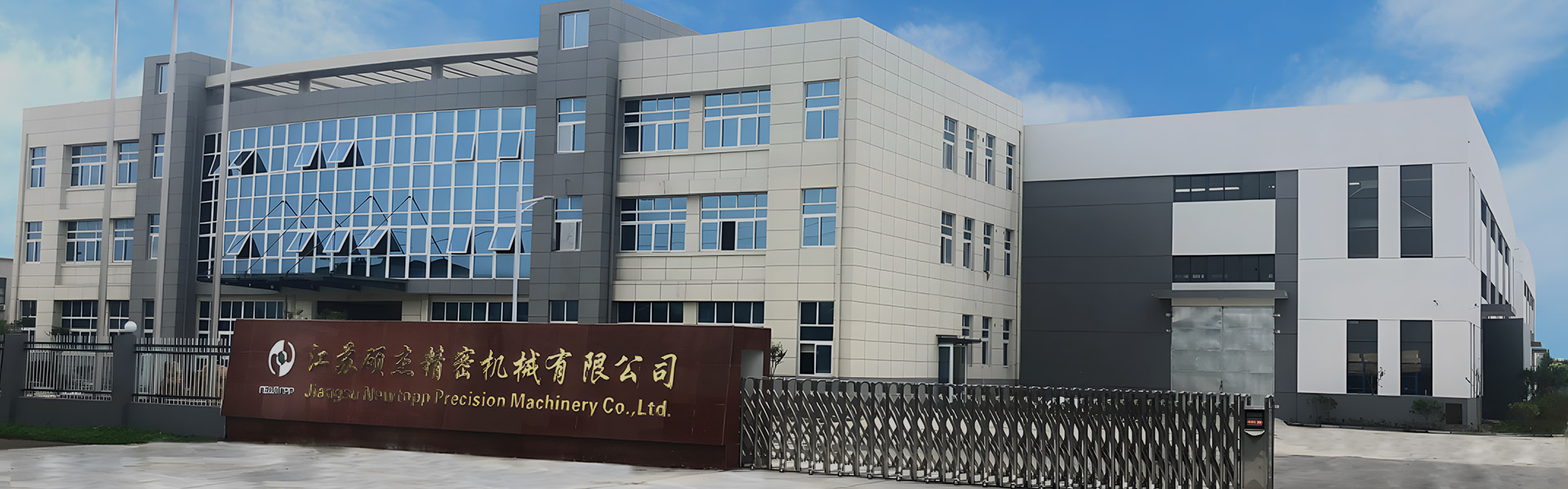
Meeting the stringent requirements of modern cables, especially for multi-layer designs on complex conductors, has rendered traditional mechanical taping systems inadequate. The industry’s shift is towards high-precision, digitally controlled systems that guarantee consistency, speed, and adaptability. This is the precise technological gap addressed by solutions like the Numerical Control Vertical Double Layers/Multilayers Servo Taping Machine from Jiangsu Newtopp Precision Machinery. This system embodies the next generation of taping technology, leveraging multi-axis servo algorithms and coordinated vertical dual-station control to transform how insulation layers are applied, directly answering the call for smarter, more capable cable production equipment.
Core Concepts in Insulation Taping
To appreciate the technological leap, it’s essential to understand the foundational goals and challenges of the insulation taping process.
-
The Primary Objective: The core function is to helically wrap insulating tape—such as PTFE, polyester, or composite films—around a conductive core (which can be a single wire, stranded, or parallel conductors) with precise overlap. This creates a continuous, uniform dielectric barrier.
-
The Central Challenge - Tension Control: Consistent tape tension is paramount. Fluctuating tension causes uneven wrap density, gaps, wrinkles, or stretched tape, leading to insulation flaws that degrade electrical performance. Research highlights that effective tension control is a primary determinant of final product quality, with modern strategies focusing on closed-loop, sensor-less, or indirect control methods for higher accuracy and simpler systems.
-
The Precision Mandate - Path Stability: The point where the tape contacts the conductor—the formation point—must remain spatially stable. Any drift during machine acceleration, constant speed, or deceleration results in inconsistent overlap or pitch, compromising the insulation's integrity and uniformity.
Industry Metrics
Moving from concepts to measurable performance, the industry evaluates taping equipment on several key metrics. The following table contrasts the capabilities of traditional systems with those of advanced servo-driven solutions like the Numerical Control Vertical Double Layers/Multilayers Servo Taping Machine.
| Performance Metric |
Traditional / Mechanical Taping Equipment |
Advanced Servo-Driven Taping System (e.g., Newtopp's Solution) |
Impact on Cable Quality & Production |
| Tension Control |
Often mechanical or open-loop; tension varies with reel diameter and speed. |
Closed-loop, stepless tension field control with real-time calculation and compensation. |
Eliminates manual intervention, ensures uniform layer density, and prevents defects caused by tension spikes or sags. |
| Speed & Throughput |
Limited by mechanical linkages; slower cycle times. |
Integrated high-inertia spindle drive enables exponentially higher material throughput per unit time. |
Dramatically increases production capacity and efficiency for high-volume or thick insulation requirements. |
| Wrapping Path Precision |
Prone to drift due to mechanical play and inertia. |
Programmable motion controller ensures zero drift in the taping formation point across all motion phases. |
Guarantees perfect overlap ratio and geometric consistency, critical for high-frequency and miniaturized cables. |
| Process Flexibility |
Tooling changes required for different conductors or wrap patterns; limited adaptability. |
Intelligent arrangement topology allowing free 3D definition of width/pitch parameters via digital preset. |
Enables quick changeovers and accommodates a vast range of conventional and specialty wire configurations without hardware swaps. |
| Automation & Intelligence |
Manual setup and monitoring are common. |
Digitally preset parameters, multi-axis servo coordination, and real-time compensation mechanisms. |
Reduces operator skill dependency, minimizes human error, and paves the way for integration into smart factory setups |
Stability Through Coordination
A simplified diagram helps visualize a key technological differentiator. Traditional systems often treat the conductor feed and tape head movement as loosely coupled, leading to path instability. In contrast, a true servo taping system treats them as a coordinated multi-axis system. The motion controller synchronizes the conductor rotation (C-axis), the horizontal traverse of the taping head (X-axis), and the vertical positioning in dual-layer systems (Y-axis) in real-time. This electronic gearing, combined with dynamic tension control, is what locks the taping formation point in space, ensuring impeccable wrap consistency regardless of speed changes.
The Trajectory Shaping Future Taping Solutions
The cable equipment sector is not static. Several powerful trends are driving innovation and defining the requirements for next-generation machinery:
-
The Push for Extreme Precision and Miniaturization: As cables for consumer electronics, medical devices, and robotics become smaller and more complex, the demand for micro-precision in taping is soaring. This goes beyond mechanical accuracy to require sub-millimeter control over tape placement and tension, a domain where advanced servo systems excel.
-
Integration and Smart Manufacturing: Equipment is no longer an isolated island. The trend is toward fully integrated, data-rich production lines. Modern taping machines must offer standard communication protocols (like EtherCAT or Modbus), support remote monitoring, and provide data for process analytics and predictive maintenance.
-
Material Versatility and Sustainability: Manufacturers are exploring new, often challenging, insulating materials to meet higher temperature ratings, environmental regulations, or cost targets. Equipment must handle a wider range of tape materials—from classic polymers to advanced composites—without compromising on application quality. Furthermore, energy-efficient designs are becoming a competitive necessity.
-
Demand for Operational Agility: Short product lifecycles and high-mix, low-volume production runs require equipment that can change over quickly. The programmability and digital preset capabilities of CNC servo taping machines directly address this need, reducing downtime and expanding a factory’s flexible manufacturing capabilities.
These trends collectively point to a future where insulation taping is a fully digital, highly adaptive, and seamlessly integrated process. The technological foundations of the Numerical Control Vertical Double Layers/Multilayers Servo Taping Machine—its digital core, servo precision, and intelligent control—are precisely aligned with this future, making it not just a tool for today, but a platform for tomorrow’s cable manufacturing challenges.
Frequently Asked Questions (FAQs)
Q: What types of conductors can your Vertical Servo Taping Machine handle?
A: Our machine is engineered for exceptional topological adaptability. It can efficiently process a wide range, from simple single solid conductors to complex stranded or parallel conductors, accommodating their continuous center wrapping requirements in various configurations.
Q: How does your system maintain constant tension as the tape reel diameter decreases?
A: We employ a sophisticated closed-loop tension-sensing module and real-time calculation compensation mechanism. This system dynamically adjusts to the changing inertia and diameter of the tape reel, maintaining a constant tension field throughout the entire run without the need for manual operator intervention, which is a common limitation in simpler systems.
Q: Can this machine produce the precise, consistent overlaps required for high-frequency cables?
A: Absolutely. The programmable motion controller digitally presets the exact tape overlap ratio. More importantly, its multi-axis coordination ensures zero drift in the spatial coordinates of the taping formation point during acceleration, constant speed, and deceleration. This spatial stability is critical for achieving the perfect, gap-free insulation necessary for optimal electromagnetic compatibility (EMC) in high-frequency signal wires.
Q: We have unique cable designs with specific width and pitch requirements. Is customization possible?
A: Yes. A core feature of our machine is its intelligent arrangement topology. The axial-type take-up system supports the free definition of width and pitch parameters in three dimensions, allowing our engineers to generate a precise arrangement matrix tailored to meet your complex wire gauge and design specifications.



 English
 русский
 Español