


 English
 русский
 Español


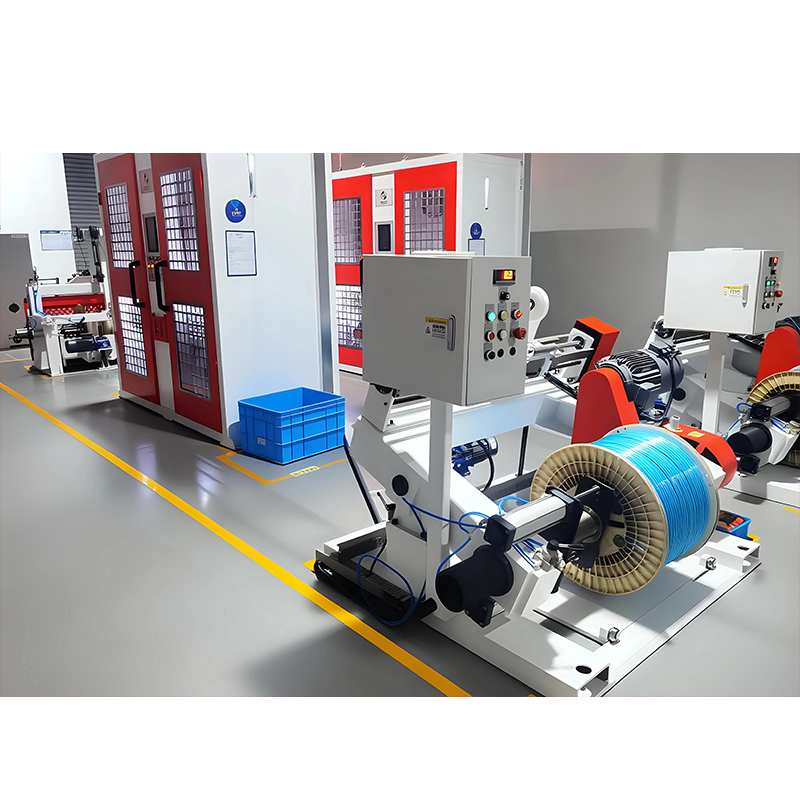
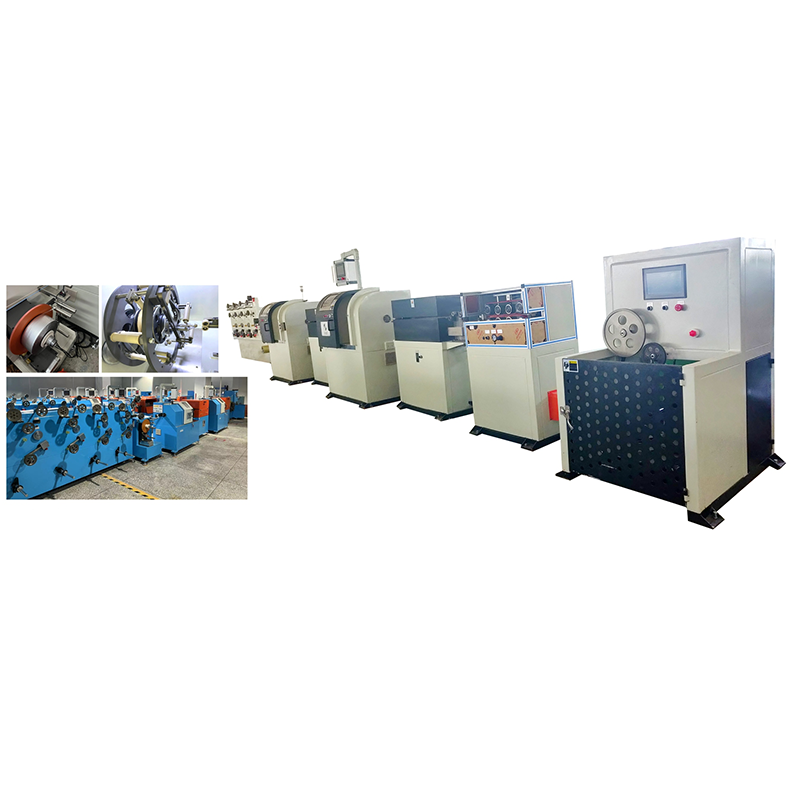
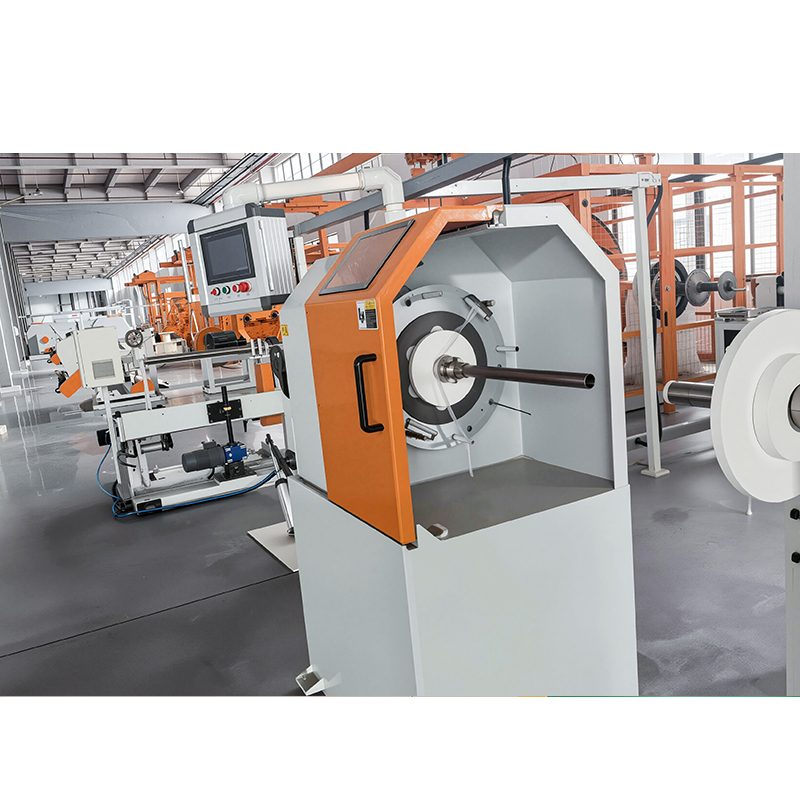


Global standards for conductor stranding include specifications for wire diameter, number...
Specification Parameters
| Number of Taping Heads | 2 (series configuration) |
| Applicable Core OD | 1.0 mm – 80 mm |
| Tape Width (each head) | 6 mm – 120 mm |
| Reel OD (max) | Up to 600 mm per head |
| Overlap Range | 0% – 55% per head, independently set |
| Winding Direction | Same or counter-helical (S/Z) |
| Head Rotation Speed | Up to 2,500 RPM per head |
| Line Speed | Up to 150 m/min |
| Tension Control | Dual independent servo tension units |
| Helix Angle Control | ±0.15° per head |
| Drive System | Dual AC servo + shared PLC |
| HMI | 10" color touchscreen, recipe storage |
| Power Supply | 380V / 50Hz / 3-phase |
| Machine Length | ~2,200 – 2,800 mm |
| Net Weight | Approx. 700–1,100 kg |
| Certifications | CE, ISO 9001 |
Application
Double-layer taping systems address a broad range of demanding cable and tubing manufacturing requirements. Key application sectors include:
- High-Frequency Data Cables (Cat6A, Cat7, Cat8): Counter-helical double foil shielding (S+Z directions) provides 100% coverage and superior EMI performance for 10GbE and 40GbE data transmission applications.
- RF & Coaxial Cables: Foil shield + drain wire carrier tape applied in a single pass ensures consistent shield-to-conductor contact for low-loss signal transmission.
- Power & Control Cables: A first layer of semiconductive tape followed by a copper foil screen achieves the Class B shielding requirements of IEC 60502 and similar standards.
- Submarine & Oil Field Cables: Water-blocking tape plus an armoring buffer tape in one pass reduces line length and processing time for highly engineered subsea cable constructions.
- Overhead Transmission Line Conductors: Binder tape over stranded aluminum followed by a corrosion-inhibiting tape layer in a single pass reduces downstream process steps.
- Fiber Optic Cables: Loose tube cables benefit from a buffer tape plus water-swellable tape combination applied simultaneously, meeting IEC 60794 environmental protection requirements.
- Medical Device Cables: Two layers of biocompatible polymer tape ensure both structural integrity and chemical resistance for patient-contact cable assemblies.
Advantage
- 100% Coverage with Counter-Helical Winding: Opposite-direction winding of the two heads guarantees no uncovered gap at any axial position, meeting the most stringent EMC shielding standards.
- Process Consolidation: Applying two functional tapes in one pass eliminates a standalone processing step, reducing line length, floor space, handling risk, and total production time per meter.
- Independent Head Control: Each taping head can be set to different tape widths, tensions, overlap ratios, and winding speeds, enabling true multi-functional tape combinations in a single pass.
- Improved Structural Integrity: Two tape layers provide significantly greater mechanical protection against crush, impact, and abrasion compared to a single layer, extending cable service life.
- Flexible Configuration: The same machine can produce both same-direction and counter-helical configurations by a simple parameter change in the HMI, without mechanical reconfiguration.
- Recipe Management: Digital recipe storage and recall enables repeatable setups for repeat product orders, reducing setup errors and improving quality consistency across production shifts.
- Competitive Total Cost of Ownership: While the capital investment is higher than a single-layer system, the elimination of a second standalone machine often delivers a net cost saving in total line investment and operational overhead.
Material & Structure
Dual-Head Frame: The machine frame is engineered to maintain precise coaxial alignment between both taping heads and the product path. The inter-head distance is optimized to prevent tape interaction while minimizing total machine length. Frame sections are heavy-gauge welded steel with precision-bored head mounting flanges.
Taping Head Construction: Both heads share the same component specification — lightweight aluminum alloy rotating disc with ceramic or hard-chrome guide rollers, designed for consistent performance and interchangeability of spare parts.
Dual Servo Tension Systems: Each head has its own independent servo-driven dancer tension arm. The two tension control loops are electrically isolated to prevent cross-interference. This ensures that a tape break on one head does not destabilize the tension on the other.
Synchronization Architecture: The PLC coordinates the speed ratio between both taping heads and the line haul-off. A master-slave architecture (or fully independent axis control in premium models) ensures precise helix angle maintenance even during acceleration and deceleration.
Guard & Safety Structure: Each taping head is enclosed in its own interlocked safety guard. A shared emergency stop network covers both heads and the product transport section between them.
