


 English
 русский
 Español


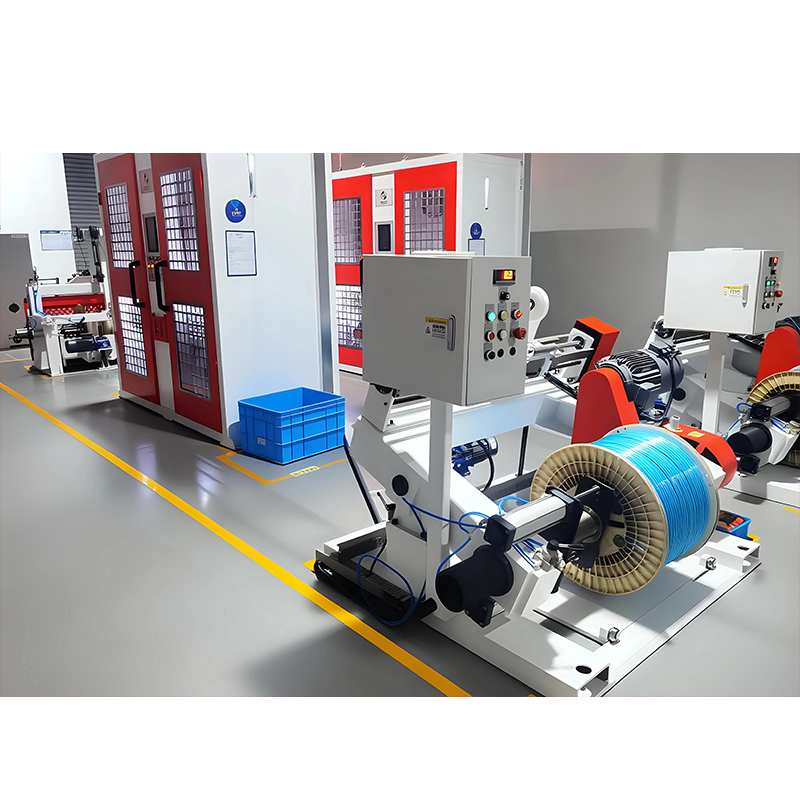
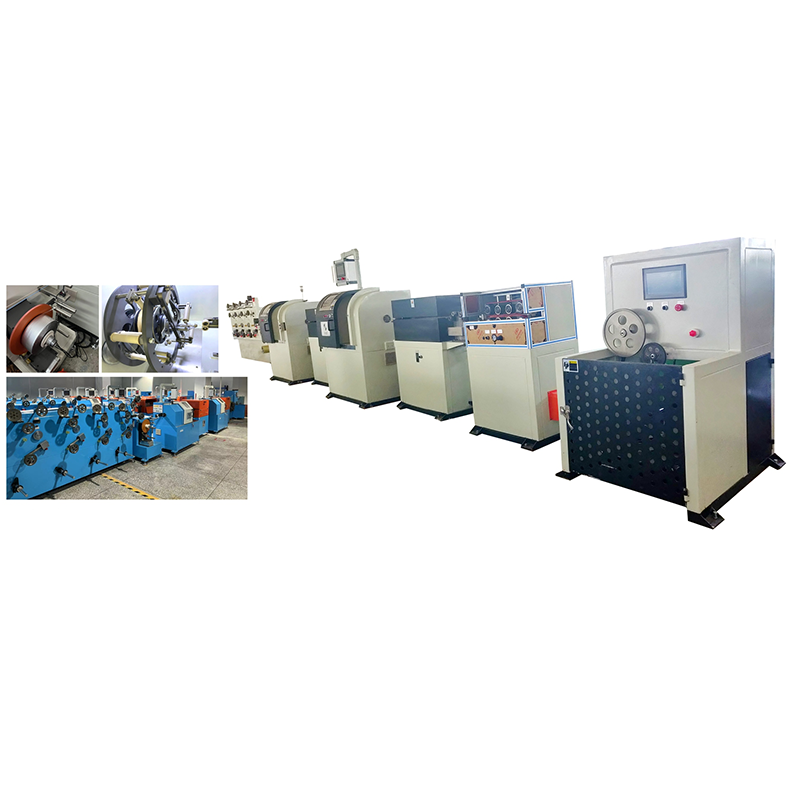
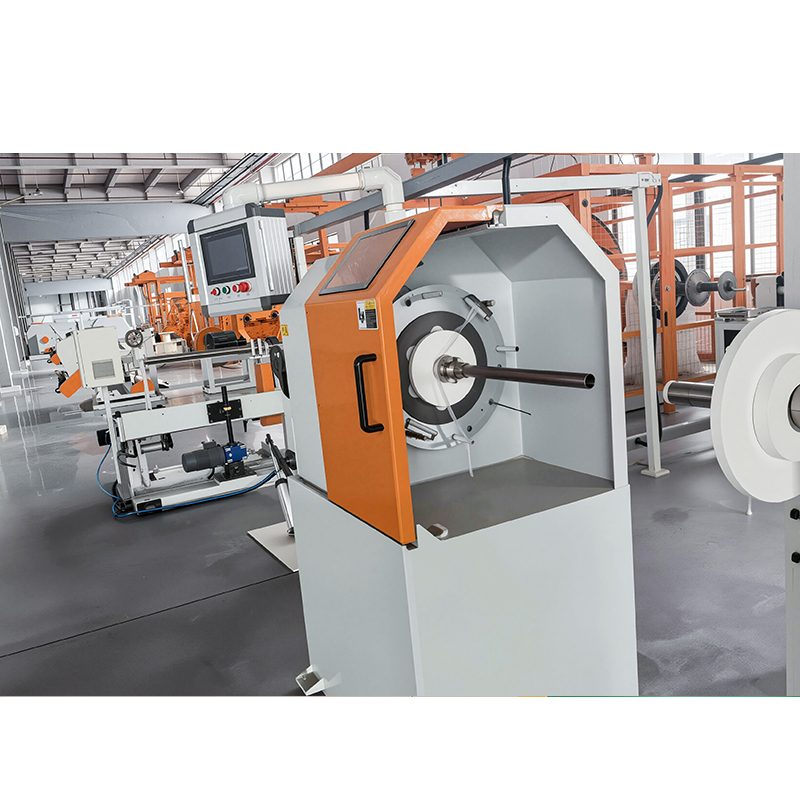


Global standards for conductor stranding include specifications for wire diameter, number...
Specifications
| Cable / Core Diameter Range | 0.5 mm – 80 mm OD |
| Taping Head Rotation Speed | Up to 2,000 RPM (servo-regulated) |
| Max. Line Speed | Up to 150 m/min |
| Tape Width Range | 6 mm – 100 mm |
| Tape Thickness Range | 0.009 mm – 0.5 mm |
| Overlap Adjustment | -50% (gap) to +95% (CNC-controlled, ±0.5%) |
| Number of Taping Heads | 1 – 4 (tandem or independent) |
| Tape Spool O.D. | Up to 300 mm outer diameter |
| Tension Control | Constant-tension servo with load-cell feedback; range 0.1–15 N |
| CNC Controller | Siemens SINUMERIK / Mitsubishi M800 (configurable) |
| HMI | 15-inch industrial touchscreen, IP65 front panel |
| Power Supply | 380 V / 3-phase / 50 Hz or 460 V / 60 Hz |
| Installed Power | 7.5 kW – 30 kW |
| Machine Footprint (L×W×H) | Approx. 1,800 × 1,200 × 3,200 mm |
| Net Weight | Approx. 2,200 – 4,500 kg |
| Certifications | CE, ISO 9001:2015, ATEX (optional zone classification) |
Applications
CNC Vertical Taping Machines serve a wide range of specialised taping needs across multiple sectors:
- Fire-Resistant Cables: Applying mica tape over conductors to produce cables compliant with IEC 60331 and BS 6387, where precise overlap is critical to achieving circuit-integrity ratings.
- Shielded Cables & EMC Protection: Wrapping aluminium-polyester or copper-polyester laminate tape over cable cores to create a continuous electromagnetic shield in data, audio, and control cables.
- High-Frequency & RF Cables: Precisely applying PTFE tape at controlled overlap over inner conductors of high-frequency coaxial or triaxial cables where dielectric consistency is critical for impedance and signal integrity.
- Aerospace & Mil-Spec Cables: Taping with polyimide (Kapton®) film or glass-fibre tape for high-temperature or radiation-resistant cable constructions per AS22759 and MIL-DTL-27500 standards.
- Power Cables (Medium Voltage): Applying semi-conductive and insulating tape layers over MV cable cores as part of multi-layer insulation systems.
- Oil & Gas / Subsea Cables: Taping with water-blocking tape, moisture-barrier film, or armour bedding tape in umbilical and well-intervention cables.
- Flat & Ribbon Cables: With appropriate guide tooling, vertical taping machines can wrap flat cable assemblies uniformly, which is difficult on conventional horizontal machines due to orientation instability.
Advantages
- Gravity-Neutral Handling: The vertical cable path prevents small-diameter or lightweight cores from deflecting under their own weight, which is a persistent problem on horizontal machines and a leading cause of eccentric taping.
- CNC Precision Overlap Control: Overlap percentage is calculated and maintained by the CNC controller based on real-time head speed and line speed data. Overlap deviation is held within ±0.5%, far tighter than mechanically governed competitors.
- Constant Tape Tension: Load-cell feedback on each tape spool servo prevents tape breakage at speed changes (acceleration, deceleration, bobbin change) while eliminating wrinkle and stretch defects common with spring-only tensioners.
- Multi-Head Flexibility: Up to four taping heads can be fitted in tandem—running the same tape for multiple layers or different tapes for composite constructions—eliminating secondary passes and intermediate storage handling.
- Fast Recipe Changeover: All axis parameters, tension setpoints, and head assignments are stored in named product recipes. A full changeover to a previously run product takes under 15 minutes, enabling efficient short-run production.
- Process Data Logging: The CNC controller logs tension, speed, overlap, and alarm events time-stamped against metre marks on the cable, enabling full process traceability and quick root-cause analysis of any taping defect.
- Reduced Tape Waste: Consistent tension and overlap control reduce both tape breakage and overwrap, typically saving 3–7% of tape material compared to non-servo machines—a meaningful cost reduction at high production volumes.
Material & Structure
The construction of CNC Vertical Taping Machines reflects a commitment to both rigidity and precision over long service lives:
- Vertical Column Assembly: The primary structural element is a precision-machined, stress-relieved cast-iron or fabricated steel column. Linear guide rails for the taping head carriage are ground to Ra 0.4 µm and pre-loaded to eliminate backlash.
- Taping Head Rotor: Machined from high-strength aluminium alloy and dynamically balanced to ISO 1940 G1.0. The rotor carries the tape spool spindle, tensioner assembly, and presser foot on a single balanced disc.
- Tape Spool Spindle: Adjustable-width, quick-release spindle accommodates spool widths from 6 mm to 100 mm without tools. Spindle run-out is controlled to under 0.02 mm to prevent tension pulsation.
- Presser / Guide Foot: Interchangeable stainless-steel or ceramic-tipped presser feet are available for different cable diameters and tape types. The presser-foot geometry determines tape lay angle and is easily swapped during changeover.
- Drive Train: A direct-drive servo motor coupled to the taping head eliminates intermediate belts and pulleys, removing a major source of speed ripple and reducing maintenance requirements.
- Haul-Off & Dancer System: A motorised dual-roller haul-off maintains line speed independent of downstream take-up tensions. An active dancer arm with encoder provides the line-speed feedback signal to the CNC overlap calculation loop.
- Cabinet & Cabling: All power and signal cables are routed in steel cable trays and labelled per IEC 60204-1. Drag-chain cable management protects moving-axis cables against fatigue.
