

 English
 русский
 Español


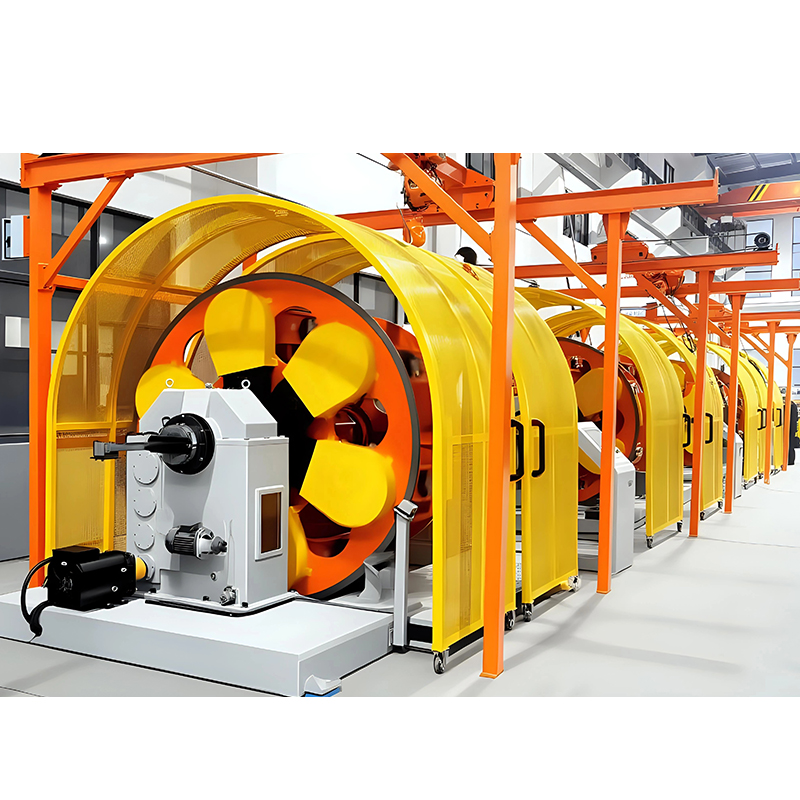
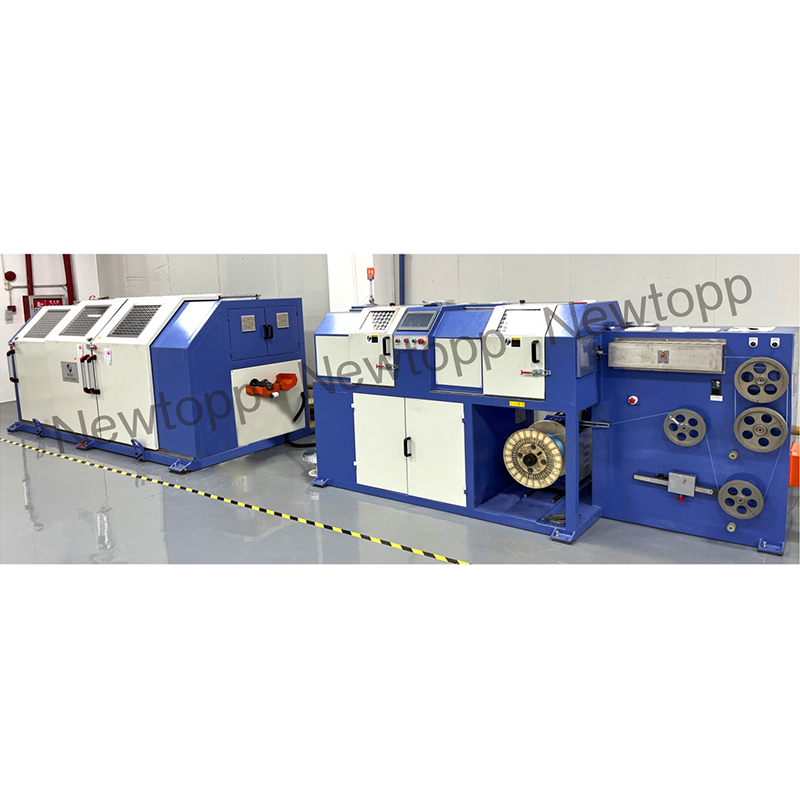
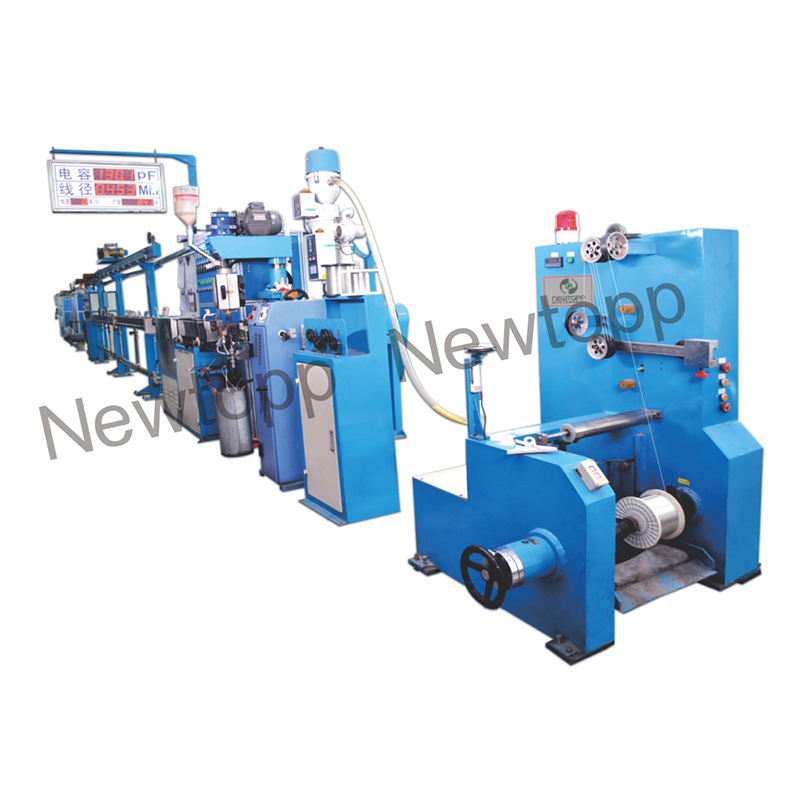
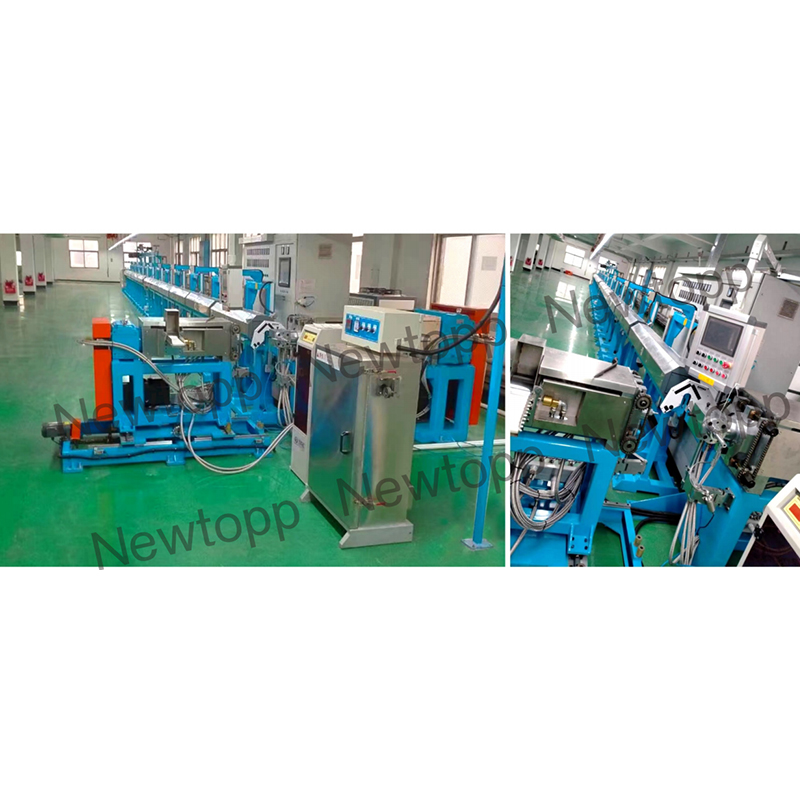
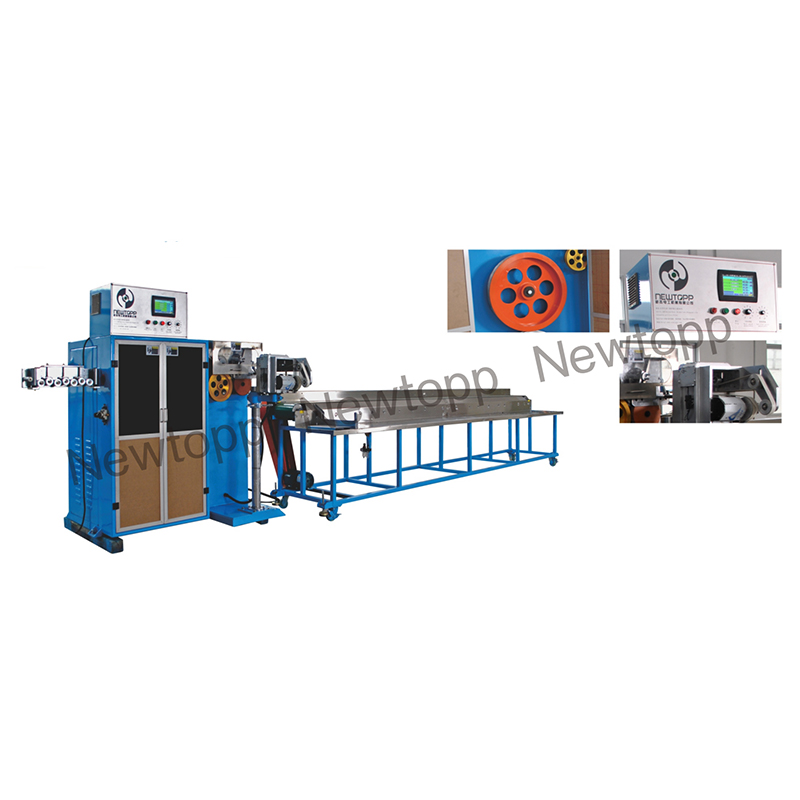
A cable stranding machine is an industrial device that twists multiple individual wires or conductors together into a unified, helical structure — producing cables that are stronger, more flexible, and electrically superior to single-wire alternatives. In wire production, it is the critical piece of equipment that transforms raw wire inputs into finished cable products used in power transmission, telecommunications, automotive wiring, and beyond.
Content
- 1 Understanding the Cable Stranding Machine: Core Definition
- 2 Why Stranding Matters: The Engineering Case
- 3 Main Types of Cable Stranding Machines
- 4 Cable Stranding Machine Type Comparison
- 5 How a Cable Stranding Machine Works: Step-by-Step Process
- 6 Key Components of a Cable Stranding Machine
- 7 Cable Stranding Machine Applications by Industry
- 8 Technical Specifications to Evaluate When Buying a Cable Stranding Machine
- 9 Quality Standards Governing Stranded Cable Production
- 10 Maintenance Best Practices for Cable Stranding Machines
- 11 Frequently Asked Questions (FAQ)
- 11.1 Q: What is the difference between a cable stranding machine and a cable twisting machine?
- 11.2 Q: Can one cable stranding machine produce different IEC conductor classes?
- 11.3 Q: How long does a closing die last in normal production?
- 11.4 Q: What conductor materials can a cable stranding machine process?
- 11.5 Q: What is lay length and why does it matter?
- 11.6 Q: Is it possible to integrate a cable stranding machine into an automated production line?
Understanding the Cable Stranding Machine: Core Definition
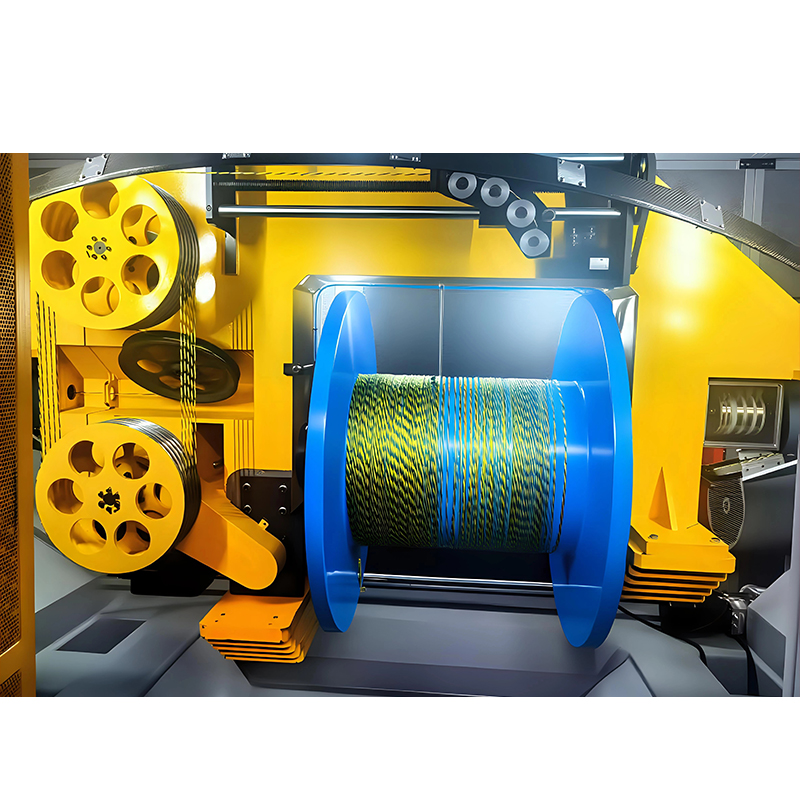
A cable stranding machine — also referred to as a wire stranding machine or conductor stranding machine — performs the fundamental manufacturing step of combining individual wires into a multi-strand cable. At its simplest, the machine rotates a set of wire bobbins around a central axis while simultaneously paying out those wires through a closing die, resulting in a tightly wound helical bundle.
Modern cable stranding machines can handle conductor diameters ranging from as small as 0.05 mm (for ultra-fine telecommunications wire) up to 50 mm or larger (for high-voltage power cable cores). Production speeds on advanced planetary or tubular stranders can exceed 1,500 meters per minute, enabling factories to meet high-volume delivery schedules without sacrificing dimensional consistency.
Why Stranding Matters: The Engineering Case
Stranded cable outperforms solid wire in virtually every demanding application. The engineering advantages are measurable and commercially significant:
- Flexibility: A 7-strand cable of the same cross-section as a solid wire can flex over 10× more cycles before fatigue failure — critical for automotive wiring harnesses and robotic cable assemblies.
- Current-carrying capacity: Stranded conductors dissipate heat more efficiently due to increased surface area, allowing the cable to carry rated current at lower operating temperatures.
- Resistance to vibration: Helically wound strands distribute mechanical stress across multiple wires, dramatically reducing the risk of micro-fractures in high-vibration environments (e.g., aerospace or marine applications).
- Installation ease: Stranded cables conform to bends more readily, reducing labor time and conduit space requirements during building or equipment installation.
Main Types of Cable Stranding Machines
There are four principal categories of cable stranding machine, each optimized for specific wire gauges, production volumes, and lay configurations.
1. Tubular Stranding Machine
The tubular stranding machine is the workhorse of medium-to-large power cable production. The take-up bobbin is stationary while the entire rotating tube (which carries the supply reels) revolves. This design allows large-diameter bobbins and high-tension stranding, making it ideal for power cables with conductor cross-sections from 16 mm² to 400 mm².
2. Planetary Stranding Machine (Skip Strander)
In a planetary stranding machine, the supply bobbins revolve on individual cradles mounted within a rotating cage. The bobbins counter-rotate to compensate for cradle rotation, meaning no twist is imparted to the supply wire itself. This is the preferred machine for fine wire stranding and conductor sizes below 10 mm², as it handles delicate conductors without wire distortion.
3. Rigid Frame (Cradle) Stranding Machine
The rigid frame stranding machine uses a fixed rotating cage with non-compensating cradles. The wire does receive some torsion as the cage rotates, which is acceptable for robust conductors. It excels at high-speed production of standard electrical cables and is widely used for ACSR (Aluminum Conductor Steel Reinforced) and similar utility-grade products.
4. Buncher (Bunch Stranding Machine)
The buncher machine twists all wires simultaneously without controlling the lay direction or individual wire position. It produces a random-lay, loosely twisted bundle optimal for flexible cords, hook-up wire, and flexible control cables. Bunchers are fast and economical — line speeds can reach 2,000 m/min for very fine wire — but are not suitable for applications requiring precise lay length or concentric geometry.
Cable Stranding Machine Type Comparison
| Machine Type | Best Wire Gauge Range | Typical Speed | Lay Control | Primary Application |
| Tubular Strander | 16 – 400 mm² | 50 – 300 m/min | Precise | Power cables, XLPE cables |
| Planetary Strander | 0.05 – 10 mm² | 200 – 800 m/min | Precise | Telecom, fine conductor |
| Rigid Frame Strander | 1.5 – 150 mm² | 100 – 600 m/min | Good | ACSR, utility wire |
| Buncher | 0.03 – 2.5 mm² | 500 – 2,000 m/min | Random lay | Flexible cord, hook-up wire |
Table 1: Comparison of the four main cable stranding machine types across key production parameters. Values are representative industry ranges and may vary by manufacturer configuration.
How a Cable Stranding Machine Works: Step-by-Step Process
The stranding process follows a precise, mechanically coordinated sequence that determines the final cable's geometry, electrical performance, and mechanical properties.
Step 1 — Wire Pay-Off and Tension Control
Individual wires are wound onto supply bobbins loaded into the machine's rotating cage or cradles. A tension control system — typically servo-driven or dancer-arm-based — maintains consistent wire tension across all strands simultaneously. Uneven tension is the leading cause of strand crossover defects and diameter variation; precision machines hold tension variance to within ±2%.
Step 2 — Wire Guiding Through the Pre-former
Wires are routed through a series of guide rings or bow assemblies that begin pre-forming them into their helical path. The lay length — the axial distance required for one complete helix turn — is set at this stage by the ratio of the cage rotation speed to the linear take-up speed. Standard power cable conductors use lay lengths between 10× to 16× the strand diameter, per IEC 60228 requirements.
Step 3 — Closing Die (Compaction)
All individual wire strands converge at the closing die — a precision-machined tungsten carbide or polycrystalline diamond tool with a calibrated bore. The die compresses the helical bundle to the exact target outer diameter, eliminating interstrand gaps. For compacted stranded conductors (Class 2, per IEC 60228), additional rolling or drawing stages reduce conductor diameter by up to 10–15% while increasing fill factor above 90%.
Step 4 — Take-Up and Coiling
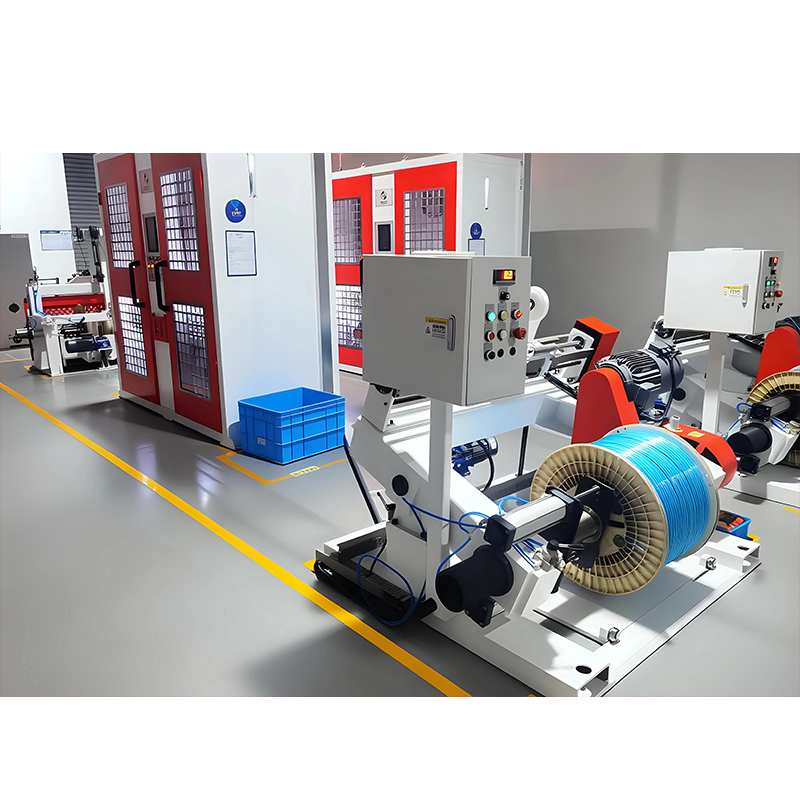
The finished stranded conductor passes to the take-up unit, which winds it onto a storage or shipping bobbin. Traversing mechanisms control the winding pitch to prevent layer bulging. Integrated diameter gauges and spark testers (for insulated wire) perform real-time quality checks, flagging deviations before they accumulate into a significant scrap event.
Key Components of a Cable Stranding Machine
Understanding the machine's subsystems helps procurement teams and engineers assess specifications and maintenance requirements more accurately.
- Rotating Cage / Tube: The structural framework that carries supply bobbins and generates the helical twist. Material: high-tensile steel or aluminum alloy. Balancing is critical above 500 RPM to prevent vibration-induced diameter variation.
- Bobbin Cradles: Mounting points for wire supply bobbins. In planetary designs, cradles incorporate gear systems for back-twist compensation, preserving wire straightness.
- Pre-forming Bow / Guide Rings: Ceramic or hardened steel guides that route wires from bobbins to the closing die without surface damage. Smooth surface finish (Ra < 0.4 µm) is essential for copper wire to prevent strand marking.
- Closing Die Holder: A precision assembly that secures the die in exact alignment with the machine axis. Eccentric dies cause helical oval cross-sections — a common quality defect.
- Drive System: Modern machines use AC servo motors with vector control, replacing older DC systems. This allows instantaneous speed adjustment and synchronization of cage rotation and take-up, maintaining target lay length to within ±0.5 mm across full speed range.
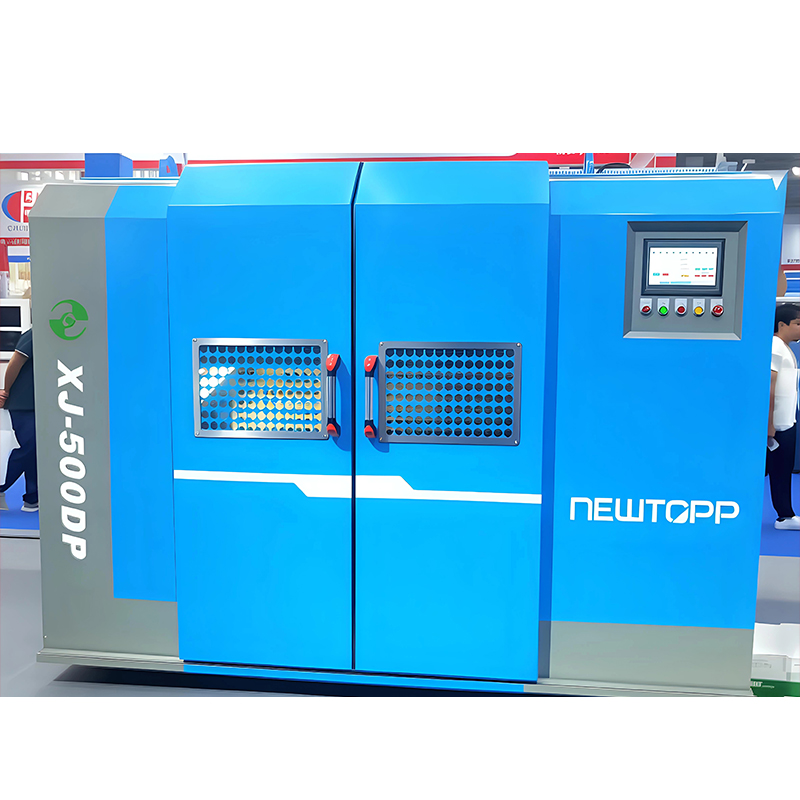
- PLC / HMI Control Panel: Programmable logic controllers store and recall production recipes (lay length, speed, tension), log quality data, and interface with factory MES systems for traceability.
- Take-Up Unit: The motorized bobbin winding system at the output. Dancer-arm tension feedback keeps output tension stable regardless of bobbin fill state.
Cable Stranding Machine Applications by Industry
Cable stranding machines are deployed across nearly every industrial sector that relies on electrical infrastructure. The table below maps industries to their typical cable types and stranding requirements.
| Industry | Cable Type | Conductor Class | Key Requirement |
| Power Utilities | XLPE, PVC power cable | IEC Class 1 / 2 | High fill factor, low resistance |
| Telecommunications | Data cable, coaxial cable | IEC Class 5 | Ultra-fine wire, minimal surface damage |
| Automotive | Wiring harness, EV battery cable | IEC Class 5 / 6 | High flexibility, vibration resistance |
| Aerospace & Defense | MIL-spec wire, signal cable | IEC Class 6 | Precision geometry, exotic alloys |
| Marine & Offshore | Submarine cable, deck cable | IEC Class 2 / 5 | Corrosion-resistant materials, high tensile strength |
| Renewable Energy | Solar DC cable, wind turbine cable | IEC Class 5 | UV resistance pairing, flexible core |
Table 2: Industry applications for stranded cables and the corresponding stranding machine requirements. IEC 60228 conductor classes referenced.
Technical Specifications to Evaluate When Buying a Cable Stranding Machine
Selecting the right wire stranding machine requires careful matching of machine capabilities to production requirements. The following parameters are the most commercially significant:
- Number of bobbins (stranding count): Common configurations are 7, 12, 18, 24, 36, and 48-bobbin machines. More bobbins allow higher strand counts and thicker conductors in a single pass. A 19-wire configuration, for example, is standard for medium-voltage cable cores.
- Maximum bobbin size and weight: Larger bobbins reduce changeover downtime. A machine accepting DIN 500 bobbins (500 mm flange diameter) holds approximately 3× more wire than one limited to DIN 250, directly improving operational efficiency.
- Cage rotation speed (RPM): Higher RPM permits faster lay rates. However, at cage speeds above 800 RPM, dynamic balancing of the rotating assembly becomes critical to prevent vibration-induced measurement errors and bearing wear.
- Lay length range: The machine's lay range must encompass all target products. Typical variable-lay machines cover from 20 mm to 500 mm lay length in a single setup.
- Wire diameter range: Ensure the tension system, guides, and closing die holder are compatible with the full range of wire gauges the factory processes.
- Degree of automation: Machines with automatic tension equalization, PLC recipe management, and integrated diameter gauging reduce operator skill requirements and quality variability — critical when scaling output.
Quality Standards Governing Stranded Cable Production
A well-configured cable stranding machine must produce conductors that comply with recognized international standards, as these directly determine product acceptance by buyers and certification bodies.
- IEC 60228: The global standard classifying conductor types (Classes 1–6) by strand count, flexibility, and resistance. Most export-grade cable manufacturers must certify to this standard.
- ASTM B8 / B286 (USA): American standards covering concentric-lay-stranded copper conductors for electrical purposes.
- BS EN 60228 (UK/Europe): The harmonized European adoption of IEC 60228, with some national annexes.
- UL Standards (UL 44, UL 83): Required for cables sold into the North American market, specifying conductor construction alongside insulation and jacket requirements.
Machines with built-in laser diameter gauges and data-logging capability make it significantly easier to generate SPC (Statistical Process Control) charts and certificate-of-conformance documentation aligned to these standards.
Maintenance Best Practices for Cable Stranding Machines
Proper maintenance of a cable stranding machine directly impacts uptime, wire quality, and machine longevity. The following scheduled tasks are industry-standard:
- Daily: Inspect guide rings and closing die for wear or wire grooves. Even a 0.05 mm groove in a guide ring can mark copper wire surfaces and cause insulation adhesion failures downstream.
- Weekly: Check and adjust bobbin cradle tension springs or brake systems. Lubricate traverse guides and check take-up dancer arm pivot bearings.
- Monthly: Lubricate cage bearings per manufacturer specifications (over-lubrication is as damaging as under-lubrication). Verify cage balance — especially after any change in bobbin loading pattern.
- Annual: Full gearbox inspection and oil change, motor insulation resistance testing, and calibration of all sensors (diameter gauges, tension transducers, encoders).
Industry data suggests that factories with structured Preventive Maintenance (PM) programs reduce unplanned downtime by 40–60% compared to reactive maintenance approaches, with direct savings in scrap wire, labor, and delivery penalties.
Frequently Asked Questions (FAQ)
Q: What is the difference between a cable stranding machine and a cable twisting machine?
A cable stranding machine produces a concentric, helically structured conductor from multiple individual wires. A cable twisting machine typically refers to equipment used to twist pairs or groups of already-insulated wires — common in telecommunications (twisted pair data cables). While both involve rotation, stranding machines work with bare conductors and define the electrical geometry, while twisting machines work post-insulation to control impedance and crosstalk.
Q: Can one cable stranding machine produce different IEC conductor classes?
Yes — most modern machines can produce Class 1 through Class 5 conductors by adjusting lay length, bobbin count, and wire diameter. However, Class 6 (ultra-flexible) production typically requires a planetary-type buncher for the finest strand counts and may benefit from a dedicated machine configuration.
Q: How long does a closing die last in normal production?
Tungsten carbide closing dies typically last 50,000 to 150,000 meters of production before replacement is needed, depending on conductor material (aluminum is less abrasive than copper alloys), line speed, and coolant/lubrication use. Polycrystalline diamond (PCD) dies last significantly longer but carry a higher initial cost.
Q: What conductor materials can a cable stranding machine process?
Standard wire stranding machines process bare copper (BC), tinned copper, aluminum, aluminum alloy (AAC, AAAC), copper-clad aluminum (CCA), and specialty alloys such as Inconel or titanium for aerospace applications. Material-specific tooling — guide rings, closing dies — must be selected to match hardness and ductility of the wire being processed.
Q: What is lay length and why does it matter?
Lay length is the axial length of cable over which one strand completes one full helical revolution. Shorter lay lengths increase flexibility and strand interlocking strength but increase wire consumption per meter of cable. Longer lay lengths reduce material usage but decrease flexibility. IEC 60228 specifies maximum lay length ratios to ensure conductors meet resistance and flexibility requirements for each conductor class.
Q: Is it possible to integrate a cable stranding machine into an automated production line?
Absolutely. Modern cable stranding machines with servo drives, PLC controls, and standardized communication protocols (OPC-UA, Profinet, EtherNet/IP) can be fully integrated into automated wire and cable production lines. They can communicate upstream with wire drawing machines and downstream with extruders, armoring machines, or drum winders, enabling real-time synchronization and centralized quality data capture.
Ready to Upgrade Your Wire Production?
How can you find the best cable stranding machine for your factory? Contact our experts today! Our engineering team will analyze your production requirements — conductor class, output volume, wire materials — and recommend the optimal machine configuration with a detailed ROI projection.
Contact Our Experts Now →