


 English
 русский
 Español


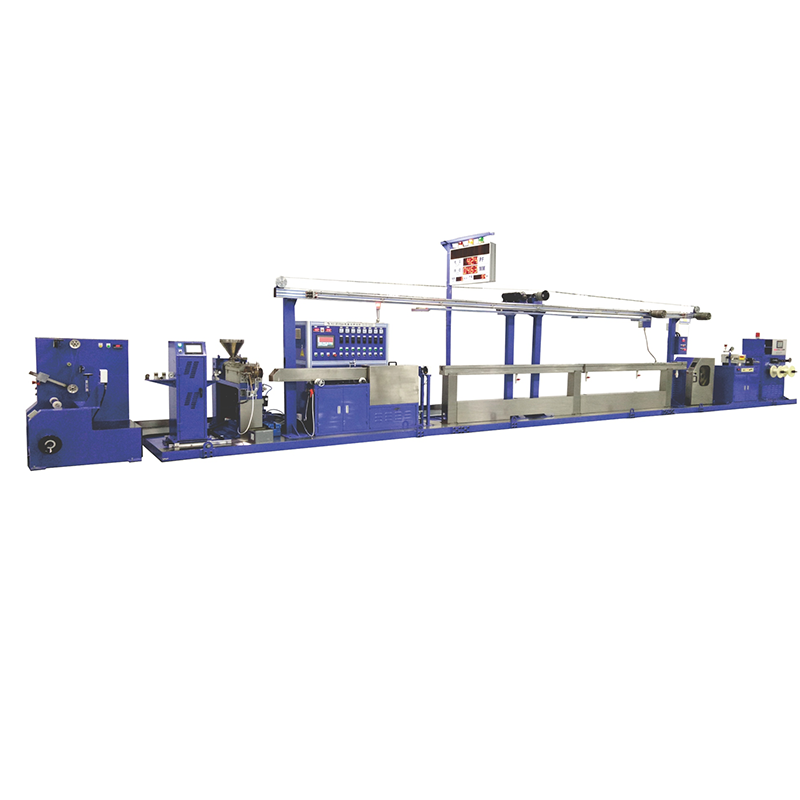
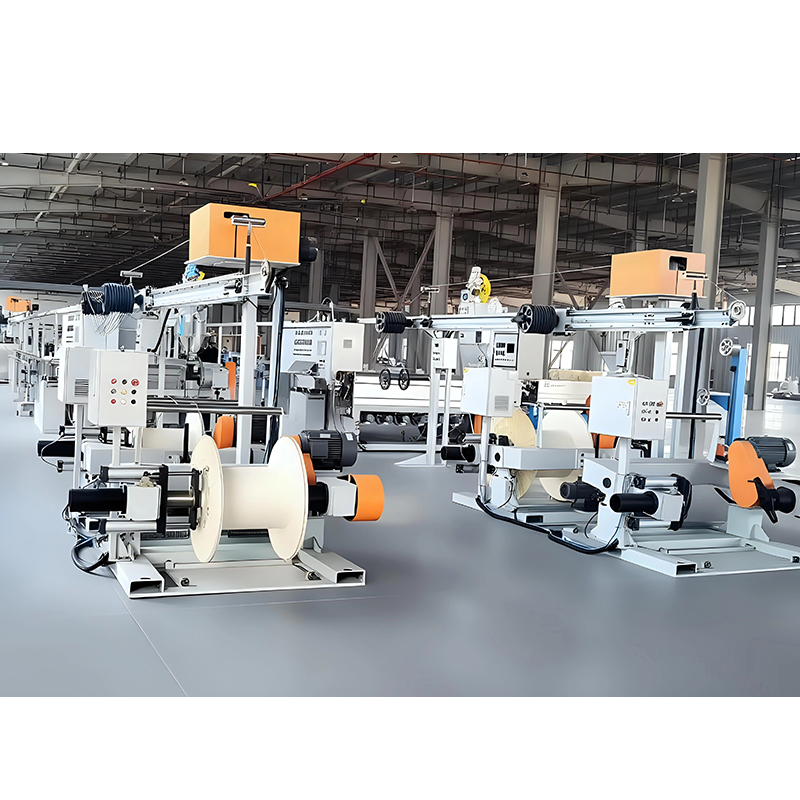
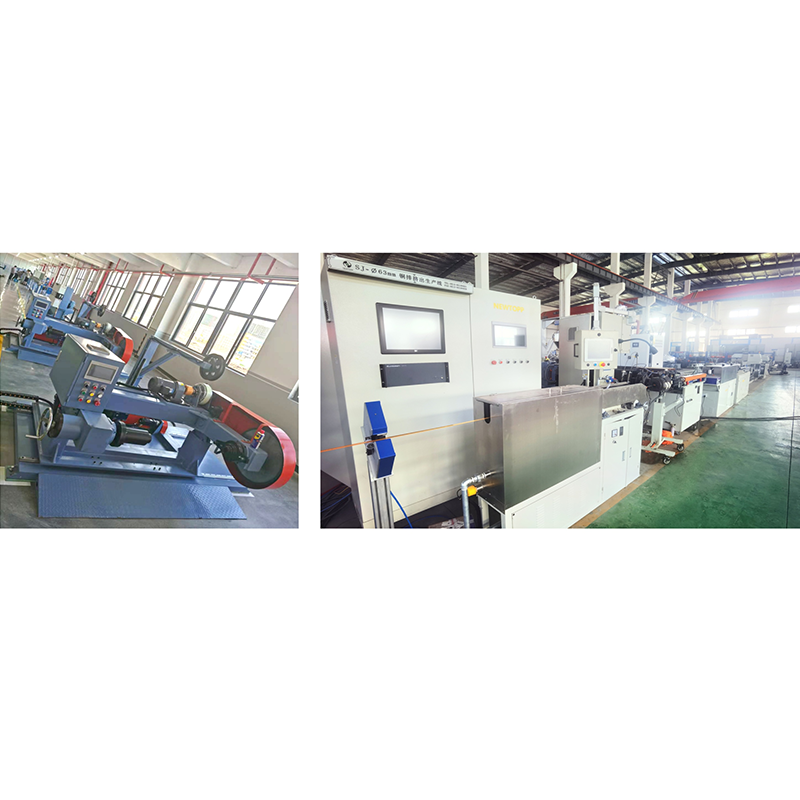


Global standards for conductor stranding include specifications for wire diameter, number...
Specification
| Assembly Type Coverage | Automotive harness branches, USB/HDMI/power cable assemblies, industrial PLC wiring sets, sensor/actuator cables, medical device interconnects |
| Wire Range | AWG 28 – AWG 10 (0.08 mm² – 6 mm²); multi-conductor up to 24 cores |
| Cut Length Accuracy | ±0.5 mm (servo-driven feed) |
| Crimping Force Range | 50 N – 8,000 N; servo-electric crimping heads |
| Crimp Pull Force Test | Integrated; 100% tested per IEC 60352-2 / USCAR-21 |
| Robot Type | 6-axis articulated (KUKA, FANUC, ABB) + collaborative (UR, Doosan) options |
| Vision System | 4K inline cameras with AI defect detection; terminal seating depth ±0.1 mm |
| Cycle Time (typical USB-C assy) | 4.2 seconds per assembly (fully automated; cut-strip-crimp-test-coil) |
| Overmolding Press Integration | Vertical injection presses 50–250 t; robotic insert/remove; auto-degas |
| Electrical Test (100%) | Continuity, Hi-pot (up to 4 kV DC), insulation resistance, shield continuity |
| Traceability | RFID/2D barcode per assembly; digital quality record; MES integration |
| OEE Target | ≥88% (typical achieved on mature programs) |
| Control Platform | Beckhoff TwinCAT 3 / Siemens S7 with OPC-UA to MES; cloud-ready |
| Footprint (standard cell) | 6 m × 4 m per robot cell; scalable modular layout |
| Safety Standards | ISO 10218-1/-2, ISO/TS 15066 (cobots), CE Machinery Directive |
Application
Robotic cable production lines are applicable wherever cable assembly is performed at sufficient volume to justify automation investment. Below are the primary application sectors and the specific automation challenges our systems address in each.
- Automotive Wiring Harness Manufacturing: The automotive harness sector is the largest single application for cable assembly automation. Robotic lines handle branch wire cutting and stripping, terminal crimping with crimp-force monitoring, seal insertion for waterproof connectors, connector housing loading, and clip attachment. Collaborative robot cells integrate with human operators on complex multi-branch harness assemblies where full automation is not yet economical.
- Consumer Electronics Cable Assemblies: USB-C, USB 3.x, HDMI 2.1, Thunderbolt, and proprietary charging cable assemblies are ideal candidates for full robotic automation. Short cable lengths, standardized connectors, and extremely high volumes (millions per month) justify dedicated robotic cells with cycle times under 5 seconds. Vision-verified connector insertion and 100% electrical testing are standard.
- Industrial Control and Sensor Cables: PLC wiring sets, servo motor feedback cables, and IO-Link sensor cables are produced in medium volumes with high mix. Flexible robotic cells programmed through graphical teach pendants allow rapid changeover between cable types, making them ideal for EMS (electronics manufacturing services) companies serving multiple industrial OEM customers.
- Medical Device Interconnects: Patient monitoring cables, imaging probe assemblies, and surgical instrument cords require cleanroom-compatible automation with full traceability to batch and serial number. Robotic cells with stainless-steel worksurfaces, HEPA air filtration, and 21 CFR Part 11 compliant data recording serve this demanding market.
- Telecommunications Infrastructure: Fiber-optic patch cord assembly, copper patch cord production, and structured cabling sub-assemblies benefit from robotic stripping, polishing, and end-face inspection automation. High-speed robotic ferrule insertion and polishing cells reduce cycle time and eliminate polishing quality variability.
- Defense and Aerospace: MIL-spec connector backshell assembly, wire identification marker application, and harness board layout automation support high-mix, low-volume aerospace programs. Robotic systems reduce the risk of assembly errors on life-critical systems and provide the digital work instruction and traceability records required by AS9102 first article inspection processes.
Advantage
Robotic cable production lines deliver advantages across five dimensions that matter most to cable assembly manufacturers competing in demanding global markets.
- Consistent Zero-Defect Quality: Robots perform crimp, strip, and insertion operations to the same force, depth, and speed parameters on every cycle — eliminating the human fatigue and attention variability that cause most assembly defects in manual production. Vision-verified 100% inspection catches the rare mechanical failures before they leave the cell. Customer defect return rates on robotic lines are typically 30–50 times lower than equivalent manual processes.
- Labor Cost Reduction and Workforce Flexibility: A robotic cell producing 800 assemblies per hour replaces 6–10 manual operators performing the same work. The freed-up workforce can be redeployed to higher-value assembly operations that require human dexterity and problem-solving, improving overall factory productivity without headcount reduction.
- 24/7 Production Capability: Robotic lines do not require shift premiums, overtime limits, or rest breaks. Running three shifts daily without human operators, a robotic cell achieves 6,000+ productive hours per year versus 4,200 hours for a two-shift manual operation — a 43% increase in output capacity from the same footprint.
- Full Digital Traceability: Every assembly produced carries a digital quality record linking it to the specific crimp tool, reel of wire, terminal reel, and robot program version used in its production. This level of traceability is increasingly mandatory in automotive (IATF 16949) and medical (FDA 21 CFR Part 820) supply chains and provides the data foundation for continuous improvement initiatives.
- Rapid New Program Launch: Robotic cells programmed with offline simulation software (KUKA Sim, RoboDK, ABB RobotStudio) can have a new cable assembly program debugged and validated in simulation before the physical cable exists — dramatically compressing new product introduction timelines. Physical tryout programs are typically reduced from 3–4 weeks to 3–5 days.
- Scalable Capacity: Adding a robotic cell is faster and more predictable than recruiting, training, and qualifying additional manual assembly operators. Capacity can be scaled in defined increments, with payback models that are transparent and financeable, making capital planning significantly easier for finance and operations teams.
- Ergonomic Risk Elimination: Repetitive crimp, strip, and coiling operations are among the highest-incidence ergonomic injury sources in manufacturing. Automating these operations eliminates the associated workers' compensation claims, absenteeism, and productivity losses — generating a safety benefit alongside the economic one.
Material & Structure
The physical design and material choices in robotic cable production line infrastructure are as important as the robot and software specification. Poorly chosen tooling materials or inadequate cell structures can negate the quality and reliability benefits that automation is intended to deliver.
- Robot Cell Structure: Welded and powder-coated structural steel frames form the primary cell enclosure. Cells are designed as self-contained modules with forklift pockets for installation and relocation flexibility. Safety fencing uses aluminium profile systems with polycarbonate vision panels, meeting EN ISO 13855 minimum safety distance requirements from robot reach envelope to fence face.
- Gripper and End-of-Arm Tooling (EOAT): Precision grippers for cable handling use hardened stainless steel fingers with ground contact surfaces, ensuring consistent cable positioning repeatability of ±0.05 mm. Quick-change EOAT interfaces (ISO 9409-1) allow robot tool changes in under 60 seconds for product changeover. EOAT designs are validated through FEA analysis to ensure stiffness under maximum acceleration loads.
- Crimp Tooling Dies: Servo-electric crimping heads use hardened tool steel (D2 or M2 grade) crimp dies with mirror-finish working surfaces to produce consistent terminal deformation and minimize tool wear. Die life is typically 500,000–1,000,000 cycles before replacement; wear monitoring via crimp force signature analysis flags degradation before quality impact occurs.
- Wire Cut and Strip Blades: Tungsten carbide blade inserts are standard for high-volume stripping of PVC, XLPE, and fluoropolymer insulations. Blade holders use a kinematic location pin system ensuring blade position repeatability after changes, maintaining strip length and insulation nicking performance across blade changes.
- Vision System Optics: Industrial-grade telecentric lenses with chromatic aberration compensation ensure consistent pixel-to-mm calibration across the full field of view. LED ring illuminators with intensity feedback control compensate for bulb aging, maintaining constant surface illumination for reliable AI-based defect classification. Protective sapphire glass windows guard optics from wire chip contamination in the crimping zone.
- Electrical Test Fixtures: High-density spring-probe test fixtures for 100% electrical testing use gold-plated probes (≥0.5 µm Au) on stainless steel spring mechanisms, providing stable contact resistance (<5 mΩ) over millions of contact cycles. Fixtures are designed with guided locate features ensuring ±0.1 mm cable positioning for repeatable probe contact.
