


 English
 русский
 Español


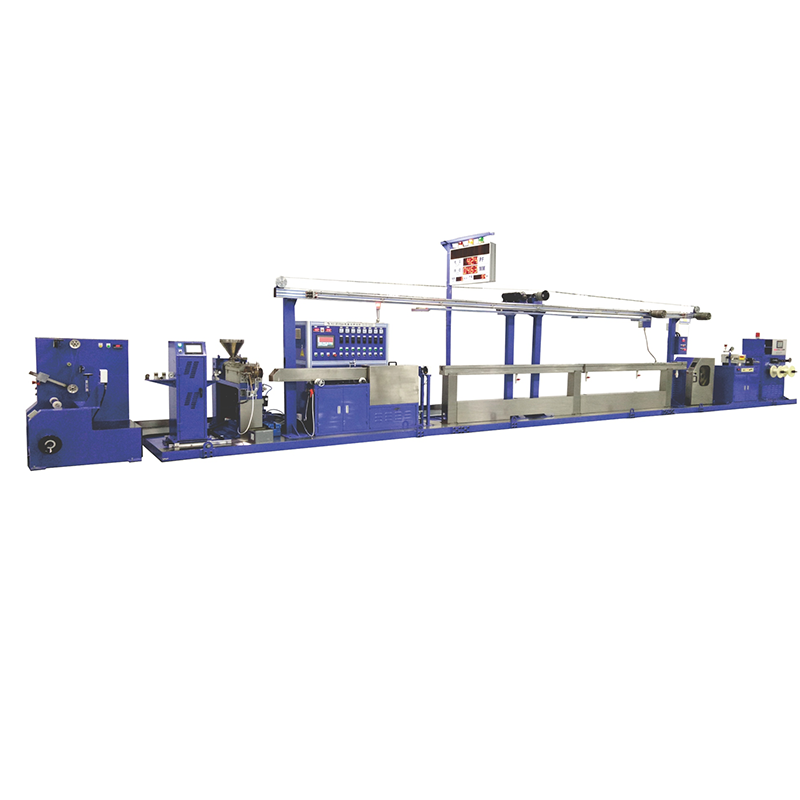
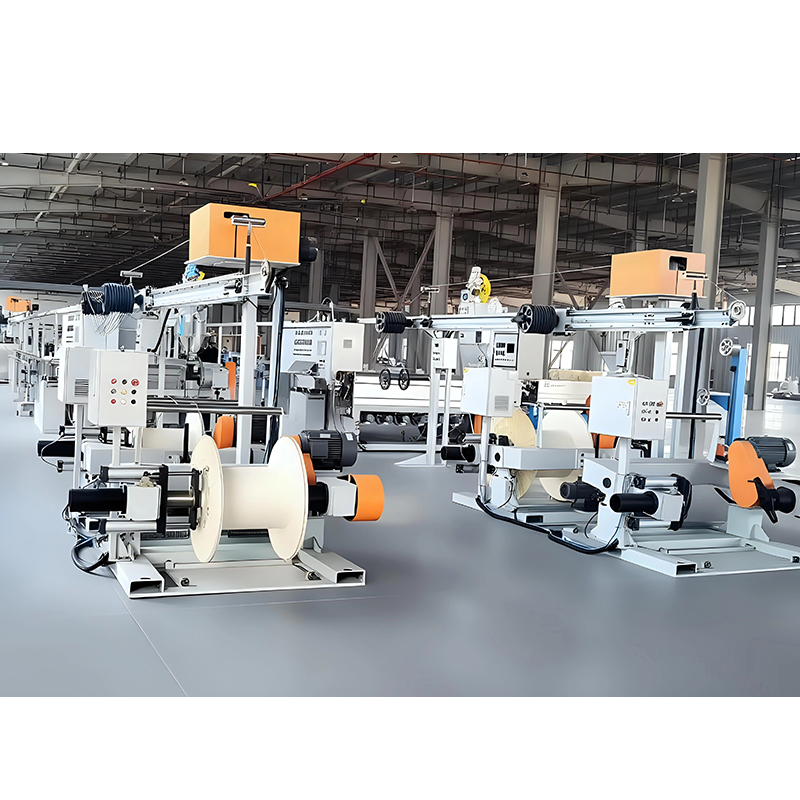


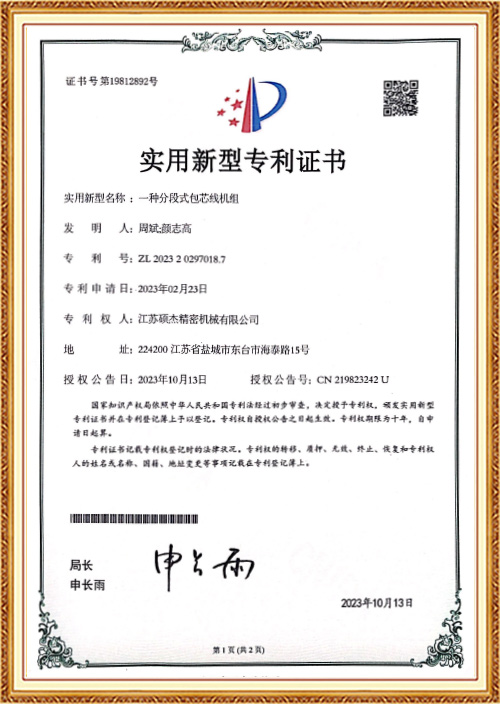
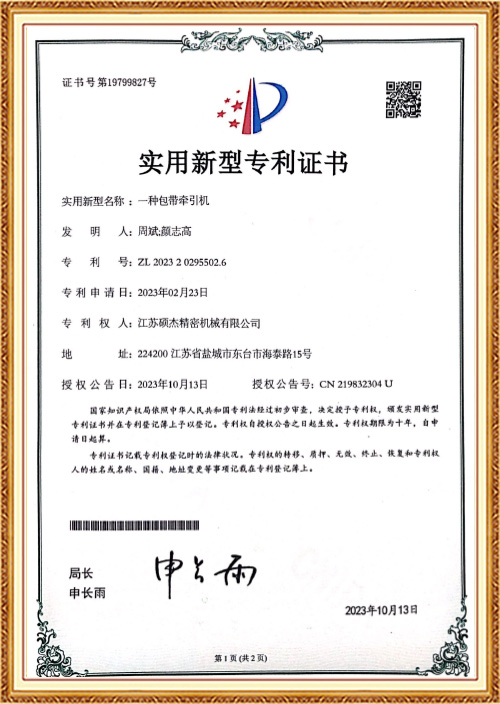
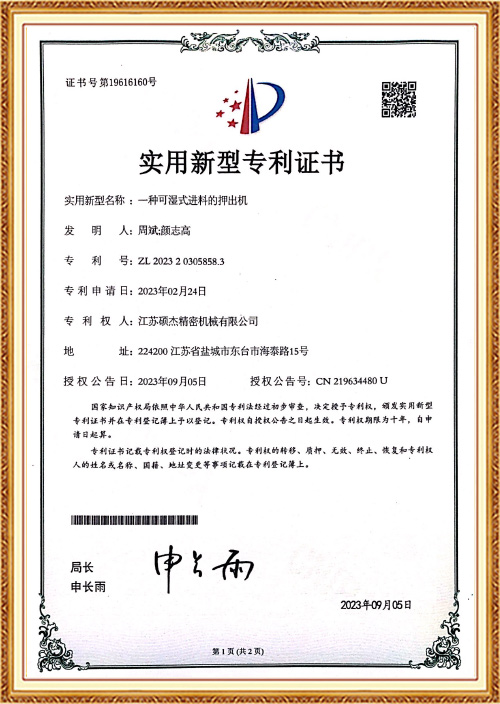
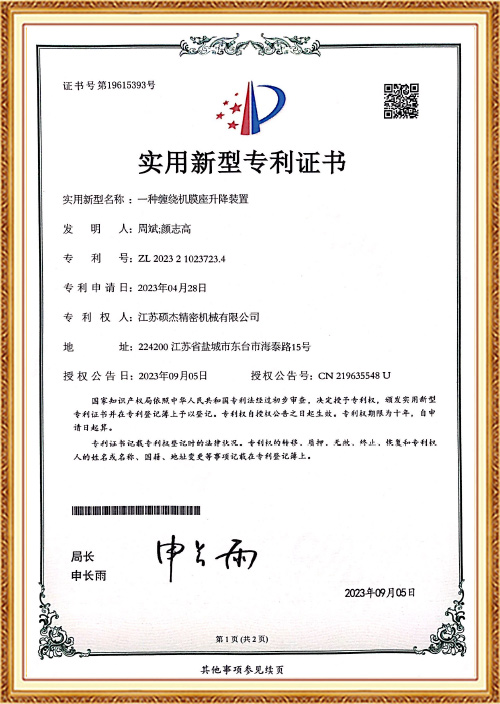
Global standards for conductor stranding include specifications for wire diameter, number...
Specification
| Cable Type Coverage | USB 2.0 / 3.x / 4.0, HDMI 1.4–2.1, Cat5e / Cat6 / Cat6A / Cat7, Coaxial RG6/RG59, Fiber-optic hybrid, Multi-pair data cables |
| Conductor Range | AWG 36 – AWG 10 (0.05 mm² – 6 mm²) |
| Line Speed (Extrusion) | Up to 600 m/min (dependent on cable OD and material) |
| Extrusion Head Bore | 25 mm – 90 mm (interchangeable tooling) |
| Insulation Materials | PVC, PE, XLPE, FEP, PTFE, TPE, LSZH compounds |
| Shielding Options | Aluminum foil tape, braided copper, spiral serve, combination |
| Stranding Pitch Control | ±0.5 mm tolerance; servo-controlled lay length |
| OD Tolerance (Inline) | ±0.01 mm via laser micrometer feedback loop |
| Spark Test Voltage | 0.5 kV – 15 kV AC/DC (configurable per IEC 60811) |
| Take-up Reel Capacity | PN 400 – PN 1250 bobbin; pay-off up to 2,000 kg |
| Control System | Siemens S7-1500 PLC + HMI touchscreen (15"); optional SCADA |
| Power Supply | 380 V / 415 V / 480 V, 50/60 Hz, 3-phase |
| Certifications | CE, ISO 9001:2015, RoHS compliant |
| Footprint (typical line) | 25 m × 4 m (modular; expandable) |
Application
Data cable manufacturing equipment serves an exceptionally wide range of industries and product categories. Understanding where and how these machines are deployed helps facilities managers, procurement teams, and engineering directors make informed investment decisions.
- Telecommunications Infrastructure: Production of structured cabling (Cat6A, Cat7, Cat8) for data centers and enterprise LAN installations. Machines run high-volume extrusion and twinning operations with stringent electrical balance requirements.
- Consumer Electronics OEM: Manufacture of USB-C, Lightning-compatible, and HDMI cables sold under major brand labels. Short production runs with rapid changeover are common; precision termination and overmolding integration are key requirements.
- Automotive Data Networks: CAN bus, LIN, MOST, and Automotive Ethernet (100BASE-T1) cable production. These applications demand high-flex constructions, oil-resistant jacketing, and 100% continuity verification.
- Industrial Fieldbus Cables: PROFIBUS, DeviceNet, EtherCAT, and Modbus cables for factory automation. Shielding integrity and controlled impedance are critical; inline TDR testing may be integrated.
- Medical Device Interconnects: Low-smoke, halogen-free, and biocompatible cable assemblies for imaging systems and patient monitoring. Cleanroom-compatible extrusion options are available.
- Aerospace and Defense: MIL-spec wire and cable construction with hermetically sealed insulation. Machines accommodate PTFE and ETFE compounds processed at elevated temperatures.
- Broadcast and AV: SDI coaxial, balanced audio, and fiber-optic hybrid broadcast cables. Tight capacitance and impedance control are achieved through precision tooling and real-time monitoring.
- Energy and Smart Grid: Communication cables bundled within composite power cables for SCADA and protection relay systems in substations and wind turbines.
In each of these verticals, the manufacturing equipment must be capable of adapting to new conductor counts, insulation thicknesses, and shielding configurations without significant retooling cost. Our modular architecture addresses this need directly.
Advantage
Investing in purpose-built data cable manufacturing equipment — rather than repurposing general-purpose machinery — delivers measurable advantages across quality, cost, and time-to-market dimensions.
- Inline Quality Assurance: Integrated laser OD gauges, capacitance monitors, and spark testers catch defects in real time, dramatically reducing scrap rates compared to offline sampling. Defect detection at 600 m/min means essentially zero bad cable reaches the customer.
- High Throughput with Consistent Quality: Servo-controlled payoff and takeup tensioners maintain uniform lay length and outer diameter across the entire spool, eliminating end-of-reel variability that plagues manually tensioned older machines.
- Rapid Changeover Architecture: Quick-change extruder heads, guided reel-loading trolleys, and recipe-driven HMI setups allow product changeovers in under 30 minutes — a key competitive advantage for contract manufacturers serving multiple OEM customers.
- Energy Efficiency: Modern servo drives with regenerative braking recover braking energy back to the DC bus, reducing net energy consumption by up to 18% versus older DC motor-driven lines.
- Data-Driven Production: OPC-UA connectivity enables seamless integration with MES and ERP platforms. Every spool produced carries a full production history — temperatures, speeds, tension profiles, test results — supporting traceability requirements in automotive and medical markets.
- Long Service Life: Hardened-steel drawing dies, tungsten-carbide capstans, and heavy-duty cast-iron frames ensure a service life exceeding 15 years under normal production loads. Mean time between major overhauls (MTBO) exceeds 8,000 running hours.
- Global Spare Parts Network: With service centers on three continents and a 48-hour guaranteed airfreight option for critical components, downtime risk is minimized even in remote manufacturing locations.
- Compliance by Design: CE-marked electrical panels, OSHA-compliant guarding, and built-in process parameter logging simplify factory audits for ISO 9001, IATF 16949, and AS9100 certification bodies.
Material & Structure
The durability and performance of data cable manufacturing equipment are directly determined by the materials chosen for each functional sub-assembly. Our engineering team selects materials based on wear resistance, thermal stability, chemical compatibility with processing compounds, and long-term dimensional accuracy.
- Machine Frame: Welded structural steel (S355JR) with stress-relief annealing post-welding. Frames are precision-machined on CNC boring mills to maintain alignment tolerances of ±0.02 mm across the entire line length. Epoxy-powder coat finish prevents corrosion in humid factory environments.
- Extruder Barrel and Screw: Bimetallic barrel with a 1.5 mm tungsten-carbide-alloy liner for resistance to filled compounds (e.g., LSZH, carbon-black PE). Screws are manufactured from 38CrMoAlA nitrided steel, delivering Rockwell hardness of HRC 64–68 on flight faces.
- Die and Tip Tooling: Hardened H13 tool steel for standard compounds; sintered tungsten carbide inserts for highly abrasive PTFE and mineral-filled compounds. All tooling is precision-ground to ±0.005 mm on critical bore dimensions.
- Capstans and Pulleys: Cast ductile iron cores with plasma-sprayed aluminium-oxide ceramic surfaces. The ceramic coating provides a coefficient of friction ideal for cable grip without marking the outer jacket surface, extending re-coat intervals to 12,000 hours.
- Cooling Trough: 316L stainless steel throughout, with electropolished internal surfaces to eliminate bacterial growth in water-cooling circuits. Closed-loop chillers maintain water temperature to ±0.5 °C for repeatable crystallinity in semi-crystalline insulation materials (PE, XLPE).
- Tension Control Arms: Aluminium alloy 6061-T6 arms fitted with precision low-friction bearings and sealed-for-life strain gauge load cells. Dynamic response time <5 ms ensures tension spikes are corrected before they affect lay length.
- Electrical Cabinet: IP54-rated (IP65 optional) powder-coated steel enclosure. Siemens or Schneider components used exclusively. Fiber-optic intra-machine communication bus eliminates EMI interference from the extrusion drive in sensitive measurement circuits.
This careful material selection philosophy ensures that machine performance does not degrade over the first decade of operation — protecting the return on investment our customers make when outfitting a new production line.
