


 English
 русский
 Español


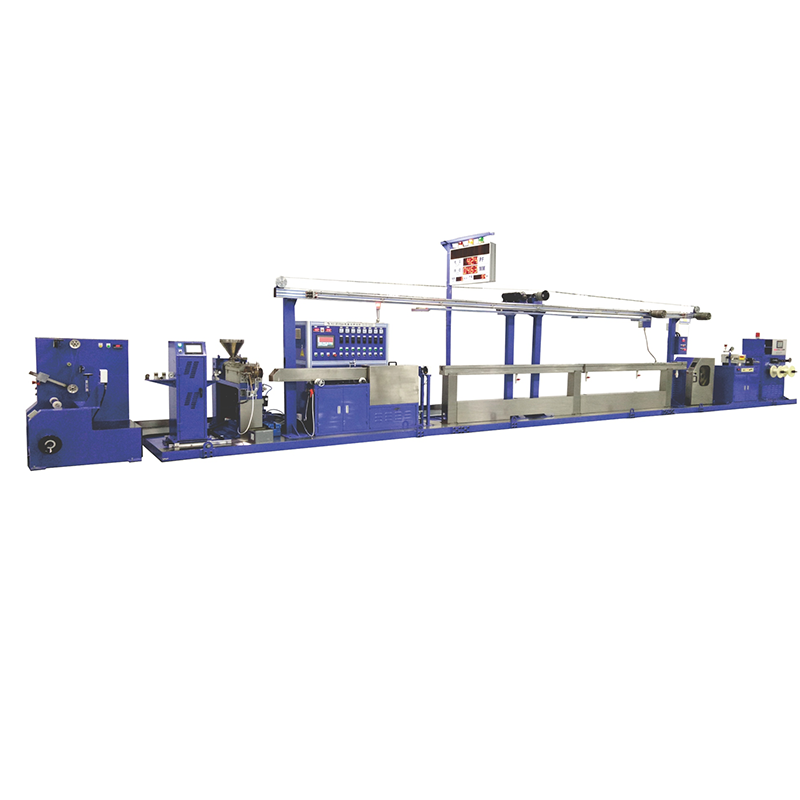
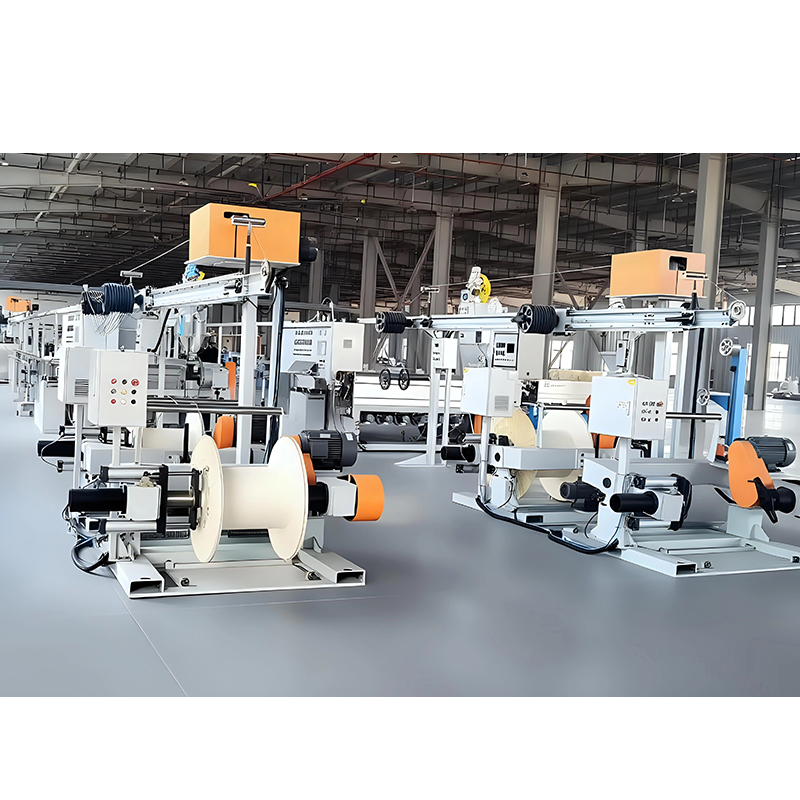


Global standards for conductor stranding include specifications for wire diameter, number...
Specification
| Parameter | Description |
| Machine Type | Foam Insulation Extruder |
| Screw Diameter | 45mm – 100mm |
| Output Capacity | 60 – 400 kg/h |
| Foaming Method | Physical (Nitrogen/CO₂) / Chemical Foaming |
| Applicable Materials | PE, PP, FEP, PTFE |
| Temperature Control Zones | 4 – 8 Zones |
| Control System | PLC + Touch Screen Control |
| Gas Injection System | High-Precision Flow Control |
| Line Speed | Up to 250 m/min |
| Cooling System | Water Cooling Trough |
Application
Foam Cable Extruders are primarily used in the production of high-performance communication cables. In the telecommunications industry, they are essential for manufacturing coaxial cables and data cables that require low signal attenuation and high transmission efficiency.
In the electronics sector, these machines are used to produce internal wiring and high-frequency cables used in computers, servers, and networking equipment. The foamed insulation improves signal stability and reduces electromagnetic interference.
Additionally, foam extrusion technology is widely applied in aerospace and automotive industries, where lightweight materials and reliable signal transmission are critical. These machines also support emerging technologies such as 5G communication and high-speed data infrastructure.
Advantages
Reduced Dielectric Constant: Improves signal transmission quality and reduces loss.
Material Savings: Foamed structure reduces raw material consumption.
Lightweight Products: Ideal for applications requiring reduced cable weight.
Uniform Cell Structure: Ensures consistent insulation performance.
High Precision Control: Advanced gas injection system ensures stable foaming.
Adaptability: Suitable for both physical and chemical foaming processes.
Materials and Structure
The core structure of Foam Cable Extruders includes a specially designed screw and barrel system that ensures proper mixing of polymer melt and foaming agents. The screw geometry is optimized to maintain stable pressure and prevent premature gas expansion, which is critical for achieving uniform foam cells.
The gas injection system is a key component, allowing precise control of gas flow rate and pressure. This ensures consistent foaming across the entire production process. The extrusion die is engineered to evenly distribute the foamed material around the conductor, maintaining uniform insulation thickness.
Additional components such as cooling troughs, diameter control systems, and take-up units are integrated into the line to ensure stable product formation and dimensional accuracy.
