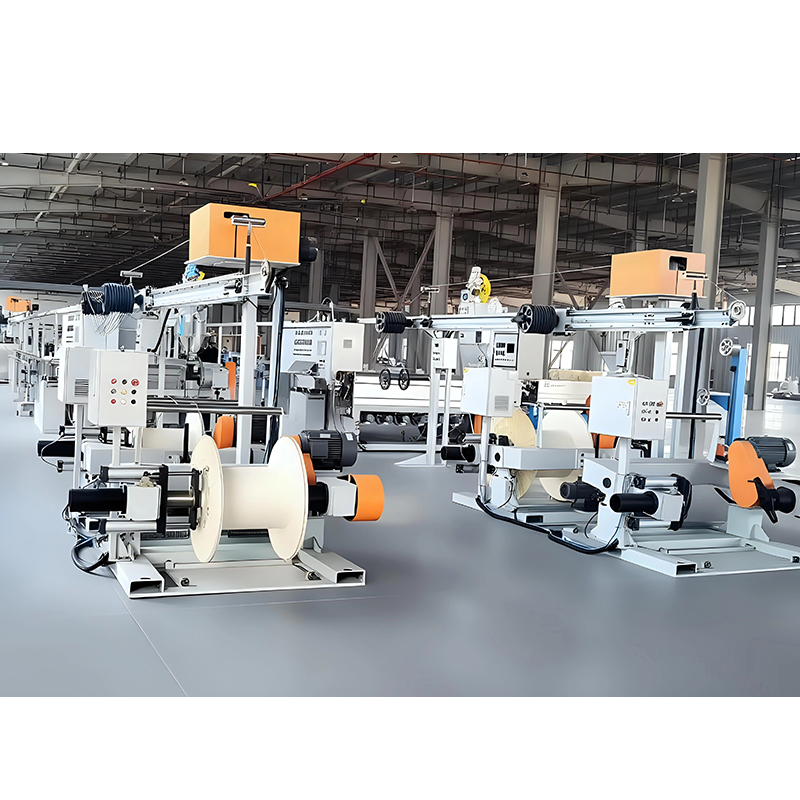
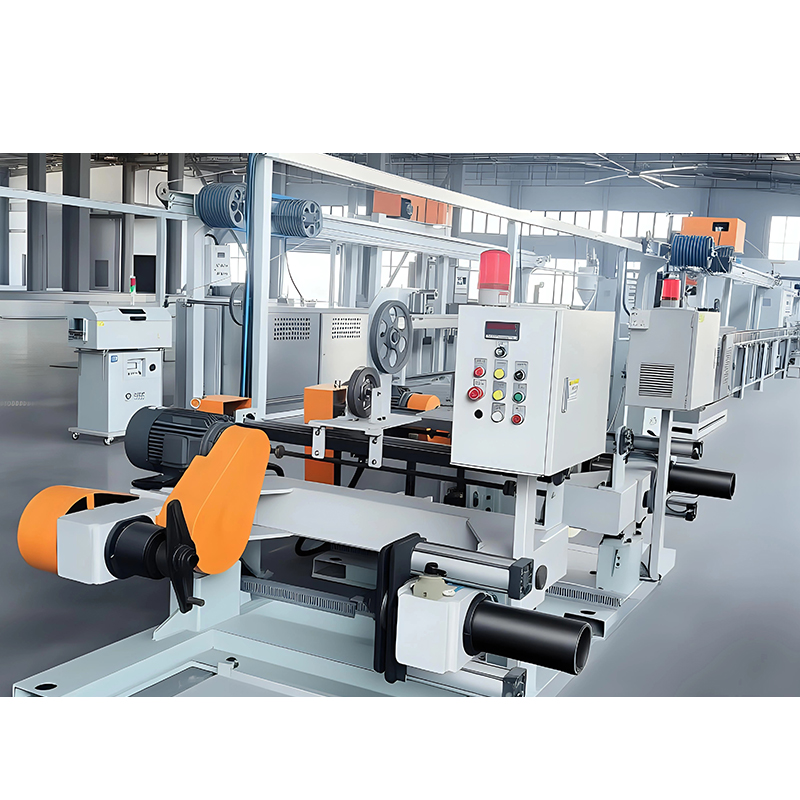
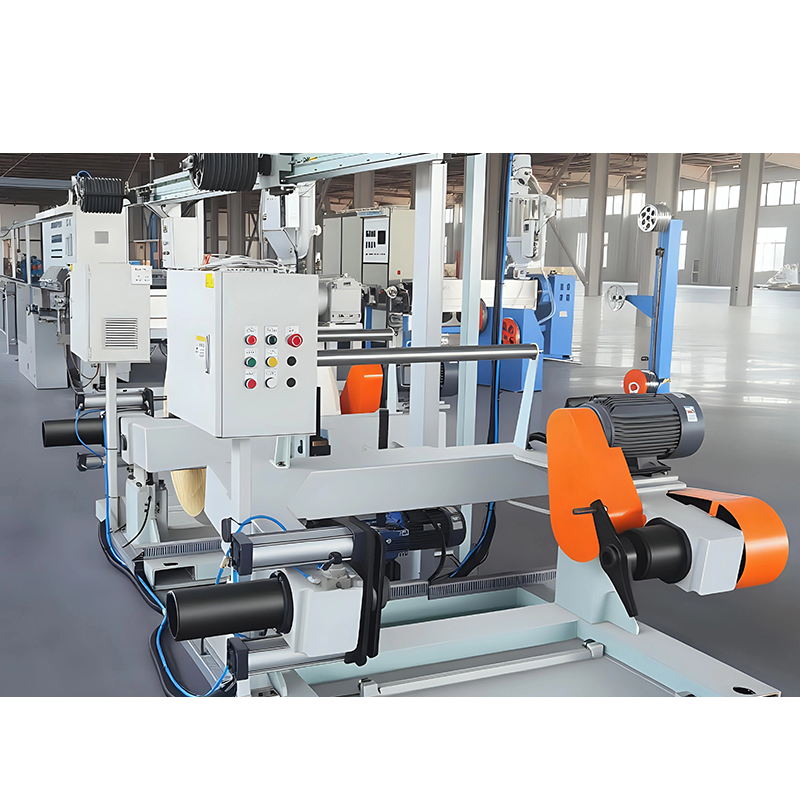
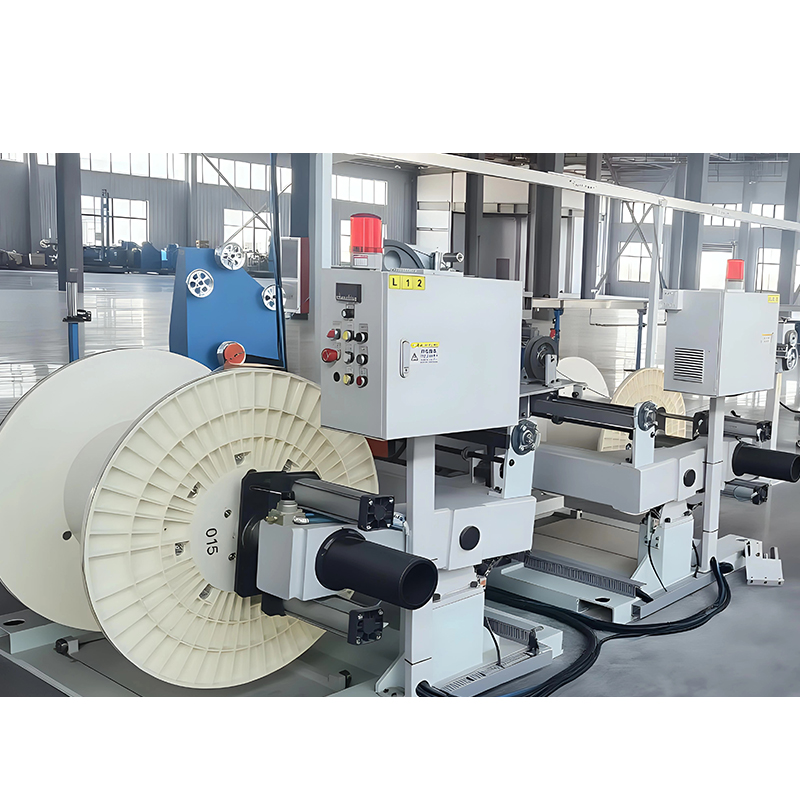
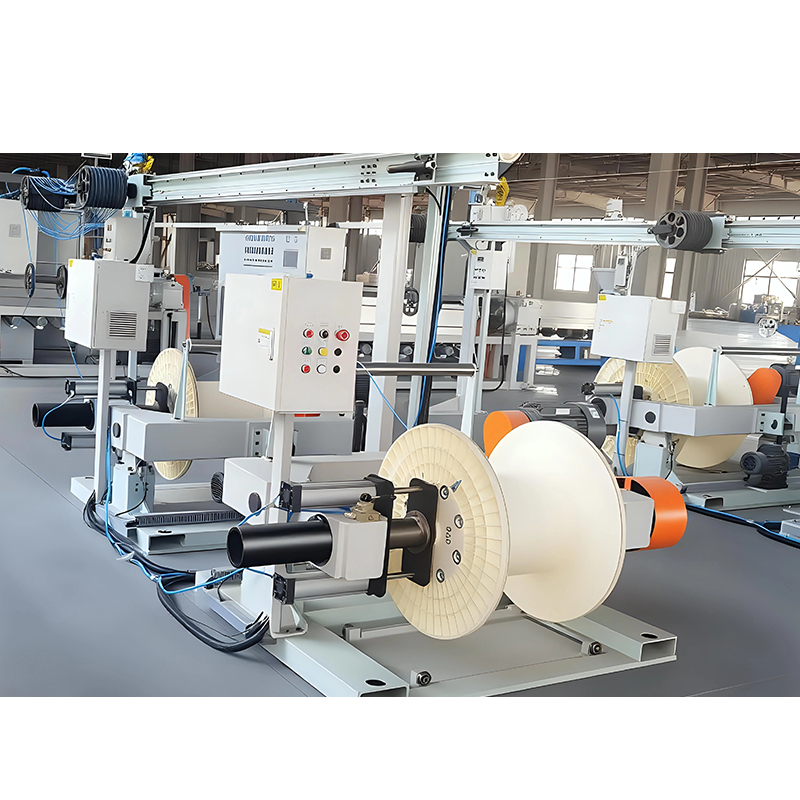
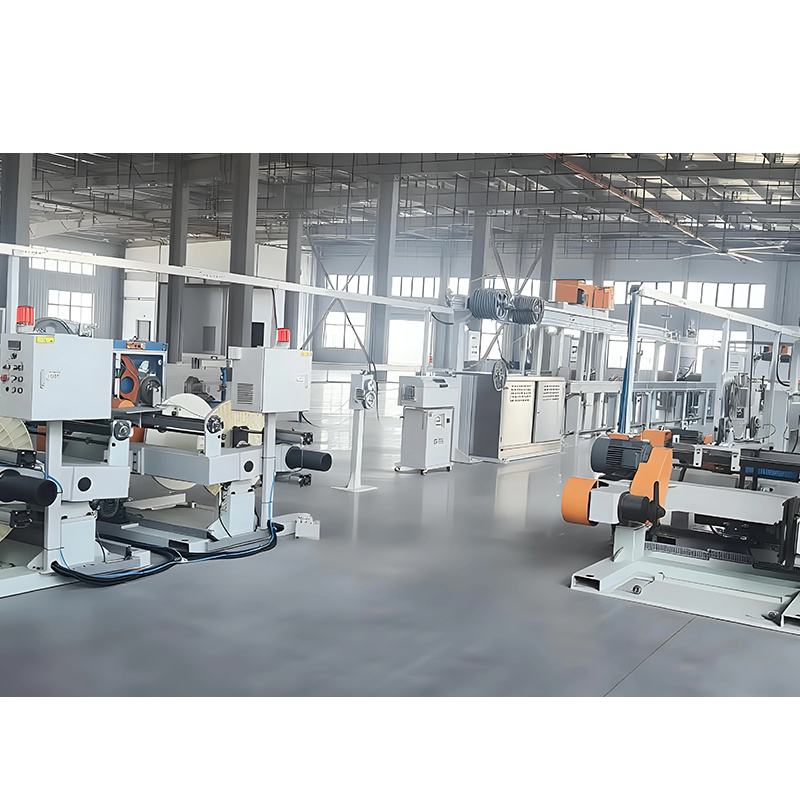
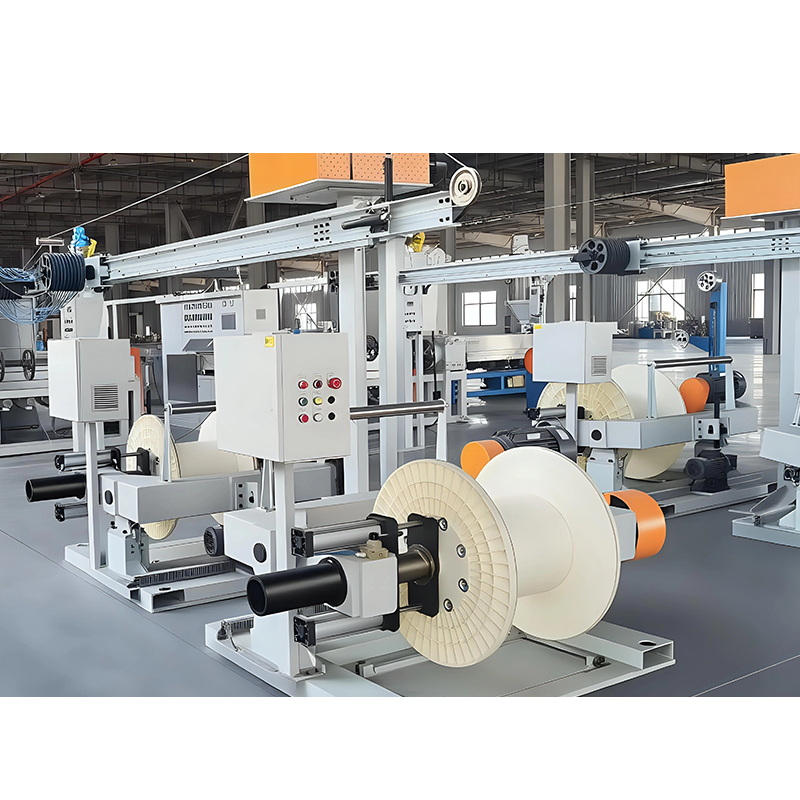
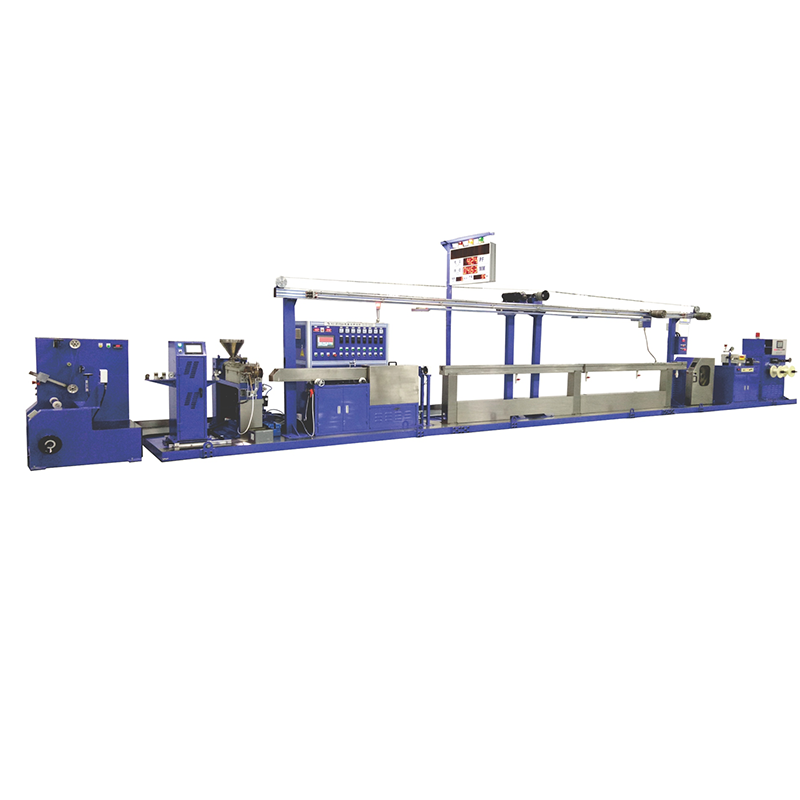
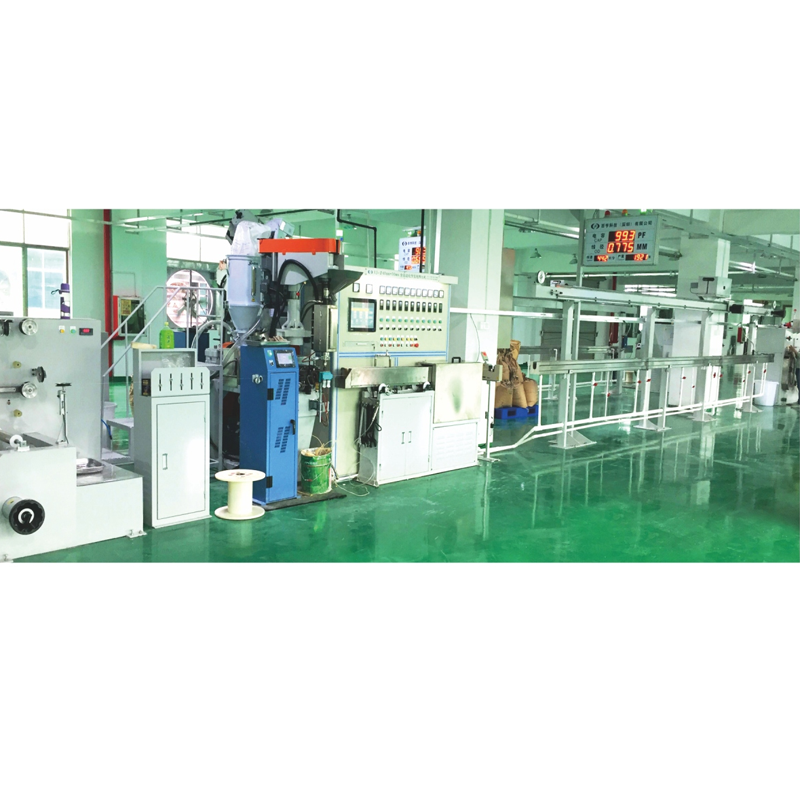
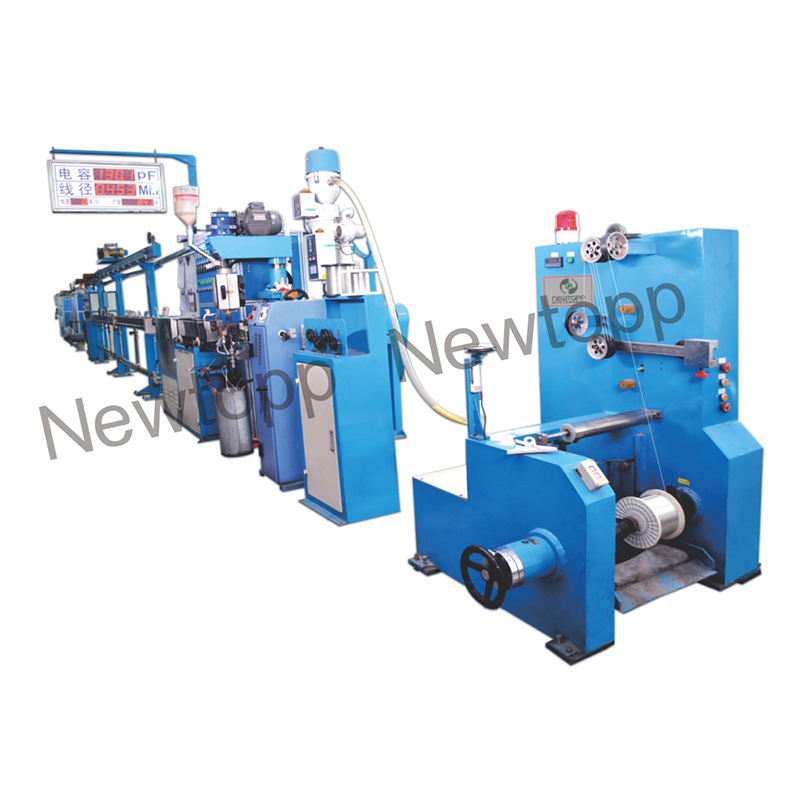
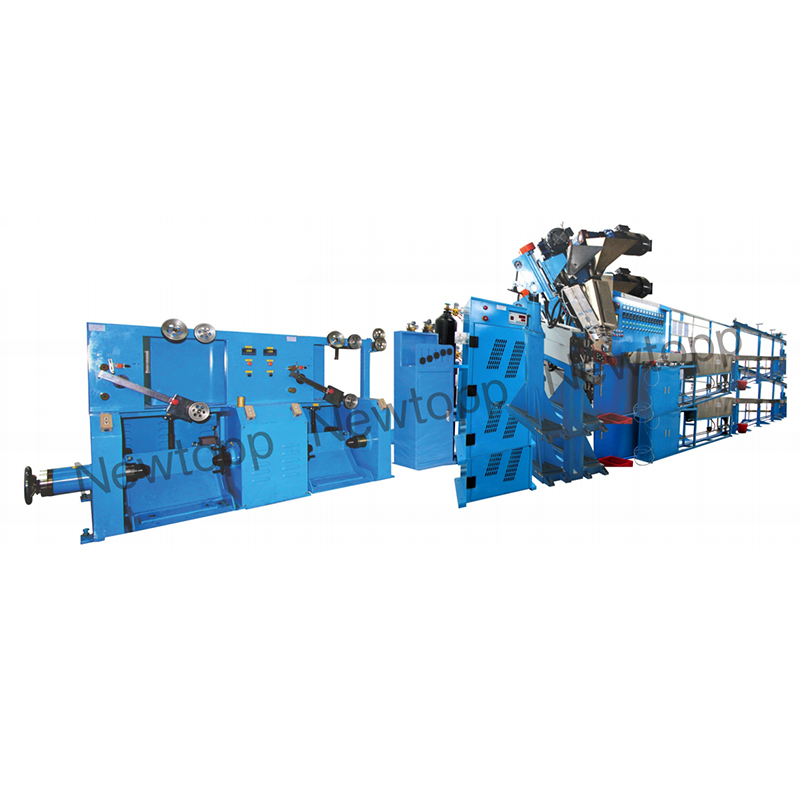
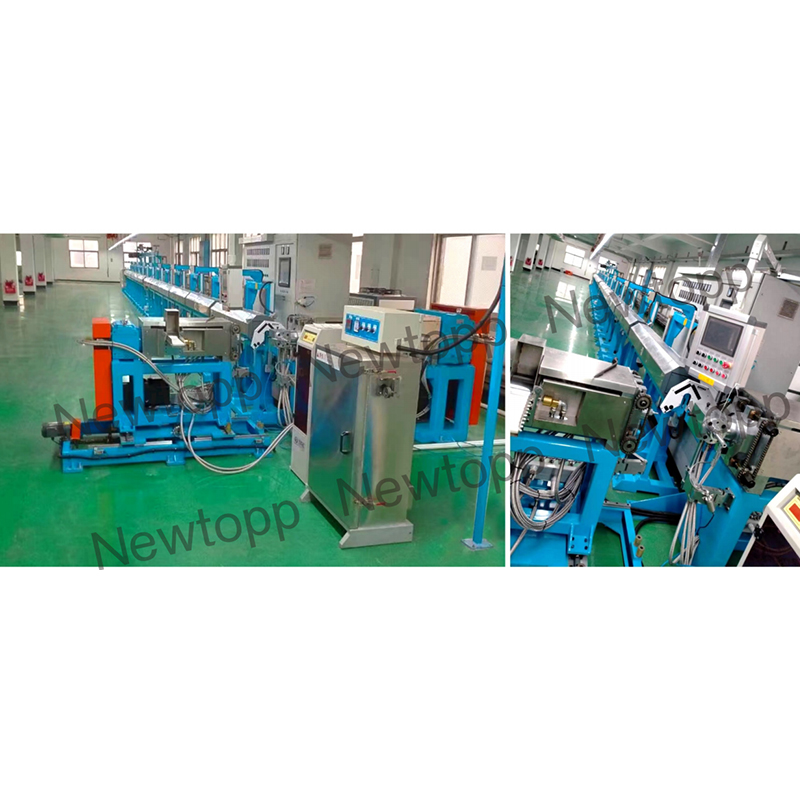
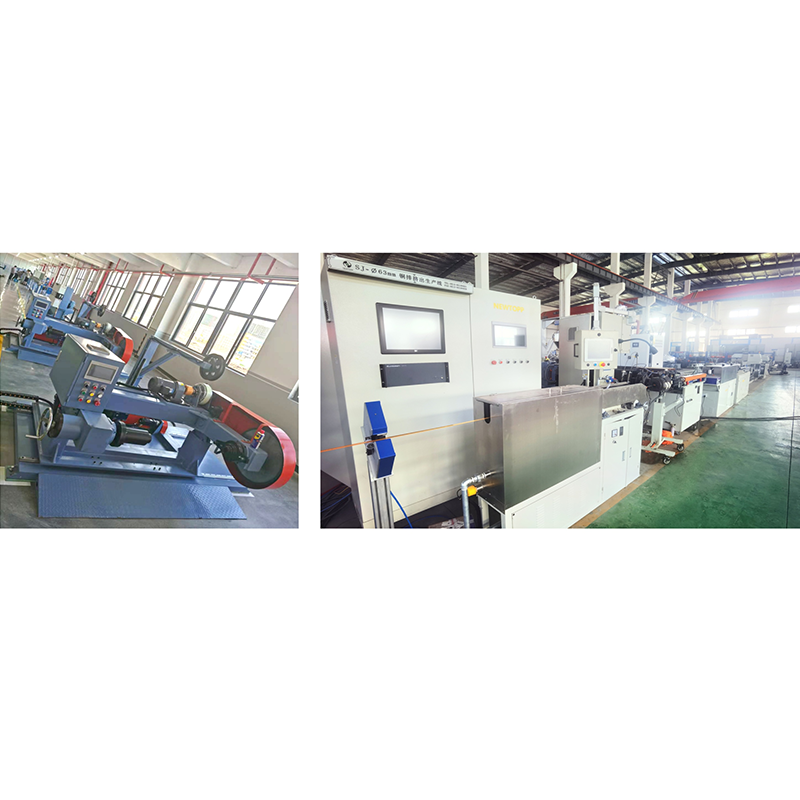
In modern industrial and digital infrastructure, Wire&Cable Jacket Sheath Extrusion Line as the "blood vessels" for transmitting power and information. The quality of their outer jacket sheath directly determines a cable's durability, safety, and signal integrity. Facing market demands for higher transmission speeds, harsher environmental adaptability, and more efficient production, jacket extrusion has become a core process in wire and cable manufacturing. Jiangsu Newtopp Precision Machinery Co., Ltd., deeply rooted in the high-end cable equipment field, designs its jacket extrusion lines specifically to address industry pain points. Through high-precision, intelligent, and high-stability design, these lines provide reliable manufacturing solutions for power, data, industrial, and new energy sectors.
1. Foundational Knowledge
Jacket extrusion is a critical process in wire and cable production. It involves uniformly coating a conductor or cable core with a polymer material (such as PVC, PE, TPU, fluoroplastics, etc.) to provide insulation, protection, and identification.
| Key Concept |
Definition & Purpose |
Impact on Final Cable Performance |
| Extrusion Concentricity |
The uniformity of the jacket material around the cable core, usually expressed as a percentage. |
Concentricity >90% ensures uniform insulation/protection thickness, preventing uneven signal attenuation, decreased voltage resistance, or weak points in mechanical strength. |
| Outer Diameter (OD) Tolerance |
The allowable dimensional deviation range of the jacket's outer diameter, commonly expressed as ± millimeters. |
Tight tolerance (e.g., ±0.03mm) ensures dimensional consistency, facilitating subsequent connector assembly, conduit installation, and meeting high-end application specifications. |
| Temperature Control Precision |
The deviation between the actual temperature and the set temperature in various zones of the extruder. |
Precision control within ±1°C is fundamental for preventing material degradation, ensuring stable melt flow, and achieving a smooth appearance and consistent physical properties. |
| Screw Design |
The core component of the extruder, responsible for conveying, compressing, melting, and metering the polymer. |
Optimized design impacts output, melt quality, color change efficiency, and resistance to degradation, directly affecting production efficiency and material utilization. |
Newtopp Product Link: Our jacket extrusion line ensures high concentricity and strict OD tolerance through optimized screw design and precise temperature control, laying the foundation for high-quality cable manufacturing.
2. Core Technology: Key Industry Metrics & Newtopp's Solutions
High-end cable manufacturing sets clear performance metrics for the extrusion process. The Newtopp jacket extrusion line addresses these industry standards with the following core technologies.
2.1 High-Precision Extrusion & Process Control
2.2 High Efficiency & High Output
2.3 Intelligence & Ease of Operation
3. Industry Trends & Newtopp's Product Evolution
The wire and cable industry is evolving towards high performance, specialization, green manufacturing, and industrial interconnection, posing new requirements for extrusion equipment.
| Industry Trend |
New Demands on Extrusion Equipment |
Link to Newtopp Product Advantages |
| Higher Speed & Precision |
Equipment must maintain superior concentricity and dimensional stability at increased line speeds. |
Optimized screw dynamics and closed-loop auto-feedback systems are designed precisely for high-precision output at high line speeds. |
| New Material Applications |
Increasing use of materials like TPU, fluoroplastics, LSZH, each with different processing windows. |
Offers specialized models like Teflon (Fluoroplastic) Extruders, Chemical/Physical Foam Extruders, with screws and temperature control systems optimized for special materials. |
| Intelligence & IoT |
Equipment needs data collection, remote monitoring, and predictive maintenance capabilities. |
Leveraging the group's IoT technology company, equipment can be equipped with IoT modules for data cloud integration, remote O&M, and production management. |
| Energy Saving & Sustainability |
Reduce energy consumption, improve material utilization, minimize waste. |
Efficient screw design lowers specific energy consumption; precision control reduces scrap, aligning with the green philosophy of the ISO14001 Environmental Management System. |
As a National High-Tech Enterprise, Newtopp ensures its extrusion lines stay synchronized with industry trends through its independent R&D center and continuous investment, providing customers with future-proof manufacturing tools.
Frequently Asked Questions (FAQ)
Q1: How do I choose the right extrusion line for my cable products (e.g., data cable, automotive wire, or power cable)?
A: Selection depends on material (e.g., PVC, PE, Teflon), cable structure, target line speed, and precision requirements. Newtopp offers various models, from standard jacket extruders to special material extruders (e.g., for fluoroplastics) and foam extruders. Our engineers can recommend the most suitable model and configuration based on your specific process needs.
Q2: How does Newtopp's extrusion line ensure long-term stability and low failure rates?
A: We ensure this through multiple layers: 1) High-Quality Core Components: Screws and barrels undergo special treatment and hardening for wear resistance and longevity. 2) Precise Temperature Control: Stability within ±1°C prevents process fluctuations. 3) Robust Mechanical Design: Sturdy machine structure with key transmission parts from reputable brands. 4) Rigorous Factory Testing: Each machine undergoes continuous material running tests before delivery, ensuring it's ready for production.
Q3: What practical benefits does the intelligent control system bring?
A: Key benefits include: Reduced Waste (auto-feedback minimizes human error), Increased Efficiency (one-touch recipe recall for quick start-up), Simplified Operation (graphical interface lowers the learning curve), and Enhanced Management (production data recording enables analysis and traceability).



 English
 русский
 Español