

 English
 русский
 Español

Industry News
Home / News / Industry News / What Are Cable Extruders, Stranding Machines, and Large Scale Wire Extrusion Machines — And How Do They Work?
Home / News / Industry News / What Are Cable Extruders, Stranding Machines, and Large Scale Wire Extrusion Machines — And How Do They Work?
NEWS


What Are Cable Extruders, Stranding Machines, and Large Scale Wire Extrusion Machines — And How Do They Work?
2026-04-30
A cable extruder, stranding machine, and large scale wire extrusion machine are the three core pieces of equipment in modern wire and cable manufacturing. A cable extruder applies insulation or jacketing over a conductor using molten polymer; a stranding machine twists multiple wires together to form a flexible, high-conductivity cable core; and a large scale wire extrusion machine handles high-volume, high-diameter production for power transmission, submarine, and industrial cables. Together, they form a complete cable production line capable of processing conductors from 0.1 mm to 1,000 mm² or larger.
Content
- 1 What Is a Cable Extruder?
- 2 What Is a Stranding Machine?
- 3 What Is a Large Scale Wire Extrusion Machine?
- 4 How Cable Extruders, Stranding Machines, and Large Scale Extrusion Lines Work Together
- 5 Key Materials Processed by Cable Extrusion Machines
- 6 Buying Guide: How to Select the Right Machine
- 7 Frequently Asked Questions
- 7.1 What is the difference between a cable extruder and a wire extruder?
- 7.2 How many wires can a stranding machine handle at once?
- 7.3 What is the purpose of the CV tube in a large scale wire extrusion machine?
- 7.4 Can one extrusion line produce both PVC and XLPE cables?
- 7.5 What production speed does a large scale wire extrusion machine operate at?
- 7.6 How long does a complete cable extrusion line need to be?
- 8 Conclusion
What Is a Cable Extruder?
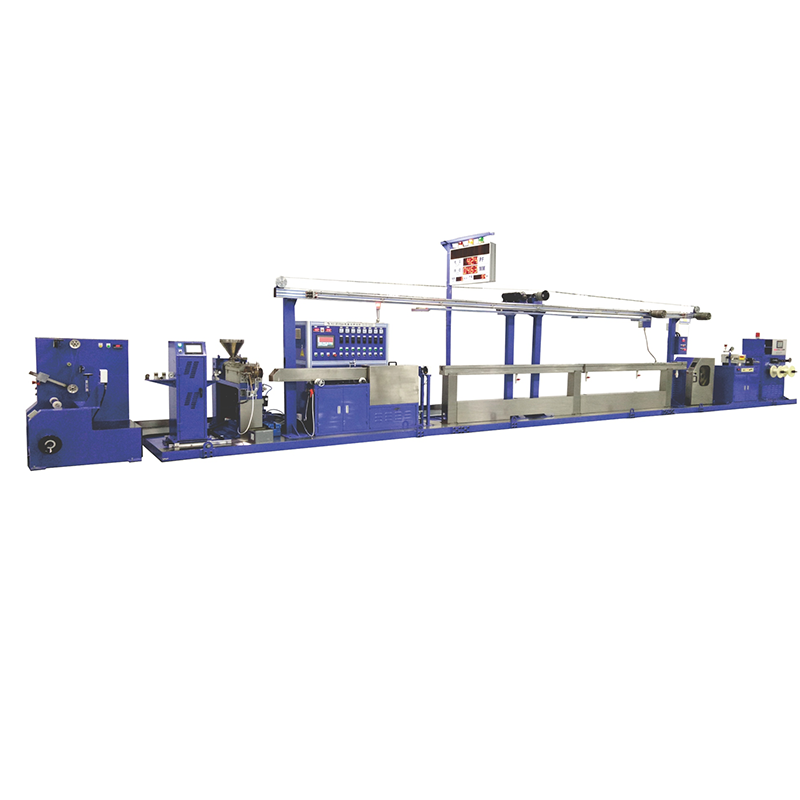
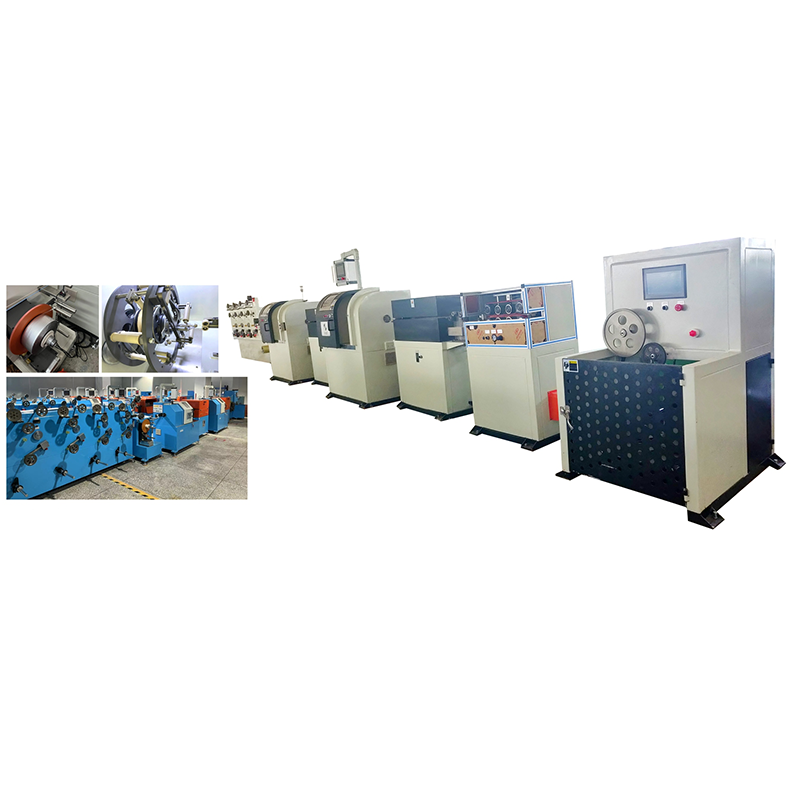
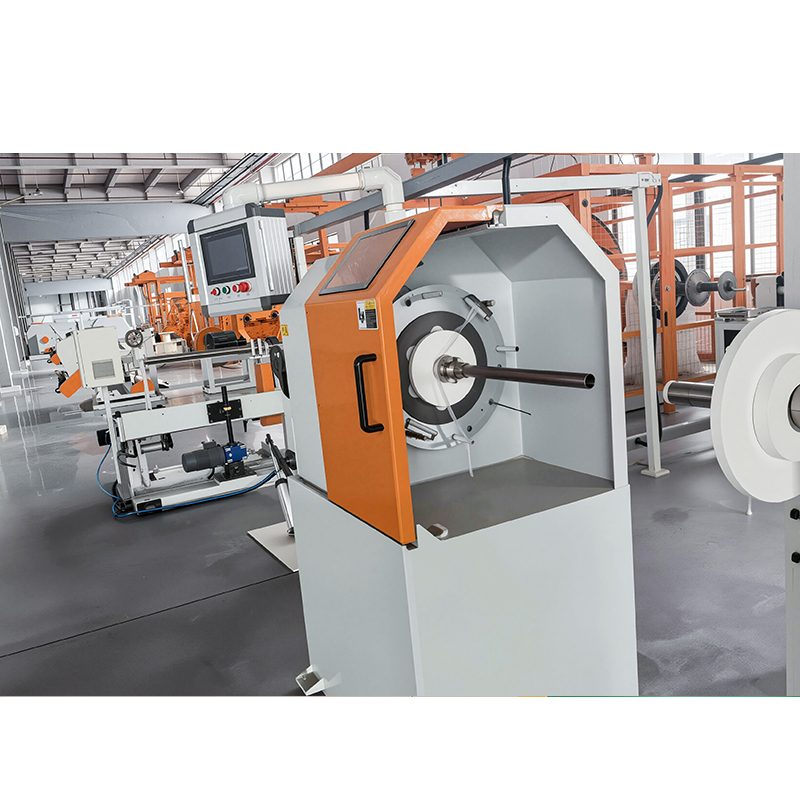
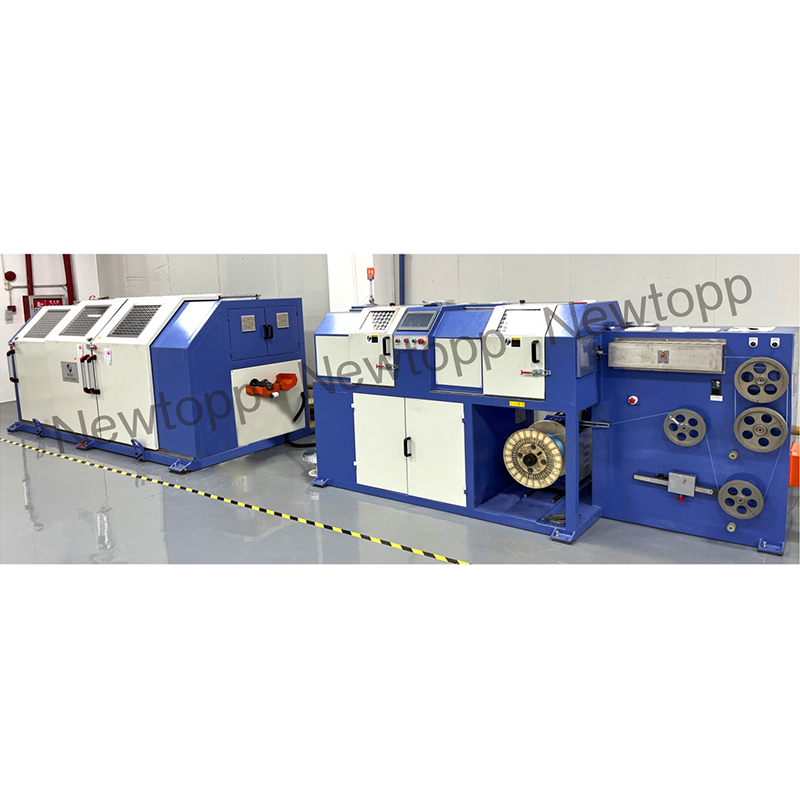
A cable extruder is a machine that melts thermoplastic or thermoset compounds and continuously applies them as a uniform coating around a moving conductor. It is the primary method for applying PVC, XLPE, PE, LSZH, and rubber insulation to wires and cables across every industry segment.
Core Components of a Cable Extruder
- Hopper: Feeds raw polymer granules or powder into the barrel. Capacity ranges from 20 kg to 500+ kg depending on line size.
- Barrel and screw: The screw rotates inside a heated barrel, melting and homogenizing the polymer. Screw diameters range from 30 mm (fine wire) to 200 mm (heavy jacketing lines).
- Crosshead die: The molten polymer flows through a precisely engineered crosshead where it wraps around the conductor with controlled wall thickness, typically ±0.01–0.05 mm tolerance.
- Cooling trough: The freshly coated cable passes through a water cooling trough — typically 10–60 meters long — to solidify the insulation without deformation.
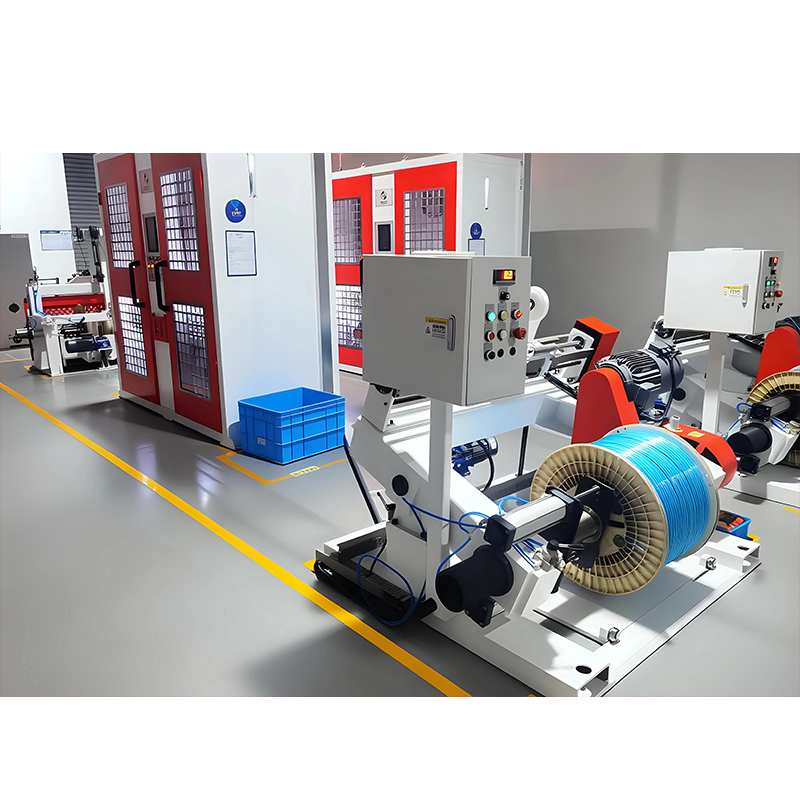
- Capstan and take-up: A caterpillar or belt capstan pulls the cable at a controlled line speed (5–2,000 m/min depending on wire gauge), feeding it onto a take-up reel.
Types of Cable Extruders
Cable extruders are categorized by screw configuration and application range:
| Extruder Type | Screw Diameter | Output Rate | Typical Application |
|---|---|---|---|
| Single-screw (standard) | 30–90 mm | 10–150 kg/h | Building wire, auto cable |
| Single-screw (large) | 120–200 mm | 200–800 kg/h | Power cable jacketing |
| Twin-screw co-rotating | 40–135 mm | 50–400 kg/h | XLPE, compound blending |
| Tandem extruder | 90+150 mm | 300–1,000 kg/h | HV/EHV cable insulation |
| Micro extruder | 16–30 mm | 0.5–10 kg/h | Fine magnet wire, fiber optic |
Table 1: Comparison of cable extruder types by screw diameter, output rate, and primary application.
What Is a Stranding Machine?
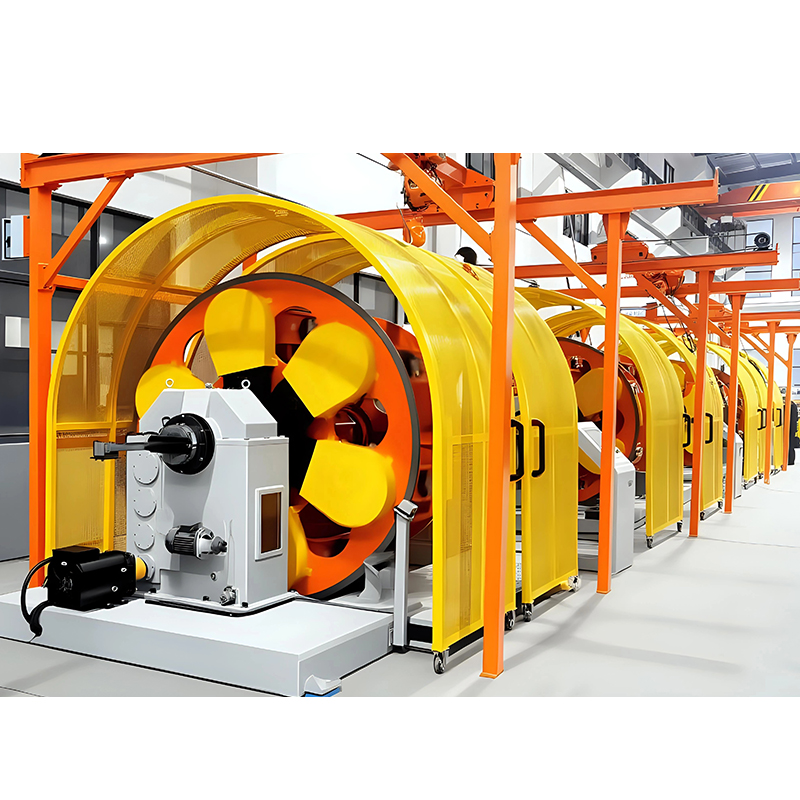
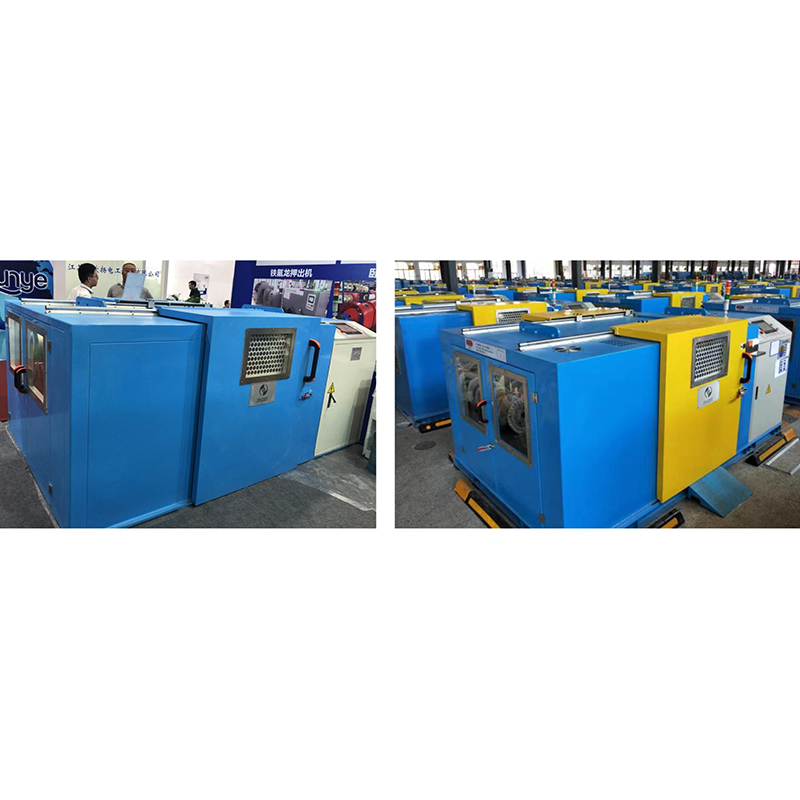
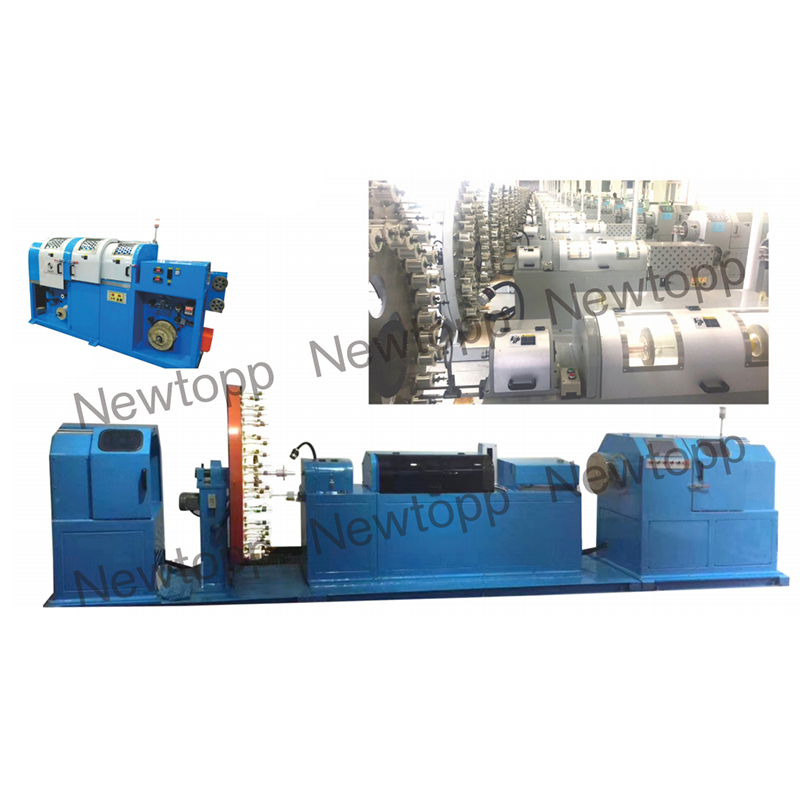
A stranding machine twists multiple individual wires together in a controlled helical pattern to produce a stranded conductor that is more flexible, mechanically stronger, and electrically more efficient than a single solid wire of the same cross-section. Stranding reduces the skin effect at high frequencies and is essential for cables that must flex repeatedly in service.
How a Stranding Machine Works
The fundamental operating principle involves feeding individual wire spools (called bobbins or payoff reels) through a rotating frame called a cradle or bow. As the frame rotates, the wires are twisted around a central conductor at a precisely controlled lay length — the axial distance per complete revolution. Key parameters include:
- Lay length: Typically 10–25× the outer diameter of the stranded conductor. Shorter lay = more flexible but higher resistance.
- Stranding direction: Alternating S and Z twist directions in concentric layers prevents the cable from unraveling under flexing.
- Number of wires per layer: Standard concentric configurations are 1+6, 1+6+12, 1+6+12+18 (19-wire, 37-wire, 61-wire, etc.).
- Line speed: Ranges from 5 m/min on large-diameter power cable stranders to over 2,000 m/min on fine wire bunching machines.
Types of Stranding Machines
| Machine Type | Wire Range | Max Bobbins | Best For |
|---|---|---|---|
| Tubular strander | 0.1–2.5 mm | 6–48 | Flexible cord, auto wire |
| Planetary (skip) strander | 1.0–5.0 mm | 12–91 | Power cable conductors |
| Rigid (drum twister) | 2.0–8.0 mm | Up to 127 | Overhead lines, HV cable |
| Bunching machine | 0.05–0.5 mm | 6–100+ | Fine stranded wire, data cable |
| Cradle strander | 4.0–20 mm | 6–37 | Submarine, mining cable |
Table 2: Comparison of stranding machine types by wire range, bobbin capacity, and application.
What Is a Large Scale Wire Extrusion Machine?
A large scale wire extrusion machine is a heavy-duty extrusion system engineered specifically for high-volume, large-diameter cable production — typically covering conductor sizes from 95 mm² up to 2,500 mm² or beyond, used in high-voltage (HV), extra-high-voltage (EHV), submarine, and industrial power infrastructure cables. These systems are not simply scaled-up versions of standard extruders; they incorporate fundamentally different engineering solutions for melt pressure management, temperature uniformity, and triple-layer co-extrusion.
Defining Features of Large Scale Wire Extrusion Machines
- Triple-head co-extrusion: High-voltage XLPE cable lines apply inner semiconducting layer, XLPE insulation, and outer semiconducting layer simultaneously in a single pass through a triple crosshead — a process requiring three synchronized extruders (typically 60 mm + 150 mm + 90 mm screw configuration).
- Continuous vulcanization (CV) tube: XLPE insulation must be cross-linked under heat and pressure immediately after extrusion. Large scale lines use a nitrogen-filled CV tube up to 200 meters long, maintaining pressure of 8–12 bar at 300–400°C.
- Vertical catenary layout: Many large HV extrusion lines are installed in purpose-built towers 30–60 meters tall, using gravity-assisted catenary cable travel to prevent sag-induced deformation of the soft insulation.
- Precision temperature zoning: Barrel heating is divided into 6–12 independent temperature zones with ±1°C accuracy to ensure melt consistency across large screw diameters.
- Integrated online testing: Spark testers (up to 80 kV), diameter gauges, eccentricity monitors, and capacitance meters are integrated inline to ensure zero-defect quality at production speeds of 1–15 m/min.
Large Scale vs. Standard Wire Extrusion Machine: Key Differences
| Parameter | Standard Cable Extruder | Large Scale Wire Extrusion Machine |
|---|---|---|
| Conductor size | 0.5–95 mm² | 95–2,500+ mm² |
| Screw diameter | 30–90 mm | 120–250 mm |
| Line speed | 50–2,000 m/min | 0.5–20 m/min |
| Output rate | 10–200 kg/h | 300–2,000+ kg/h |
| Crosshead type | Single or dual layer | Triple co-extrusion |
| Vulcanization | Not typically required | CV tube (up to 200 m) |
| Footprint | 20–100 m line length | 200–600 m line length |
| Capital investment | $50K–$500K | $2M–$30M+ |
Table 3: Technical comparison between standard cable extruders and large scale wire extrusion machines.
How Cable Extruders, Stranding Machines, and Large Scale Extrusion Lines Work Together
A complete cable manufacturing line integrates all three machine types in a defined production sequence. Understanding how each stage feeds the next is essential for optimizing throughput and quality:
- Stage 1 — Wire drawing: Copper or aluminum rod is drawn from 8 mm down to the required wire diameter (e.g., 0.32 mm for fine stranded conductors) using multi-die drawing machines.
- Stage 2 — Stranding: The stranding machine combines individual wires into a stranded conductor. For a 240 mm² power cable, this may involve 37 wires of 2.87 mm each, stranded in three concentric layers.
- Stage 3 — Conductor screening (large scale): On HV cables, a semiconducting layer is applied over the stranded conductor, often using a small 60 mm extruder in the first head of a triple co-extrusion system.
- Stage 4 — Insulation extrusion: The cable extruder (or large scale wire extrusion machine for HV cables) applies the insulation layer — PVC at 180–200°C for low-voltage cables, XLPE at 200–240°C for medium and high-voltage cables.
- Stage 5 — Cabling and armoring: Multiple insulated cores are cabled together, then armor (steel wire or tape) is applied using a separate cabling machine.
- Stage 6 — Outer jacket extrusion: A final cable extruder applies the outer PVC, PE, or LSZH sheath for mechanical and environmental protection.
Key Materials Processed by Cable Extrusion Machines
The choice of insulation material directly determines which type of cable extruder and processing parameters are required:
| Material | Processing Temp | Screw L/D Ratio | Cable Voltage Class |
|---|---|---|---|
| PVC | 160–200°C | 20:1–25:1 | Low voltage (≤1 kV) |
| XLPE | 200–240°C | 25:1–30:1 | MV/HV/EHV (1–500 kV) |
| PE (HDPE/LDPE) | 180–230°C | 24:1–28:1 | Telecom, low voltage |
| LSZH | 170–210°C | 22:1–28:1 | Fire-rated building, rail, marine |
| EPR / Rubber | 90–130°C | 12:1–16:1 | Mining, welding, offshore |
Table 4: Insulation materials used in cable extrusion, with processing parameters and target cable voltage classes.
Buying Guide: How to Select the Right Machine
Choosing between a standard cable extruder, a stranding machine, and a large scale wire extrusion machine depends on five core criteria:
- Product range: Define the minimum and maximum conductor cross-section you need to produce. Machines optimized for 0.5–16 mm² cannot efficiently run 300 mm² cable, and vice versa.
- Annual throughput target: Calculate kg/year required. A 90 mm extruder running PVC at 150 kg/h produces approximately 1,200 tonnes/year on a 2-shift basis — if you need 5,000+ tonnes/year, a 150 mm or larger machine is required.
- Insulation material: XLPE and rubber require specialized screw designs and CV tube systems that standard PVC extruders cannot provide.
- Automation level: Entry-level lines use manual diameter gauging and speed adjustment; Industry 4.0-ready lines integrate closed-loop PLC control adjusting screw speed, line speed, and cooling in real time to maintain ±0.02 mm wall thickness.
- Factory layout: A standard 60 mm extrusion line requires approximately 40×8 meters; a large scale HV line with CV tube needs a dedicated building of 400×20 meters or a purpose-built tower facility.
Frequently Asked Questions
What is the difference between a cable extruder and a wire extruder?
The terms are often used interchangeably, but technically a wire extruder typically refers to machines coating individual solid or fine stranded wires up to ~16 mm², while a cable extruder refers to larger systems handling multi-core or armored cables. In practice, the same machine hardware is often used for both — the distinction is in die tooling, line speed settings, and downstream equipment.
How many wires can a stranding machine handle at once?
This depends entirely on machine type. A standard tubular strander handles 6–48 bobbins, producing conductors up to 61-wire configuration. Large planetary stranders for power cable can accommodate up to 127 individual wires simultaneously, producing conductors exceeding 1,000 mm² in cross-section.
What is the purpose of the CV tube in a large scale wire extrusion machine?
The continuous vulcanization (CV) tube is a pressurized, heated pipe — typically filled with nitrogen gas — through which the freshly extruded XLPE-insulated cable passes immediately after the crosshead. The combination of heat (300–400°C) and pressure (8–12 bar) triggers the chemical cross-linking reaction that transforms the thermoplastic XLPE into a thermoset material. Without cross-linking, the insulation would soften at elevated operating temperatures and fail in high-voltage service.
Can one extrusion line produce both PVC and XLPE cables?
A standard PVC extruder cannot process XLPE without significant upgrades. XLPE requires a screw with a longer L/D ratio (25:1–30:1 vs. 20:1 for PVC), a nitrogen-pressurized CV tube, and a clean-room-grade polymer handling system to prevent contamination. Some manufacturers offer convertible lines, but the capital cost of adding XLPE capability is typically 3–6× the cost of a standalone PVC line.
What production speed does a large scale wire extrusion machine operate at?
Unlike standard cable extruders that run at 50–2,000 m/min for fine wire, large scale wire extrusion machines for HV and EHV cable operate at much lower speeds — typically 0.5–15 m/min. This is not a limitation but a necessity: at large conductor diameters (200–400 mm OD), even 5 m/min represents enormous mass throughput (500–1,500 kg/h) and allows the CV tube sufficient residence time for complete cross-linking.
How long does a complete cable extrusion line need to be?
A compact building wire extrusion line (1.5–16 mm² PVC) fits in approximately 30–60 meters. A medium-voltage XLPE line with a 60-meter CV tube requires 150–250 meters. A full EHV cable extrusion line with a 200-meter catenary CV tube and integrated testing station can span 400–600 meters in a purpose-built facility, or be installed vertically in a 50–60 meter tower structure to save land footprint.
Conclusion
Understanding the distinct roles of the cable extruder, stranding machine, and large scale wire extrusion machine is essential for anyone designing, upgrading, or investing in a wire and cable production facility. Each machine type addresses a specific stage of cable manufacturing — from conductor preparation through insulation application to jacketing — and the right combination depends on your target product range, throughput volume, insulation material, and capital budget. As global demand for energy infrastructure, EV charging networks, and data transmission cables continues to grow, investment in the correct extrusion and stranding technology is increasingly a strategic competitive advantage.
-
Phone
+86 188 2296 5630 +86-(0)515-8510 8601Email
[email protected]
[email protected]
[email protected]
[email protected]
[email protected]
[email protected]Address
No. 168 Haitai Road, Dongtai City, Jiangsu Province, China
Copyright © 2025 Jiangsu NewTopp Precision Machinery Co., Ltd. All Rights Reserved. Wire & Cable Equipment Manufacturer
Robot Cable Production Ancillary Equipment Factory
