

 English
 русский
 Español

Industry News
Home / News / Industry News / What is a Cable Extrusion Line?Cable Extrusion Line Comprehensive Guide
Home / News / Industry News / What is a Cable Extrusion Line?Cable Extrusion Line Comprehensive Guide
NEWS


What is a Cable Extrusion Line?Cable Extrusion Line Comprehensive Guide
2025-12-18
Content
- 1 What is a Cable Extrusion Line?
- 2 What are the main components of a Cable Extrusion Line?
- 3 How does a Cable Extrusion Line differ from a Cable Stranding Machine?
- 4 How does a Cable Extrusion Line work?
- 5 What are the key steps in the cable extrusion process?
- 6 How is the raw material transformed into finished cable insulation?
- 7 What are the different types of Cable Extrusion Lines?
- 8 What is the difference between single-layer and multi-layer extrusion lines?
- 9 What are specialized extrusion lines for specific cables (e.g., power cables, coaxial cables)?
- 10 What are the installation requirements for a Cable Extrusion Line?
- 11 What routine maintenance is needed to keep it running efficiently?
- 12 What safety considerations should operators be aware of?
- 13 How does a Cable Extrusion Line compare with a Cable Stranding Line?
- 14 FAQ about Cable Extrusion Lines
- 14.1 Q1: What types of polymers are commonly used in Cable Extrusion Lines?
- 14.2 Q2: Can a Cable Extrusion Line produce multi-core cables?
- 14.3 Q3: How is insulation thickness controlled?
- 14.4 Q4: What is the typical production speed of a Cable Extrusion Line?
- 14.5 Q5: How does temperature affect the extrusion process?
- 14.6 Q6: Can Cable Extrusion Lines be automated?
- 14.7 Q7: How do I choose the right Cable Extrusion Line for my application?
- 14.8 Q8: What is the lifespan of a Cable Extrusion Line?
What is a Cable Extrusion Line?
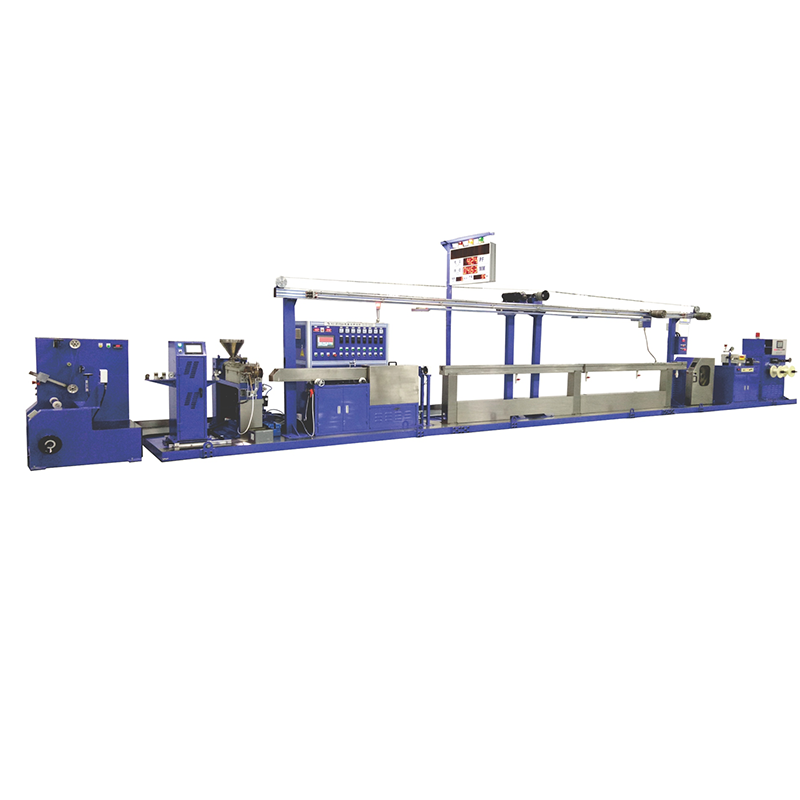
A Cable Extrusion Line is a sophisticated manufacturing system used in the production of electrical cables, optical fiber cables, and communication cables. Its primary function is to apply an insulating layer around a conductor or a group of conductors through the extrusion process. This process ensures uniform insulation thickness, excellent mechanical properties, and electrical performance suitable for various industrial applications.
In essence, a Cable Extrusion Line is designed to transform raw polymer materials into high-quality cable insulation, jacketing, and sometimes sheathing, depending on the cable type. It is a critical part of modern cable manufacturing and is widely used in industries ranging from power transmission and telecommunications to automotive and electronics.
What are the main components of a Cable Extrusion Line?
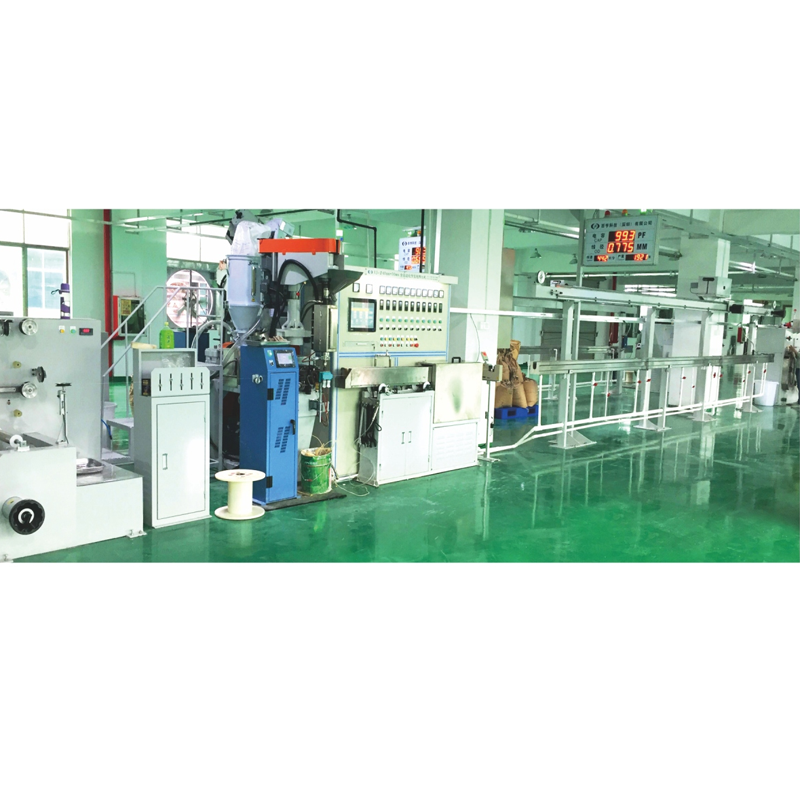
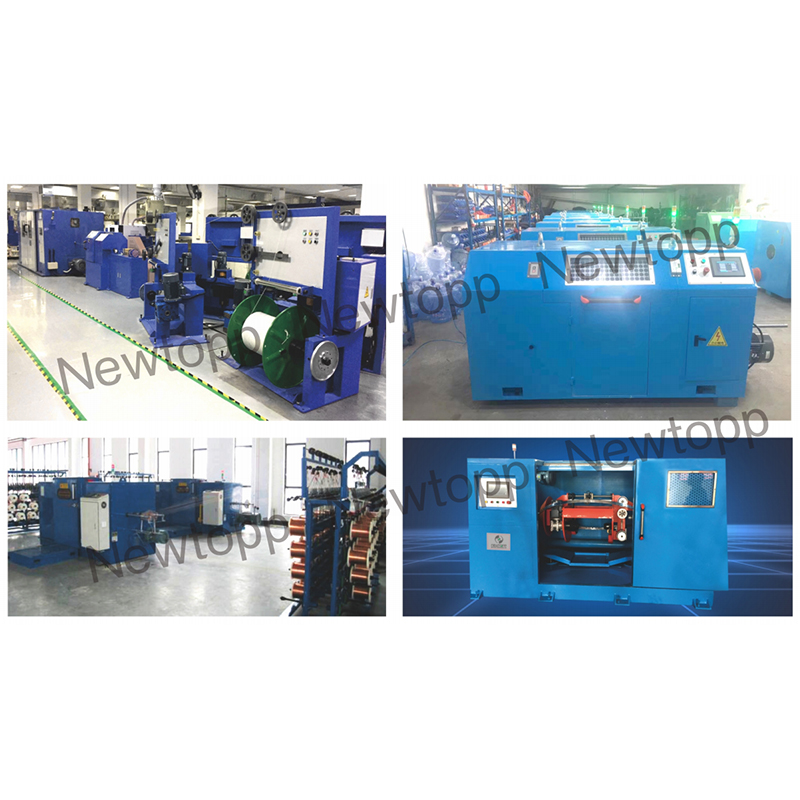
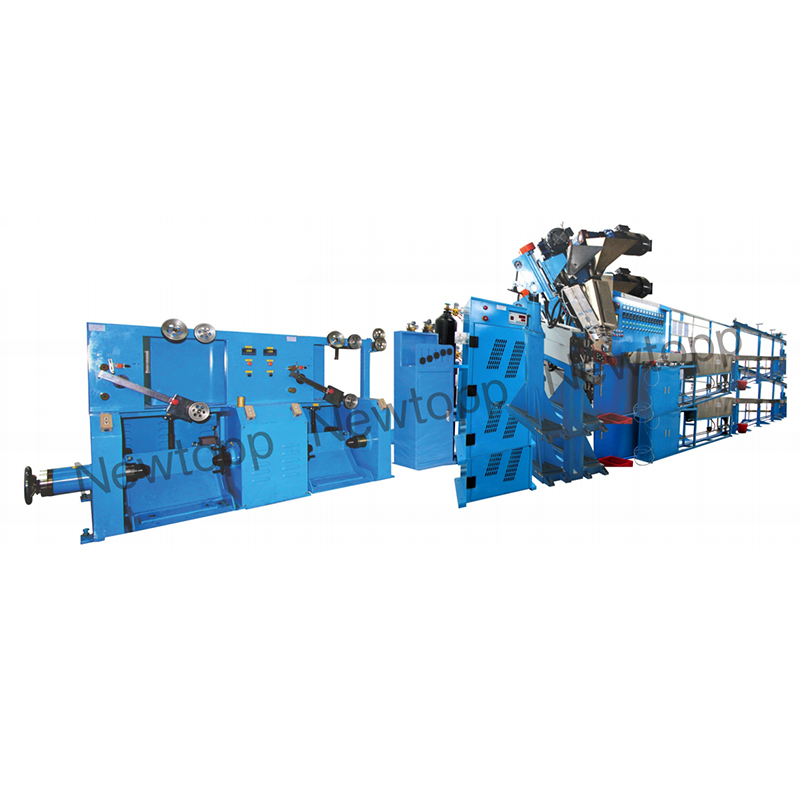
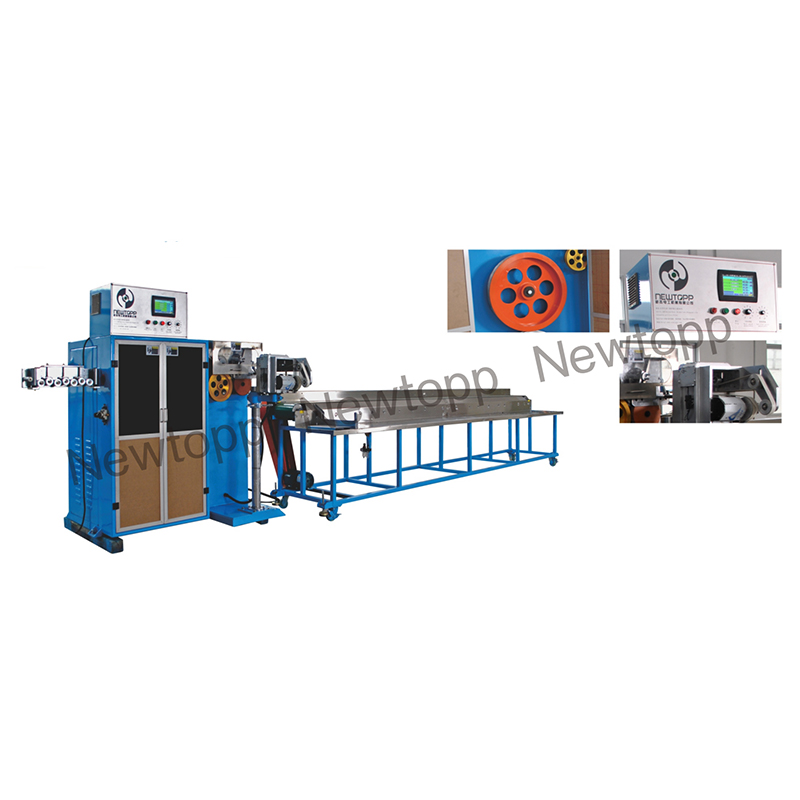
A typical Cable Extrusion Line comprises several key components, each playing a vital role in the insulation and jacketing process:
- Extruder: The heart of the system, where raw polymer material is melted and homogenized for extrusion.
- Die Head: Shapes the molten polymer to the desired profile around the conductor.
- Vacuum Tank: Ensures smooth coating by removing air bubbles and controlling the thickness of insulation.
- Cooling Tank: Solidifies the extruded insulation by passing the cable through water or air cooling systems.
- Capstan or Pulling Unit: Controls the cable speed and tension during extrusion and cooling.
- Take-up Unit: Collects the finished cable onto reels for storage or further processing.
- Control System: Monitors and adjusts temperature, speed, and pressure to ensure consistent quality.
How does a Cable Extrusion Line differ from a Cable Stranding Machine?
While both machines are integral to cable manufacturing, their functions are fundamentally different:
- Cable Extrusion Line: Focuses on applying insulation or jacketing to pre-formed conductors.
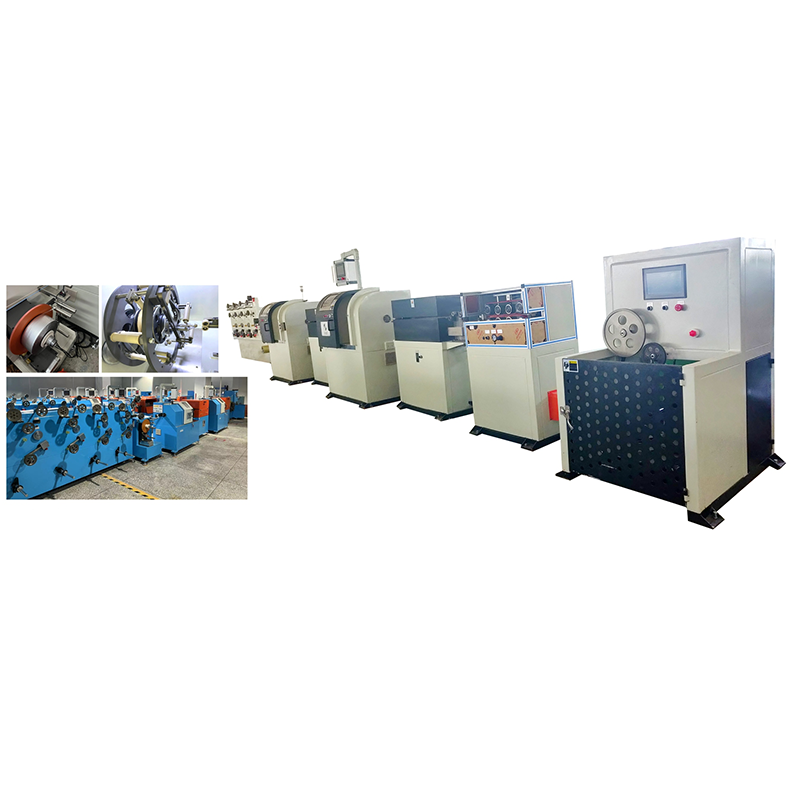
- Cable Stranding Machine: Combines individual wires or conductors into a single stranded cable.
In practice, a stranded conductor produced by a Cable Stranding Machine often enters a Cable Extrusion Line for insulation. This separation ensures precise control over both mechanical and electrical properties of the final cable.
How does a Cable Extrusion Line work?
The operation of a Cable Extrusion Line involves several interconnected steps:
- Feeding: Raw polymer material, usually in pellet or powder form, is fed into the extruder.
- Melting and Homogenization: The extruder heats and mixes the polymer to a uniform molten state.
- Extrusion: The molten polymer is forced through the die head, forming a continuous layer around the conductor.
- Vacuum Calibration: A vacuum tank removes air bubbles and ensures accurate insulation thickness.
- Cooling: The cable passes through a water bath or cooling system to solidify the insulation.
- Haul-off: The capstan pulls the cable at a consistent speed, maintaining tension.
- Take-up: Finished cable is wound onto reels for storage, inspection, or further processing.
What are the key steps in the cable extrusion process?
The extrusion process can be broken down into several critical stages:
- Material Preparation: Selecting high-quality polymer granules, additives, or colorants.
- Preheating: Some lines require preheating the conductor to improve adhesion.
- Extrusion: Melting and shaping the insulation through the die head.
- Vacuum Calibration and Cooling: Controlling thickness, shape, and surface quality.
- Testing: Online monitoring of diameter, ovality, and surface defects.
- Haul-off and Winding: Ensuring proper tension and reel packaging.
How is the raw material transformed into finished cable insulation?
Raw polymer materials such as PVC, PE, XLPE, or TPE undergo physical and chemical changes during extrusion:
- Melting: Solid pellets are heated to a viscous liquid state.
- Mixing: Additives like stabilizers, flame retardants, or colorants are blended uniformly.
- Shaping: The molten polymer is pressed around the conductor through the die head.
- Cooling and Solidifying: Water or air cooling systems solidify the insulation without defects.
- Surface Finishing: Optional coating, texturing, or printing for specific cable types.
What are the different types of Cable Extrusion Lines?
Different cable types and applications require customized extrusion lines:
- Single-layer Extrusion Lines: Produce cables with one insulating layer.
- Multi-layer Extrusion Lines: Apply multiple layers for enhanced mechanical, thermal, or electrical performance.
- Coaxial Cable Extrusion Lines: Specialized for precise shielding and dielectric layers.
- Power Cable Extrusion Lines: High-capacity lines for medium to high voltage power cables.
- Optical Fiber Cable Extrusion Lines: Ensure precise dimensions and minimal stress on delicate fibers.
What is the difference between single-layer and multi-layer extrusion lines?
The distinction is mainly in the number of layers and complexity:
| Feature | Single-layer Extrusion Line | Multi-layer Extrusion Line |
|---|---|---|
| Number of Layers | 1 | 2 or more (e.g., insulation + semiconducting layer + jacket) |
| Complexity | Low, easier setup and maintenance | High, requires precise synchronization between extruders |
| Applications | Simple communication cables, basic power cables | High-voltage cables, coaxial cables, fire-resistant cables |
| Cost | Lower initial investment | Higher due to multiple extruders and control systems |
What are specialized extrusion lines for specific cables (e.g., power cables, coaxial cables)?
Specialized Cable Extrusion Lines are designed for high-precision or high-performance cables, where standard extrusion may not meet requirements:
- Power Cable Extrusion Lines: Used for medium- and high-voltage cables, often featuring multiple extruders for insulation, semiconducting layers, and outer jackets.
- Coaxial Cable Extrusion Lines: Equipped with precise concentric dies and tension control systems to maintain tight tolerances for the inner conductor, dielectric, and shielding layers.
- Optical Fiber Cable Lines: Include specialized extruders with minimal thermal stress, tight dimensional control, and sometimes simultaneous jacketing for fiber bundles.
- Automotive Cable Lines: Compact, flexible lines for multi-core and highly flexible cables, often requiring advanced cooling and precise diameter control.
- Fire-Resistant and Low-Smoke Halogen-Free (LSZH) Cable Lines: Designed to handle specialty polymers and additives that prevent flame propagation and toxic smoke emission.
What are the installation requirements for a Cable Extrusion Line?
Installing a Cable Extrusion Line requires careful planning to ensure efficiency and safety:
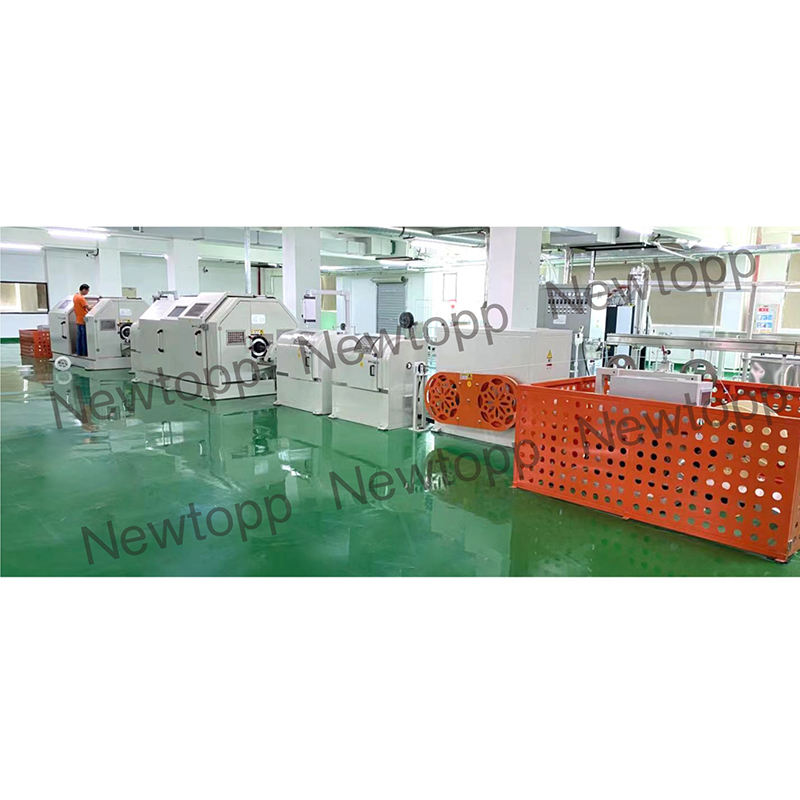
- Space Requirements: Lines require a long, straight layout, including space for extruders, vacuum tanks, cooling systems, and take-up units.
- Foundation and Leveling: Strong, level foundations to support heavy machinery and prevent vibration.
- Power Supply: High-capacity electrical connections for extruders, heaters, and control systems.
- Cooling Systems: Water supply with proper filtration and recirculation systems, or air cooling systems for specific designs.
- Ventilation: Adequate ventilation for heat dissipation and removal of fumes from heated polymers.
- Control Room Setup: Ergonomically arranged control panels, monitoring systems, and safety interlocks.
What routine maintenance is needed to keep it running efficiently?
Proper maintenance is crucial for the longevity and performance of a Cable Extrusion Line:
- Daily Maintenance: Check temperatures, polymer feed, cooling water flow, and lubrication of moving parts.
- Weekly Maintenance: Inspect die heads, extruder screws, vacuum tanks, and capstan rollers for wear or damage.
- Monthly Maintenance: Calibrate control systems, clean extruders, and check water treatment systems.
- Annual Maintenance: Conduct full system inspection, replace worn components, and update software if applicable.
What safety considerations should operators be aware of?
Safety is critical when operating a Cable Extrusion Line due to high temperatures, moving machinery, and electrical systems:
- Wear personal protective equipment (PPE) including heat-resistant gloves, eye protection, and safety shoes.
- Avoid contact with hot surfaces, molten polymer, and moving parts.
- Ensure emergency stop buttons are functional and accessible.
- Follow lockout/tagout procedures during maintenance or repair.
- Maintain proper ventilation to avoid inhalation of fumes.
- Train operators on proper handling of raw materials and chemicals.
How does a Cable Extrusion Line compare with a Cable Stranding Line?
Comparing the two systems helps understand their role in cable manufacturing:
| Aspect | Cable Extrusion Line | Cable Stranding Line |
|---|---|---|
| Primary Function | Apply insulation and jacketing | Combine multiple conductors into a stranded cable |
| Key Components | Extruder, die head, vacuum tank, cooling tank, take-up unit | Pay-off stands, stranding units, cabling frame, tension control |
| Materials | Polymers such as PVC, PE, XLPE, TPE | Metallic conductors such as copper, aluminum |
| Output | Insulated cables ready for further processing or direct use | Stranded conductors ready for insulation |
FAQ about Cable Extrusion Lines
Q1: What types of polymers are commonly used in Cable Extrusion Lines?
Polyvinyl chloride (PVC), polyethylene (PE), cross-linked polyethylene (XLPE), thermoplastic elastomers (TPE), and flame-retardant polymers are commonly used depending on cable specifications.
Q2: Can a Cable Extrusion Line produce multi-core cables?
Yes, specialized lines can handle multi-core cables by simultaneously extruding insulation on multiple conductors and assembling them into a single cable.
Q3: How is insulation thickness controlled?
Insulation thickness is controlled through precise die design, vacuum calibration tanks, and continuous online diameter measurement systems.
Q4: What is the typical production speed of a Cable Extrusion Line?
Production speed varies based on cable type and size, ranging from 50 meters per minute for large power cables to 500 meters per minute for small communication cables.
Q5: How does temperature affect the extrusion process?
Proper temperature control is essential to ensure uniform polymer melting, smooth surface finish, and correct adhesion. Too high or too low temperature can cause defects such as bubbles, cracks, or poor insulation quality.
Q6: Can Cable Extrusion Lines be automated?
Yes, modern lines are often fully automated with PLC control, automatic thickness measurement, and remote monitoring for consistent quality and reduced labor costs.
Q7: How do I choose the right Cable Extrusion Line for my application?
Consider the cable type, voltage rating, production speed, number of layers required, and any special material or regulatory requirements. Consulting with manufacturers for customized solutions is recommended.
Q8: What is the lifespan of a Cable Extrusion Line?
With proper maintenance, a well-designed extrusion line can operate efficiently for 15–20 years or more.
-
Phone
+86 188 2296 5630 +86-(0)515-8510 8601Email
[email protected]
[email protected]
[email protected]
[email protected]
[email protected]
[email protected]Address
No. 168 Haitai Road, Dongtai City, Jiangsu Province, China
Copyright © 2025 Jiangsu NewTopp Precision Machinery Co., Ltd. All Rights Reserved. Wire & Cable Equipment Manufacturer
Robot Cable Production Ancillary Equipment Factory
