

 English
 русский
 Español

Industry News
Home / News / Industry News / What Does an Extrusion Head Do in a Cable Extrusion Line — and Why Does It Matter?
Home / News / Industry News / What Does an Extrusion Head Do in a Cable Extrusion Line — and Why Does It Matter?
NEWS


What Does an Extrusion Head Do in a Cable Extrusion Line — and Why Does It Matter?
2026-04-02
The extrusion head is the core forming component of a cable extrusion line. It shapes molten polymer around a conductor — or independently — to create the precise insulation and jacketing that define a cable's electrical performance, mechanical durability, and safety compliance. Without a properly engineered extrusion head, no cable extrusion line can achieve consistent product quality.
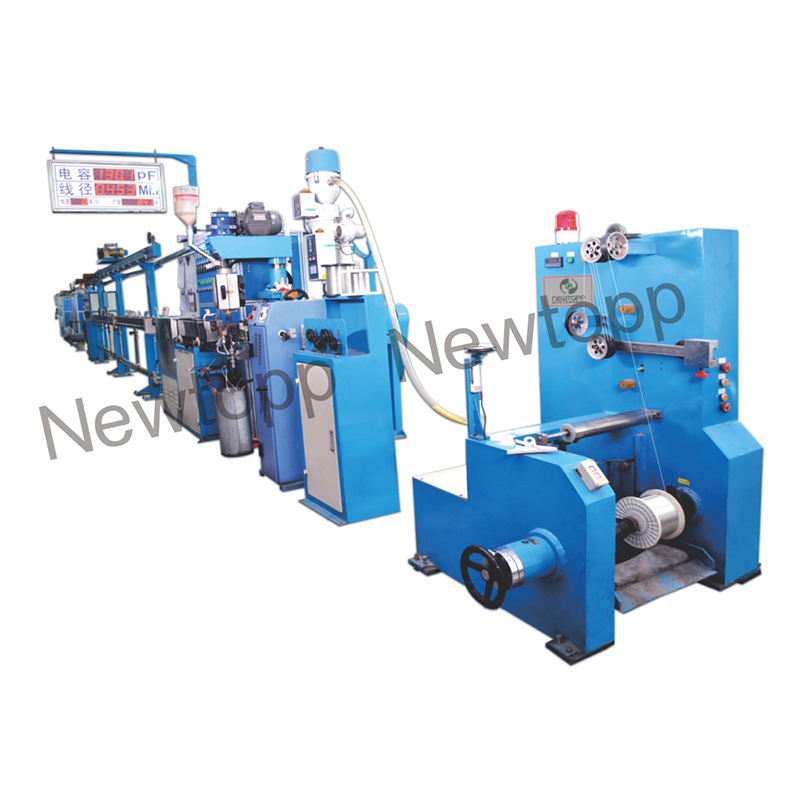
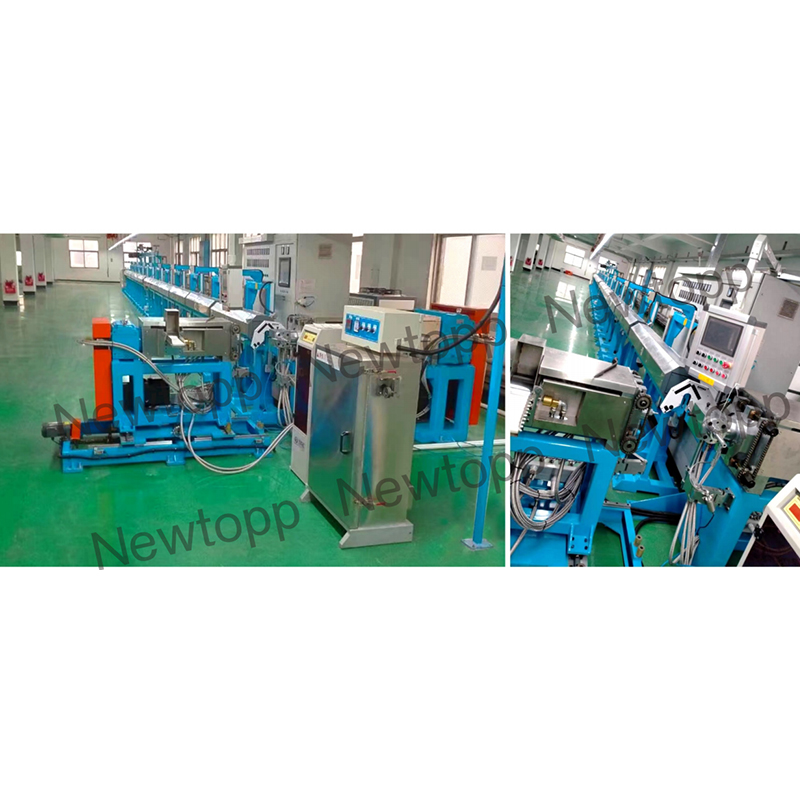
In the global cable manufacturing industry, the cable extrusion line represents a multi-stage production system where raw polymer materials are melted, shaped, cooled, and wound into finished wire and cable products. At the heart of this system sits the extrusion head — a precision-engineered assembly that determines the geometry, wall thickness, concentricity, and surface finish of the cable coating applied to the conductor.
As cable specifications grow increasingly demanding — driven by renewable energy infrastructure, EV charging systems, high-speed data transmission, and industrial automation — the design and performance of the extrusion head have become central topics for manufacturing engineers worldwide. This article explores the structure, types, comparison, and best practices surrounding the extrusion head in modern cable extrusion lines.
Content
- 1 Understanding the Extrusion Head: Core Structure and Function
- 2 Types of Extrusion Heads Used in Cable Extrusion Lines
- 3 How the Extrusion Head Influences Cable Quality
- 4 Extrusion Head Design: Pressure vs. Tubing Method — A Detailed Comparison
- 5 Extrusion Head Tooling: Die and Tip Selection for Cable Extrusion Lines
- 6 Maintenance Best Practices for the Extrusion Head
- 7 Advanced Technologies in Modern Extrusion Head Design
- 8 Frequently Asked Questions: Extrusion Head in Cable Extrusion Lines
- 9 Conclusion: The Extrusion Head Is the Quality Engine of Any Cable Extrusion Line
Understanding the Extrusion Head: Core Structure and Function
The extrusion head, also referred to as a crosshead die or cable die head, is mounted at the discharge end of the extruder barrel. Molten thermoplastic or elastomeric compound — such as PVC, XLPE, LSZH, or TPU — is forced from the screw into the head under high pressure, where it is shaped into a uniform annular profile around the conductor wire.
Key Components Inside the Extrusion Head
Every well-engineered extrusion head on a cable extrusion line contains these critical elements:
- Die body (head body): The outer housing that withstands high melt pressure and maintains precise temperature zones.
- Die tip (inner die / guider tip): Guides the conductor through the center of the melt channel, controlling concentricity.
- Die (outer die / sizing die): Defines the outer diameter of the applied insulation or jacket layer.
- Screen pack / breaker plate: Filters contaminants and builds back-pressure for homogeneous melt flow.
- Adjustable centering screws: Allow fine-tuning of die tip position to ensure wall thickness uniformity.
- Heating elements & thermocouples: Maintain optimal melt temperature within the head for consistent viscosity.
- Conductor guide tube: Feeds the bare wire or previously coated conductor into the die tip with minimal drag.
Types of Extrusion Heads Used in Cable Extrusion Lines
Not all extrusion heads are alike. The selection of the correct type is fundamental to achieving the right insulation method, material compatibility, and cable specification. The two primary approaches are pressure extrusion and tubing (tube-on) extrusion, and several specialized head designs serve specific applications.
| Head Type | Extrusion Method | Typical Applications | Material Compatibility | Concentricity Control |
|---|---|---|---|---|
| Pressure Crosshead | Melt contacts conductor under pressure | Primary insulation (PVC, XLPE, LSZH) | PVC, PE, XLPE, LSZH, rubber | Excellent |
| Tubing Crosshead | Melt forms tube, then drawn down over conductor | Loose jacketing, sheathing | PE, PP, nylon, flexible PVC | Good |
| Tandem / Dual Layer Head | Two materials co-extruded simultaneously | Dual-layer insulation, skin-core structures | XLPE + semiconductive, LSZH bilayer | Very good with precise tooling |
| Triple Layer Head | Three materials extruded in one pass | MV/HV power cable insulation systems | Semiconductive + XLPE + semiconductive | Critical — requires servo-centering |
| 90° Crosshead | Melt enters at 90° to conductor path | General wire, hook-up wire, automotive | PVC, PE, TPU, silicone | Good |
| In-Line / 180° Head | Melt enters in-line with conductor | High-speed fine wire, telecom | PE, FEP, PTFE | Excellent at high speed |
How the Extrusion Head Influences Cable Quality
The performance of the extrusion head directly determines four key quality parameters in the finished cable: concentricity, wall thickness consistency, surface smoothness, and material integrity. These parameters are not cosmetic — they govern electrical breakdown strength, mechanical flexibility, and compliance with standards such as IEC 60228, UL 44, and BS 7211.
Concentricity: The Most Critical Parameter
Concentricity refers to how precisely the conductor sits at the center of the insulation layer. A well-designed extrusion head with properly adjusted tooling achieves concentricity above 95% — meaning the minimum wall thickness is at least 95% of the nominal value. Poor concentricity creates thin spots where dielectric breakdown can occur under voltage stress, leading to premature cable failure.
Modern cable extrusion lines incorporate online eccentricity monitors — typically ultrasonic or capacitance-based sensors — placed immediately after the extrusion head. These systems feed real-time data back to servo-controlled centering systems on the head, allowing automatic correction during production runs.
Melt Pressure and Temperature Management
The extrusion head must maintain a consistent melt pressure throughout production. Pressure fluctuations caused by screw speed variation, material inconsistency, or thermal gradients within the head translate directly into diameter variation along the cable length. A typical production-grade cable extrusion line targets melt pressure stability within ±2 bar and head zone temperatures controlled to ±1°C.
| Control Parameter | Target Range | Effect on Cable Quality | Monitoring Method |
|---|---|---|---|
| Head melt pressure | 50–250 bar (material dependent) | Controls diameter stability and surface finish | Melt pressure transducer |
| Head zone temperature | ±1°C of setpoint | Affects melt viscosity and output consistency | PID-controlled thermocouples |
| Concentricity | >95% (IEC standard) | Electrical insulation reliability | Ultrasonic / capacitance sensor |
| Outer diameter | ±0.05 mm typical | Mechanical fit, connector compatibility | Laser diameter gauge |
| Surface temperature (post-head) | Controlled by cooling trough | Surface smoothness, shrinkage control | IR thermometer / water bath temp |
Extrusion Head Design: Pressure vs. Tubing Method — A Detailed Comparison
The choice between pressure extrusion and tubing extrusion at the extrusion head is one of the most consequential decisions in cable extrusion line setup. Each method has distinct advantages and limitations that engineers must evaluate based on cable type, material, and performance requirements.
Pressure Extrusion Method
In this configuration, the die tip and outer die are positioned so that the melt contacts and bonds to the conductor under pressure inside the head. Key characteristics include:
- Superior adhesion between insulation and conductor — critical for solid insulation in power cables
- Excellent void-free coverage around stranded conductors with complex surface geometry
- High concentricity due to in-head melt confinement
- Requires more precise tooling setup and higher maintenance discipline
- Preferred for: energy cables, building wire, automotive wire
Tubing (Tube-on) Extrusion Method
Here, the die tip is recessed so the melt exits as a free tube and is then drawn down over the conductor outside the head. Characteristics include:
- Loose jacket — insulation can be stripped more easily, preferred for fiber optic cable jackets
- Faster line speeds achievable in some configurations
- Lower contact pressure reduces risk of conductor distortion on delicate or pre-coated conductors
- Dimensional control relies more heavily on cooling trough and tension management
- Preferred for: fiber optic sheathing, telecommunications cables, multi-core cable outer jackets
Extrusion Head Tooling: Die and Tip Selection for Cable Extrusion Lines
The die and tip — sometimes called the tooling set — are the consumable heart of the extrusion head. Selecting the correct tooling geometry is essential for achieving the target wall thickness, concentricity, and surface quality. Tooling is typically made from hardened tool steel, with wear-resistant coatings for abrasive compounds like filled LSZH or carbon black semiconductive materials.
Die-to-Tip Ratio (Draw-Down Ratio)
The ratio between the die bore diameter and the finished cable outer diameter — the draw-down ratio (DDR) — influences the degree of molecular orientation, melt relaxation, and surface quality. A DDR between 1.0 and 1.5 is common for jacketing compounds, while higher ratios are used for tubing-on methods. Excessive draw-down increases residual stress in the insulation and can lead to shrinkback or surface cracking during cooling.
Similarly, the die land length — the straight section at the end of the die bore — controls back-pressure and surface quality. Longer land lengths produce smoother surfaces but increase head pressure, which the extruder drive system must compensate for.
Maintenance Best Practices for the Extrusion Head
Neglecting the maintenance of the extrusion head is one of the most common causes of quality failures and unplanned downtime on a cable extrusion line. A disciplined maintenance program extends tooling life, prevents contamination, and ensures consistent output.
- Regular purging: Purge the extrusion head with a compatible purging compound before material changeovers to avoid cross-contamination between PVC and PE compounds, which can cause degradation.
- Die and tip inspection: Inspect tooling surfaces after each production run for scoring, wear, or polymer buildup. Even minor surface defects translate into visible streaks or lumps on the cable surface.
- Bolt torque verification: Flange bolts holding the extrusion head to the barrel must be torqued to specification — over-torquing causes distortion while under-torquing risks melt leakage.
- Thermocouple calibration: Verify temperature sensor accuracy quarterly. A 5°C deviation in head temperature can shift melt viscosity enough to affect output rate by 3–5%.
- Centering screw lubrication: Apply high-temperature anti-seize compound to centering screws to prevent galling during adjustments at operating temperatures.
- Flow channel cleaning: Periodically disassemble the head for full flow channel cleaning using solvent or high-temperature burn-off ovens to remove carbonized polymer deposits.
Advanced Technologies in Modern Extrusion Head Design
The evolution of the extrusion head in recent years reflects broader trends in cable manufacturing: greater line speeds, tighter tolerances, more demanding materials, and the need for digital integration. Several technological advances are reshaping how extrusion heads are designed and operated on contemporary cable extrusion lines.
Quick-Change Tooling Systems
Traditional extrusion heads require full disassembly and cooling before tooling can be changed — a process that can take 2–4 hours. Modern quick-change head systems allow die and tip replacement in under 30 minutes while the head remains at operating temperature, dramatically reducing changeover downtime on multi-product extrusion lines.
Servo-Assisted Automatic Centering
In response to demand for near-zero eccentricity in high-voltage power cables, servo-driven automatic centering systems have been integrated with online eccentricity measurement. The feedback loop adjusts centering screw positions in real time — compensating for thermal drift, conductor variation, and material inconsistency without operator intervention.
Triple-Layer Co-Extrusion Heads for Power Cable
Medium and high voltage cable manufacturing requires simultaneous application of inner semiconductive layer, XLPE insulation, and outer semiconductive layer in a single pass. Triple-layer extrusion heads — also called CCV (catenary continuous vulcanization) line heads — achieve this with three separate melt channels merging into a single annular die zone. The interface between layers must be perfectly bonded and free of contamination, which demands exceptional flow channel geometry and temperature control within the head.
Digital Monitoring and Industry 4.0 Integration
Contemporary cable extrusion lines increasingly incorporate smart extrusion head monitoring — embedding pressure and temperature sensors directly into the die body and streaming data to manufacturing execution systems (MES). This enables predictive maintenance, process trending, and SPC (statistical process control) directly tied to head performance. When a head shows early signs of wear — indicated by drift in process parameters at identical machine settings — maintenance can be scheduled proactively rather than reactively.
Frequently Asked Questions: Extrusion Head in Cable Extrusion Lines
Conclusion: The Extrusion Head Is the Quality Engine of Any Cable Extrusion Line
From general-purpose building wire to high-voltage power transmission cables, the extrusion head remains the most performance-critical component in any cable extrusion line. Its design dictates concentricity, wall uniformity, surface quality, and material integrity — all of which determine whether a finished cable meets international electrical and mechanical standards.
As the industry pushes toward higher line speeds, more demanding materials, and tighter dimensional tolerances, investment in advanced extrusion head technology — including servo centering, quick-change tooling, co-extrusion capability, and digital monitoring — offers measurable returns in scrap reduction, uptime improvement, and product consistency.
For cable manufacturers evaluating extrusion line upgrades or new installations, a thorough understanding of extrusion head selection, tooling design, and process control is not optional — it is the foundation upon which profitable, consistent cable production is built.
-
Phone
+86 188 2296 5630 +86-(0)515-8510 8601Email
[email protected]
[email protected]
[email protected]
[email protected]
[email protected]
[email protected]Address
No. 168 Haitai Road, Dongtai City, Jiangsu Province, China
Copyright © 2025 Jiangsu NewTopp Precision Machinery Co., Ltd. All Rights Reserved. Wire & Cable Equipment Manufacturer
Robot Cable Production Ancillary Equipment Factory
