

 English
 русский
 Español


Industry News
Home / News / Industry News / Skip Stranding Machine: Working Principle, Lay Length and How to Choose
Home / News / Industry News / Skip Stranding Machine: Working Principle, Lay Length and How to Choose
NEWS


Skip Stranding Machine: Working Principle, Lay Length and How to Choose
2026-10-10
A batch of flexible robot cable comes back from a customer because the conductor kinks at the tight bend behind the connector, and the strands at the stripped end have already started to spring apart. The insulation passed every electrical test. The conductor lay did not. In cases like this, the correction usually starts at the stranding stage rather than at the extruder.
A skip stranding machine is a conductor stranding machine that lays the individual wires with an interrupted, periodically reversing lay, an S-Z pattern, instead of a continuous helix running in one direction. Because the twist reverses at set intervals, the wire never accumulates the same stored torsion that a conventional concentric lay builds up, so the finished conductor stays flexible and predictable when it is bent, cut or crimped.
That single process choice changes three things a cable plant actually measures: minimum bend radius, cut-end stability, and how much the conductor fights the extrusion line downstream. What follows covers how the process works, where it earns its cost, what belongs in a purchase specification, and the defects that appear when a machine is set up wrong.
Content
- 1 What Is a Skip Stranding Machine?
- 2 How Skip Stranding Compares With Other Conductor Constructions
- 3 Where Skip-Stranded Conductors Earn Their Cost
- 4 Five Parameters That Decide Whether Skip Stranding Works
- 5 Specifying a Skip Stranding Machine: A Buyer's Checklist
- 6 Typical Defects and What Actually Causes Them
- 7 Frequently Asked Questions
- 7.1 What is the difference between skip stranding and bunched stranding?
- 7.2 What lay length should a skip-stranded robot cable use?
- 7.3 Can a standard double-bow strander produce a skip lay?
- 7.4 Is skip stranding suitable for aluminium conductors?
- 7.5 How do I check reversal consistency without stopping production?
What Is a Skip Stranding Machine?
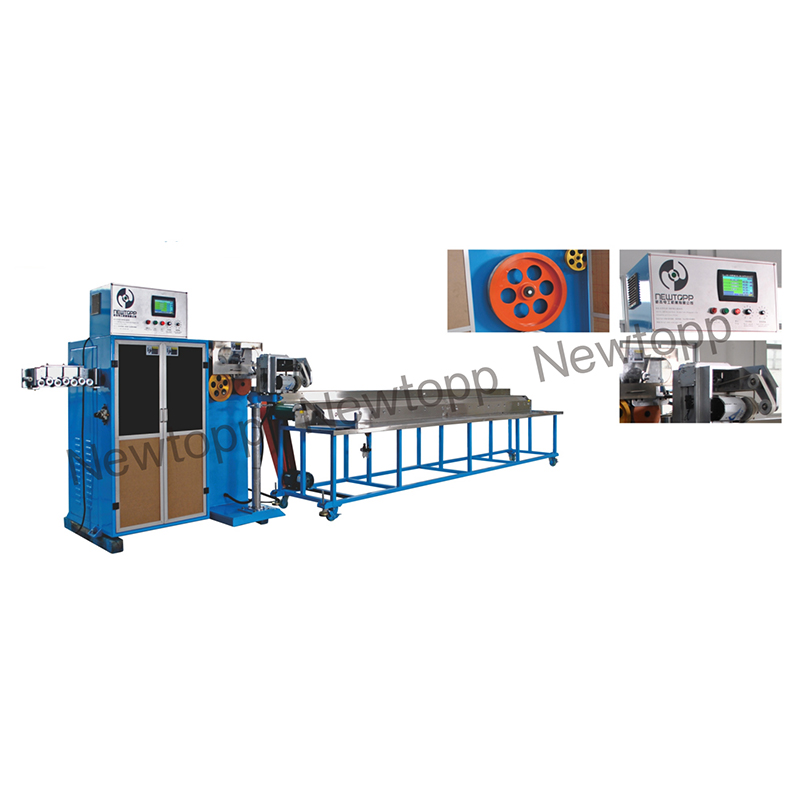
A skip stranding machine is best described as a strander plus synchronised reversing control: the mechanical hardware is close to standard stranding equipment, while the lay pattern itself is created by timing.
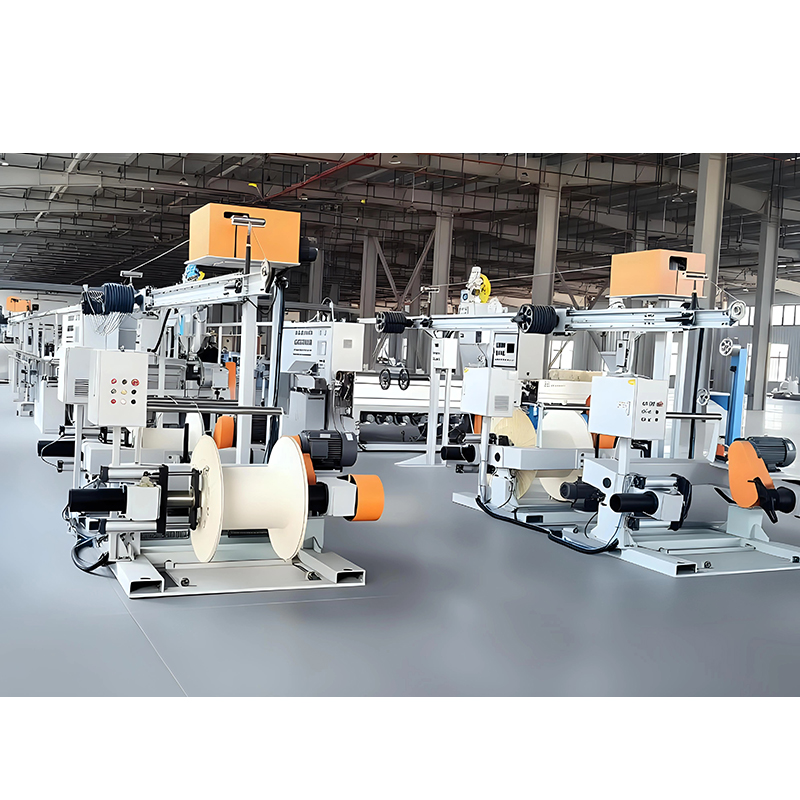
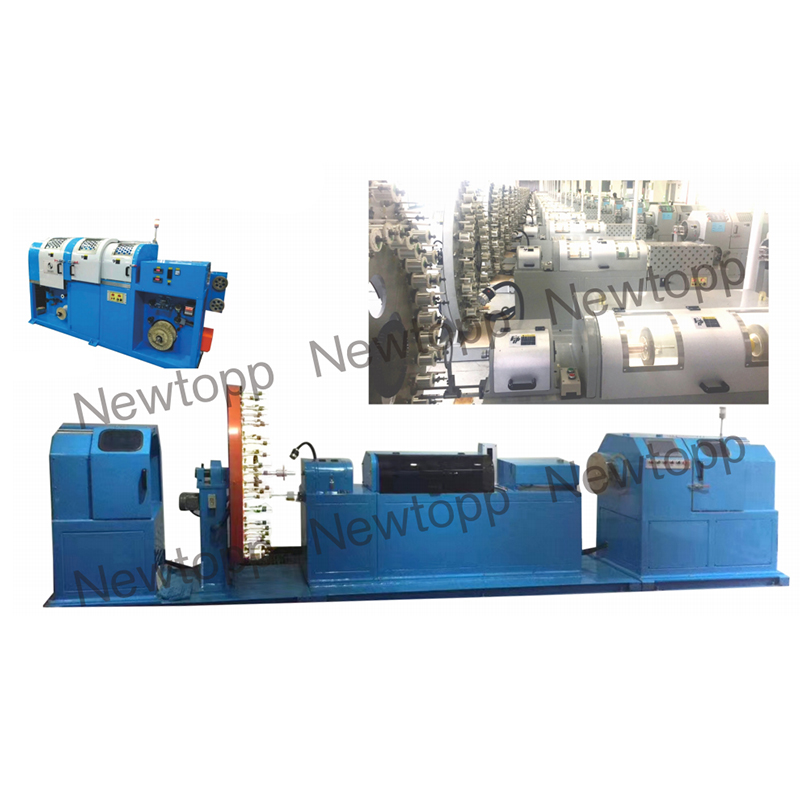
On the machine side you will find a pay-off, rotating bows or a rotating frame carrying the wire bobbins, a lay plate or forming die, and a capstan or haul-off take-up. The distinguishing part is the control relationship between bow rotation and take-up speed, because that ratio defines lay length. Rotate the bows faster at the same line speed and the lay shortens; run the line faster at the same bow speed and the lay lengthens.
In a skip lay, the controller runs the bows forward for a set length of conductor, reverses them for a comparable length, then repeats. The point where direction changes is the reversal point, and its spacing is the single most important setting on the machine after the lay length itself. Reversal intervals commonly fall somewhere between roughly half a metre and three metres, but the right value always comes from the finished cable's flex requirement, not from a fixed machine constant.
One practical warning about terminology: suppliers use “skip stranding” loosely, and some catalogues apply it to any alternating-lay process. Before comparing quotations, confirm three numbers in writing: lay length in each direction, reversal interval, and the bow speed the machine reaches at working line speed. The overview of cable stranding machine types is a useful companion if you need the wider vocabulary first.
How Skip Stranding Compares With Other Conductor Constructions
Skip stranding is one of three common ways to build a stranded conductor, and it is the right answer only for a specific set of requirements.
| Attribute | Skip (S-Z) stranding | True concentric stranding | Bunched stranding |
| Lay pattern | Alternating S and Z at fixed intervals | Continuous single direction, layer direction reversed per layer | Continuous single direction, no defined layers |
| Typical lay length | Longer, set per direction to suit the bend radius | Tight and closely controlled per layer | Short, treated as non-critical |
| Flexibility | High, with little restoring torque | Moderate | High, but roundness suffers |
| Cut-end behaviour | Strands hold together with minimal untwisting | Slight untwist, often needs binding or taping | Tends to flare |
| Roundness | Good | Best | Poorest |
| Line speed potential | High, limited by reversal synchronisation | High, limited by bow speed | Highest |
| Typical use | Robot, drag-chain, welding, medical and automotive flexible cable | Power, overhead and control cable | Flexible cords and small hook-up wire |
Where Skip-Stranded Conductors Earn Their Cost
Skip stranding pays for itself wherever a conductor has to survive repeated bending or has to be terminated by hand in the field, because the lay does the work that binders and tapes would otherwise do.
- Robot arm and articulated machinery cable, where the conductor is bent thousands of times across a small radius.
- Drag-chain (continuous flex) cable in machine tools and automated handling systems.
- Welding cable and other hand-carried leads that are dragged and coiled daily.
- Automotive and new-energy harness conductors, including copper and aluminium busbar assemblies that are terminated and bent during assembly.
- Medical and instrumentation leads where a stripped end must stay tidy without extra sleeving.
Skip stranding is not universal. A high-frequency data conductor needs a tight, stable lay to hold its electrical length and impedance, and overhead and power conductors rely on the mechanical balance that true concentric layers provide. When a customer specifies a stable characteristic impedance, a conventional lay is usually the better answer.
Five Parameters That Decide Whether Skip Stranding Works
Five settings control the outcome, and adjusting any one of them changes the others.
- Lay length in each direction. Too short and the conductor stiffens and resists bending; too long and the strands separate at the forming die. Start from the minimum bend radius the finished cable must survive and work backwards.
- Per-wire pay-off tension. Uneven tension is the most common root cause of bird-caging. Every bobbin should feed at the same tension, and tension should be measured rather than judged by feel.
- Reversal synchronisation. The reversal point must land at the same conductor length every cycle. Capstan slip, worn belts and aggressive acceleration all push reversal points out of position.
- Take-up tension and traverse. Take-up must be firm enough to keep the lay closed but light enough not to flatten the conductor. A poorly set traverse produces soft, wavy sections that only appear after extrusion.
- Incoming wire quality. Diameter tolerance, surface finish and drawing lubrication all show up in the stranded result. A lay that runs cleanly on one wire lot can bird-cage on the next.
Specifying a Skip Stranding Machine: A Buyer's Checklist
The fastest way to compare quotations is to fix the conductor first and let the machine follow, because two machines with the same nominal bow speed can deliver very different lay consistency on the same conductor.
Match the platform to the conductor
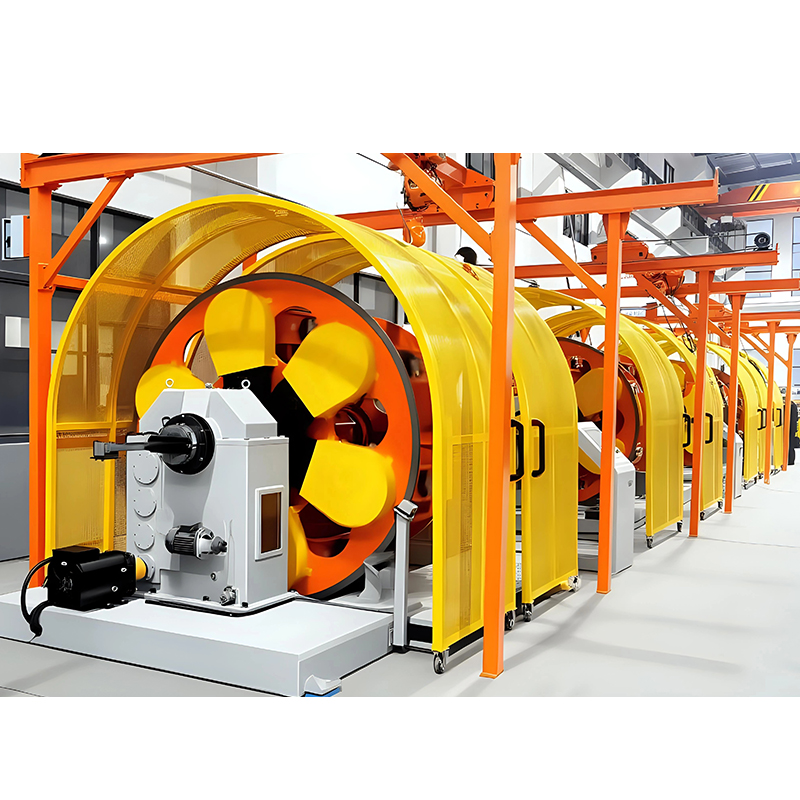
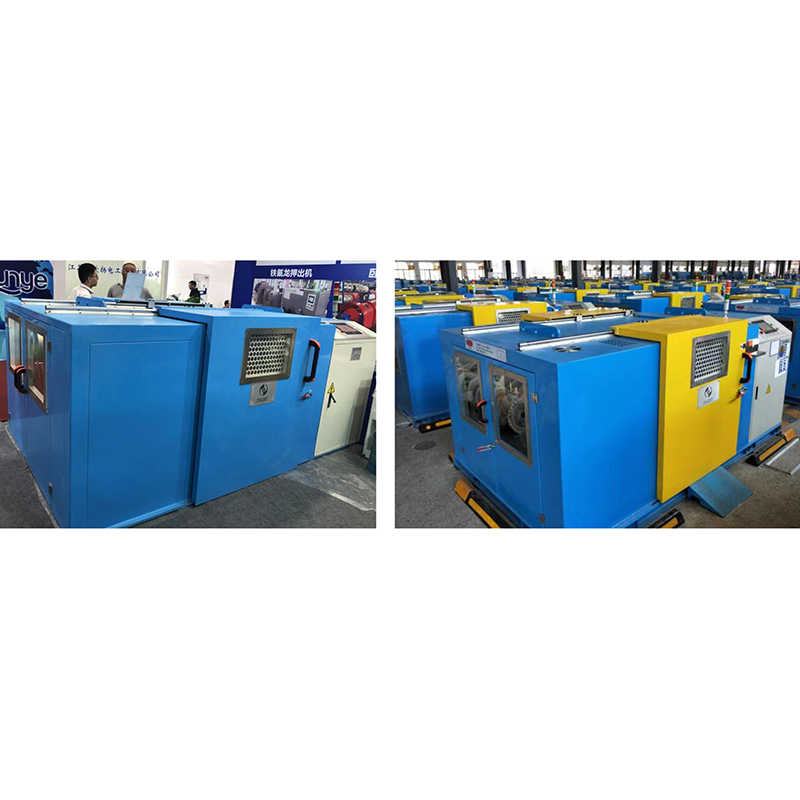
Double-bow machines suit higher-output production of medium and large conductors, where the two bows balance each other and allow faster rotation without vibration. Back-twist pair stranders suit constructions that must unwind cleanly at the cut end. Cantilever single stranders are typically chosen for smaller cores, shorter runs and frequent product changes.
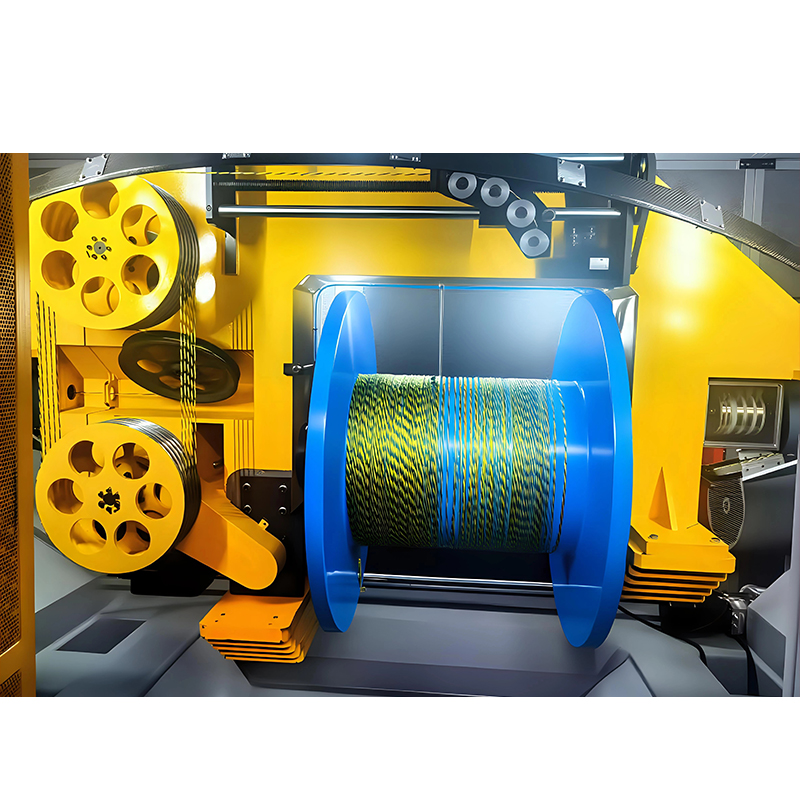 1250 Double Bow Stranding Machine for High-Output Cable ProductionDouble-bow design targets medium and large conductors; review tension balance, supplier specifications, and applications from data cables to power conductors.View Product →
Ask each supplier for the reversal interval they can hold at your target line speed, plus the tolerance around it. A stated interval without a tolerance figure is not a specification.
Write the numbers into the RFQ
The following should appear on the enquiry, not be agreed verbally:
- Conductor construction: strand count, single wire diameter, and whether bare or plated wire is used.
- Lay length in each direction, reversal interval, and the permitted deviation.
- Target line speed and the resulting lay at that speed, confirmed by the supplier in writing.
- Bobbin sizes and pay-off count, since these limit how long the machine runs between reloads.
- Acceptance test: a sample length checked for lay, roundness and reversal spacing before shipment is accepted.
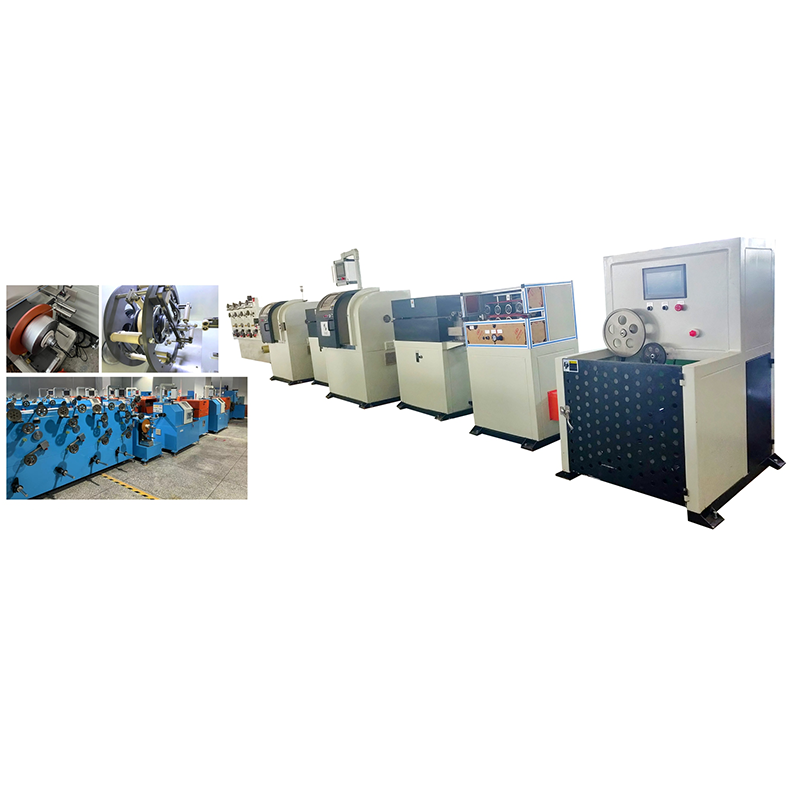
Back-twist machines deserve a separate look whenever cut-end behaviour is the customer's complaint, because the wire path is designed so the conductor releases its torsion progressively rather than all at once.
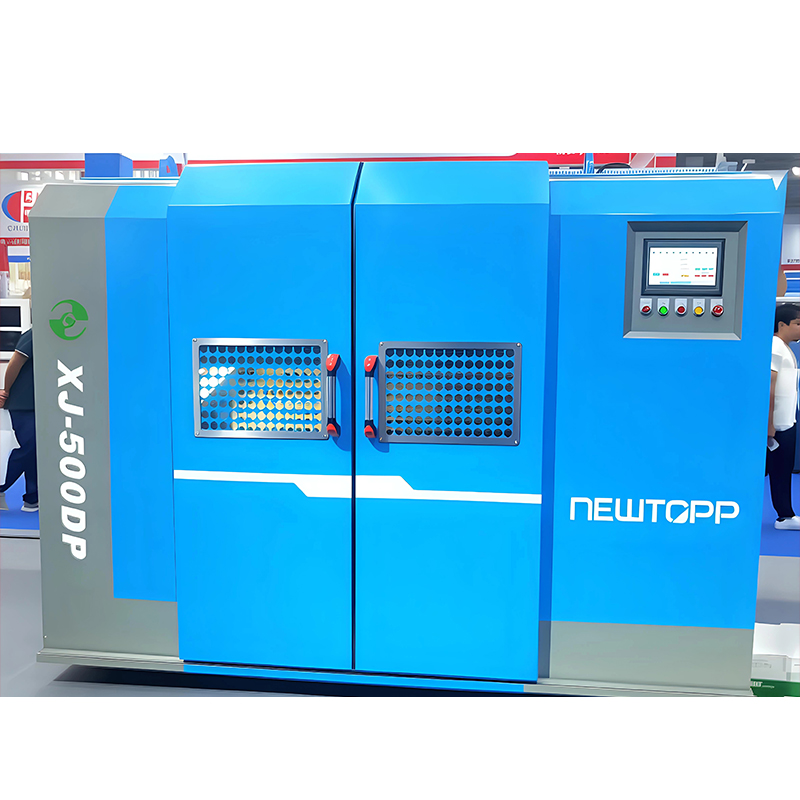 Horizontal or Vertical Back-Twist Pair Stranding MachineAvailable horizontal or vertical; back-twist before pair twisting reduces damage for Cat-5e/6/6A, HDMI 2.1, and high-speed data cables.View Product →
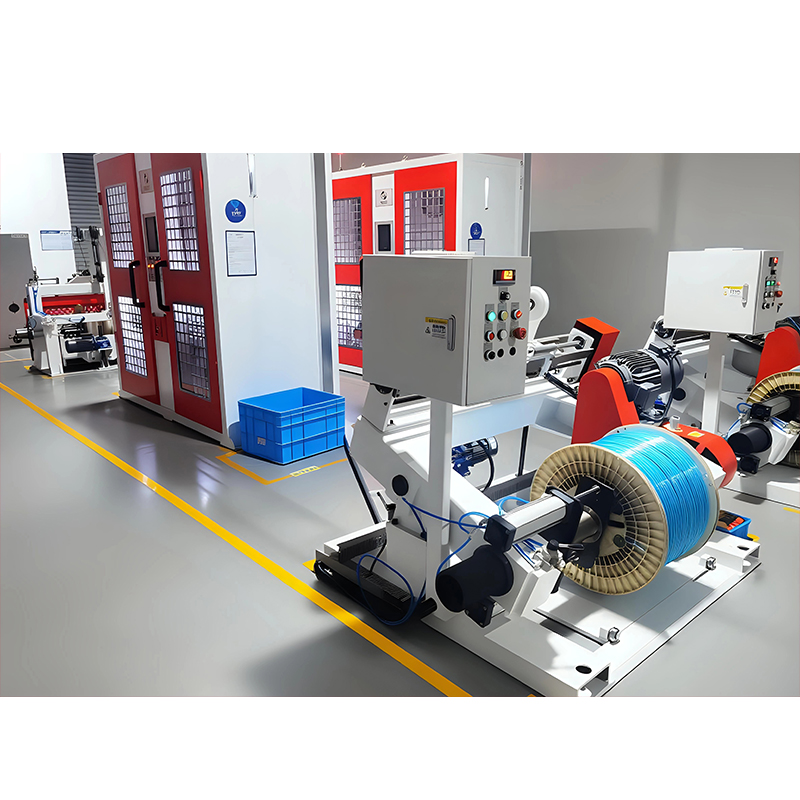
For smaller cores and plants that change products several times a week, a single-strander platform usually gives a better return than a high-speed double-bow machine that is underloaded.
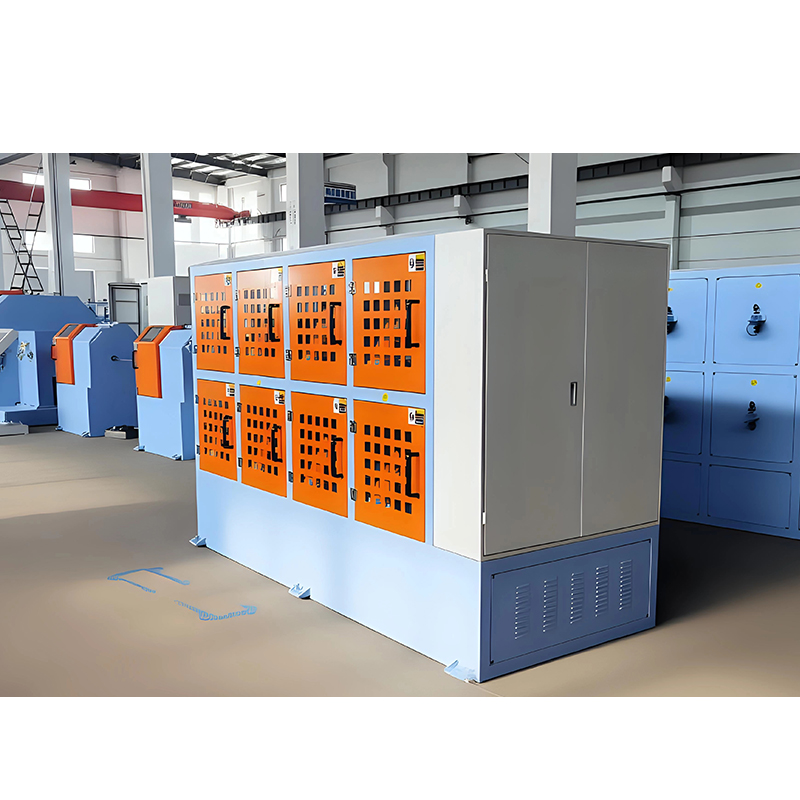 Cantilever Type Single Stranding Machine for Small-Core ProductionSuited to smaller cores and frequent product changes; check tension stability, PLC pitch control, and traversing setup for skip-stranding issues.View Product →
Typical Defects and What Actually Causes Them
Nearly every skip stranding problem traces back to tension, synchronisation or tooling rather than to the conductor design itself.
| Defect | Likely cause | What to change |
| Bird-caging or wire flare at the die | Uneven or low pay-off tension, oversized die bore | Equalise tension, resize the forming die |
| Loose, wavy conductor | Take-up tension too low, reversal timing drifting with line speed | Raise take-up tension, re-verify synchronisation |
| Uneven reversal spacing | Capstan slip, excessive acceleration in the reversal | Re-calibrate the drive, soften the acceleration ramp |
| Broken wires | Tension above the wire's limit, worn ceramic guides | Reduce tension, replace guides and inspect the wire path |
| Out-of-round conductor | Mismatched wire diameters, uneven bobbin fill | Check incoming wire tolerance, review bobbin loading |
| Kinking after flex testing | Lay too short for the required bend radius | Lengthen the lay and widen the reversal interval |
Frequently Asked Questions
What is the difference between skip stranding and bunched stranding?
Skip stranding reverses the lay direction at set intervals, while bunched stranding twists continuously in one direction with no defined layers. Skip stranding holds cut ends together and keeps the conductor round; bunched conductors are faster to produce and prone to flaring at the cut.
What lay length should a skip-stranded robot cable use?
There is no universal number. Work from the smallest bend radius the cable must survive, then set the longest lay that still holds the conductor closed at the forming die. A lay that is too short is the usual cause of stiff, kinking robot conductors.
Can a standard double-bow strander produce a skip lay?
Only if the drive and control system can reverse the bows accurately and repeatably at production speed. Many machines can rotate both ways, but far fewer hold a reversal interval within a tight tolerance while the take-up keeps pulling.
Is skip stranding suitable for aluminium conductors?
Yes, provided tensions are set for aluminium rather than copper. Aluminium wire is softer and more sensitive to guide wear, so pay-off tension and ceramic contact surfaces need reviewing before the lay settings are tuned.
How do I check reversal consistency without stopping production?
Take a sample length, mark the reversal points along it, and measure the spacing. Repeat the check on samples taken at the start and the end of a shift. Drift between the two samples means the drive is losing position as the machine warms up.
The decision comes down to how the cable is used, not to which lay pattern is more modern. If your conductor is bent repeatedly, cut and terminated by hand, or dragged across a shop floor, put the lay length and reversal interval in the purchase specification right next to the strand count and the wire diameter. Jiangsu Newtopp Precision Machinery builds stranding, extrusion and taping equipment for exactly these conductor types, so the lay specification and the machine that produces it can be matched in one conversation instead of three.
-
Phone
+86 188 2296 5630 +86-(0)515-8510 8601Email
[email protected]
[email protected]
[email protected]
[email protected]
[email protected]
[email protected]Address
No. 168 Haitai Road, Dongtai City, Jiangsu Province, China
Copyright © 2025 Jiangsu NewTopp Precision Machinery Co., Ltd. All Rights Reserved. Wire & Cable Equipment Manufacturer
Robot Cable Production Ancillary Equipment Factory
