

 English
 русский
 Español



A robotic cable stranding machine is a programmable, servo-controlled stranding system that twists single wires into cable conductors while automating reel loading, tension control, and process supervision. If you run data cables, robot cables, or automotive wiring, switching from manually tended stranders to a robotic platform is the most direct way to improve conductor consistency and reduce labor cost per kilometer. This guide covers what "robotic" means on a stranding machine, the measurable gains, the specifications to compare, and the purchasing risks to avoid.
Content
- 1 What Is a Robotic Cable Stranding Machine?
- 2 Why Cable Manufacturers Are Moving to Robotic Stranding
- 3 Robotic Stranding vs. Conventional Stranding: What Changes on the Shop Floor
- 4 Key Specifications to Evaluate Before Buying
- 5 Applications That Benefit Most from Robotic Stranding
- 6 Frequently Asked Questions
- 7 Final Recommendation
What Is a Robotic Cable Stranding Machine?
A robotic cable stranding machine is a conventional stranding platform equipped with automated reel handling, closed-loop tension control, and digital recipe management, so one operator can supervise multiple lines instead of tending a single machine.
"Robotic" does not always mean a robot arm. In a cable plant, robotization typically appears in three subsystems:
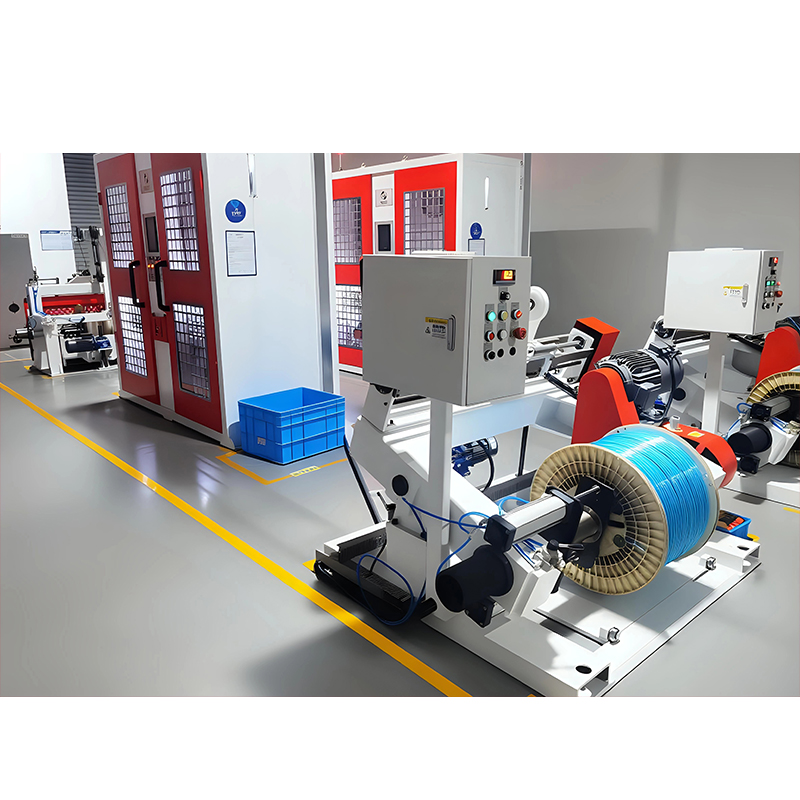
- Automatic bobbin loading and unloading, often with a robotic arm or shuttle that pulls empty reels from storage and places them into the creel.
- Servo-driven pay-off control that reads wire tension through load cells and adjusts braking force in real time.
- Digital lay-length and speed presets that recall the exact parameters for each cable design in seconds.
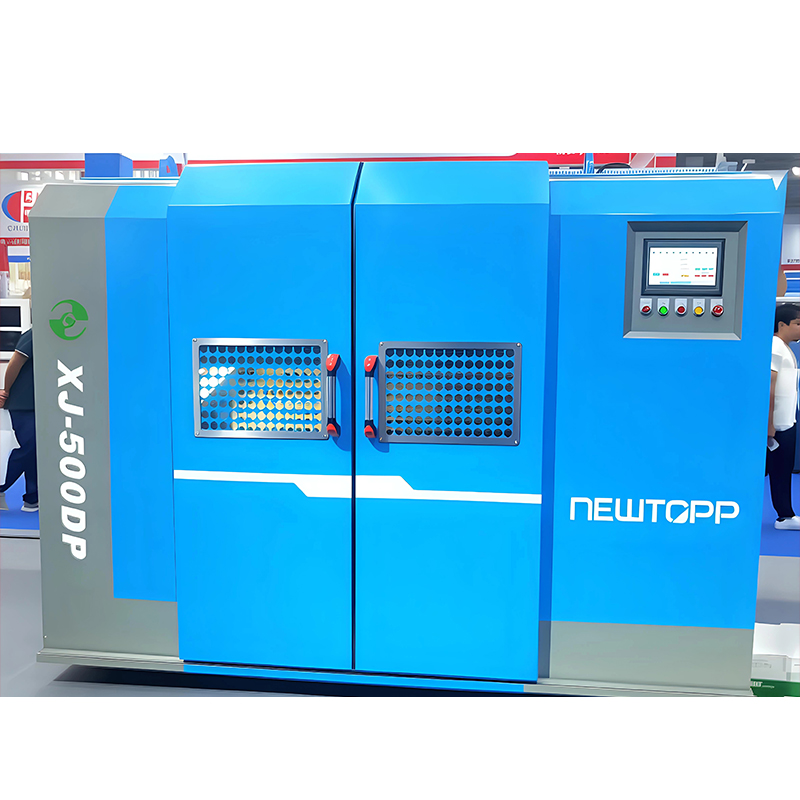
A machine like the 1250 double-bow stranding machine reflects this trend: it maintains a stable twist at high bow speed while the control system compensates for changing bobbin weight, which prevents sloppy stranding at the end of a run.
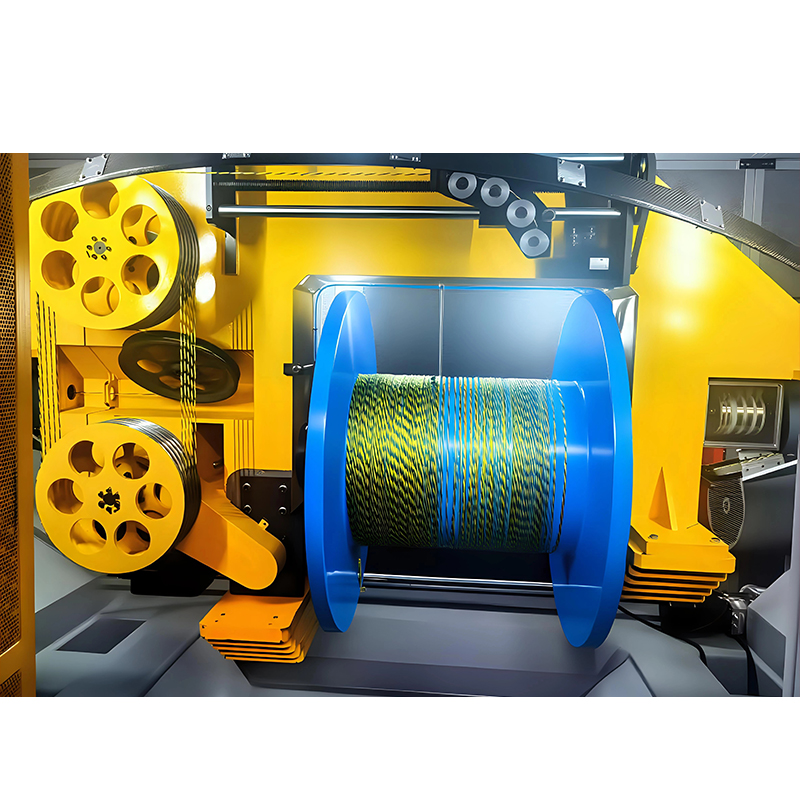 1250 Double Bow Stranding Machine for High-Speed Cable TwistingThis machine maintains stable twist at high bow speeds while automatically compensating for changing bobbin weight, preventing loose stranding near the end of a run. Its dual-bow design balances tension across multiple strands, making it a reliable choice for efficient cable production.View Product →
For a broader comparison of machine types, see our comprehensive guide to cable stranding machines.
Why Cable Manufacturers Are Moving to Robotic Stranding
The main driver is economic: robotic stranding converts operator-dependent judgment into software-controlled precision, which raises first-pass yield and lets one worker run several machines at once.
The measurable benefits that plant managers typically see after automation:
| Metric | Manual stranding | Robotic stranding |
|---|---|---|
| Tension variation | ±5–8% | ±2–3% |
| Reel change time | 15–20 minutes | Under 3 minutes |
| Operators per line | 1 per line | 1 per 3–4 lines |
| First-pass yield | 92–97% | 98–99% |
| Batch traceability | Paper records | Digital logs |
Beyond these numbers, the softer gains matter too: less scrap from broken-wire events, faster qualification of new cable designs, and fewer repeated orders caused by tension drift between shifts.
Robotic Stranding vs. Conventional Stranding: What Changes on the Shop Floor
In practice, the switch changes three things: who interacts with the machine, how the machine reacts to variation in wire tension, and how much data the process leaves behind.
| Aspect | Conventional strander | Robotic strander |
|---|---|---|
| Lay-length change | Manual gears or dials | Digital input, stored recipes |
| Tension control | Mechanical brake, set by feel | Servo brake with load-cell feedback |
| Wire-break response | Stops after a wrap or two | Instant stop with alarm location |
| Reel handling | Manual hoist or cart | Robotic arm or automatic trolley |
| Data output | Rarely recorded | OEE, tension trends, alarm history |
The practical impact is that a robotic machine recovers from small disturbances before the operator even notices them, which keeps long production runs inside tolerance.
Key Specifications to Evaluate Before Buying
Five numbers determine whether a robotic stranding machine will be profitable for your product mix: lay-length range, bobbin count, wire diameter range, take-up capacity, and tension accuracy.
- Lay-length range — typically 20 to 150 mm on general-purpose machines; make sure the lower limit fits your finest-pitch data cable designs.
- Bobbin count — 6, 12, 18, or 24 spindles decide the maximum conductor cross-section and strand geometry.
- Wire diameter range — around 0.2 to 2.0 mm is common; if you process fine magnet wire, verify the lower limit with a production sample.
- Take-up drum capacity — must match your typical order length and floor space.
- Tension accuracy — ask for load-cell-based closed-loop control and state your required tolerance in grams or newtons.
Three purchasing risks deserve attention. First, brochure speeds are usually measured on unloaded reels; ask for fully loaded performance data. Second, changeover time is only meaningful if tested on your own wire with your operator. Third, the scope of "robotic" varies between suppliers, so confirm whether it covers reel changing only or also automated wire-break repair.
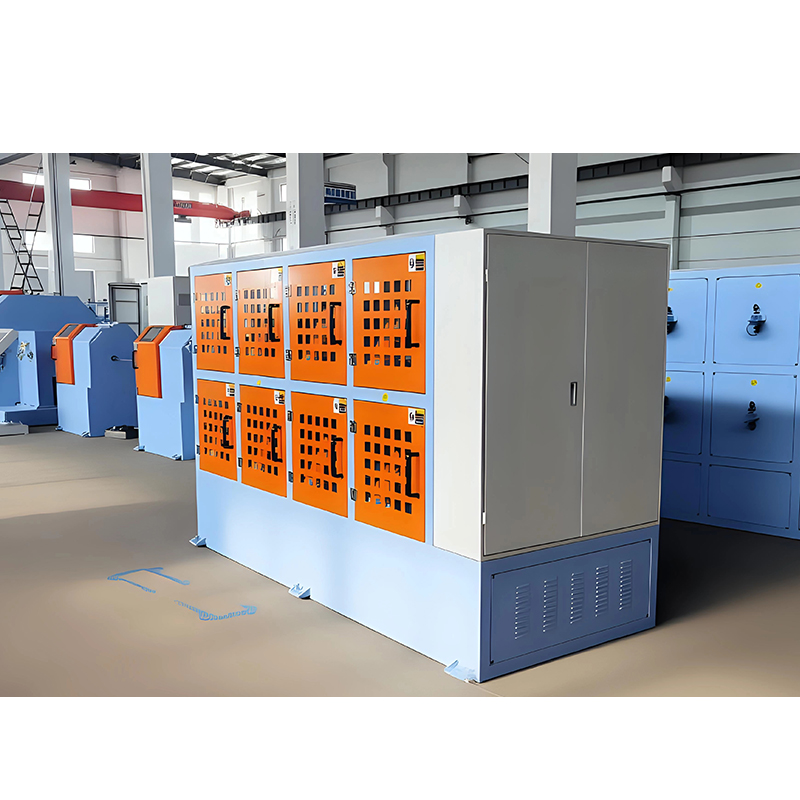
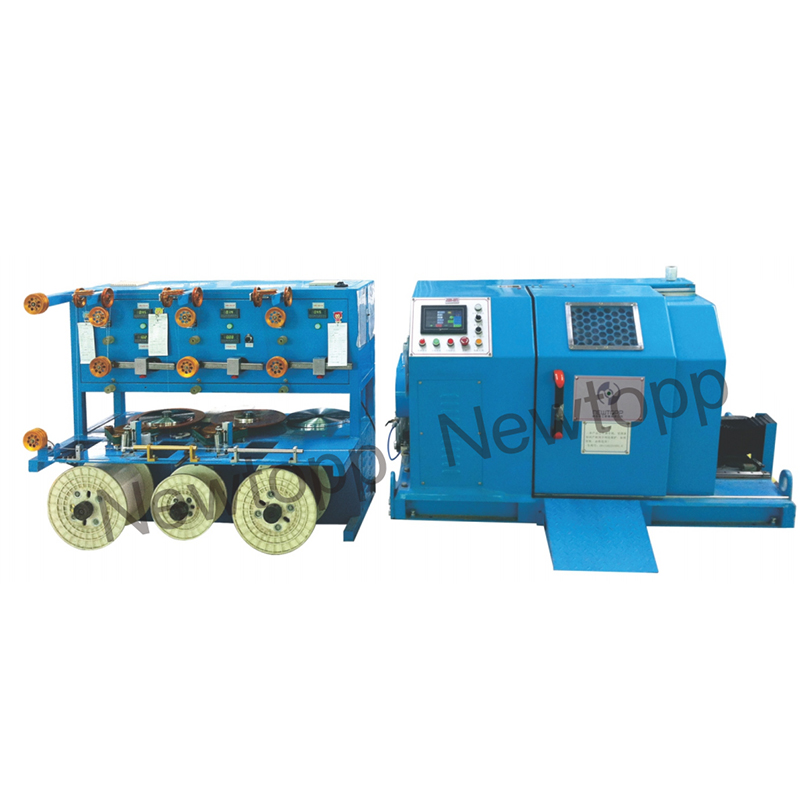
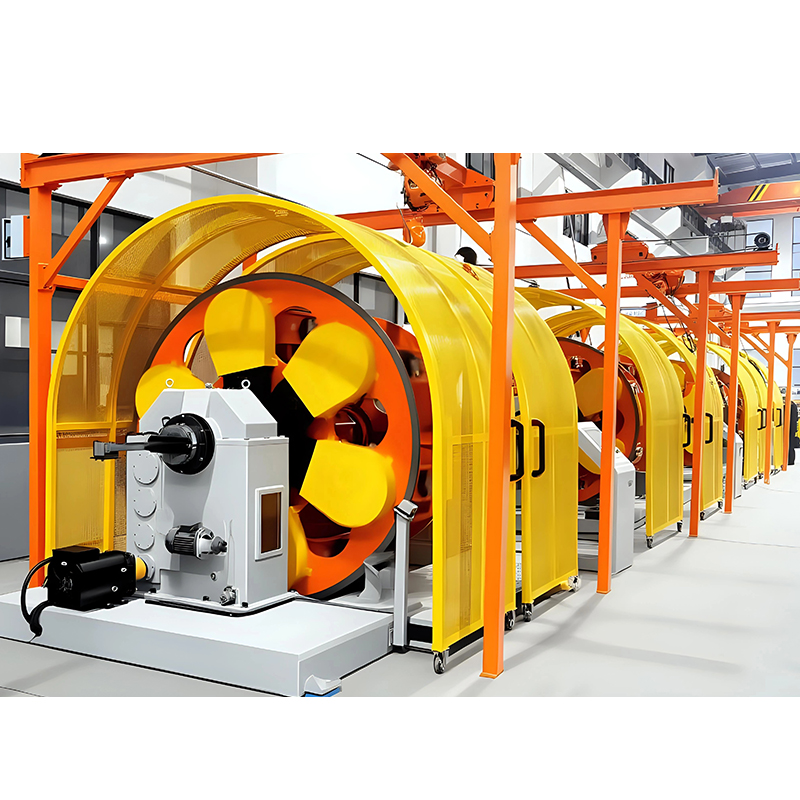 Planetary Type Stranding Machine for Precision Multiconductor CablesAfter reviewing common purchasing risks, this machine stands out for its planetary motion that minimizes residual torque and supports automated tension monitoring. It suits producers mixing power and fine control conductors while offering flexible lay control and consistent performance.View Product →
If your production mixes power conductors with fine control conductors, a planetary type stranding machine offers flexible lay control and still allows automated tension monitoring on modern builds.
Applications That Benefit Most from Robotic Stranding
The largest returns come from plants that run long, repeated orders for high-flex robot cables, data cables, and automotive harness wires, where consistency and traceability matter more than top speed.
- High-flex robot cables: hundreds of fine copper strands demand even tension to avoid early conductor breakage under continuous bending.
- Industrial Ethernet and data cables: precise lay-length and backtwist control keep electrical characteristics stable from pair to pair.
- Automotive wiring: batch traceability and low defect rates are required to qualify as a tier supplier.
- Multi-pair control cables: digital tension control prevents pair-length variation that causes crosstalk failures.
For data cable producers, the triple stranding machine is worth a close look because it can produce three twisted pairs in one pass, which cuts floor space and labor while keeping the same automated tension control.
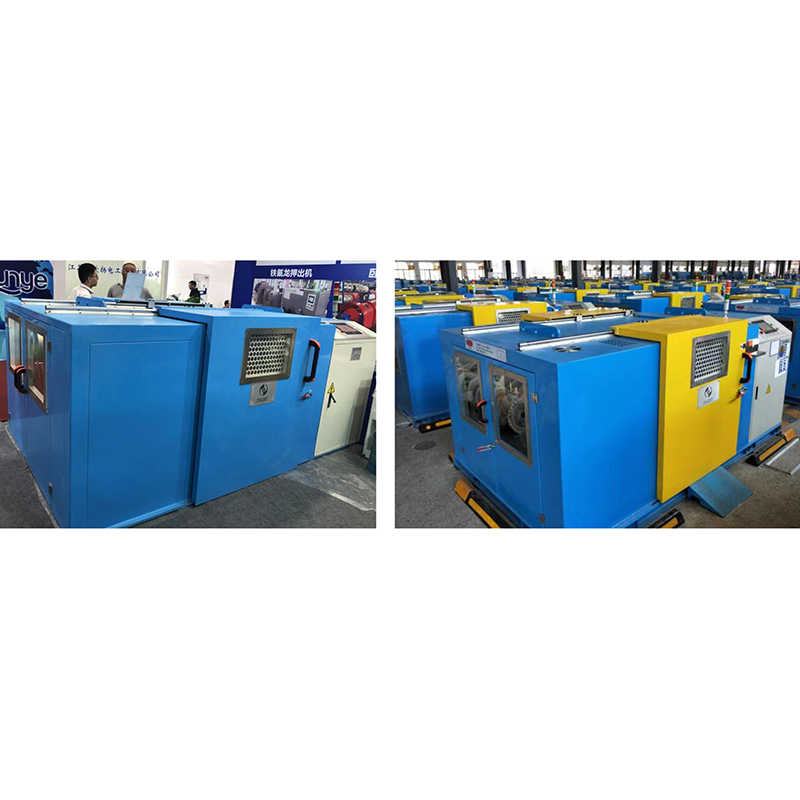 Triple Stranding Machine for High-Speed LAN Cable ProductionThis machine produces three twisted pairs in one pass, reducing floor space and labor while retaining automated tension control. With triple pitches and servo electronic pitch accuracy within ±2%, it is a practical fit for CAT5E, CAT6, and CAT7 cable manufacturers.View Product →
Browse our cable stranding machine product range to match a platform to your conductor portfolio.
Frequently Asked Questions
Here are the most common purchasing questions we hear from cable plant engineers and production managers.
What is the difference between a robotic stranding machine and a normal stranding machine?
A robotic stranding machine automates at least one of the recurring manual tasks — reel changing, tension adjustment, or process setup — through servos, sensors, and programmable logic, while a normal stranding machine requires the operator to perform those tasks by hand on every run.
Can a robotic stranding machine run fine wires?
Yes, but you must verify the lower wire diameter limit and the tension-control resolution. Fine wire requires load cells with a small measuring range so that tension feedback stays accurate below 100 g; not every machine specification is meaningful for thin conductors.
How much floor space is required for a robotic stranding machine?
The machine footprint is usually similar to that of a conventional strander, but automatic reel storage and the robotic handling cell add 2 to 4 meters at the creel end. Request a layout drawing and check aisle space for maintenance access.
What maintenance does a robotic strander need?
Servo motors and load cells reduce mechanical wear but increase electrical maintenance. Plan for annual recalibration of tension sensors, regular cleaning of the robotic gripper, and software backups. Overall, scheduled maintenance time is lower than with mechanical-brake machines.
Final Recommendation
For most cable manufacturers, the question is not whether to automate stranding, but when and at what capacity. Start with your largest recurring conductor constructions, request guaranteed performance numbers in writing, and run a paid trial with your own wire before committing to a model.
A robotic cable stranding machine pays for itself fastest when the production mix is stable, the quality requirements are strict, and labor is the bottleneck — exactly the situation in robot cable, data cable, and automotive cable plants today.