

 English
 русский
 Español



A stranding machine works by rotating its pay-off bobbins around the axis of the cable while the cable is pulled forward at a controlled speed. Each revolution wraps the incoming wires helically around the bundle already gathered at the lay plate, and the relationship between pulling speed and rotation speed fixes the lay length — the one value that decides whether the finished conductor is flexible, round and electrically repeatable.
Everything else on the machine exists to protect that relationship: even pay-off tension, a rigid rotor or cage, a closing die that defines the stranding point, and a take-up that winds the finished conductor without stretching it. Understand those four jobs and you can judge whether any stranding machine fits your cable.
Content
- 1 What a Stranding Machine Does: A Working Definition
- 2 The Working Cycle, Step by Step
- 3 Lay Length, Lay Direction and Back Twist: The Parameters That Matter
- 4 How the Main Stranding Machine Types Work
- 5 When the Working Parameters Go Wrong
- 6 Matching the Machine to the Cable You Build
- 7 Frequently Asked Questions
What a Stranding Machine Does: A Working Definition
A stranding machine is cable-making equipment that takes two or more wires or insulated cores from rotating supply bobbins and lays them into a helical assembly with a defined lay length and a defined lay direction.
It is not the same thing as a buncher. A buncher pulls wires together with no back twist and lets them find their own lay. That is fast and inexpensive, and perfectly adequate for short flexible leads. A strander controls the helix deliberately: every wire has a known position, a known twist rate and a known direction. That control is why stranded conductors keep their roundness, why data pairs keep their electrical symmetry, and why the tenth kilometre of conductor behaves the same as the first.
Whatever the machine size, the mechanical tasks never change: rotate the supply, hold tension even, close the wires at a fixed point, and wind the result without deforming it. The differences between machine types are simply different answers to the question of how to rotate the supply without stressing the wire.
The Working Cycle, Step by Step
The cycle runs in a fixed order, and each stage constrains the next one. If any stage is unstable, the lay length will drift even though the motor speed has not changed.
- Pay-off and tension. Wires leave bobbins mounted inside the rotor, bow or cage. Tension is held by mechanical friction, pneumatic brakes or dancer rollers, and in good practice it stays within a few percent of the set value from the full bobbin to the empty one.
- Rotation. The rotor turns at a set rpm. A single-bow machine adds one twist per revolution. A double-bow machine carries two bobbins on opposite sides of the rotor, so one revolution adds two twists and output roughly doubles for the same speed.
- Closing. All wires converge at a lay plate or closing die downstream of the rotor. The distance between the last guide and this closing point governs how gradually the wires are bent into the helix, and therefore how much the conductor is worked.
- Take-up. A capstan pulls the strand at line speed and a reel winds it under controlled tension. Traction is usually provided by a haul-off rather than the reel itself, so that reel diameter does not change the lay.
- Back twist. On back-twist machines, each bobbin also rotates about its own axis in the opposite direction. This cancels most of the torsion that the stranding action puts into every individual wire, which is what keeps insulated pairs and fine flexible conductors from fighting back after they leave the die.
The arithmetic that ties it together is short. Lay length in millimetres equals line speed in mm per minute divided by twists per minute, and twists per minute equals rotor rpm multiplied by the number of bows. A 1250 double-bow machine at 600 rpm produces 1200 twists per minute; at 60 m/min, or 60,000 mm/min, that yields a lay length of 50 mm. Change either number and the lay changes with it — which is why speed ramps during start-up are a common source of soft or uneven sections.
Lay Length, Lay Direction and Back Twist: The Parameters That Matter
Only a handful of settings actually change the conductor, and they interact. Adjusting one without watching the others is how most stranding problems start.
| Parameter | What it controls | Practical note |
|---|---|---|
| Lay length | The distance the cable travels during one complete twist | Short lay adds flexibility and fatigue life; long lay lowers loss and crosstalk in data cables |
| Lay direction | Whether the helix runs left (S) or right (Z) | Opposite lay directions on successive layers keep the conductor from untwisting and help termination |
| Back twist ratio | How much counter-rotation each bobbin receives | Too little leaves residual torsion; too much can loosen the strand inside the die |
| Rotor speed | Twists per minute, hence output at a given line speed | Limited by bobbin mass, windage and bearing quality rather than by the drive |
| Line speed | The pull rate through the machine | Combined with rpm it defines lay; ramps must be coordinated with the rotor |
| Pay-off tension | Wire position inside the strand | Uneven tension causes birdcaging, diameter variation and core protrusion |
| Fill factor and die size | How tightly the wires pack into the cross-section | Compacted conductors typically run around 0.9; an oversized die leaves the strand loose |
How the Main Stranding Machine Types Work
Machine type follows from three questions: how large is the conductor, how flexible must it be, and how much output do you need. The working principle is identical in all of them; only the way the bobbins are carried changes.
Double-bow stranders: two twists per revolution
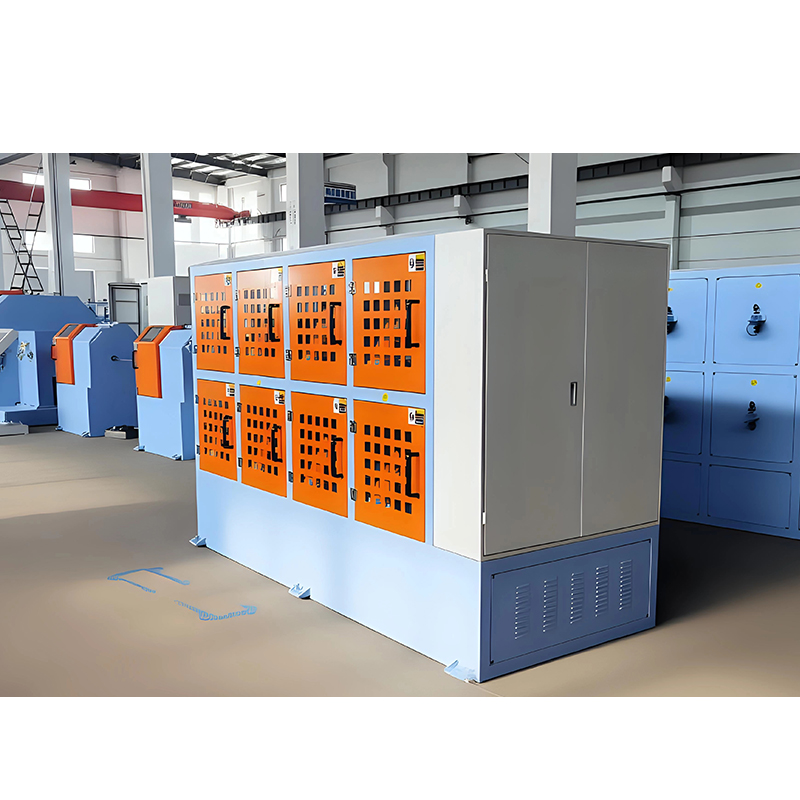
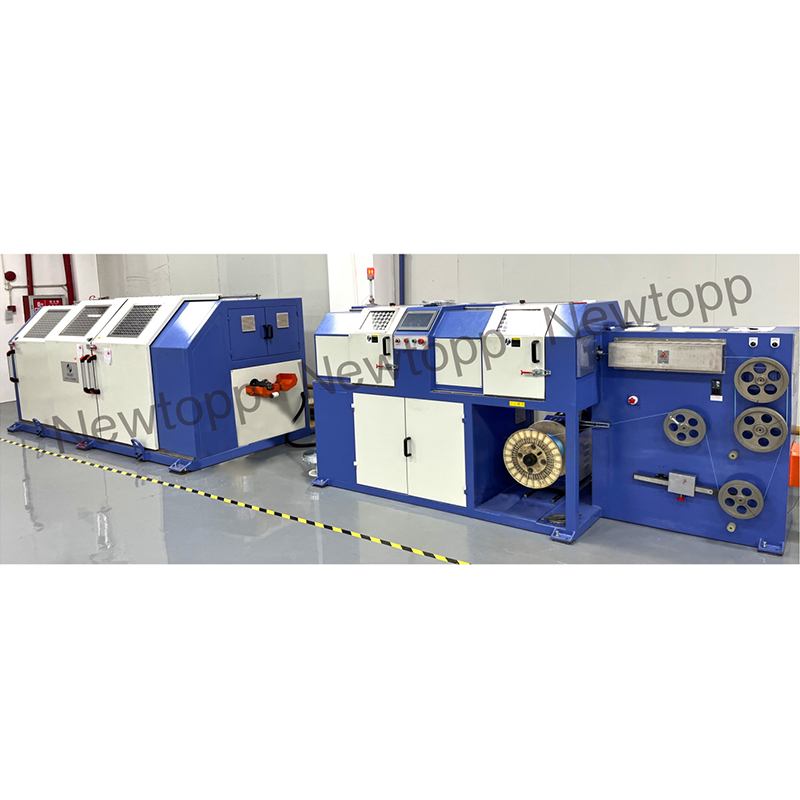
In a double-bow machine the bobbins sit inside a bow-shaped rotor. Each half-turn of the bow carries one bobbin around the cable axis, so a full revolution delivers two twists. That is why these machines dominate for medium and fine conductors where output matters: a 1250 double-bow strander can reach very high twist rates while keeping the wire path gentle. The trade-off is that the bow must be balanced precisely, because at high speed any imbalance shows up immediately as lay-length variation and tension ripple.
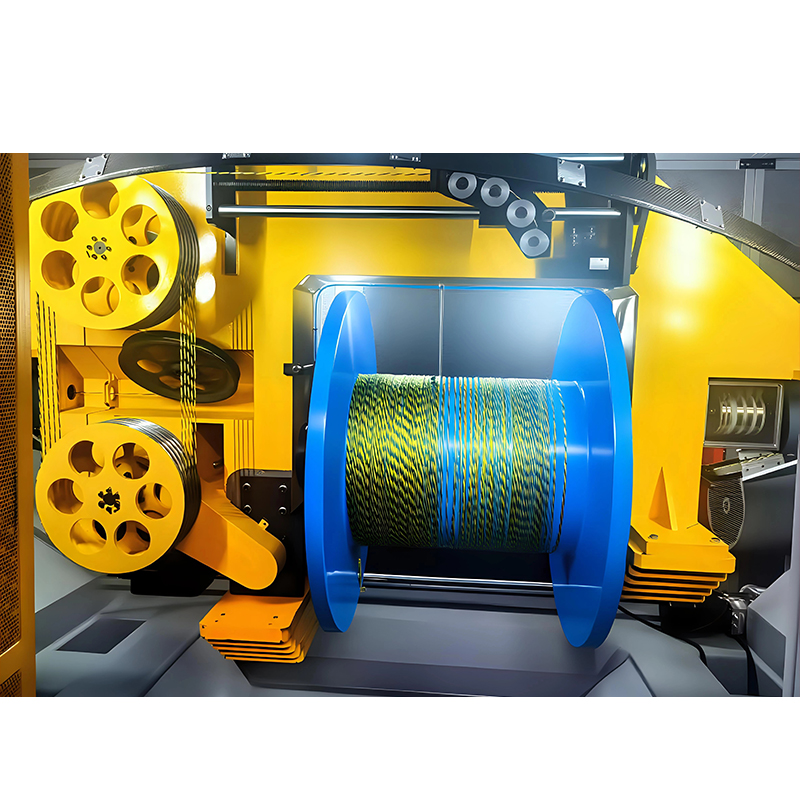 1250 Double Bow Stranding Machine for Cable Core ProductionThe 1250 double-bow strander twists conductors and fibers into cable cores, delivering two twists per revolution with balanced tension for medium and fine wires.View Product →
Back-twist pair stranders: built for data and flexible cores
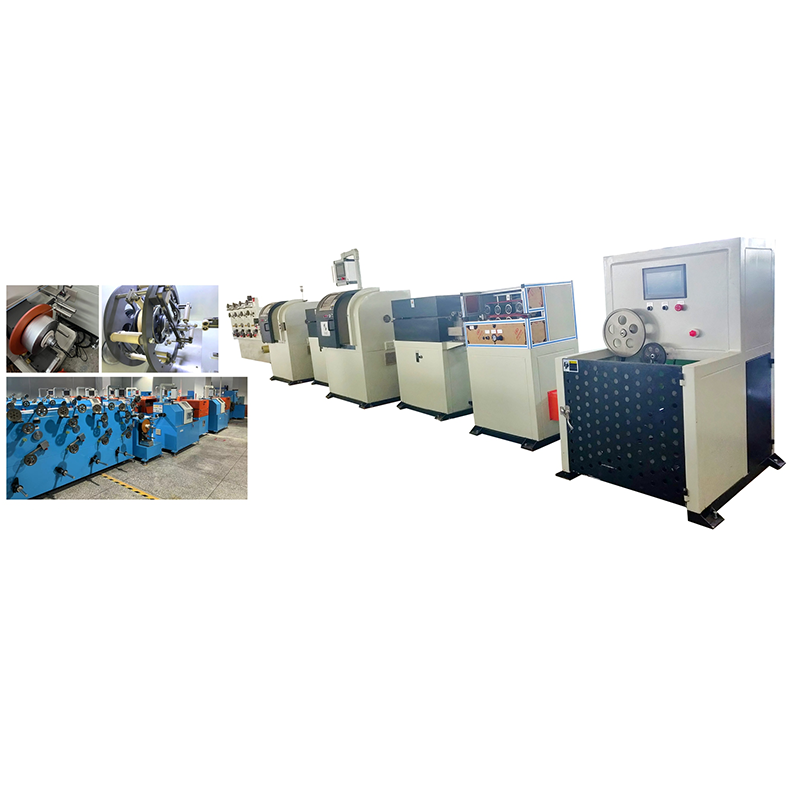
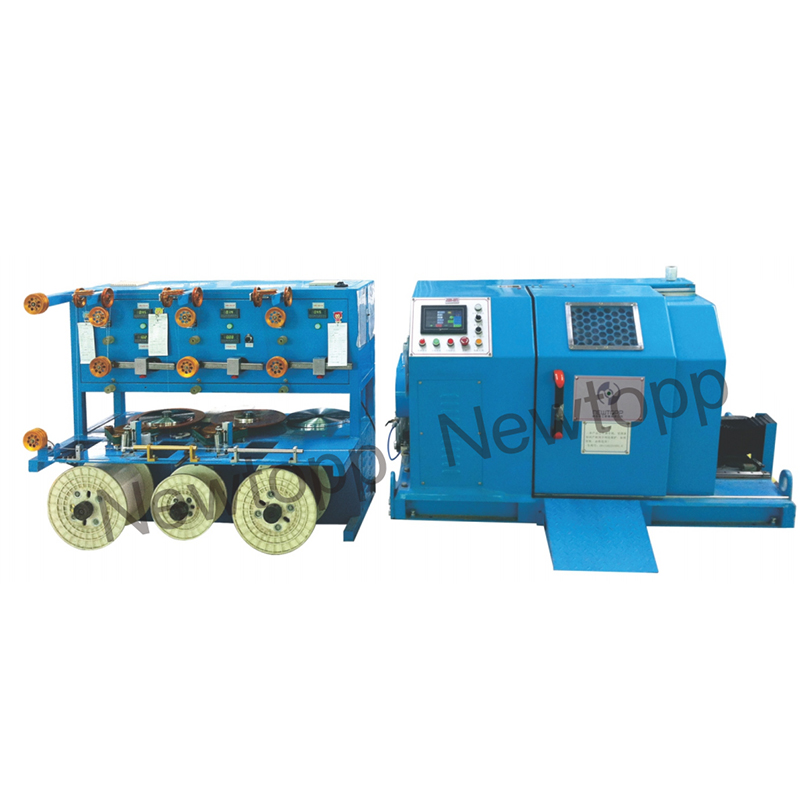
A back-twist pair strander counter-rotates each bobbin against the direction of the main rotor. The individual insulated cores therefore arrive at the closing point with almost no stored torsion, which matters most for LAN and data cables, robot arm cable and drag-chain cable. Horizontal and vertical versions exist because shop layout and cable path decide which one fits: a horizontal machine suits long, straight take-off runs, while a vertical frame saves floor space and handles light, fine cores. Set the back twist ratio wrongly and the pair will either open up after the die or twist back on itself inside the next process.
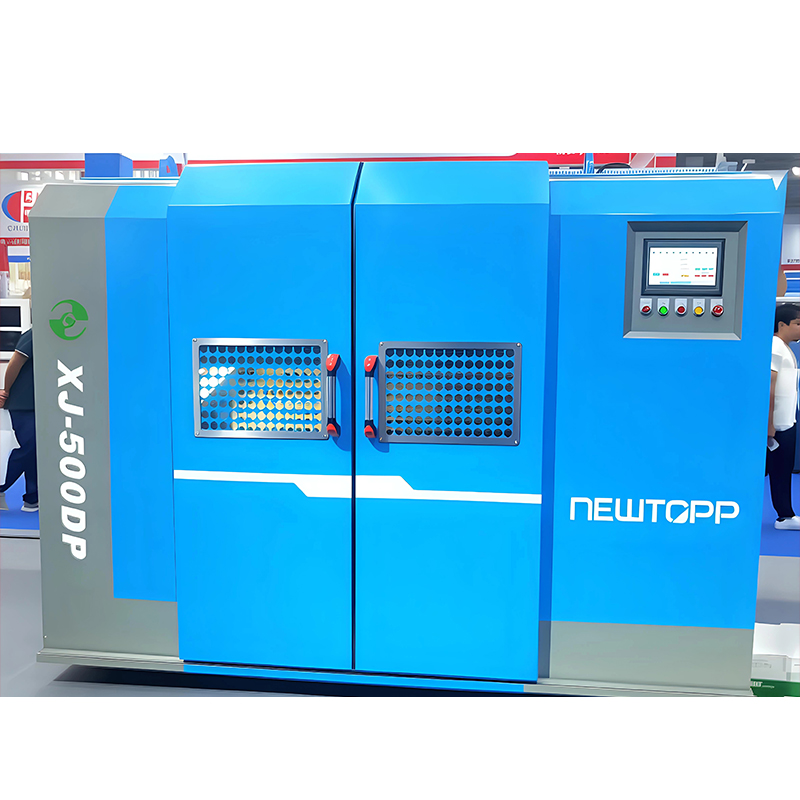 Horizontal/Vertical Back-Twist Pair Stranding Machine for Data CablesA back-twist pay-off and pair twisting machine for insulated data-cable cores; counter-rotation reduces stored torsion before closing, supporting Cat-5/6 and HDMI 2.1 work.View Product →
Planetary stranders: many bobbins, minimum stress
A planetary strander carries its bobbins in a large cage that rotates as a whole, so each bobbin keeps a fixed orientation relative to the cable. The wire path is long and gentle, which is exactly what large power conductors, sector-shaped conductors and steel or aluminium wire assemblies need. The machine is slower than a bow strander, but it handles heavy bobbins, large cross-sections and materials that will not tolerate sharp bending. It is also the usual choice when the strand must remain metallurgically undisturbed.
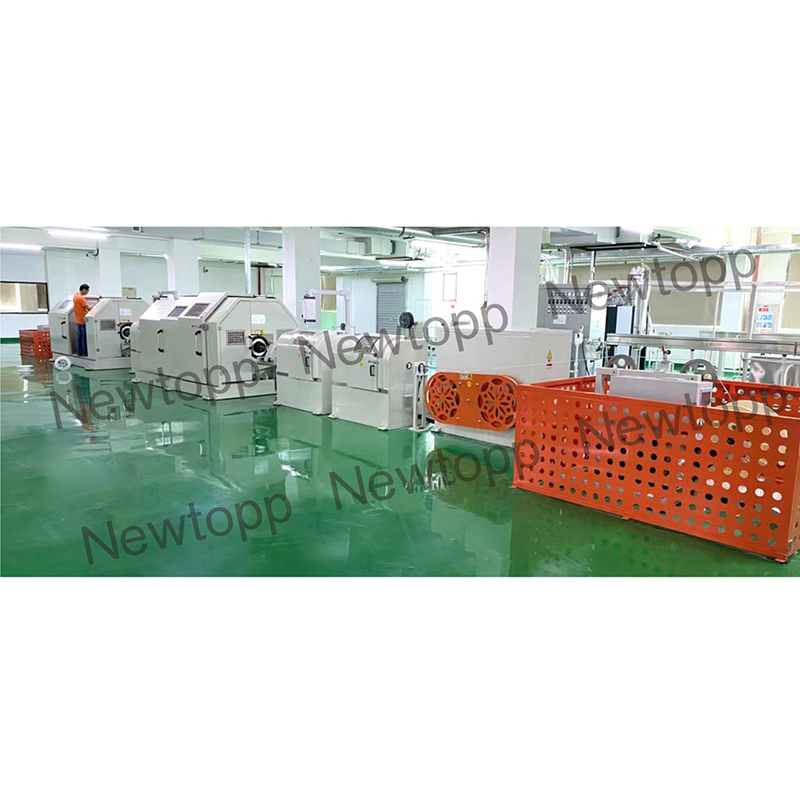
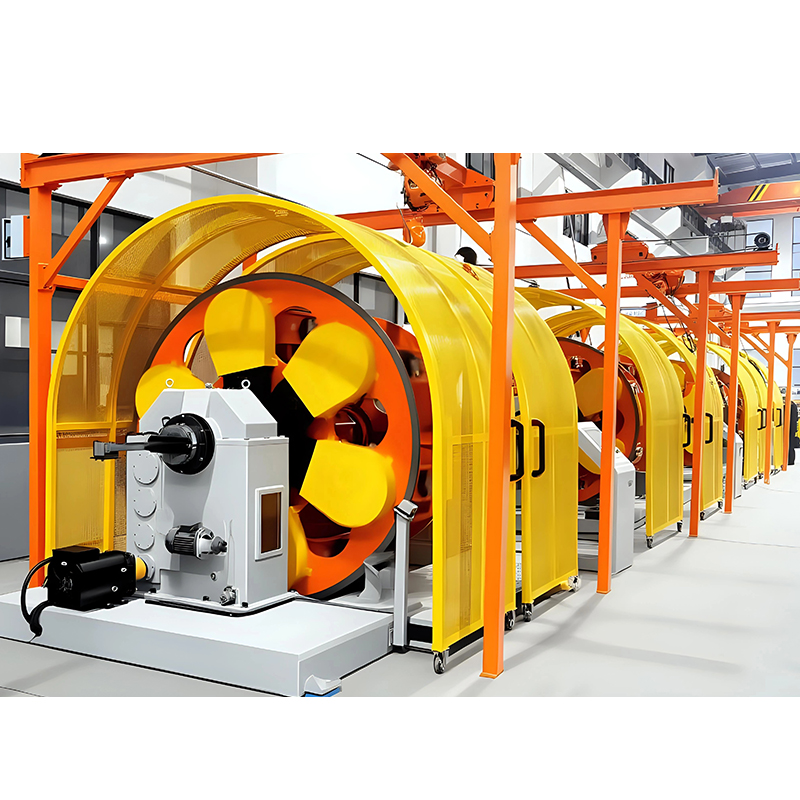 Planetary Type Stranding Machine for Complex Precision CablesPlanetary strander with cage-mounted bobbins for gentle wire paths, suited to large power conductors and complex precision cables needing geometric symmetry and low residual torque.View Product →
Cantilever single stranders and triple stranders fill the gaps at either end of the range. A cantilever single strander is compact and easy to thread, which suits short runs and frequent changeovers. A triple strander performs three twisting operations in a single pass through the machine, which is a practical way to build a tight, compact conductor without running the cable through three separate lines.
The working principle behind all of these is set out in more depth in this comprehensive guide to cable stranding machines, including how lay length interacts with each machine family.
When the Working Parameters Go Wrong
Most stranding faults are traceable to one of five causes, and the symptom usually points straight at the cause.
- Birdcaging, where wires open up between the die and the take-up, almost always means pay-off tension is uneven or one bobbin is dragging.
- Loose or soft sections in an otherwise good conductor usually come from a speed ramp during start-up or from a bobbin that has run to its end and lost tension.
- Uneven lay length along the reel points to capstan slip, a worn haul-off belt, or a take-up tension that rises as the reel fills.
- Conductor untwisting after the die indicates too little back twist, or a lay direction that works against the following layer.
- Flattened or marked wires are a die problem: too tight a closing die, a nicked guide, or a wire path that bends too sharply near the rotor.
Matching the Machine to the Cable You Build
The same principle produces very different machines depending on the cable. This is the part worth checking against your own product list before you specify anything.
| Cable or conductor | Typical configuration | Why it fits |
|---|---|---|
| Robot arm and drag-chain cable | Back-twist pair strander, short lay, high back twist ratio | Flexible cores need low residual torsion to survive millions of bending cycles |
| LAN and data cable | Back-twist pair strander with tight lay tolerance | Pair geometry must stay stable or crosstalk and impedance drift |
| Automotive and EV cable | Double-bow strander with compacting die | High output on medium cross-sections, consistent diameter for insulation |
| Power cable sector conductor | Planetary strander with large cage | Heavy bobbins and large cross-sections need a long, gentle wire path |
Frequently Asked Questions
What is the difference between stranding and bunching?
Stranding controls both lay length and lay direction deliberately, so the conductor geometry is defined and repeatable. Bunching lets the wires take up their own random lay with no back twist, which is faster and cheaper but gives a less round, less predictable conductor.
How do I calculate the lay length?
Divide line speed by twists per minute. Because a double-bow machine adds two twists per revolution, its effective twists per minute is twice the rotor rpm — remember that factor before you compare two machines on paper.
Why does a stranded conductor untwist after it leaves the die?
The wires still carry stored torsion from the twisting action. Back twist removes most of it. If the strand opens up or springs back, increase the back twist ratio gradually and check the lay direction of the following layer.
Can one stranding machine handle both rigid and flexible conductors?
Only within limits. A back-twist machine can run either, but the lay length and back twist ratio you need for flexible cable are very different from those for a compact power conductor. In practice most plants split the work between a back-twist pair strander and a bow or planetary machine rather than compromise on one.
The working principle of a stranding machine never changes: rotate the supply, hold even tension, close the wires at a known point, and pull the result at a speed that fixes the lay. What changes is how the bobbins are carried, and that single design decision determines the conductor sizes, materials and flexibility levels a machine can serve. Match that decision to your cable list first, and the parameter settings become a matter of routine tuning rather than guesswork.
Newtopp has been building cable equipment since 2004, covering extrusion, stranding and taping lines from one manufacturing base, which helps when a conductor has to run from the strander into the next process without tolerances drifting between suppliers.