

 English
 русский
 Español

Industry News


Cable Stranding Machine: Types, Working Principle & Buying Guide
2026-03-18
Whether you are setting up a new cable factory or upgrading existing production lines, understanding the cable stranding machine — its working principle, variants, and critical selection criteria — is the single most important step toward consistent cable quality and manufacturing efficiency.
Content
- 1 What Is a Cable Stranding Machine?
- 2 How Does a Cable Stranding Machine Work?
- 3 Main Types of Cable Stranding Machines
- 4 Cable Stranding Machine Type Comparison
- 5 Key Components of a Cable Stranding Machine
- 6 How to Select the Right Cable Stranding Machine
- 7 Stranded vs. Solid Conductors: Why Stranding Matters
- 8 Industry Applications of Cable Stranding Machines
- 9 Maintenance Best Practices for Cable Stranding Machines
- 10 Frequently Asked Questions (FAQ)
- 11 Conclusion
What Is a Cable Stranding Machine?
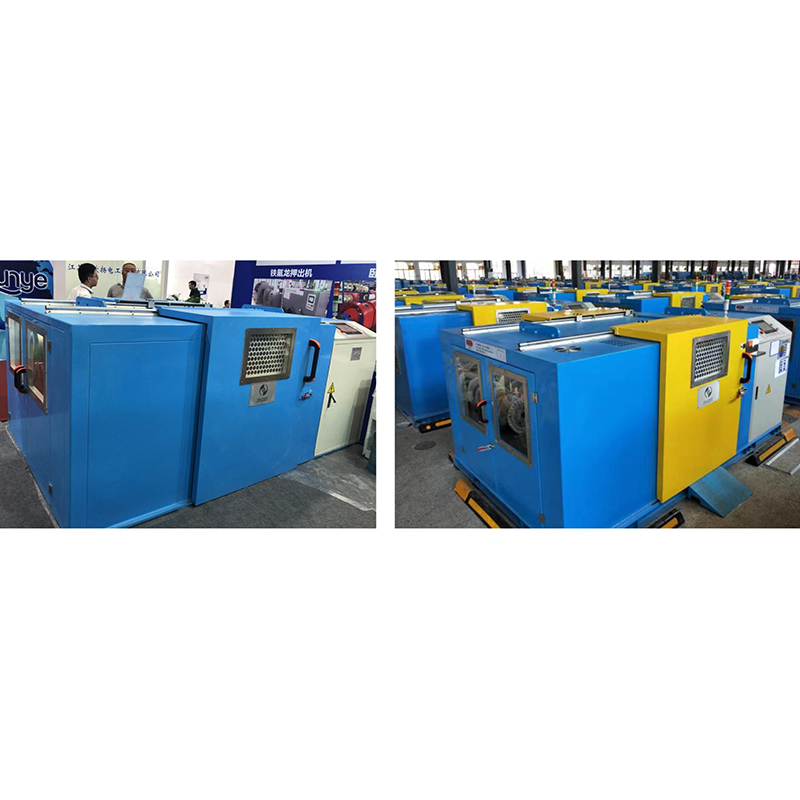
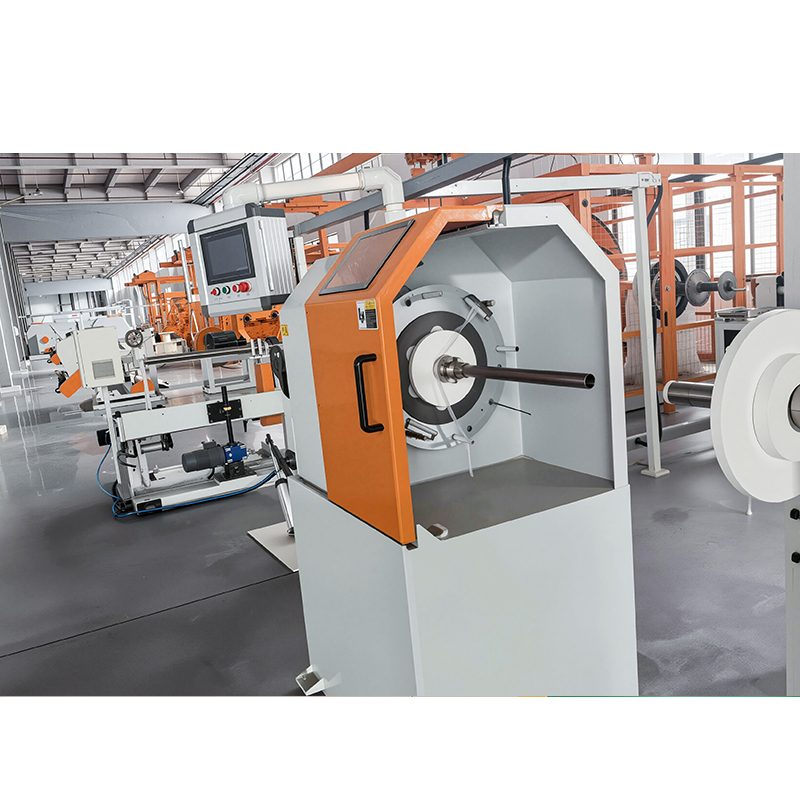
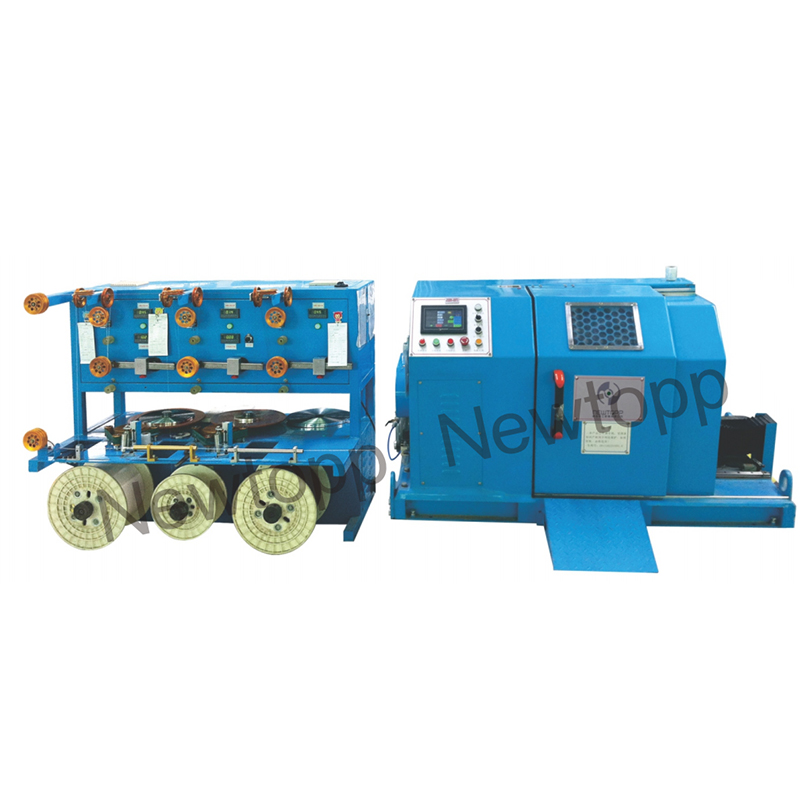
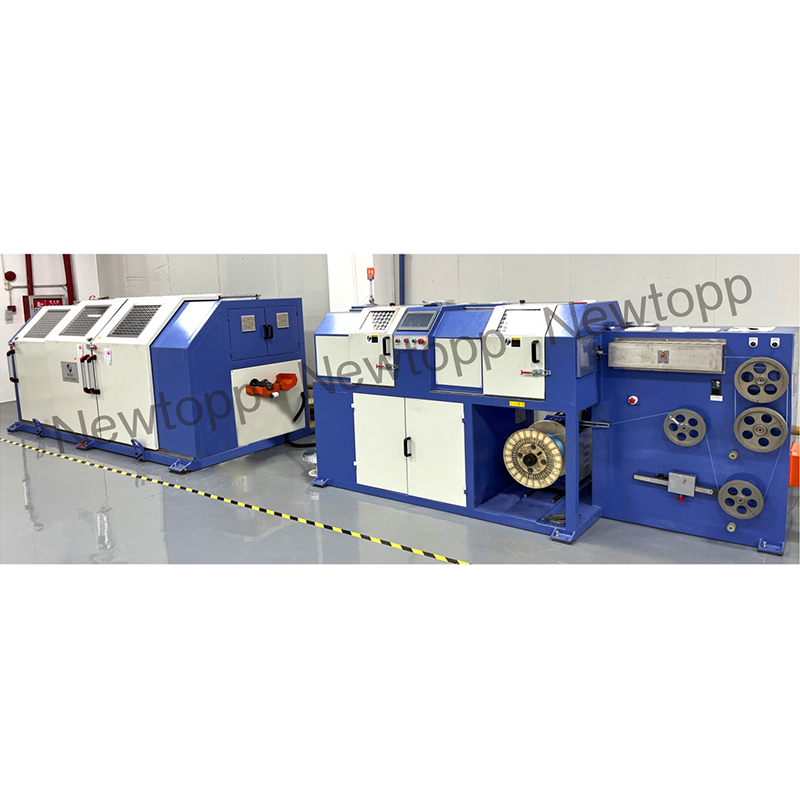
A cable stranding machine is industrial equipment designed to twist, braid, or lay multiple individual wires, conductors, or optical fibers together into a composite cable structure. This process — known as stranding or cabling — dramatically improves a cable's flexibility, mechanical strength, current-carrying capacity, and overall electrical performance compared to a single solid wire of equivalent cross-section.
The machine achieves this by rotating payoff reels (also called bobbins or spools) around a central axis while simultaneously pulling the wire bundle through a closing die, forming a consistent, helical lay. The result is a precisely engineered conductor ready for the next stage of cable manufacturing, such as insulation extrusion or armoring.
From power transmission cables and automotive wiring harnesses to submarine communication cables and fine medical-grade wires, the cable stranding machine is indispensable across virtually every wire and cable market segment.
How Does a Cable Stranding Machine Work?
Understanding the operating principle helps manufacturers select the right machine type and configure it correctly.
Core Working Principle
- Wire Payoff: Individual wires are fed from bobbins mounted on the stranding cradle or in fixed payoff positions.
- Tension Control: Each wire passes through individual tension devices (magnetic brakes or dancer arms) to ensure uniform elongation and prevent breakage.
- Rotation & Twisting: The rotating cage or bow arm wraps the wires around a central core wire, creating the helical lay.
- Closing Die: All wires converge at a precision die that compresses them into the final circular or sector shape.
- Take-up: The finished stranded conductor is wound onto a take-up spool at a speed synchronized with the stranding speed.
Key Process Parameters
- Lay Length (Pitch): The axial distance per complete revolution of the helix — a shorter lay means more flexibility but lower linear output speed.
- Lay Ratio: Lay length divided by the diameter of the stranded conductor, typically ranging from 10:1 to 30:1 depending on cable class.
- Stranding Direction: Right-hand (S-lay) or left-hand (Z-lay) twist, often alternated between layers for stability.
- Number of Wires: Determined by the cross-section class (e.g., 7-wire, 19-wire, 37-wire concentric structures).
Main Types of Cable Stranding Machines
Manufacturers must choose from several fundamentally different machine architectures. Each type is optimized for specific wire gauges, production speeds, and conductor structures.
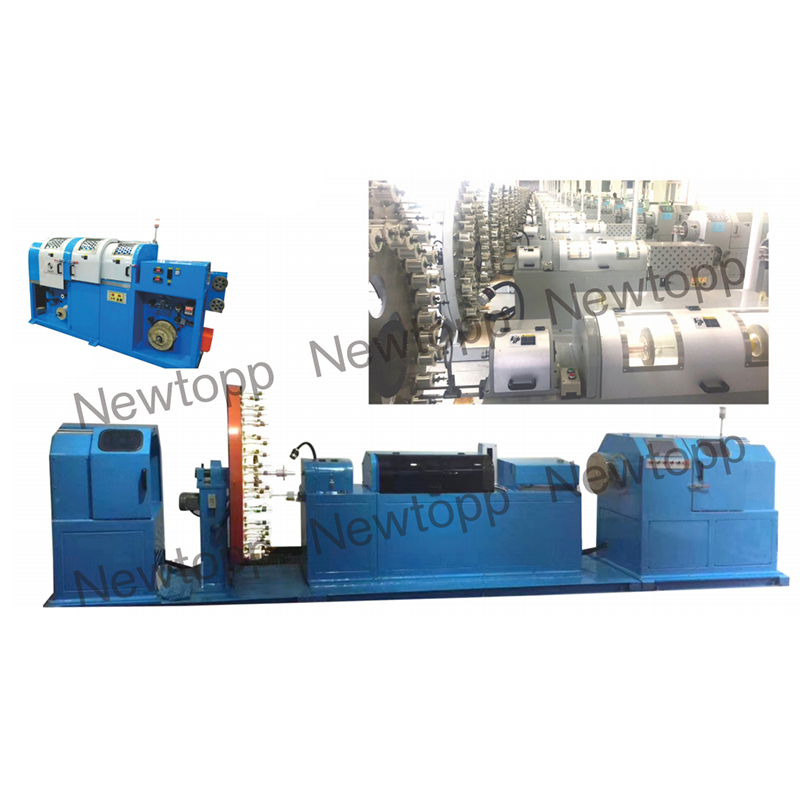
1. Tubular (Drum Twister) Stranding Machine
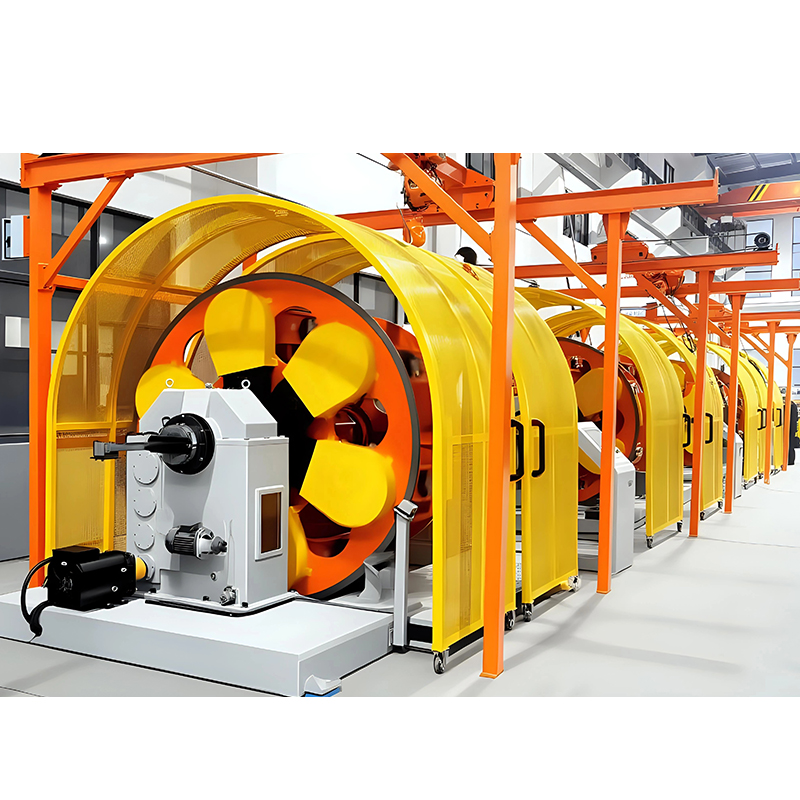
The most widely used configuration for medium and large conductor cross-sections. The payoff bobbins are housed inside a rotating tube (drum). As the tube spins, wire is twisted around the central core. Tubular machines excel at processing copper and aluminum conductors from 10 mm² up to several thousand mm².
- Advantages: High production speeds, excellent lay accuracy, large bobbin capacity, multi-layer stranding in one pass.
- Best for: Power cables, overhead transmission lines, underground distribution cables.
2. Planetary (Cradle) Stranding Machine
In a planetary stranding machine, the payoff bobbins remain in a fixed horizontal orientation while the cradle rotates around them. This counter-rotation prevents the wire from being twisted on its own axis, which is critical for certain applications.
- Advantages: No torsion on individual wires; ideal for pre-formed or delicate conductors; produces sector-shaped conductors.
- Best for: High-voltage XLPE power cables, submarine cables, sector conductors.
3. Bow (Skip) Stranding Machine
A bow stranding machine uses one or more rotating bow arms that carry wire from stationary payoffs around a central former. It is a simpler, high-speed solution for fine wire applications.
- Advantages: Extremely high rotation speeds (up to 6,000 RPM for fine wire), compact footprint, low tooling cost.
- Best for: Bunching fine copper wire, data cable cores, automotive wiring.
4. Rigid (Frame) Stranding Machine
A rigid stranding machine mounts all bobbins on a fixed, non-rotating frame. The bobbins rotate on their own axes as the entire frame revolves. Used for very large cross-sections or when maximum bobbin capacity is needed.
- Advantages: Handles very large spool weights; robust for heavy-gauge conductors.
- Best for: Extra-large cross-section power cables, armored cables, steel wire stranding.
5. Bunching Machine
Technically a variant of the cable stranding machine family, a bunching machine twists wires together without a specific lay pattern, producing a flexible, random-lay bundle commonly used for flexible cords and fine-strand conductors.
- Advantages: Very high speed, simple setup, low cost per meter.
- Best for: Flexible extension cords, speaker cables, low-voltage wiring harnesses.
Cable Stranding Machine Type Comparison
The table below summarizes the key differences to help you identify the right cable stranding machine for your application.
| Machine Type | Wire Range | Max Speed | Lay Precision | Best Application | Investment Level |
| Tubular | 1.5 – 3,000 mm² | Medium–High | Excellent | Power / Distribution Cables | Medium–High |
| Planetary | 16 – 2,500 mm² | Medium | Very High | HV / Submarine Cables | High |
| Bow / Skip | 0.03 – 2.5 mm² | Very High | Good | Fine Wire / Data Cables | Low–Medium |
| Rigid Frame | 120 – 5,000 mm² | Low–Medium | Good | Heavy-Gauge / Armored | High |
| Bunching | 0.05 – 10 mm² | Very High | Standard | Flexible Cords / Harnesses | Low |
Key Components of a Cable Stranding Machine
Regardless of machine type, all cable stranding machines share a set of critical sub-systems whose quality directly determines output consistency and uptime.
- Payoff System: Cradle, flyer, or static payoff racks with individual tensioning per wire position. Precision tension control is the single largest quality variable.
- Main Drive & Gearbox: High-torque AC or DC servo drives with precision gear reduction deliver consistent rotation speed across the full speed range.
- Closing Die Holder: Accepts interchangeable carbide or hardened steel closing dies in sizes matched to the target conductor diameter.
- Haul-Off Capstan: A motorized capstan maintains constant linear speed and back-tension on the finished conductor.
- Take-Up Unit: Motorized level-winding take-up ensures neat, damage-free storage of the stranded conductor on the output bobbin.
- PLC Control System: Modern machines use programmable logic controllers (PLC) with HMI touchscreens for recipe storage, production data logging, and fault diagnostics.
- Wire Break Detection: Optical or mechanical sensors stop the machine instantly on wire breakage to prevent expensive die damage and product scrap.
How to Select the Right Cable Stranding Machine
Choosing the wrong machine type or specification is one of the most costly mistakes a cable manufacturer can make. The following criteria form the foundation of a sound selection decision.
1. Target Product Range
Define the minimum and maximum conductor cross-sections, wire gauges, and number of wire positions your product mix demands. A machine with too narrow a product range creates bottlenecks; over-specifying wastes capital.
2. Required Production Speed
Calculate your monthly output targets in meters or kilograms. Match these to the machine's rated stranding speed (RPM) and the lay length requirements of your target conductor classes. A planetary machine running at 40 RPM may produce the same meterage as a tubular machine at 400 RPM when the lay length differs by 10×.
3. Conductor Material
Copper, aluminum, steel, optical fiber, and specialty alloys each require different tension settings, closing die materials, and machine speeds. Ensure the machine's tension range and closing die compatibility match your raw material.
4. Compliance Standards
Products sold under IEC, UL, BS, or other standards specify precise lay length tolerances and conductor compaction ratios. Verify that the machine's precision and monitoring capabilities can consistently meet these requirements.
5. Automation & Integration Level
Industry 4.0-ready cable stranding machines offer OPC-UA or Ethernet/IP connectivity for integration with MES (Manufacturing Execution Systems). For high-volume operations, automated bobbin handling and online measurement systems (laser diameter gauges, lay pitch counters) dramatically reduce labor costs and scrap rates.
6. Total Cost of Ownership
Consider not just the purchase price but also energy consumption (kWh per ton of output), die wear rates, spare parts availability, and service response times. A lower-priced machine with poor spare parts support can cost far more over a 10-year service life than a well-supported premium system.
Stranded vs. Solid Conductors: Why Stranding Matters
The value of the cable stranding machine is best understood when comparing stranded and solid conductors side by side.
| Property | Solid Conductor | Stranded Conductor |
| Flexibility | Low — risk of fatigue cracking | High — survives repeated bending |
| Current Capacity | Slightly higher for same cross-section | Marginally lower due to lay factor |
| Mechanical Strength | Moderate | High — load shared across all wires |
| Installation Ease | Difficult in complex routes | Excellent — conforms to routing paths |
| Resistance to Vibration | Poor | Excellent |
| Suitable Cross-Sections | ≤ 10 mm² (typical) | 1.5 mm² to 5,000+ mm² |
Industry Applications of Cable Stranding Machines
The cable stranding machine serves virtually every sector that depends on reliable electrical or data connectivity.
- Energy & Power Utilities: Low, medium, and high-voltage underground distribution cables; overhead transmission lines (ACSR, AAC, AAAC).
- Renewable Energy: Wind turbine torsion cables, solar DC trunk cables, offshore floating wind umbilicals.
- Automotive: High-flexibility wiring harness conductors rated for continuous vibration; EV battery cables requiring Class 6 fine stranding.
- Telecommunications: Copper pair cables, coaxial cable inner conductors, signal cables for data centers.
- Aerospace & Defense: Ultra-lightweight silver-plated copper alloy conductors for aircraft wiring systems.
- Marine & Offshore: Flexible dynamic power cables, submarine communication cables, ROV umbilicals.
- Building & Construction: Installation wiring (Class 1–2), flexible cords (Class 5–6), armored building cables.
- Medical: Fine-strand biocompatible conductors for patient monitoring leads and implantable devices.
Maintenance Best Practices for Cable Stranding Machines
Maximizing uptime and service life requires a disciplined preventive maintenance program.
- Daily: Check individual wire tensions; inspect closing dies for wear or chips; verify brake pad condition on all payoff positions.
- Weekly: Lubricate main bearings and gear surfaces; clean wire guides and rollers; verify capstan grip and liner condition.
- Monthly: Inspect drive belts and coupling alignments; verify PLC sensor calibration; check motor insulation resistance.
- Quarterly: Full gearbox oil analysis; recalibrate tension measurement systems; review wire break event logs for trend patterns.
- Annually: Complete machine overhaul including bearing replacement on high-speed positions; verify geometric alignment of entire payoff-to-take-up line.
Frequently Asked Questions (FAQ)
Conclusion
The cable stranding machine is the cornerstone of every wire and cable manufacturing operation. Its ability to transform individual wires into flexible, mechanically robust, and electrically optimized stranded conductors underpins the reliability of infrastructure ranging from residential wiring to offshore wind farms.
Selecting the right type — whether a tubular machine for high-volume power cable production, a planetary machine for torsion-sensitive high-voltage conductors, or a bow machine for ultra-fine wire bunching — requires a careful analysis of your product range, production targets, conductor materials, compliance requirements, and total cost of ownership.
Equally important is a robust maintenance program and, where applicable, investment in modern automation and data integration. As cable standards continue to tighten and labor costs rise globally, the intelligence and precision built into today's cable stranding machines represent one of the most leveraged investments a cable manufacturer can make.
-
Phone
+86 188 2296 5630 +86-(0)515-8510 8601Email
[email protected]
[email protected]
[email protected]
[email protected]
[email protected]
[email protected]Address
No. 168 Haitai Road, Dongtai City, Jiangsu Province, China
Copyright © 2025 Jiangsu NewTopp Precision Machinery Co., Ltd. All Rights Reserved. Wire & Cable Equipment Manufacturer
Robot Cable Production Ancillary Equipment Factory
