


 English
 русский
 Español


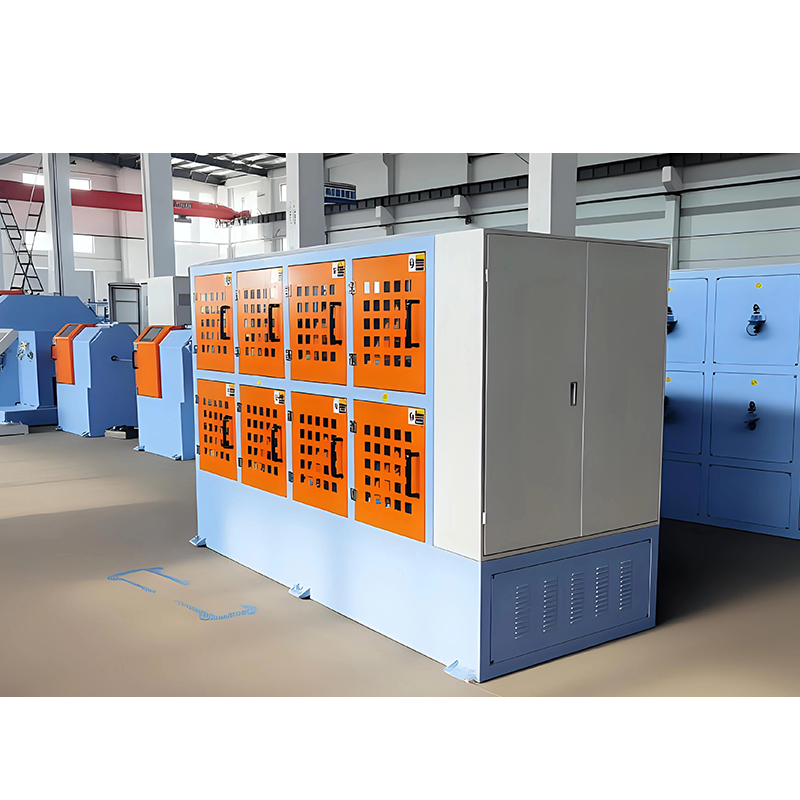
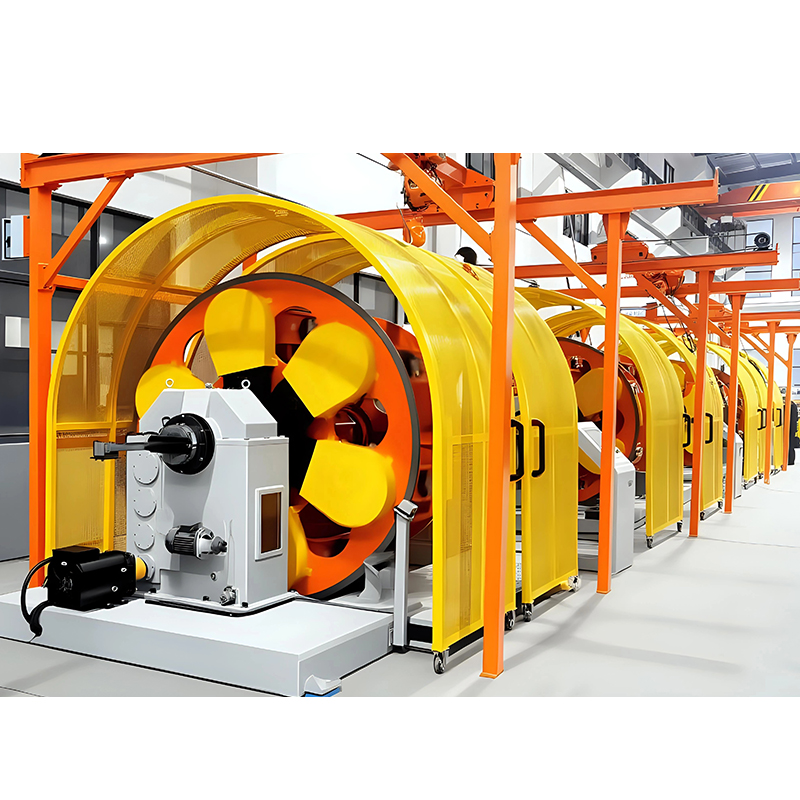
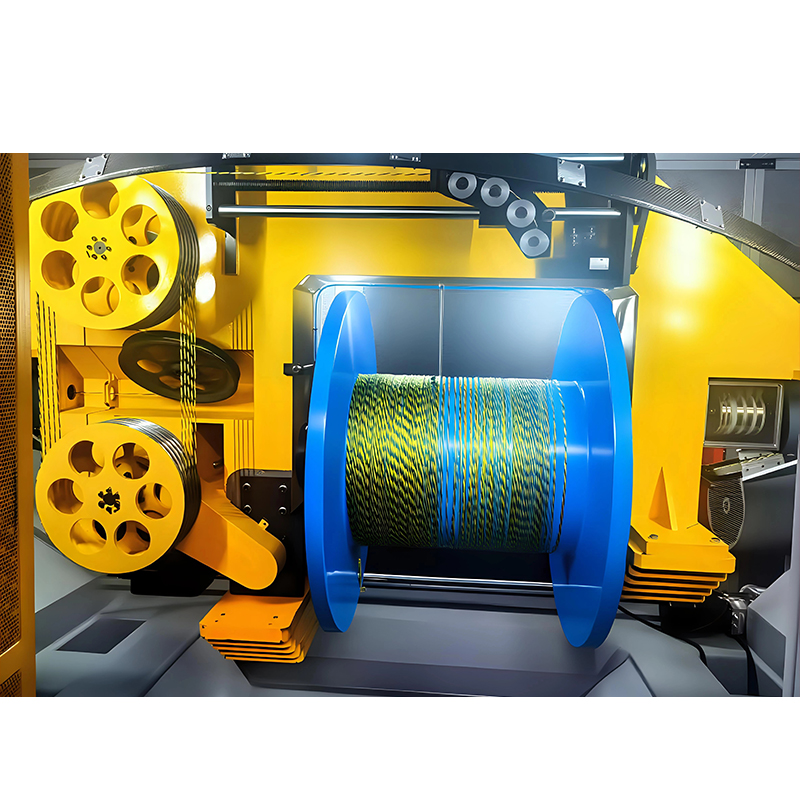


Global standards for conductor stranding include specifications for wire diameter, number...
Specification
| Wire Diameter Range | 0.05 mm – 2.5 mm |
| Number of Bobbins | 7 / 12 / 19 / 24 / 37 |
| Bobbin Size | PN 100 / PN 160 / PN 250 |
| Stranding Pitch | 3 mm – 100 mm (adjustable) |
| Max Bow Speed | Up to 3,000 RPM |
| Lay Direction | S / Z (selectable) |
| Drive System | AC servo motor + gearbox |
| Control System | PLC with HMI touchscreen |
| Take-up Spool Diameter | Up to PN 630 |
| Power Supply | 380V / 50Hz (customizable) |
| Machine Dimensions (approx.) | 3,500 × 900 × 1,400 mm |
| Weight | Approx. 1,800 kg |
Applications
Cantilever single stranding machines are used across a wide range of wire and cable production applications. Their versatility and compact design make them a practical fit in multiple industries.
- Automotive wiring harnesses: Stranding fine copper conductors for vehicle sensor lines, data cables, and power distribution wiring that require precise geometry and consistent lay length.
- Building and construction wire: Manufacturing stranded conductors for residential and commercial electrical installations, including NYM, H07V-R, and equivalent cable types.
- Instrumentation and control cables: Producing multi-strand conductors used in industrial automation, PLC systems, and fieldbus communication cables.
- LAN and data cables: Stranding individual pairs or conductors for Cat5e, Cat6, and similar structured cabling applications.
- Medical device cables: Low-pitch, fine-gauge stranding for flexible, biocompatible cable assemblies used in diagnostic and monitoring equipment.
- Aerospace and defense cables: High-precision stranding for mil-spec wire and lightweight cable harnesses where dimensional tolerance is critical.
Advantages
- Rapid bobbin changeover: The cantilever design allows operators to swap out reels from one side without dismantling the machine frame — dramatically reducing setup time between production runs.
- Consistent stranding quality: Precision tension control and servo-driven bow mechanisms ensure uniform lay length and stable conductor geometry from start to finish of every spool.
- Space-efficient layout: The compact footprint makes them easier to integrate into existing production lines, especially in facilities with limited floor space.
- Low maintenance requirements: Simplified mechanical structure with fewer rotating assemblies means reduced wear parts and longer service intervals compared to planetary designs.
- Operator-friendly interface: PLC touchscreen controls allow easy parameter input, real-time monitoring, and fault diagnostics — reducing the skill barrier for line operators.
- Flexible configuration: Available with different bobbin counts and sizes to accommodate a range of conductor configurations and production volumes.
Material and Structure
The structural integrity of cantilever single stranding machines begins with the main frame, which is typically manufactured from heavy-duty welded steel or high-quality cast iron. This provides the rigidity needed to minimize vibration during high-speed operation — a critical factor in maintaining consistent lay length and wire geometry.
The cantilever arm and bobbin holder are machined from alloy steel and surface-treated to resist corrosion and mechanical wear. Bobbin pins are precision-ground to ensure repeatable spool positioning and minimal runout during rotation.
Tension rollers and wire guides are fitted with ceramic inserts or hard chrome plating to prevent surface damage to fine conductors, especially when processing bare or lightly coated copper and aluminum wires.
The drive system integrates AC servo motors paired with precision gearboxes, offering smooth acceleration and deceleration profiles. The take-up section uses a programmable traverse mechanism to ensure even layer winding on the output bobbin.
Electrical cabinets are built to IP54 or higher, suitable for the typical industrial environment of a wire drawing or cable production facility.
