


 English
 русский
 Español


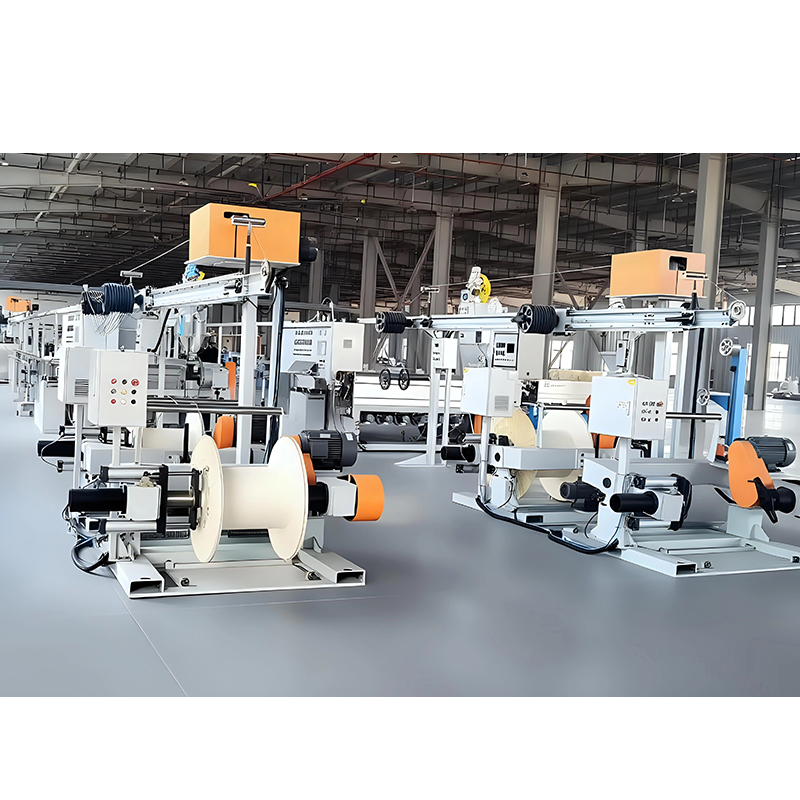
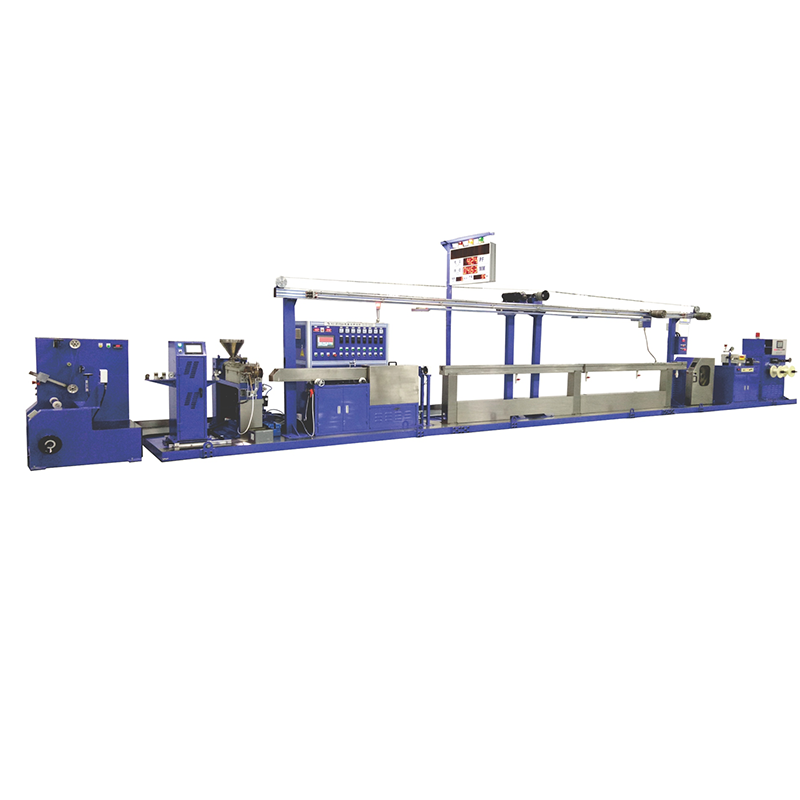
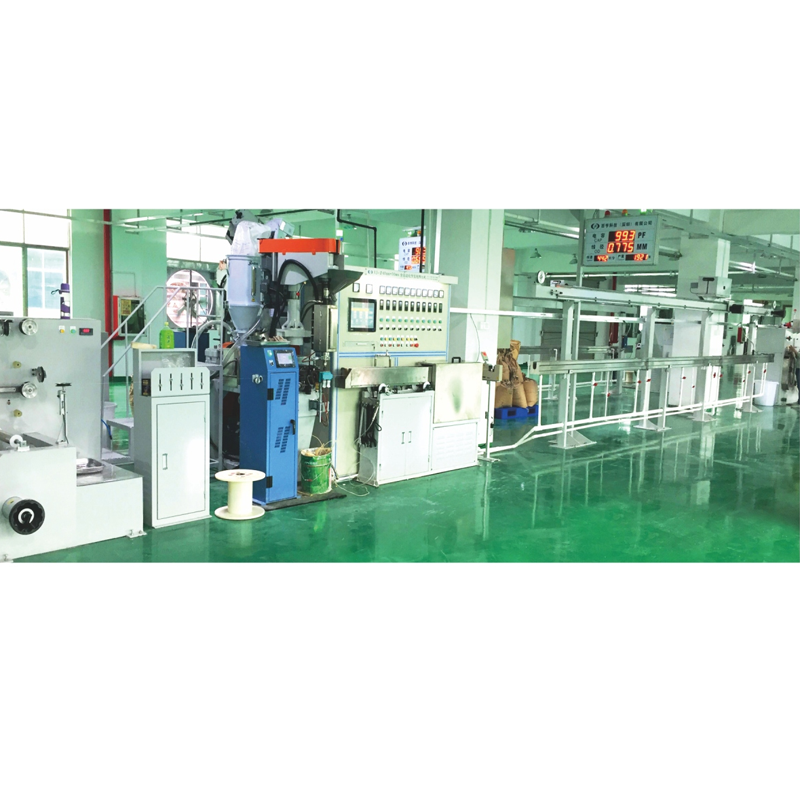


Global standards for conductor stranding include specifications for wire diameter, number...
Technical Specifications
| Machine Type | Horizontal pair twister / Vertical double-twist buncher / Multi-head twisting line |
| Wire Gauge Range | 0.05 mm – 4.0 mm diameter (solid or stranded conductors) |
| Conductor Count per Head | 2 (pair), 3 (triad), 4 (quad), or 2+2 (star quad) configurations |
| Number of Twisting Heads | 1 to 12 heads (modular expansion) |
| Twist Pitch Range | 5 mm – 150 mm (continuously adjustable via servo ratio) |
| Twist Pitch Tolerance | ±2% over full reel length (servo closed-loop) |
| Flyer Speed | Up to 4,000 RPM (single-twist); up to 2,000 RPM (double-twist) |
| Line Speed | Up to 500 m/min (dependent on pitch and conductor gauge) |
| Tension Control | Servo dancer arm per payoff; ±1% tension repeatability |
| Take-up Capacity | PN125 to PN400 bobbins; or direct spool winding option |
| Twist Direction | S or Z, program-selectable per head |
| Drive System | AC servo per axis (twist, haul-off, take-up); no mechanical gearing of twist ratio |
| Control System | PLC + 10" touch HMI; 500 product recipe storage |
| Wire Break Detection | Dancer arm position monitoring per payoff, auto-stop on break |
| SPC Monitoring | Real-time charting of pitch, tension, and speed trends; alarm setpoints configurable |
| Communication | Ethernet/IP, Modbus TCP, OPC-UA |
| Protection Class | IP54 cabinet; IP65 operator panel |
| Certifications | CE, UL-listed (optional), RoHS compliant |
Applications
Precision Wire Twisting Machines serve a wide range of industries where the electrical characteristics of twisted conductor assemblies are as critical as the mechanical properties of the wire itself. The following application areas represent the primary end-use segments for our twisting machines.
- LAN and Data Communication Cables — Production of Category 5e, 6, 6A, and 8 twisted pairs for structured cabling systems. Pitch tolerance is a primary determinant of alien crosstalk (ANEXT) and power sum crosstalk (PSANEXT) performance in Cat6A and Cat8 cables. Our closed-loop pitch control is essential to meeting TIA-568 and ISO/IEC 11801 performance requirements consistently across production reels.
- Automotive Differential Signal Pairs — CAN bus, LIN bus, FlexRay, LVDS display cables, and Automotive Ethernet (100BASE-T1, 1000BASE-T1) all use twisted pair conductors where pitch uniformity controls the cable's differential impedance and EMC rejection performance. Our machines meet USCAR-2 and major OEM (Volkswagen, BMW, General Motors, Toyota) harness specifications for pair twist quality.
- Instrumentation and Control Cables — Twisted shielded pairs (TSP) and twisted shielded triads for process control systems and DCS/PLC installations require consistent pitch to maintain the cable's designed common-mode rejection ratio (CMRR) and minimize noise pickup from variable frequency drives and other industrial EMI sources.
- Telephone and Telecom Drop Wire — Multi-pair telephone cables for central office distribution and subscriber drop installations are produced in high volumes on our multi-head twisting lines, with pitch variation managed to prevent cross-talk between adjacent pairs in the finished cable.
- Medical Imaging and Monitoring Cables — ECG lead sets, ultrasound transducer cables, and neurological monitoring cables use twisted wire pairs to improve common-mode noise rejection. The biocompatible wire materials used in these applications (silver-plated copper in insulating jackets) require low-inertia, low-tension payoff systems that our machines provide.
- Aerospace Wiring — MIL-W-22759 and MIL-DTL-27500 twisted wire assemblies for aerospace applications require pitch consistency to meet EMI shielding effectiveness and signal integrity requirements specified in ARINC and DO-160G standards. Our machines are used by approved aerospace wire harness manufacturers worldwide.
- Building Automation and BACnet Wiring — Twisted pair cables for HVAC control, fire alarm, and BACnet/MS-TP installations require consistent pitch to maintain the cable's rated surge immunity and common-mode rejection performance in electrically noisy building environments.
Key Advantages
- Closed-Loop Twist Pitch Control — Servo-driven twist ratio control maintains pitch within ±2% from the first meter to the last, independent of bobbin weight changes, speed ramp events, or tension transients — the defining quality advantage over mechanically geared twisters.
- Independent Pitch Per Head — In multi-head configurations, each twisting head operates with its own pitch setpoint, enabling production of cable cores where different pairs have different specified lay lengths — a requirement for Cat6A and some automotive bus cable designs.
- Wide Wire Gauge Compatibility — The servo tension system with calibrated dancer arm sensitivity covers wire gauges from 0.05 mm to 4.0 mm without mechanical payoff tension spring changes, simplifying product changeover across the range.
- High-Speed Production — Flyer speeds up to 4,000 RPM and line speeds up to 500 m/min deliver the throughput required for high-volume LAN cable and automotive harness production, while maintaining the pitch tolerances that lower-speed machines achieve only at reduced output rates.
- Automatic Wire Break Response — Dancer arm position monitoring detects wire breaks within one revolution of the flyer and initiates a controlled machine stop, preventing extended lengths of defective twisted pair from being produced before the fault is addressed.
- SPC-Based Quality Assurance — Integrated statistical process control trending with configurable alarm setpoints allows operators and quality engineers to detect process drift before out-of-specification material is produced, reducing reel rejection rates.
- Modular Head Expansion — The multi-head architecture allows starting with a smaller configuration and adding twisting heads as production volume grows, protecting capital investment and enabling capacity scaling without replacing the complete machine.
- Low Noise Operation — Precision-balanced flyer assemblies and vibration-isolated bearing housings result in low acoustic noise levels, an increasingly important factor in modern production environments subject to workplace noise regulations.
Material and Structure
The mechanical quality of a wire twisting machine is immediately visible in the consistency and surface quality of the twisted pairs it produces. Our Precision Wire Twisting Machines are built using component materials and manufacturing standards that ensure geometric accuracy, dynamic balance, and long-term reliability in continuous production environments.
- Main Frame — Welded heavy-gauge structural steel, stress-relieved and precision machined at all bearing and spindle mounting interfaces. The frame is designed with sufficient torsional stiffness to maintain flyer axis alignment under the dynamic loads imposed by rotating assemblies at maximum speed. FEA analysis is used to verify deflection under worst-case load conditions.
- Flyer Assembly — Manufactured from high-tensile 7075 aluminum alloy or glass-fiber-reinforced composite depending on the speed rating. All flyer assemblies are dynamically balanced to ISO 1940 Grade G1 or better at the maximum rated RPM to prevent vibration-induced twist pitch variation. Wire guide rollers on the flyer arms use precision ABEC-7 bearings and ceramic-coated guide surfaces to minimize wire friction and surface damage.
- Payoff Cradles — Each payoff position uses a cradle mounted on precision linear or pivot bearings, with a dancer arm assembly using a load cell or encoder-based position sensor to provide tension feedback to the individual payoff servo motor. The dancer arm pivot assembly is manufactured from stainless steel to prevent corrosion-induced binding in humid production environments.
- Haul-off and Capstan — Multi-groove rubber-lined capstan manufactured from precision-turned aluminum with a vulcanized nitrile rubber groove lining to provide consistent traction without wire marking. The capstan drive servo uses a direct-coupled motor with integrated absolute encoder for accurate speed reference to the twist ratio controller.
- Take-up Assembly — The traversing take-up uses a servo-driven traverse mechanism with programmable pitch and winding angle to ensure uniform bobbin build. The take-up bobbin holder accommodates standard flanged bobbins from PN125 to PN400, with optional spool adapters for reel-winding of fine-gauge pairs.
- Control Cabinet — IP54-rated steel control enclosure with forced-air cooling and filtered intake. All servo drives, PLC, and safety relay modules are mounted on DIN rails with clearly labeled terminal strips. Front-panel access for HMI and emergency stop; rear access for drive and communications wiring via removable gland plates.
