

 English
 русский
 Español


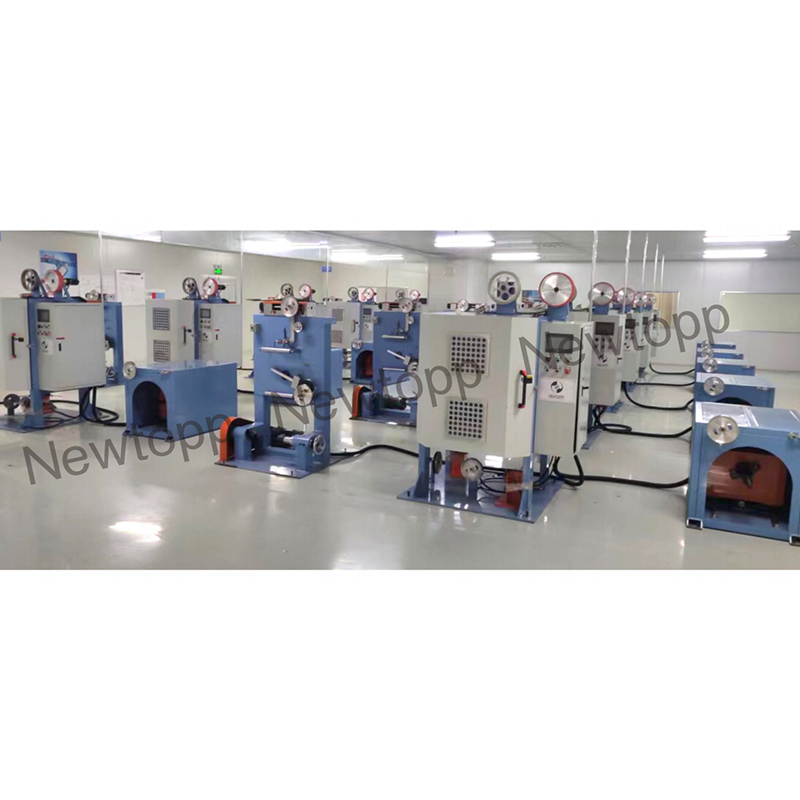
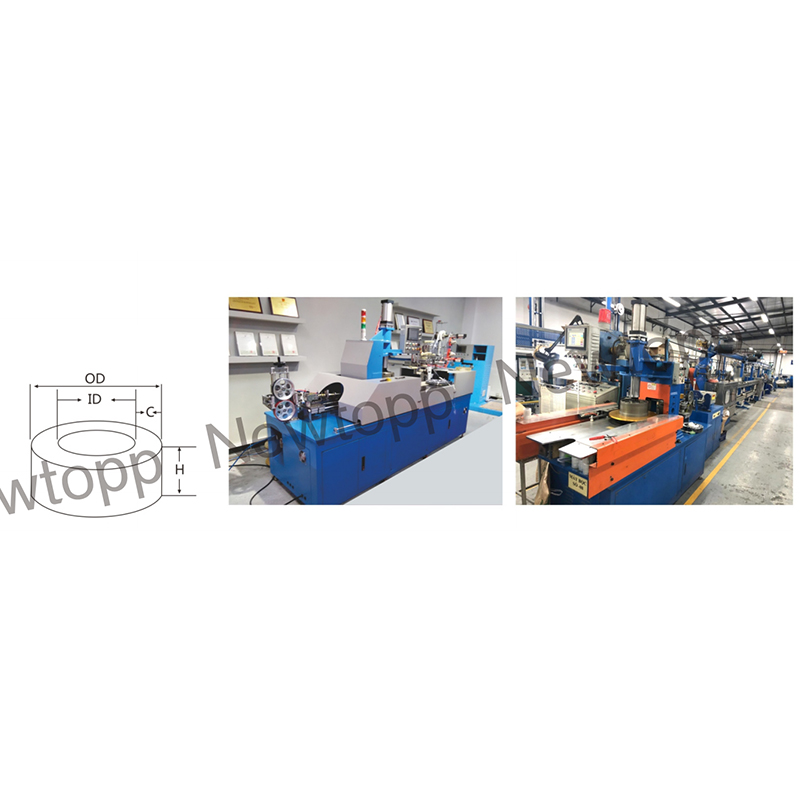
The stranding machine process is the step in cable manufacturing where individual wires are twisted around a common axis to form a stranded conductor. It is the stage that determines how flexible, fatigue-resistant, and electrically consistent the final cable will be. In practice, a well-controlled stranding process uses precise lay length, equal wire tension, and the correct machine type to avoid common defects such as bird-caging, loose wires, and diameter variations.
Content
What Happens During the Stranding Process?
The stranding process follows a consistent sequence: pay-off, tension control, twisting at a closing point, and take-up. Each stage must be synchronized to maintain a constant pitch and conductor geometry.
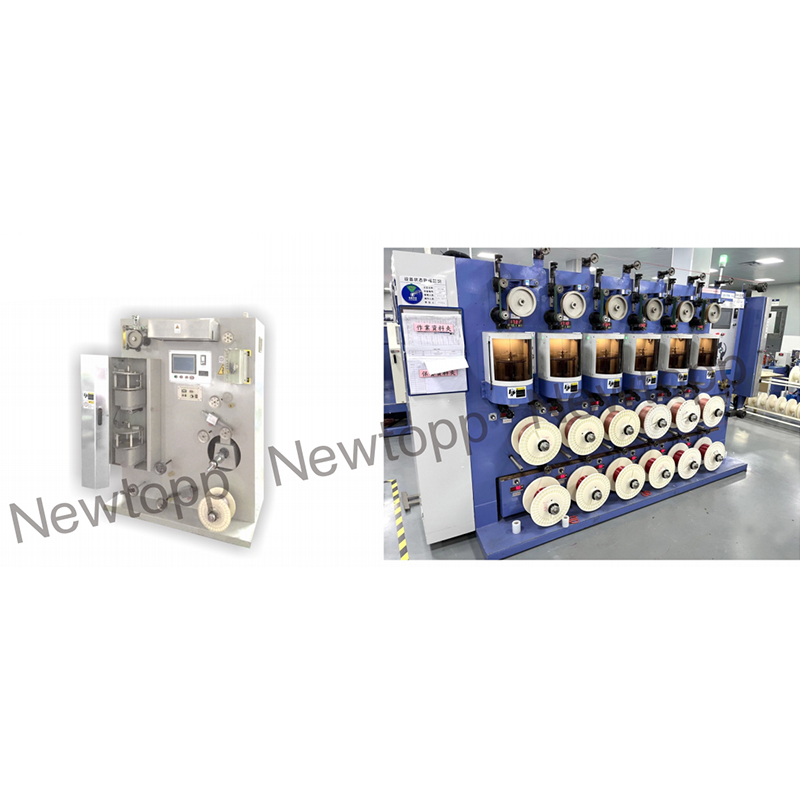
- Pay-off: individual wires are pulled from bobbins mounted on a pay-off system. The pay-off can be active or passive; active systems provide a set back-tension for each wire.
- Tension control: each wire passes through dancer rollers or tension sensors. Equal tension across all wires prevents one wire from being overstretched or forming loops.
- Twisting and closing: wires converge at a closing die or guide, while the machine rotates either the wire carriers or the take-up spool. The rotational speed and line speed together fix the lay length (the axial distance for one complete twist).
- Take-up: the stranded conductor is pulled by a capstan and wound onto the take-up reel. The speed relationship between capstan and rotating part is maintained by a servo or gear system.
For a broader introduction to the full range of stranding machines, you can read our comprehensive guide to cable stranding machines. It explains how these machines differ and how they are selected for different conductor designs.
Main Types of Stranding Machines
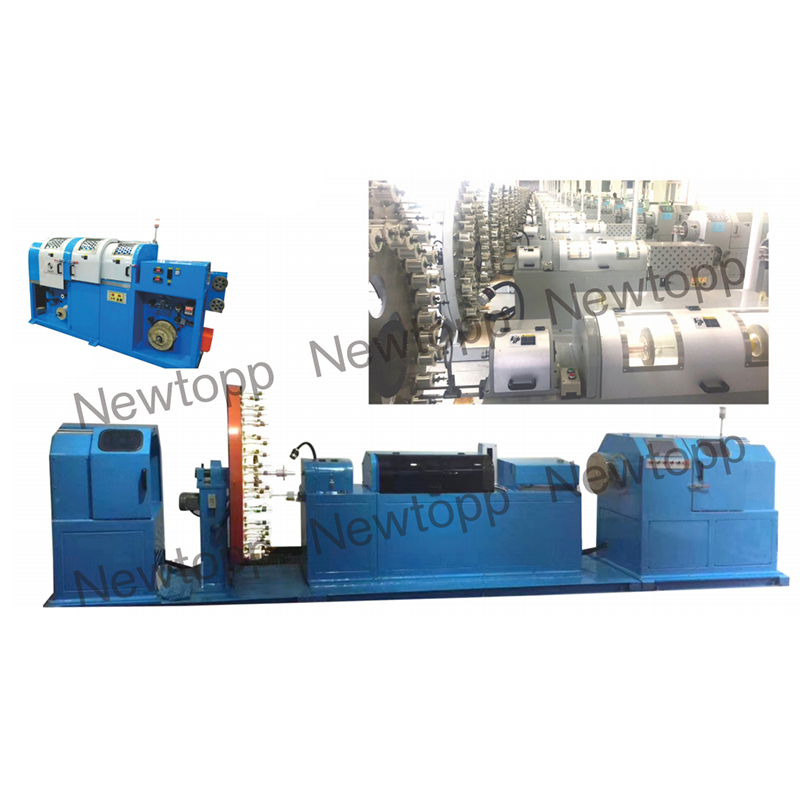
There are three main stranding machine families—planetary, tubular, and double-twist (bow) stranders. Each offers a different balance of lay accuracy, production speed, and conductor flexibility.
| Machine Type | Rotation Principle | Key Advantages | Limitations | Best Applications |
|---|---|---|---|---|
| Planetary (rigid) stranding machine | Wire spools rotate in cages around a fixed axis; individual layers are built up in large pitch circle | Very precise lay length; low wire twist; good for large, rigid conductors | Lower speed; large footprint; longer setup time | Power cables, high-voltage conductors, multi-layer stranded cores |
| Tubular stranding machine | All wire reels are mounted inside a rotating tube; the whole tube turns | High speed; smooth rotation; good for long runs of bare conductors | Wires are subjected to twist during unwinding; less suited to flex designs | Aluminium and copper overhead line conductors, steel reinforced conductors |
| Double-twist (bow) stranding machine | A bow rotates around the conductor and produces two twists per revolution | Very high output; compact design; lower energy consumption | Requires precise tension control; may need a back-twist device for uniform lay | Copper building wires, flexible cords, data cables, and control cables |
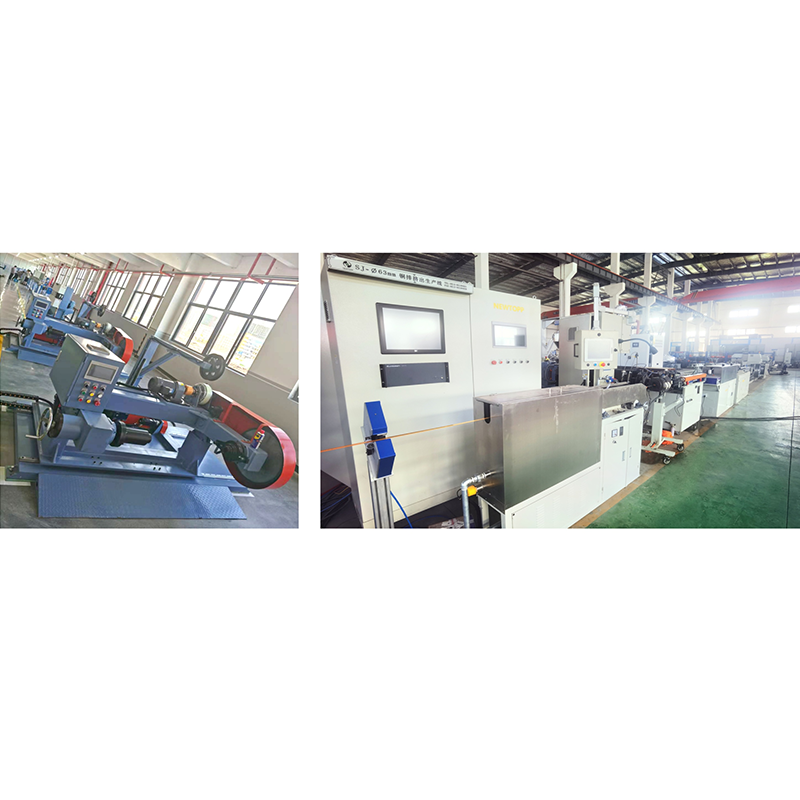
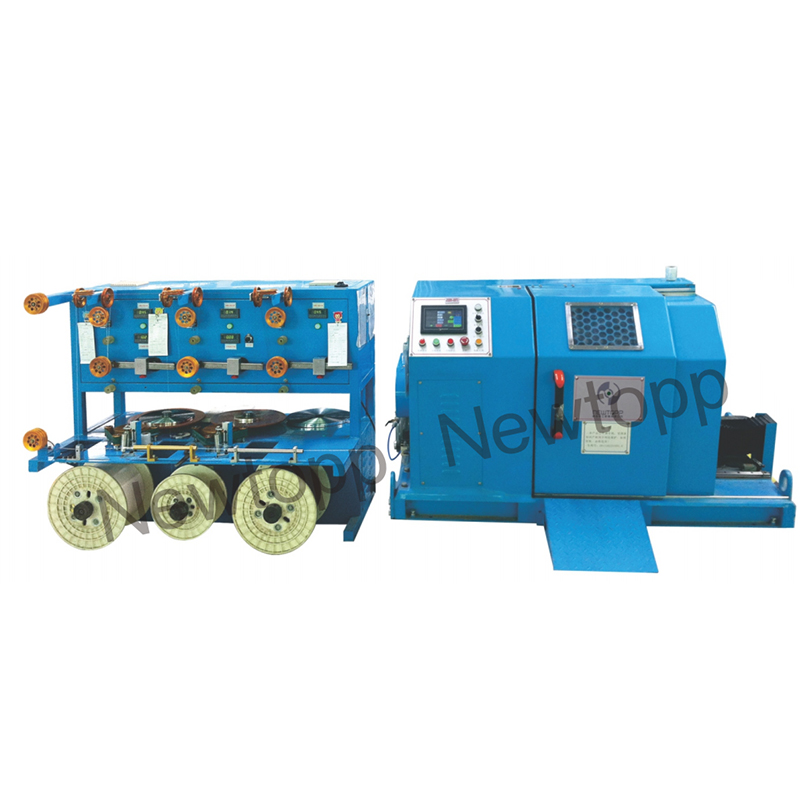
For high-volume production of flexible copper conductors, a 1250 double-bow stranding machine is a common choice because it combines a compact footprint with output rates that are competitive for building wire and data cable lines.
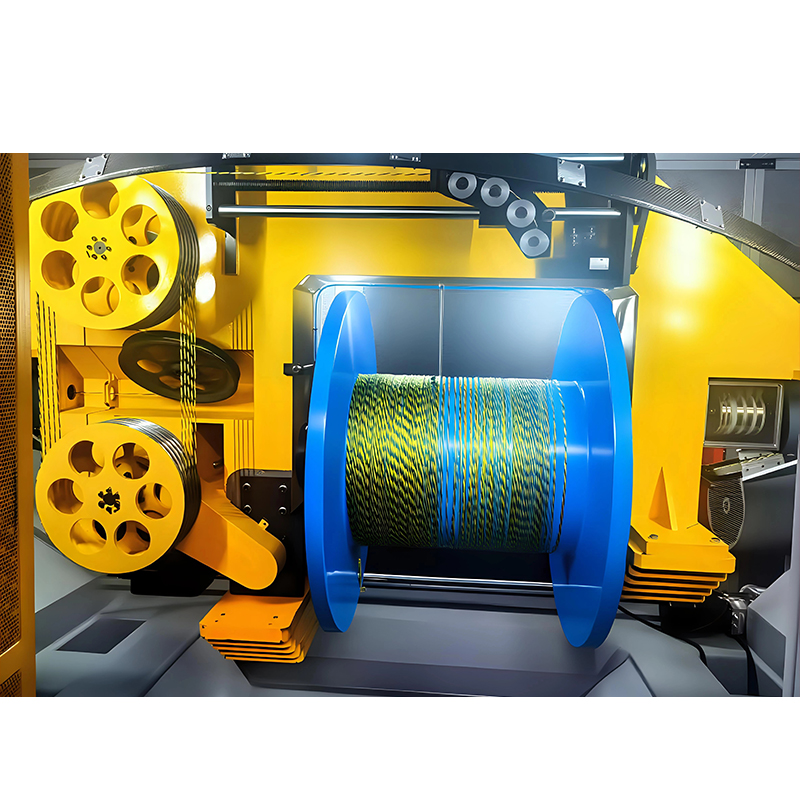 1250 Double Bow Stranding Machine Manufacturers, Custom Factory - Jiangsu NewtopJiangsu Newtopp Precision Machinery Co., Ltd is China 1250 Double Bow Stranding Machine manufacturers and custom factory, The 1250 Double...View Product →
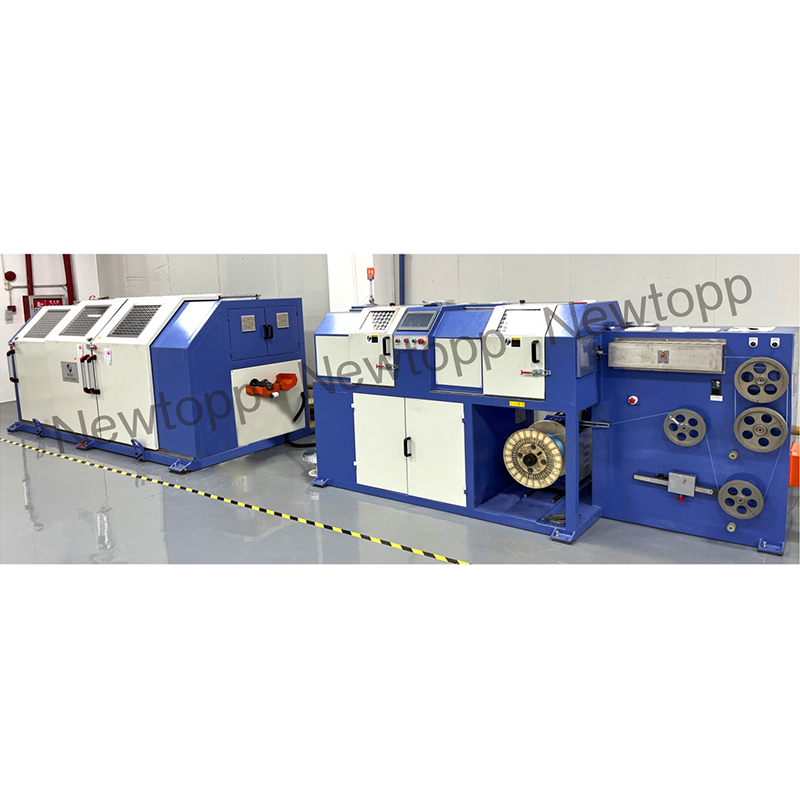
When you need extremely accurate lay length and minimum wire distortion, a planetary type stranding machine is typically preferred for power and control cables. Its rotating cage design keeps wire twist to a minimum and allows multiple layers to be applied in a single pass.
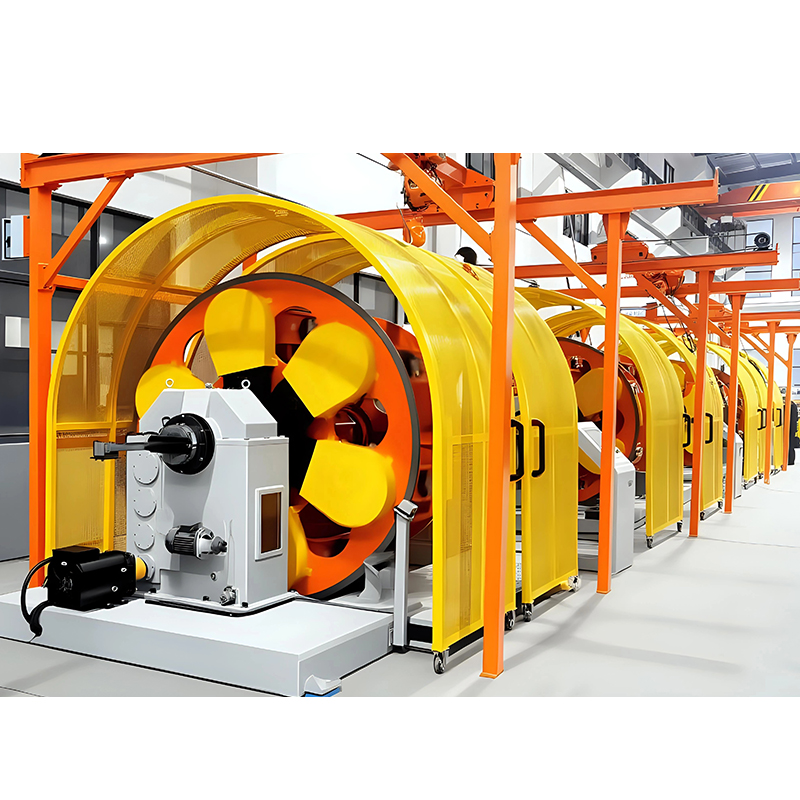 Cage Stranding Machine, Planetary Stranding Machine ManufacturersJiangsu Newtopp Precision Machinery Co., Ltd is China cage stranding machine manufacturers and planetary stranding machine custom factory...View Product →
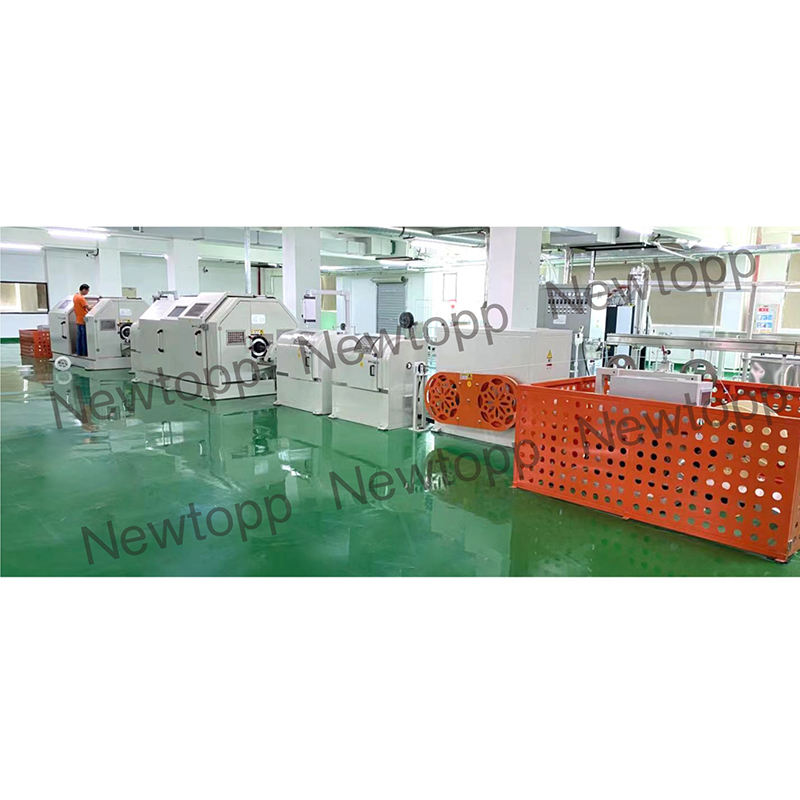
For applications that require very high twist rates, especially thin or fine wires, a triple stranding machine can produce three complete twists per revolution, which increases throughput without raising the bow speed.
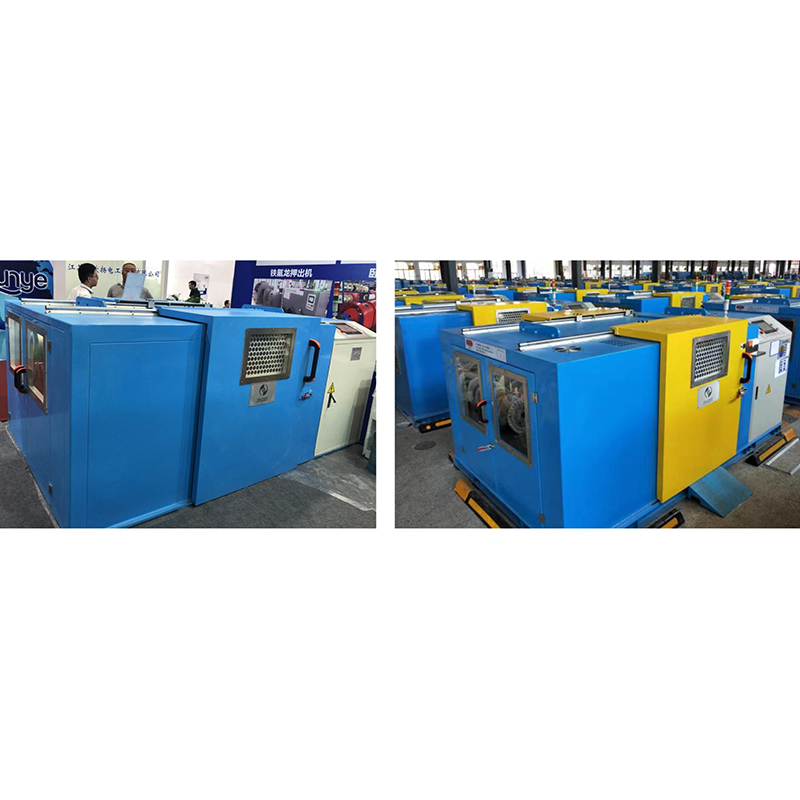 Triple Stranding Machine Manufacturers, Custom Factory - Jiangsu Newtopp PrecisiJiangsu Newtopp Precision Machinery Co., Ltd is China Triple Stranding Machine manufacturers and custom factory, Usage: Suitable for CAT5...View Product →
Key Process Parameters That Control Quality
Four parameters—lay length, direction of lay, wire tension, and filling factor—have the largest effect on the performance of a stranded conductor.
- Lay length: the axial distance for one 360° wire wrap. For concentric stranded conductors, the lay length is usually 10 to 14 times the outside diameter of the layer. A typical machine tolerance is ±3%, but high-speed lines can require tighter control.
- Direction of lay: most standard cables use right-hand lay, but the direction of the last layer must match the downstream insulation line and connector design. An incorrect lay direction can cause premature failure at terminations.
- Wire tension: individual wire tension should be as close to equal as possible. A practical rule is to keep tension at 2–5% of the wire's breaking load; higher tension can break the wire, and lower tension causes loose strands.
- Filling factor: the ratio of the actual conductor metal area to the circumscribed circular area. Compact stranding can raise this from about 75% to over 90%, which reduces the cable diameter and material cost.
Choosing the Right Stranding Machine
The right stranding machine is the one that matches the conductor design's required geometry, material, and production speed with the machine's inherent twist characteristics.
- Determine the conductor construction. A class 2 concentric stranded conductor (e.g., IEC 60228) requires a planetary or rigid strander; a flexible class 5 or 6 conductor works well on a double-twist or backtwist strand line.
- Evaluate the material. Soft copper wires need gentle handling, so double-twist machines with precision tension control are a good fit; aluminium or alloy wires can be run on tubular stranders at high speed.
- Estimate the required output. Double-twist machines produce two twists per revolution, so they often give the lowest cost per metre for simple compact strands. But when a tight lay tolerance is vital, a planetary machine's lower speed is an acceptable trade-off.
- Consider floor space and maintenance. Bow and tubular stranders are compact and easier to maintain than large planetary cages, which need substantial floor area and heavy foundations.
Common Defects and How to Prevent Them
Most stranding defects are caused by inconsistent tension, worn guides, or an incorrect lay setting. The table below lists the most common defects and their remedies.
| Defect | Typical Cause | Prevention |
|---|---|---|
| Bird-caging (wire lifts off the strand) | Insufficient back-twist during bending; excessive strand tension | Use back-twist pay-off; reduce capstan tension; increase the number of guide rollers |
| Wire breakage | Burrs on guides; too-high individual wire tension | Polish all contact points; set tension to 2–5% of breaking load; add tension monitoring on each wire |
| Oversize/undersize diameter | Worn closing die; incorrect wire preform | Replace die regularly; verify pre-former height at least once per shift |
| Irregular lay length | Speed fluctuation between capstan and rotating part | Use closed-loop servo control; calibrate tachometers; maintain stable line speed |
Frequently Asked Questions
The answers to the most common stranding questions all come back to one principle: the machine must match the conductor design and the process must be tension-controlled.
What is the difference between bunching and stranding?
Bunching is a non-geometric twist where wires are laid together randomly in one direction, often with a short lay length, and it is used for flexible fine-wire conductors. Stranding, by contrast, produces a regular helical pattern with a controlled pitch and direction, giving the conductor a defined geometry and better fatigue performance. In a stranding process the wires are positioned in distinct layers, while in bunching they are not.
Can one stranding machine handle all conductor designs?
No single machine can cover all designs. A planetary strander gives the most accurate lay and is preferred for large power conductors, while a double-twist strander is much faster for small flexible cables. For very fine wires, a triple-twist machine is an alternative, and for pairs that need cancellation, a back-twist pair strander is required. Most plants operate two or three different machine types.
What is back-twist and when is it needed?
Back-twist is the extra rotation applied to a wire during payoff so that the wire is not plastically deformed when entering the stranding point. It is necessary when the wire must remain untwisted after the conductor is formed—for example, in flexible cables, data cables, and stranded conductors used in dynamic applications. Machines with bow-type rotation can add a back-twist device to compensate for torsional strain.
How does stranding pitch affect flexibility?
Shorter pitch (lay length) increases conductor flexibility and dynamic bend resistance, but it also increases material usage and reduces breakdown voltage margin for a given insulation thickness. Longer pitch gives greater stiffness and lower DC resistance. The standard pitch range for flexible cables is approximately 8 to 12 times the diameter of the layer, while fixed-installed cables often use 12 to 16 times.
Final Thoughts
The stranding machine process is not simply a mechanical twisting operation; it is a precise manufacturing step that determines the conductor's mechanical and electrical performance. For a cable producer, the biggest gains come from matching the machine type to the product family, controlling the four quality parameters, and training operators to watch for tension-related defects. With the right equipment and discipline, the stranding process can run at high speed without compromising on quality.