

 English
 русский
 Español


Content
- 1 What Is a Silicon Rubber Cable Making Machine?
- 2 Core Components of a Silicone Rubber Extrusion Line
- 3 How the Silicone Rubber Cable Production Process Works
- 4 Silicone Rubber vs. PVC vs. PTFE: Material Comparison
- 5 How to Choose a Silicon Rubber Cable Making Machine
- 6 Common Problems and How to Avoid Them
- 7 Why Full-System Experience Matters
- 8 Frequently Asked Questions
- 8.1 What is a silicon rubber cable making machine?
- 8.2 Is there a difference between silicon rubber and silicone rubber?
- 8.3 Can a PVC extrusion line process silicone rubber?
- 8.4 Why does a silicone rubber line need a long curing channel?
- 8.5 What output speed can a silicone cable line reach?
- 8.6 How do I choose between silicone and PTFE insulation?
What Is a Silicon Rubber Cable Making Machine?
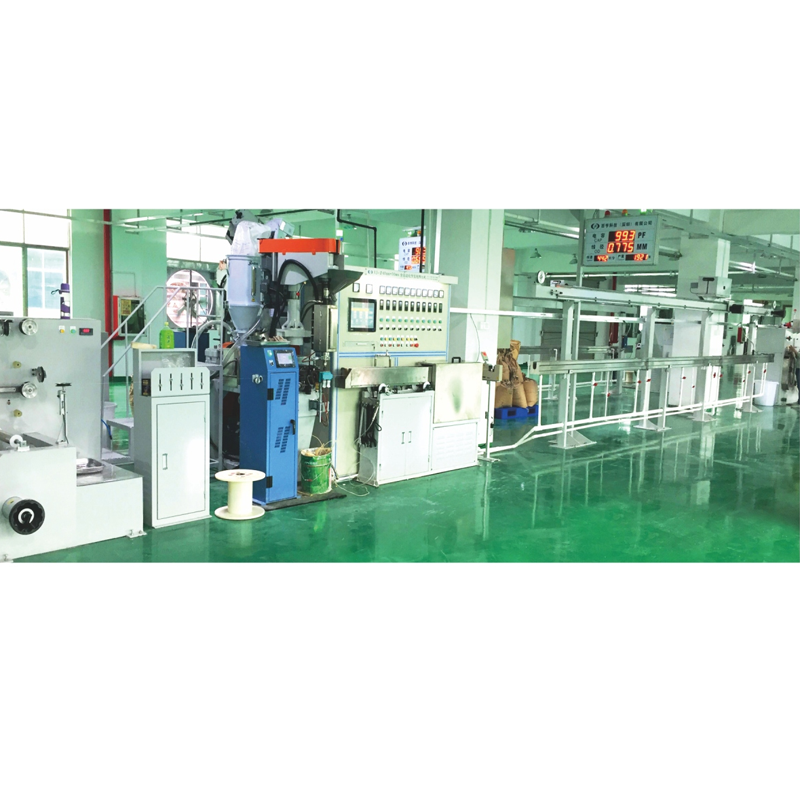
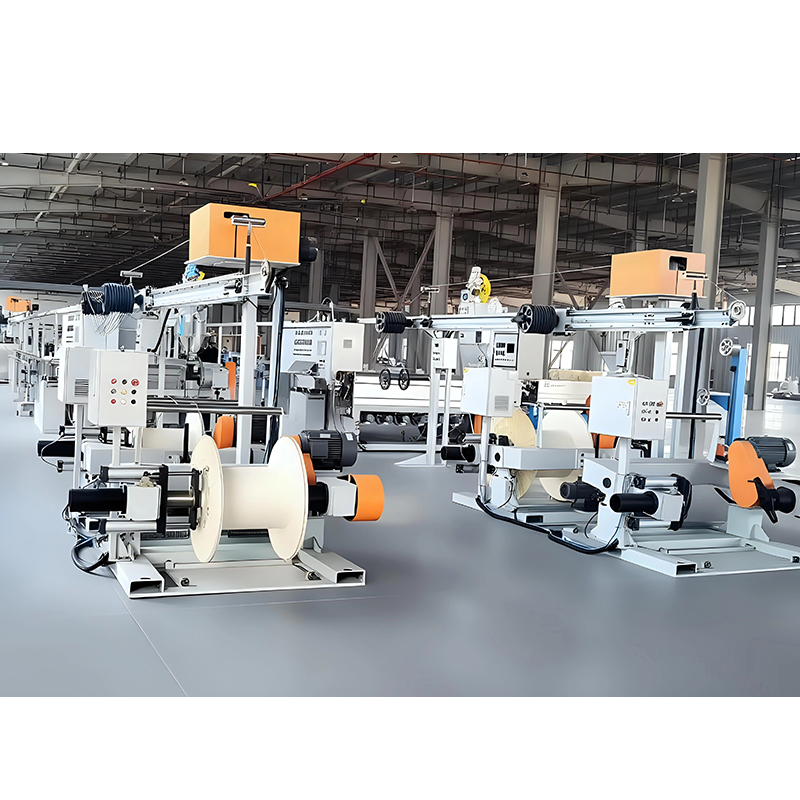
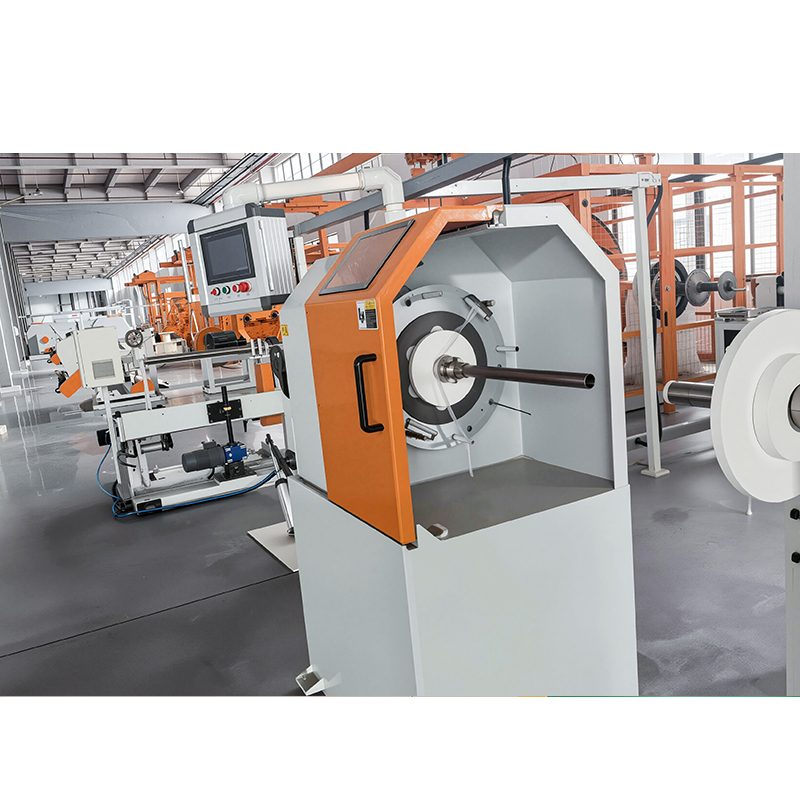
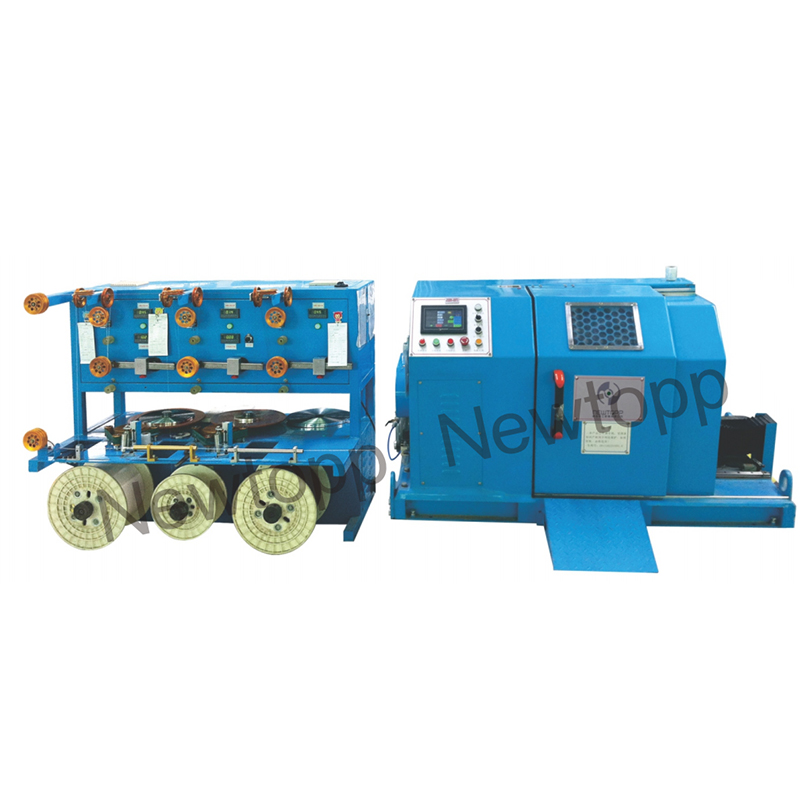
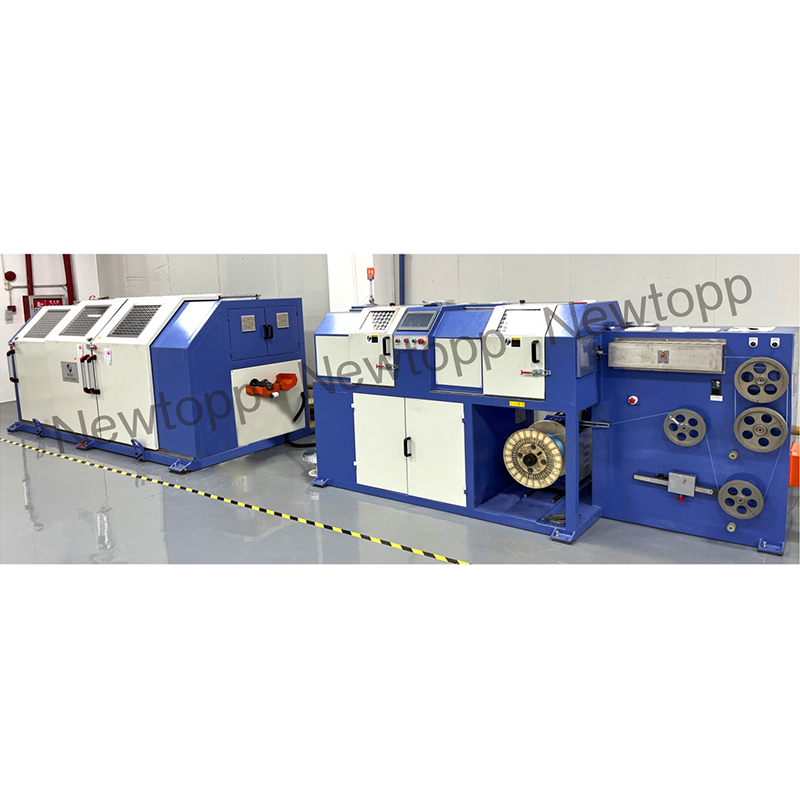
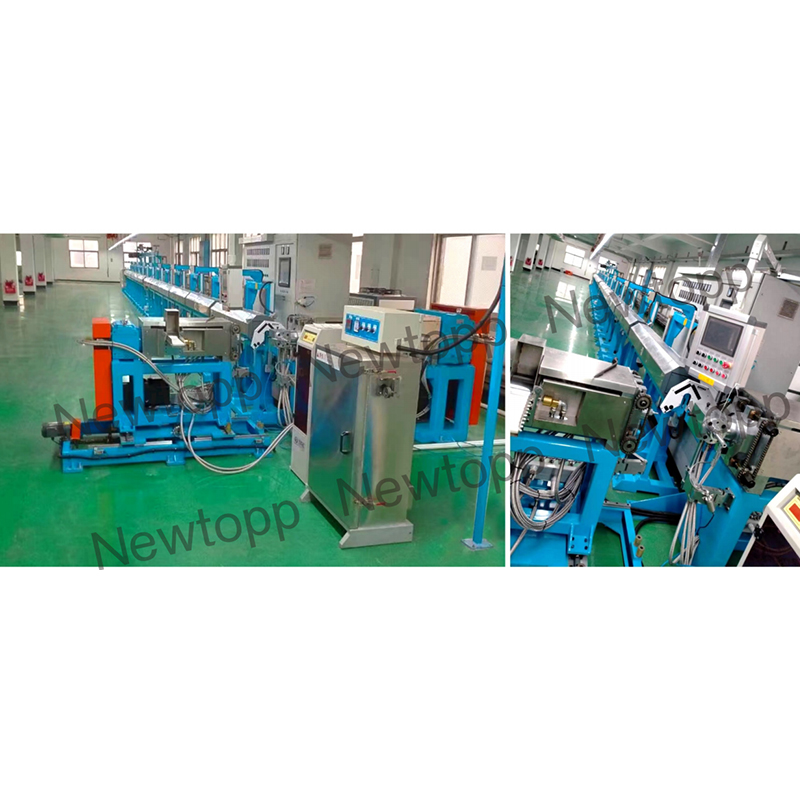
A silicon rubber cable making machine is a complete extrusion line that applies uncured silicone rubber around a conductor, vulcanizes it in a hot-air curing channel, and then cools and coils the finished cable. In production terms, it is not a single press or winder; it is a coordinated machine train in which the extruder, curing section, cooling trough, and take-up must be matched to the compound's cure behavior and the wall-thickness tolerances of the cable.
Silicone rubber is a thermoset, so it processes differently from PVC or polyethylene. The compound enters a cold-feed extruder as unvulcanized rubber, must be crosslinked after extrusion, and cannot tolerate the high-friction screw used for thermoplastics. A line designed for conventional insulation will not produce consistent silicone layers, regardless of screw speed. For a general explanation of how extrusion lines are assembled, see our comprehensive guide to cable extrusion lines.
Core Components of a Silicone Rubber Extrusion Line
Every silicone rubber cable line is built from five functional stations, and their specifications are tightly connected. Choosing a high-output extruder without an equally long curing section simply forces the line to run slower.
| Component | Function | Selection note |
|---|---|---|
| Cold-feed rubber extruder | Plasticizes the silicone compound and delivers it to the crosshead | Temperature-controlled barrel; L/D ratio commonly 12:1 to 20:1 |
| Crosshead die | Guides the conductor and applies a uniform rubber layer | Die geometry and center alignment control wall-thickness concentricity |
| Hot-air vulcanization channel | Crosslinks the silicone compound into a stable elastomer | Length and temperature profile must match the compound's cure curve |
| Cooling trough | Reduces cable temperature before take-up | Staged water cooling prevents thermal shock and porosity |
| Haul-off and take-up | Pulls the cable at constant tension and coils it onto drums | Speed stability directly affects diameter and ovality |
How the Silicone Rubber Cable Production Process Works
The process has five distinct stages, and each one has a specific effect on insulation quality.
- Feed the silicone compound into the cold-feed extruder, where the screw conveys and plasticizes it without the high frictional heat used for thermoplastics.
- Extrude around the conductor through the crosshead, forming a concentric layer over the copper or stranded conductor.
- Vulcanize the cable in a hot-air channel where the peroxide catalyst crosslinks the rubber into a stable elastomer.
- Cool the cable gradually in a water trough to lock in dimensions and prevent porosity.
- Measure the diameter and take up the finished cable onto drums with controlled tension.
Cure time depends on wall thickness; for a typical 2 mm silicone wall, the curing channel may extend 12 to 30 meters on a high-speed line. For producers focused on single-core silicone insulated cables — motor leads, heating cable, and appliance wiring — a dedicated core wire insulation extrusion line integrates the extruder, curing channel, cooling, and take-up in one machine train, which shortens commissioning and simplifies process control.
Silicone Rubber vs. PVC vs. PTFE: Material Comparison
Material choice, more than the machine, determines the finished cable's temperature class and cost.
| Property | Silicone rubber | PVC | PTFE/FEP |
|---|---|---|---|
| Continuous temperature range | -60°C to 200°C | -40°C to 105°C | -200°C to 260°C |
| Low-temperature flexibility | Excellent | Poor to moderate | Good |
| Flame performance | Self-extinguishing with additives | Self-extinguishing | Excellent |
| Processing difficulty | Requires vulcanization | Easy | Very difficult |
| Relative material cost | High | Low | Very high |
The practical message for a cable maker is that silicone rubber earns its investment where continuous operating temperature above 150°C and cold flexibility are both required. For ordinary indoor wiring, PVC is cheaper to process. For extreme environments, PTFE offers a higher rating but at a much higher material and processing cost. The machine choice follows the product specification, not the other way around.
How to Choose a Silicon Rubber Cable Making Machine
Selection starts with the cable specification and the target output, then moves through control precision and supplier capability.
Define the Cable Specification First
Choose the insulation temperature class, conductor size, wall thickness, and applicable standard before comparing machines. These parameters set the cured-wall requirement, which decides the die geometry and the minimum curing channel length. A cable rated for 180°C and one rated for 200°C may use different silicone compounds with different cure curves.
Match Line Speed to Curing Capacity
Line speed is limited by the cure time, not only by screw output. If the curing section is too short, the operator must slow the line until the compound is fully crosslinked. When a supplier quotes a speed, ask what conductor diameter, wall thickness, and compound that speed refers to.
Evaluate Wall-Thickness Control
Concentric insulation is the most visible quality attribute of silicone cable. Die alignment, haul-off tension stability, and closed-loop diameter measurement all contribute, so confirm that the line includes measurement feedback rather than manual adjustment. The details of precision cable extrusion equipment clarify what to look for in the measuring and control package.
Confirm Process Support and After-Sales Service
The first production trial is where a machine's real behavior appears. A supplier that commissions the line with your compound, trains your operators, and keeps spare parts and process documentation ready will remove most of the risk from a new line.
Common Problems and How to Avoid Them
Most defects in silicone rubber cables are traceable to four root causes.
- Porosity: moisture or volatile by-products trapped during vulcanization; solved by material drying and a correct temperature profile.
- Eccentric insulation: misaligned die head or unstable take-up tension.
- Under-curing: curing section too short or hot-air temperature too low for the line speed.
- Surface tearing or roughness: wrong screw speed, insufficient barrel cooling, or unsuitable die land length.
Each of these failure modes has a specific correction path, and our troubleshooting guide for wire extruder machines covers the root causes and fixes in systematic detail.
Why Full-System Experience Matters
When the extruder, curing section, and take-up come from different suppliers, responsibility for line performance is divided. A manufacturer that builds the complete machine train controls the interfaces, which makes dimensional consistency and cure stability easier to achieve. Jiangsu Newtopp Precision Machinery has designed and built cable extrusion, stranding, and taping equipment since 2004, with its own R&D center, precision machining facility, and three manufacturing plants under one organization.
For multilayer constructions, the outer silicone jacket is applied in a second pass on a wire and cable jacket sheath extrusion line, which is sized for larger bundle diameters and maintains the same temperature profile across the curing channel. The same organization also supplies stranding and taping machines, so a complete silicone cable production program — conductor stranding, silicone insulation, and silicone sheath — can be planned and supported from a single source.
Frequently Asked Questions
What is a silicon rubber cable making machine?
It is an extrusion line consisting of a cold-feed extruder, crosshead die, hot-air vulcanization channel, cooling trough, and take-up, built to produce silicone rubber insulated conductors or silicone sheathed cables.
Is there a difference between silicon rubber and silicone rubber?
The two terms refer to the same material family. Silicone rubber is the chemical description of polysiloxane elastomers; silicon rubber is common industry shorthand used in machine searches and product names.
Can a PVC extrusion line process silicone rubber?
Usually not. Silicone is a thermoset that must be vulcanized after extrusion, so the line needs a hot-air or steam curing section. The screw geometry of a PVC extruder also differs from the cold-feed rubber screw required for silicone.
Why does a silicone rubber line need a long curing channel?
Because vulcanization requires heat and residence time to crosslink the polymer. The curing length sets the maximum line speed for a given wall thickness; shortening it simply reduces output.
What output speed can a silicone cable line reach?
Typical small silicone building wires are produced at 20 to 80 m/min depending on conductor size, wall thickness, and curing section length. Heavy constructions run slower because heat must penetrate a thicker rubber wall.
How do I choose between silicone and PTFE insulation?
Compare the continuous temperature, flexibility, and environment. Silicone covers most high-temperature and flexible cable needs at a lower material cost than PTFE, while PTFE is chosen where extreme temperature ratings beyond 200°C are mandatory.