

 English
 русский
 Español


A buncher stranding machine is not a single machine type—it is a decision between two distinct ways of twisting conductors. A buncher gathers multiple fine wires into a loose bundle for maximum flexibility, while a stranding machine lays wires in a precisely controlled helix for signal and power transmission. The answer to which machine you need lies in your cable's electrical and mechanical requirements.
Content
What Is a Buncher Machine?
A buncher is a high-speed twisting machine that collects two or more wires into a bundle without a defined helical pattern. The wires are pulled into a rotating chamber at high speed, which creates a loose, random arrangement. This makes bunchers the fastest machine for producing flexible conductors for appliance cords, headphone cables, and small hook-up wires (typically 0.05-0.30 mm individual strands). The key benefit is production speed; the key limitation is that the bundle has no controlled pitch or lay direction.
What Is a Stranding Machine?
A stranding machine is a precision twisting unit that positions individual wires in a fixed helical pattern around a central axis. The payoff bobbins are mounted on a rotating cage, bow, or tubular rotor, and each wire is tensioned so that the final conductor has uniform twist direction and pitch. This is critical for data cables, power cables, and industrial robots, where conductor impedance, flexibility, and torque balance must remain consistent.
Key Differences Between Buncher and Stranding Machines
Bunchers and stranders differ in twist precision, pitch control, tension distribution, and the mechanical behavior of the finished conductor. For a cable manufacturer, the practical impact is that a buncher can produce a conductor for a toaster cord, while a strander is required for a 2.5 mm² power cable or a Category 6 data cable.
| Comparison Point | Buncher Machine | Stranding Machine |
|---|---|---|
| Wire Arrangement | Loose, random bundle | Helical, uniform pattern |
| Pitch Control | Not precisely controlled | Fixed, adjustable pitch |
| Twist Direction | Inconsistent | S or Z lay, precisely controlled |
| Typical Wire Size | 0.05-0.30 mm strands | 0.08-2.00 mm strands |
| Center Wire | Usually none | May have a center core |
| Flexibility | Very high | Moderate to high |
| Common Applications | Flexible cords, appliance leads | Data, power, industrial cables |
Types of Buncher and Stranding Machines
Selecting the right machine depends on the conductor size, pitch requirement, and production volume. Modern cable plants typically use three types of high-speed stranders: double-bow, planetary, and triple-twisting machines.
Double-Bow Stranding Machines
A double-bow strander uses a rotating bow to twist wires around a center axis. It is one of the fastest machines available, commonly used for copper conductors from 1.5 mm² to 35 mm². The bow design allows high rotational speed with minimal vibration, which makes it ideal for medium-size power and industrial cables.
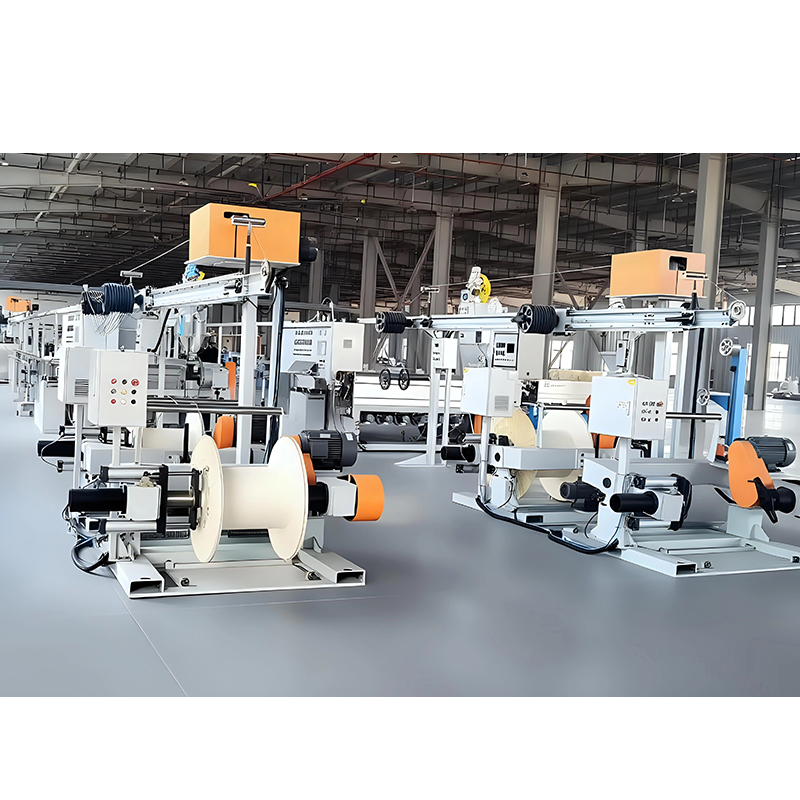
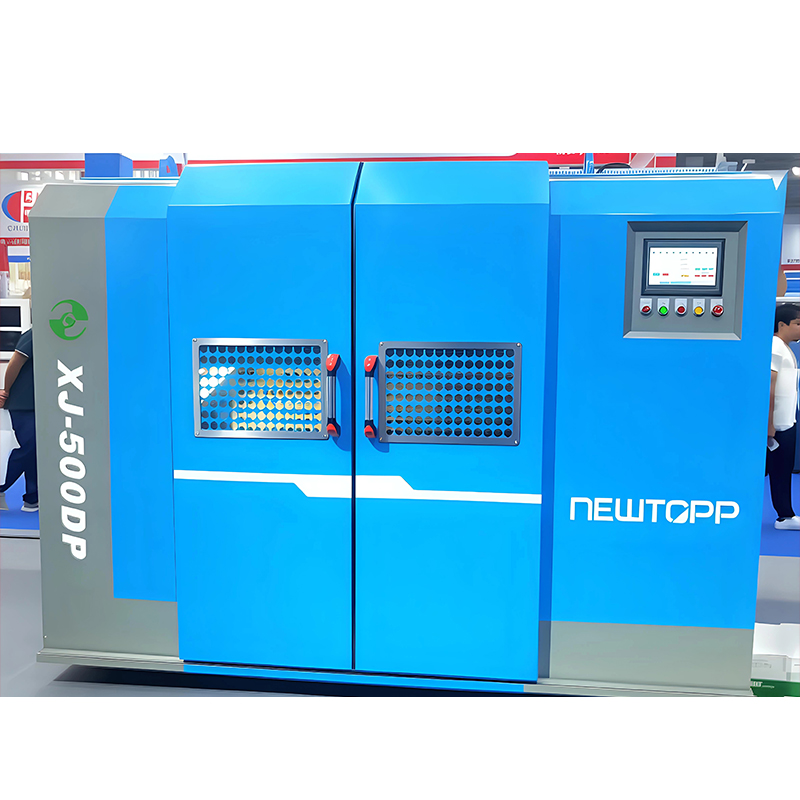
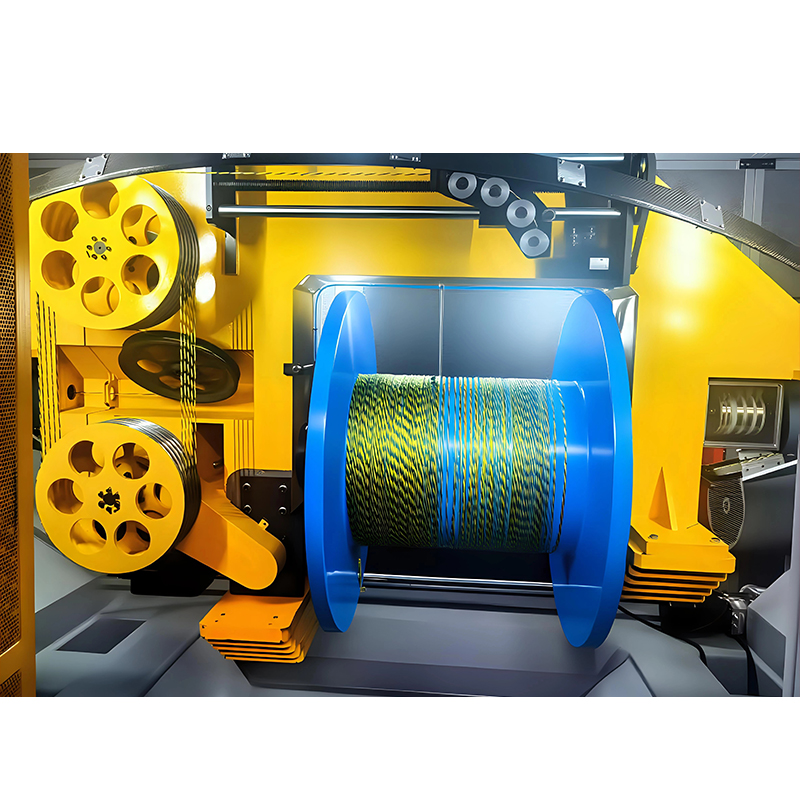 1250 Double Bow Stranding Machine for Efficient Wire TwistingThis double-bow strander uses a rotating bow to twist wires at high speed with minimal vibration, suitable for copper conductors from 1.5 to 35 mm². It ensures balanced tension and precise pitch control for medium-size power and industrial cables.View Product →
Planetary Stranding Machines
A planetary strander holds the payoff bobbins in a rotating cage, giving the operator full control over pitch, tension, and twist direction. This machine handles conductors from 35 mm² to 630 mm², including cables with a steel center core or multiple layers. It is the standard for mining, aerospace, and offshore cable production.
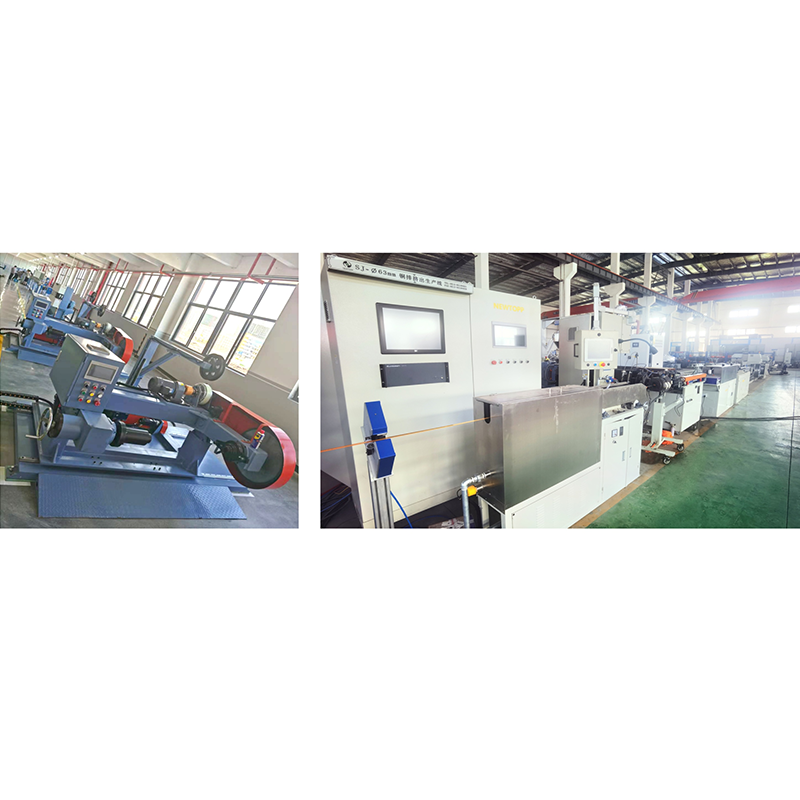
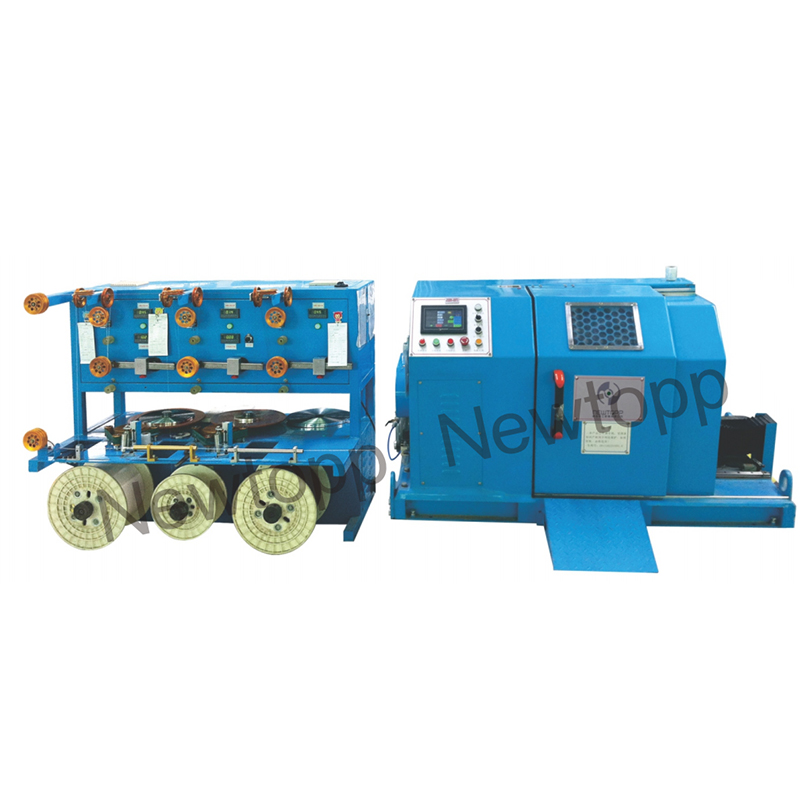
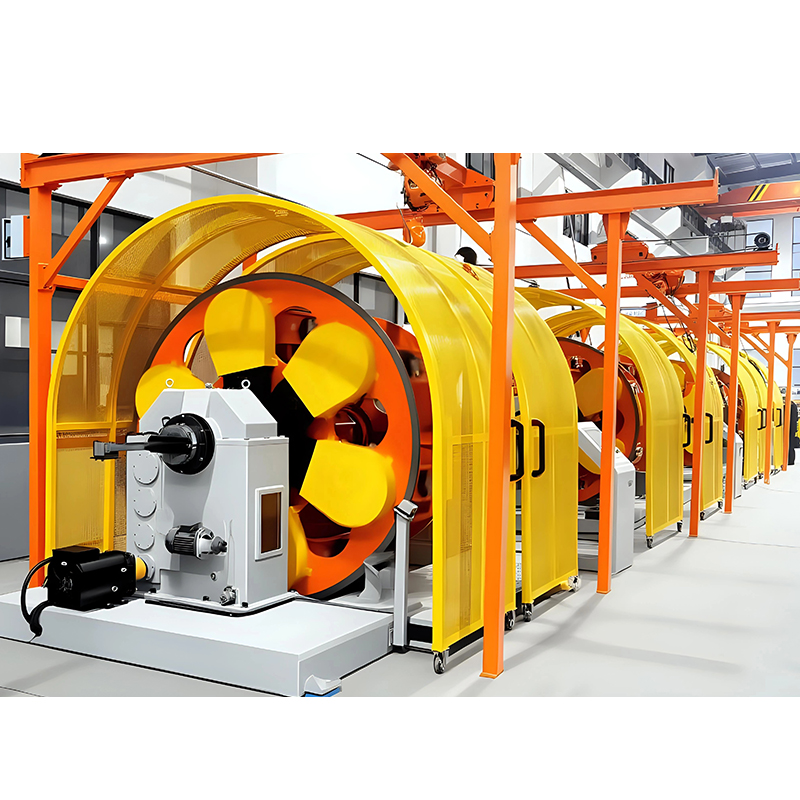 Planetary Stranding Machine for Precision CablesA planetary strander with rotating cage provides full control over pitch, tension, and twist direction. It handles conductors from 35 to 630 mm², including those with steel center cores, making it ideal for mining, aerospace, and offshore cables.View Product →
Triple-Twisting Stranding Machines
A triple-twisting strander advances the speed principle by rotating both the payoff and take-up at three times the rate of a conventional double-twist machine. It is particularly effective for producing small-diameter flexible cables, such as robot arm cables and mobile device cables.
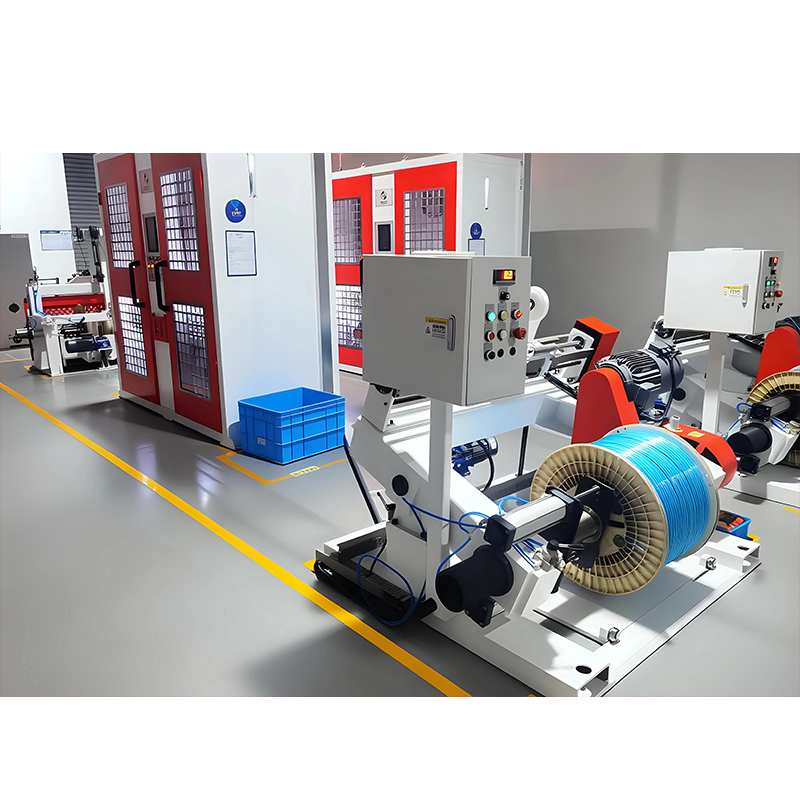
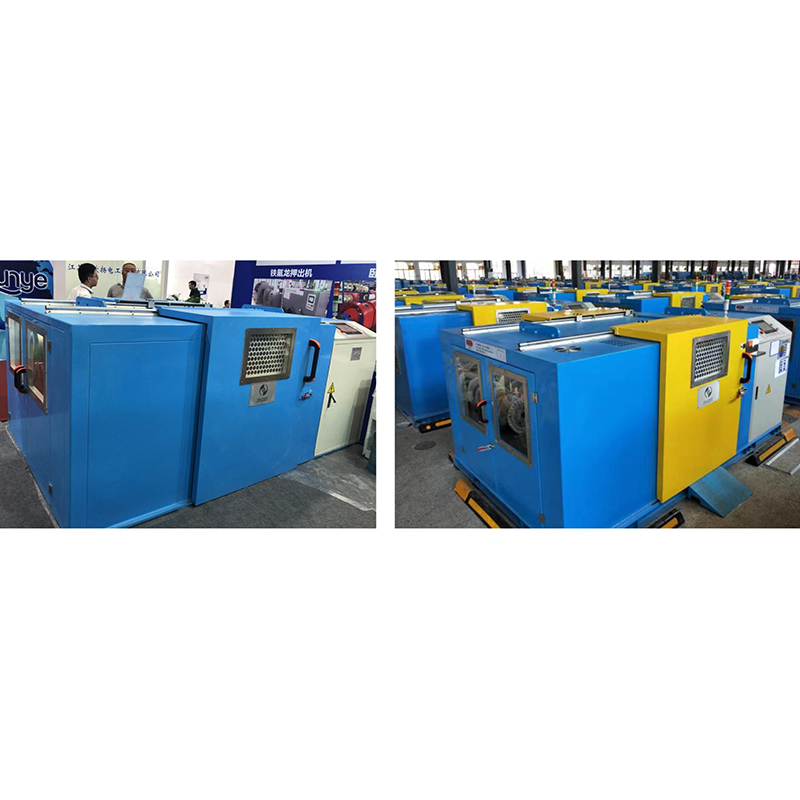 Triple Stranding Machine for High-Speed Pair TwistingThis triple-twisting strander rotates both payoff and take-up at three times the rate of a double-twist machine, achieving 1.5 times faster production. It is suited for small-diameter flexible cables like robot arm and mobile device cables.View Product →
How to Choose the Right Machine for Your Application
The right machine choice comes down to the conductor application, not the machine speed. The most common purchasing mistake is choosing a buncher for a stranding requirement, or vice versa, which often causes tension issues, inconsistent pitch, or expensive rework.
- Define the conductor application first: signal, power, or building wire
- Confirm the conductor size range: fine wire below 1 mm², or medium to large wire above 4 mm²
- Determine whether pitch and twist direction must be precisely controlled
- Estimate daily production volume: high volume favors double-bow, low volume favors planetary
- Evaluate available floor space: a planetary strander needs more area than a double-bow
- Check the pay-off and take-up sizes that match your production reels
For a closer look at how these machines integrate into the complete production cycle, see our comprehensive guide to cable stranding machines.
Frequently Asked Questions
Can a buncher be used for stranding applications?
No. A buncher cannot replace a strander when the cable requires precise pitch and twist direction. It can twist wires, but it does not control lay pitch or twist direction. For cables that must meet tight electrical or mechanical tolerances—such as data, power, or industrial cables—a strander is the correct machine. Using a buncher in these applications risks inconsistent conductor resistance and poor flexibility under repeated bending.
What is the difference between single-twist and double-twist bunchers?
A double-twist buncher is twice as productive as a single-twist machine because it applies two twists per revolution. A single-twist buncher rotates the take-up and the wire at the same speed, producing one twist per revolution. A double-twist buncher rotates the payoff spool, so the wire receives two twists per revolution. Double-twist machines are faster, but they require careful tension control.
What conductor size typically requires a planetary strander?
Conductors above 35 mm² require a planetary strander because a buncher cannot control tension and pitch at that scale. Cables with a steel center reinforcement, or multi-layer cables, also usually need a planetary strander. The cage gives the operator full control over tension and pitch, which cannot be achieved on a buncher for large conductor sections.
How do I know if my cable plant needs a buncher or a strander?
Match the machine to the conductor application and the product mix. If the plant produces flexible appliance cords and fine hook-up wire, a buncher is the fastest and most economical solution. If the plant produces power, data, or industrial cables with precise electrical requirements, a strander is the better long-term investment.