

 English
 русский
 Español


A concentric stranding machine twists two or more layers of round wires around a central conductor so that every wire sits at a defined radial position and the finished conductor is round, symmetrical, and dimensionally stable. This machine is the standard tool for making stranded conductors in power cables, control cables, robot cables, and automotive cables. Below, we explain what the machine does, how the main types differ, which specifications require attention, and what a buyer should verify before purchase.
If you are selecting a machine for a new line or replacing an old strander, the information in this article is structured to help you move from machine principle to purchase decision.
Content
- 1 What Is a Concentric Stranding Machine?
- 2 How a Concentric Stranding Machine Works
- 3 Main Types of Concentric Stranding Machines
- 4 Why Concentric Stranding Is Critical to Cable Quality
- 5 Key Specifications to Compare Before Buying
- 6 How to Choose the Right Concentric Stranding Machine
- 7 Maintenance and Troubleshooting Basics
- 8 FAQ
- 9 Final Thoughts
What Is a Concentric Stranding Machine?
A concentric stranding machine is a cable manufacturing machine that arranges individual round wires in defined circular layers around a central wire or core. Each layer is twisted with a predetermined lay length and direction, and the twist direction alternates from one layer to the next. The result is a conductor with a smooth round contour and a compact cross-sectional shape.
Unlike bunch stranding, in which a group of wires is twisted as a loose, random bundle, concentric stranding keeps every wire in its own geometric position. That predictable structure is what makes later processes, such as insulation extrusion, screening, and sheathing, run at a stable thickness without being disturbed by shape defects.
How a Concentric Stranding Machine Works
All concentric stranding machines, regardless of type, operate on the same principle: payoff spools feed individual wires under controlled tension to a rotating forming unit, and a take-up assembly pulls the finished conductor ahead at a synchronized speed.
- Pay-off: Each wire is pulled from its own spool over tension-controlled rollers.
- Guiding: Wire guides place the wires into a circular pattern around the center wire.
- Stranding head rotation: The rotating cage, drum, or bow twists the wires at a defined helix angle.
- Convergence die: Wires meet at a die that compresses the bundle into a round, clean outer surface.
- Take-up: A capstan or haul-off unit draws the conductor forward; the ratio of rotation speed to linear speed fixes the lay length.
Main Types of Concentric Stranding Machines
There is no single best concentric stranding machine. The right type is determined by wire diameter, layer count, material, and production speed.
Rigid frame stranding machines hold every spool on the rotating part of the frame, and all layers are stranded in a single rotation pass. They give accurate geometry for medium and large conductor sizes but require longer setup times. Planetary type stranding machines rotate individual spool carriers in a way that avoids adding extra twist to each wire, making them the preferred choice for flexible and control cable conductors where residual torsion harms bending behavior. Tubular stranding machines are simpler and operate at higher speeds, but tension control over the full drum length is more difficult; they are widely used for round copper and aluminium conductors in power cables. Double-bow stranding machines use a bow that rotates around the take-up side, giving both high rotation speed and a compact footprint, which makes them a practical option for small and medium round conductors.
| Machine type | Typical wire range | Speed | Flexibility | Common applications |
|---|---|---|---|---|
| Rigid frame | 0.5 – 4.0 mm | Low–medium | Medium | Power cable conductors, large round constructions |
| Planetary | 0.05 – 1.5 mm | Low–medium | High | Flexible cables, control cables, robot cables |
| Tubular | 0.3 – 3.0 mm | High | Low | Copper/aluminium power conductors |
| Double-bow | 0.1 – 2.0 mm | High | Medium | Small and medium round conductors, telecommunication cables |
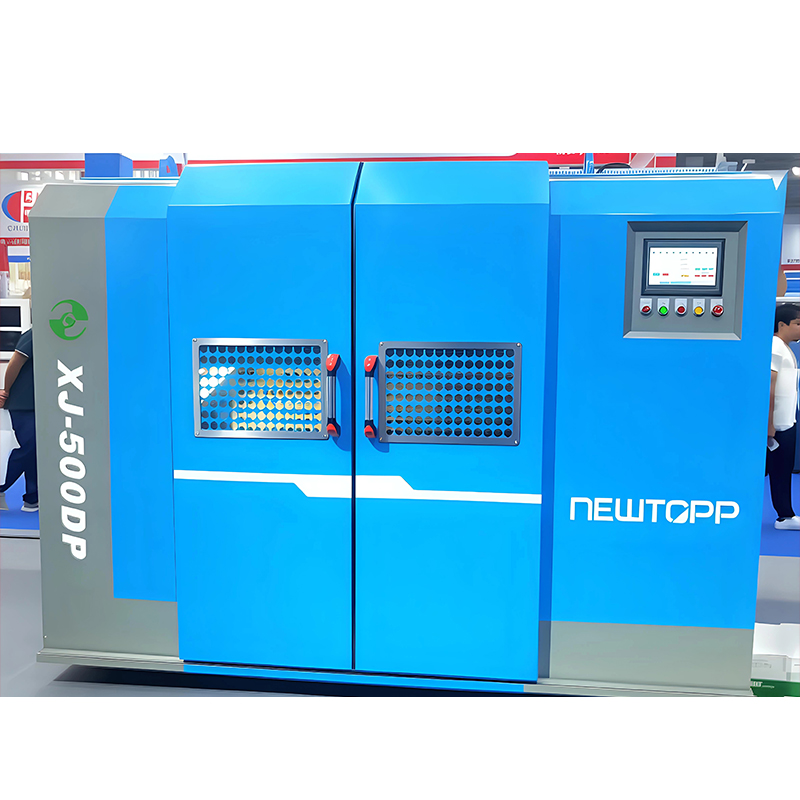
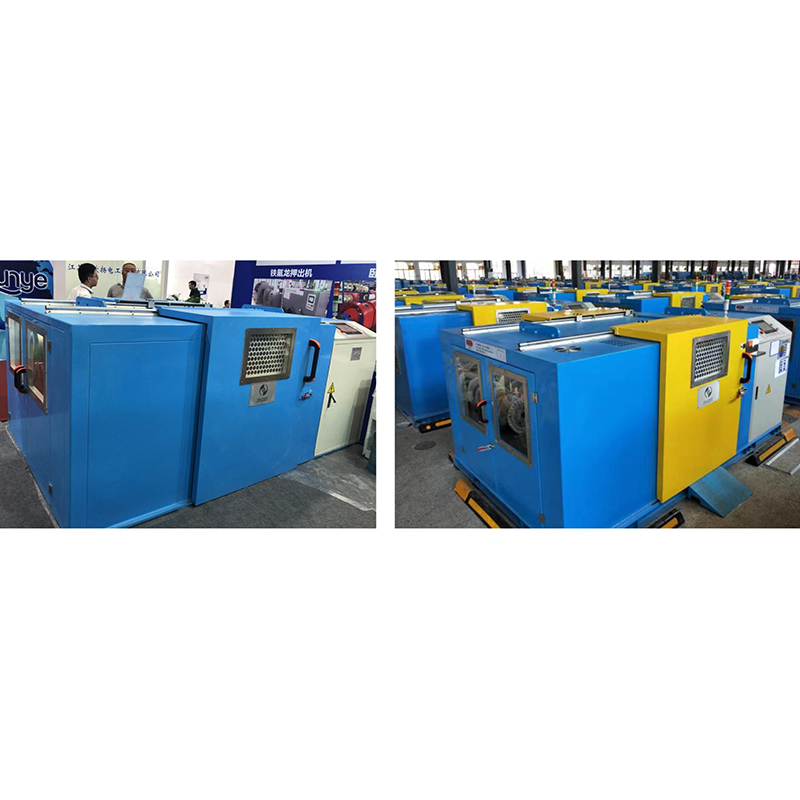
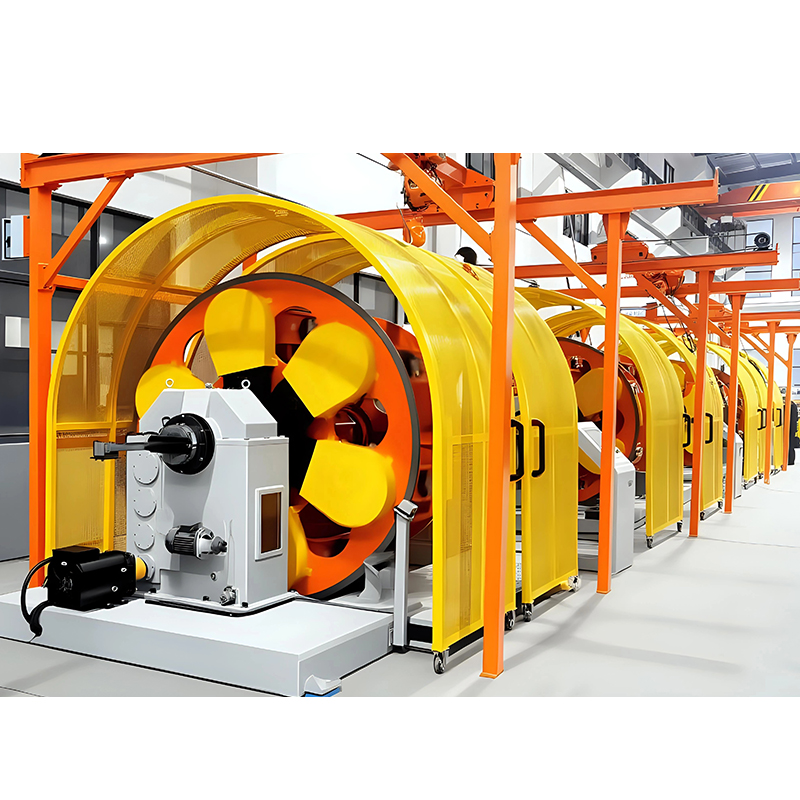 Planetary Type Stranding Machine for Precision Cable ManufacturingThis machine uses planetary motion to synchronize multiple cores around a central axis, reducing residual torque and improving geometric symmetry. It suits high-performance cables like USB 3.1+ and medical device cables, ensuring consistent shielding and long-term flexibility.View Product →
Why Concentric Stranding Is Critical to Cable Quality
The geometry produced by a concentric stranding machine directly controls electrical performance, downstream process stability, and the mechanical lifetime of the finished cable.
- Round and uniform diameter: Ensures insulation and jacket layers can be applied with consistent thickness, reducing material cost and scrap.
- Balanced torque: Alternating layer directions prevent the finished cable from curling or twisting during installation.
- Stable electrical properties: A compact, uniform conductor reduces DC resistance variation between production drums.
- Bending durability: Wires held in defined positions experience less abrasion against each other when the cable bends, which is decisive for drag-chain and robot applications.
A machine that produces acceptable samples for the first few hundred metres but drifts in tension afterward will still create failures downstream. Consistent tension control is therefore not an optional extra; it is the main factor separating a stable production line from one that generates scrap after every spool change.
Key Specifications to Compare Before Buying
Buyers should compare machines on the basis of the complete production system, not just peak rotation speed. Lay length, wire range, tension control, and take-up capacity determine whether the machine can actually produce your target conductor designs within the required tolerances.
| Parameter | What it controls | Practical note |
|---|---|---|
| Lay-length range | Twist pitch of each layer | Should be adjustable while the line is running |
| Wire diameter range | Possible conductor constructions | A narrow range limits product flexibility |
| Maximum number of wires | Largest symmetric construction | Check whether the machine reaches the target in one pass |
| Tension control | Roundness, outer diameter, scrap rate | Per-spool servo tension is more consistent than friction pads |
| Take-up capacity | Drum size and production length | Direct take-up and basket take-up suit different plant layouts |
Combine these parameters with your conductor design before asking for quotes. A machine that does not fit your target lay length and wire count will require extra passes and reduce practical output even if its maximum speed looks impressive.
How to Choose the Right Concentric Stranding Machine
The most reliable selection method is to start with the finished cable design and work backward to the machine configuration.
- Define the conductor design first: material, single-wire diameter, number of wires, lay length, and twist direction of each layer.
- Choose the machine family by layer count and backtwist needs: planetary for low-torsion flexible designs, rigid or tubular for large and simple constructions.
- Size the machine by throughput: calculate the maximum rotation speed and take-up speed needed to meet your monthly production target.
- Check the control system: look for recipe storage, error logging, and tension feedback that can be monitored while the line is running.
- Confirm practical factors: accessible loading positions, die-change procedures, and spare-part availability.
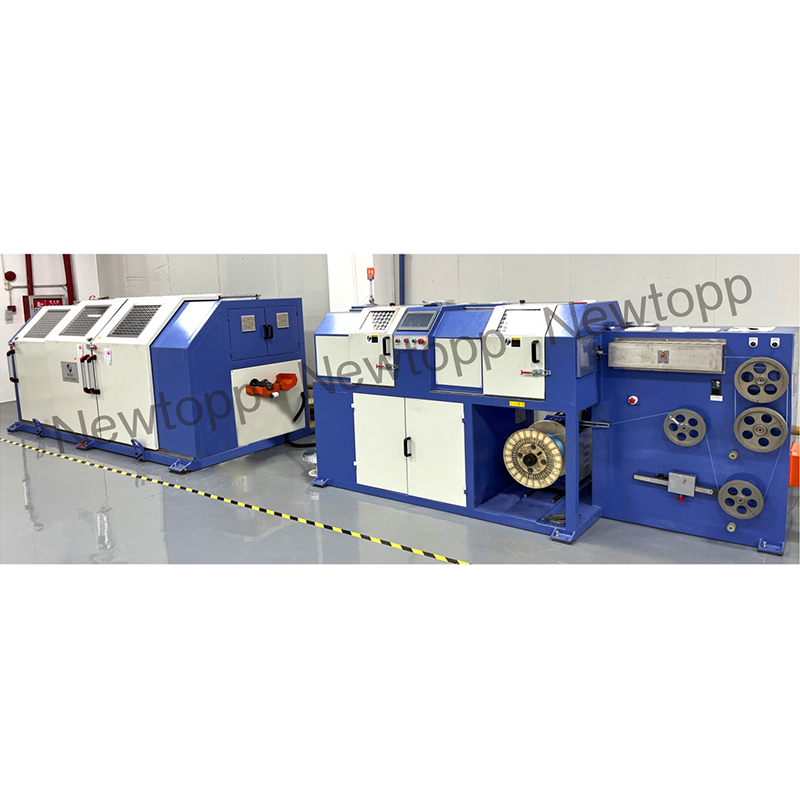
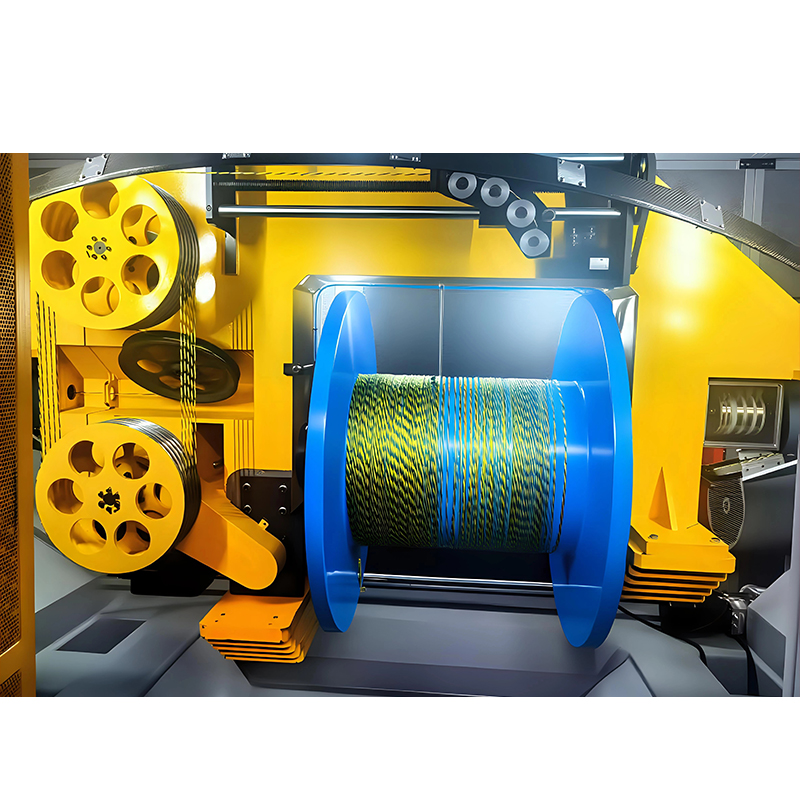 1250 Double Bow Stranding Machine for Efficient Wire StrandingFeaturing a double-bow design that balances tension during high-speed twisting, this machine processes multiple wires, optical fibers, or alloys with precise pitch control. It supports various materials and configurations, ensuring uniform stranding and stable production for cable units.View Product →
Request a trial run with your own wire rather than only a machine demonstration. You will see whether the machine maintains diameter uniformity when the pay-off spools are nearly empty, a stage where tension systems often differ.
Maintenance and Troubleshooting Basics
Most unscheduled stops on a concentric stranding machine come from avoidable causes: unstable tension, worn dies, and lubrication gaps. A structured maintenance routine prevents the majority of these issues before they affect conductor quality.
| Symptom | Likely cause | Corrective action |
|---|---|---|
| Outer diameter fluctuates | Unstable pay-off tension or worn convergence die | Calibrate tension control; replace die according to wear schedule |
| Frequent wire breaks | High friction on guide pulleys or incorrectly set brake | Realign wire path; reduce pull tension |
| Scratched or burnished surface | Wrong die approach angle or dirty die surface | Reset die position; clean die at each shift |
| Vibration and noise | Worn bearing, gears, or unbalanced bow | Inspect lubrication and run a vibration check |
FAQ
What is the difference between concentric stranding and bunching?
Bunching twists a bundle of wires loosely and randomly, which is fast but gives an irregular cross section. Concentric stranding places every wire in a set layer around the core, producing a round and compact conductor with predictable electrical and bending properties.
Can a concentric stranding machine process aluminium conductors?
Yes, aluminium is a standard material for power cable conductors. The lower tensile strength and softer surface require adjusted tension values, well-rounded guide grooves, and clean die surfaces to avoid surface scoring.
Which type is best for flexible robot cables?
A planetary type machine is usually preferred. The backtwist movement of the spool carriers keeps each wire free of additional torsional stress, which preserves the cable's bending durability in robotic and drag-chain applications.
How does lay length influence conductor performance?
A shorter lay gives more flexibility but slightly increases DC resistance. A longer lay reduces resistance but produces a stiffer conductor. The choice should follow the specification of the final cable and its installation environment.
Do I need a compacting die after stranding?
Not always. Compaction reduces conductor diameter and closes gaps between wires, which helps in automotive and power cables. But it adds material stress and requires an extra unit. Use it only when the cable design calls for a smaller outer diameter.
Final Thoughts
Choosing the right concentric stranding machine is less about picking the fastest machine and more about matching the machine construction to the conductor designs you actually produce. Verify the specifications against your production program, run a trial with your own materials, and confirm that the supplier can support installation and process optimization. With the right machine, you get stable round conductors, less scrap, and predictable throughput from the first drum.
For a broader explanation of the different families of stranding equipment, read our comprehensive guide to cable stranding machines. For production advice and company updates, visit our news section.