


 English
 русский
 Español


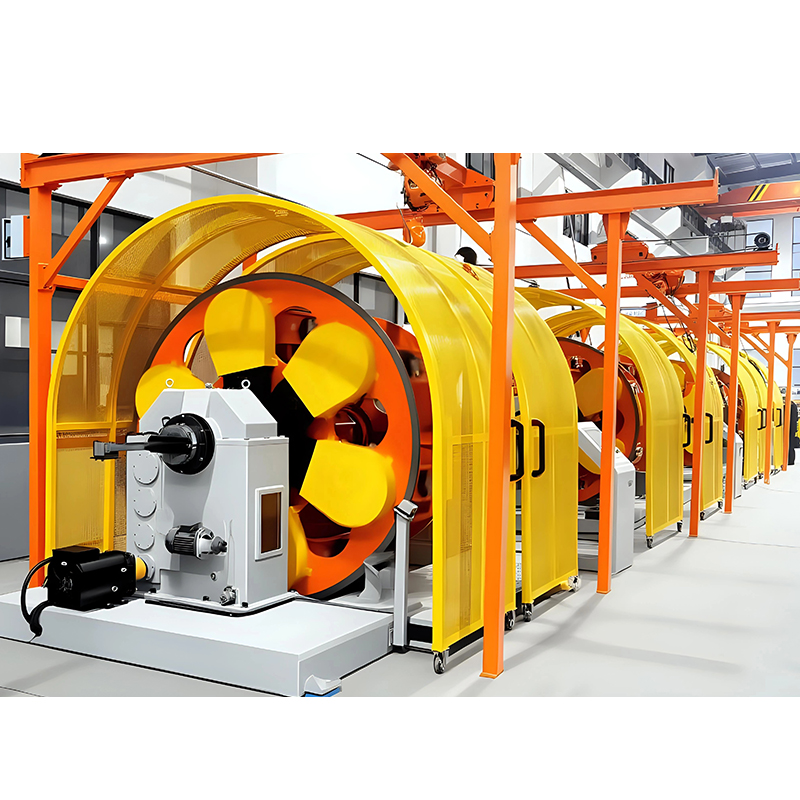


Global standards for conductor stranding include specifications for wire diameter, number...
Specification
| Operating Speed | Up to 6,000 RPM (model-dependent) |
| Wire Diameter Range | 0.03 mm – 3.0 mm |
| Stranding Configuration | 7 / 12 / 19 / 37 / custom |
| Pitch Range | 2 mm – 150 mm |
| Tension Control | Active servo tension, real-time closed-loop |
| Drive System | Vector-controlled AC drive / servo |
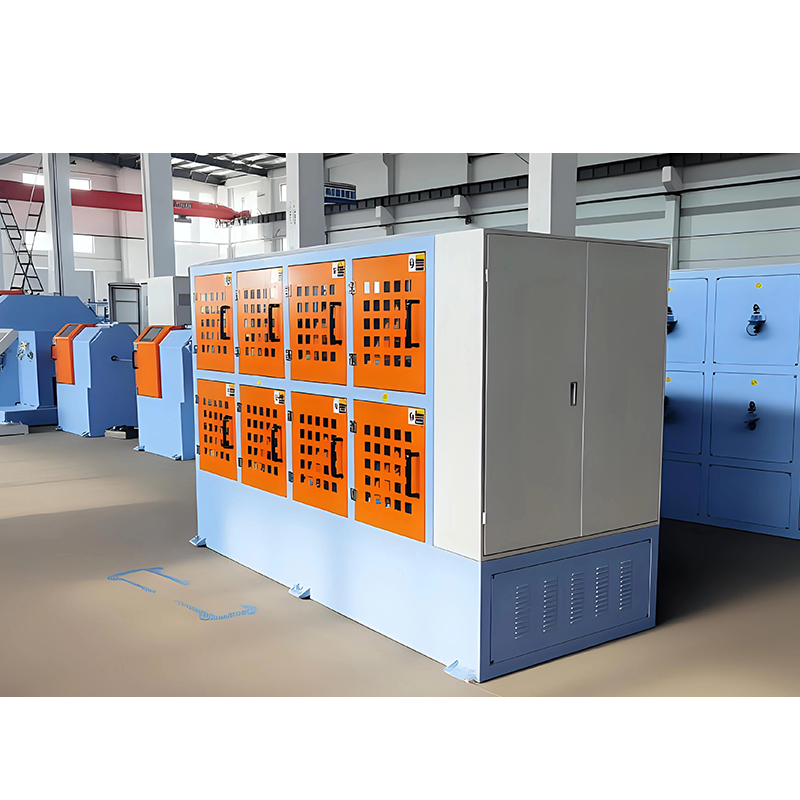
| Control Interface | Industrial PLC + 10" HMI touchscreen |
| Communication Protocol | EtherCAT / Profibus / Modbus TCP (optional) |
| Cooling System | Forced air / water-cooled spindle (high-end) |
| Take-up Bobbin | PN 400 – PN 1000 |
| Power Rating | 15 – 90 kW (model-dependent) |
| Machine Length | 5,000 – 12,000 mm |
| Production Data Logging | Yes, exportable to CSV / ERP systems |
Applications
High-speed stranding equipment is selected when production volume, conductor consistency, and operational efficiency are all critical at the same time. Key application areas include:
- Power distribution cables: High-throughput stranding of copper or aluminum conductors for low- and medium-voltage power cable cores, including XLPE and PVC-insulated types.
- Automotive wiring harnesses: Fine and medium-gauge copper stranding for mass production of vehicle wiring, where per-unit cost and dimensional consistency directly affect harness assembly yield.
- Telecommunication cables: Stranding of conductors for telephone, DSL, and outdoor communication cables where tight dimensional control is required for electrical performance.
- Renewable energy cables: Production of flexible stranded conductors for solar DC cables, wind farm cabling, and EV charging cables requiring good flexibility and fatigue resistance.
- Data and signal cables: High-speed stranding of fine conductors for coaxial, Cat6A, and industrial Ethernet cables, where consistent geometry is essential for signal integrity.
- Marine and offshore cables: Stranding of tinned copper conductors for harsh-environment applications requiring corrosion resistance and mechanical durability.
Advantages
- Significantly higher throughput: Operating at up to 6,000 RPM or more, high-speed stranders can produce two to three times the output of standard-speed equipment in the same time window — directly lowering cost per meter.
- Active closed-loop tension control: Real-time tension monitoring and automatic compensation prevent conductor over-tension or slack during high-speed runs, reducing wire breaks and off-spec product.
- Integrated data logging: Production parameters including speed, tension, pitch, and run time are recorded and can be exported to ERP or MES systems for traceability and quality reporting.
- Reduced scrap and rework: Precision pitch control and stable geometry result in fewer out-of-spec conductors, lower material waste, and reduced downstream rework at insulation and jacketing stages.
- Smart fault detection: Sensors monitor for wire breaks, bobbin depletion, and tension anomalies in real time, triggering controlled shutdowns before damage propagates.
- Scalable and networkable: Industrial communication protocols allow integration into smart factory environments with centralized monitoring, remote diagnostics, and production scheduling.
Material and Structure
The frame of high-speed stranding equipment is constructed from high-tensile welded steel or precision-cast iron, with heavy-duty cross-bracing to minimize resonance and vibration at elevated operating speeds. Frame rigidity is non-negotiable at 4,000+ RPM — any deflection at those speeds translates directly into pitch variation and conductor surface damage.
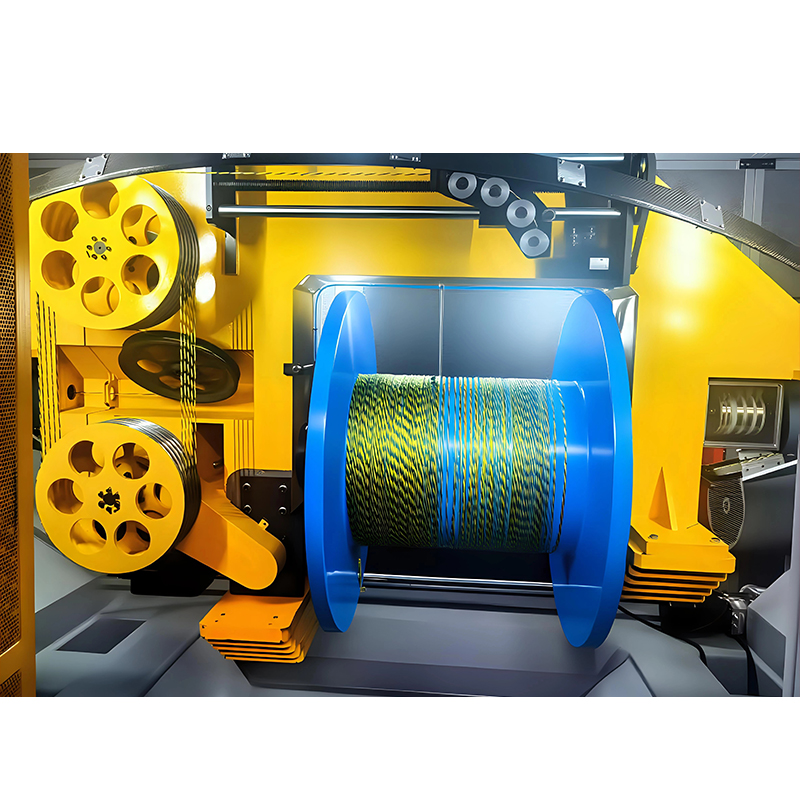
The rotating bow or flyer assembly is dynamically balanced to tight tolerances — typically within 0.5 g·mm or better. On higher-end models, titanium alloy or carbon fiber composite bow components are used to reduce rotating mass while maintaining stiffness.
Wire guide rollers use ceramic or tungsten carbide inserts to handle the combination of high speed and fine wire without scoring the conductor surface. Pay-off tension units feature magnetic powder brakes or servo-controlled active tensioners depending on the application.
The spindle and bearing assemblies are selected for long-life operation under continuous high-speed conditions. Water-cooled spindle designs are available for the most demanding environments where air cooling alone is insufficient.
