

 English
 русский
 Español


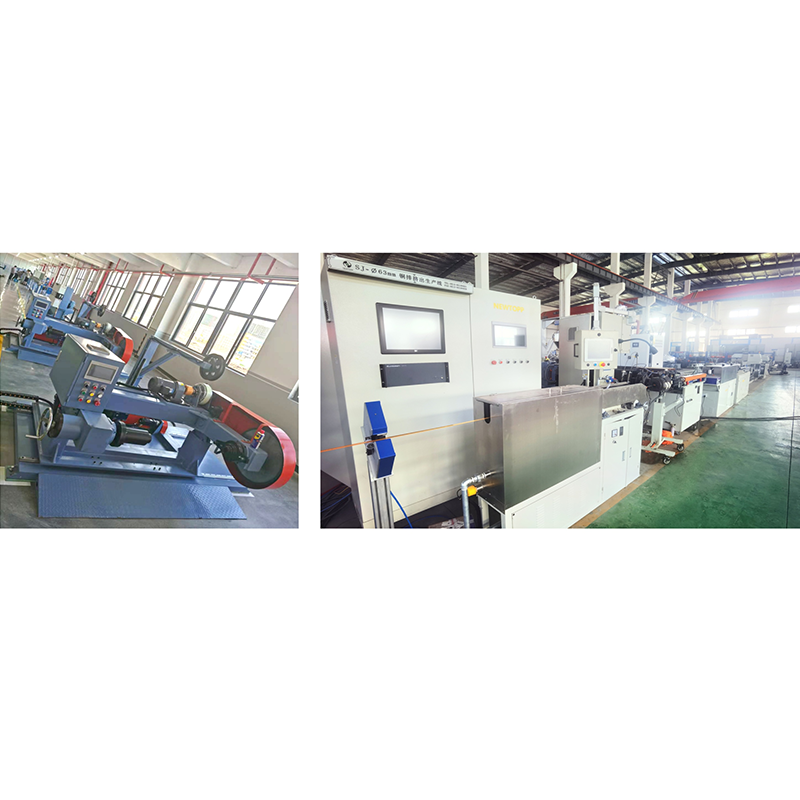
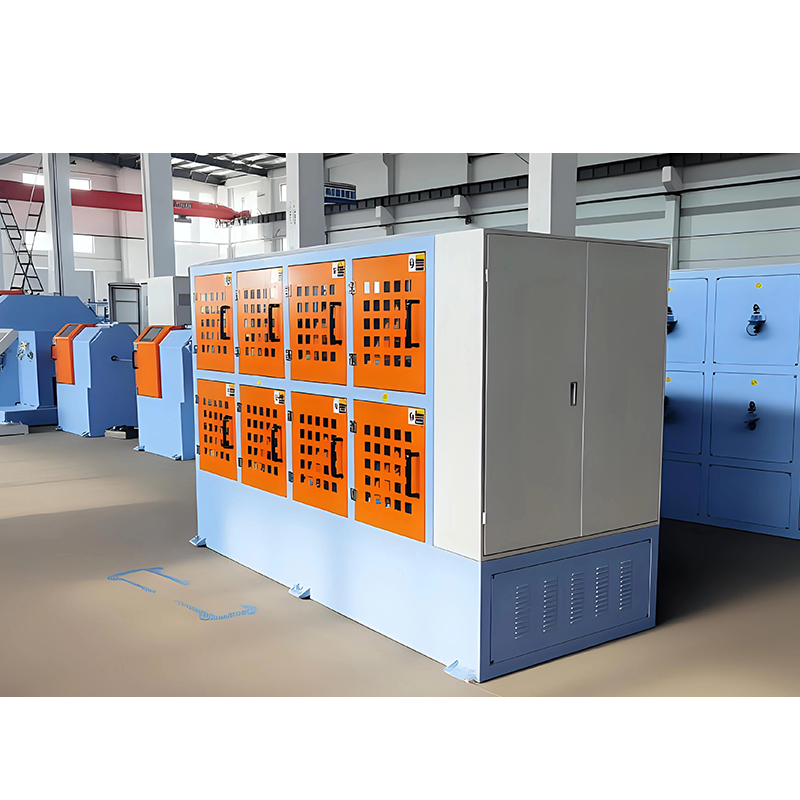
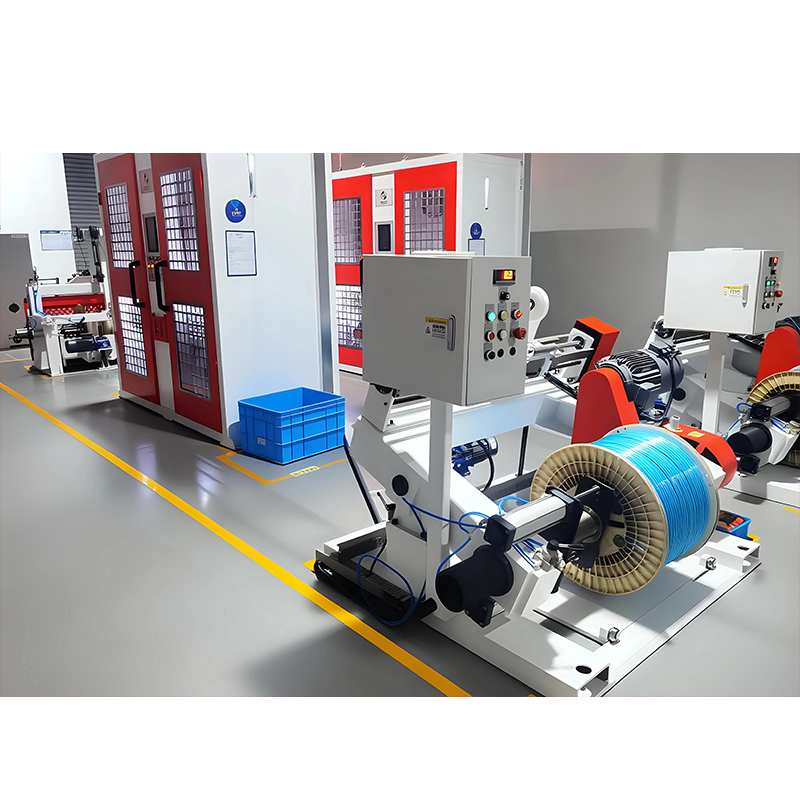
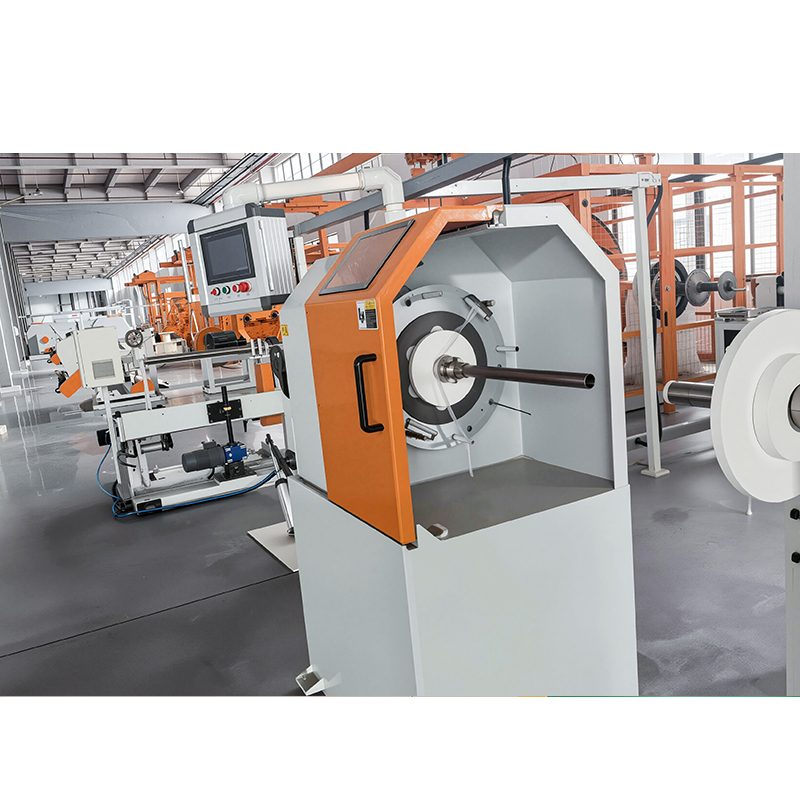
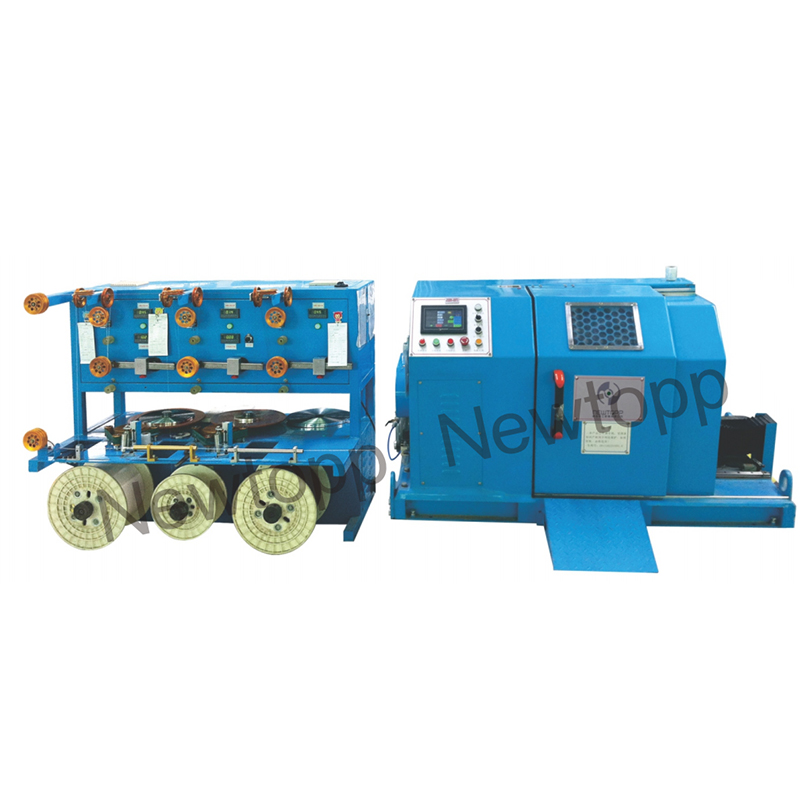
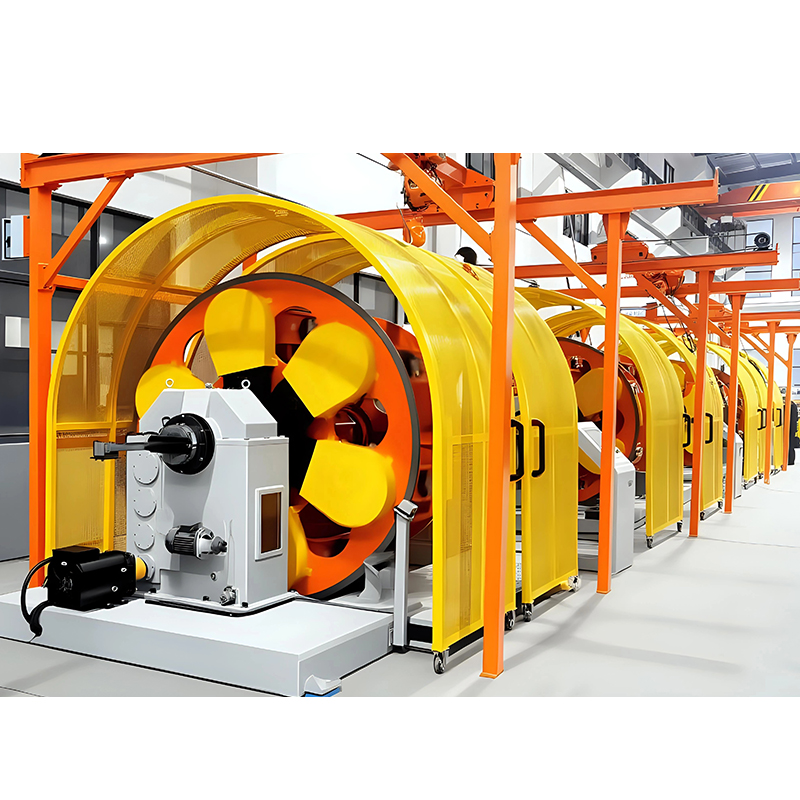
A planetary stranding machine is a highly specialized piece of wire and cable manufacturing equipment that twists multiple strands of wire together around a central core or axis while maintaining the absolute straightness and tension of each individual strand through a unique planetary motion. Unlike traditional bunching or rigid cage stranders, a planetary stranding machine ensures that each wire bobbin rotates around its own axis as it orbits the machine's central shaft, completely eliminating any undesirable twisting or back-twist in the individual filaments. According to industry data from the International Wire & Machinery Association (IWMA), planetary stranding technology has become indispensable in the production of high-voltage power cables, submarine cables, and sophisticated data transmission lines, where the precision of the lay length and the mechanical integrity of the stranded conductor are paramount to the final electrical performance and operational safety.
Content
- 1 What Is a Planetary Stranding Machine and How Does It Operate?
- 2 The Critical Advantages of Planetary Stranding Over Conventional Methods
- 3 Where Are Planetary Stranding Machines Used in Modern Industry?
- 4 Comparing Planetary Stranders to Rigid Cage and Tubular Stranders
- 5 Key Technical Specifications and Operational Considerations
- 6 Frequently Asked Questions About Planetary Stranding Machines
What Is a Planetary Stranding Machine and How Does It Operate?
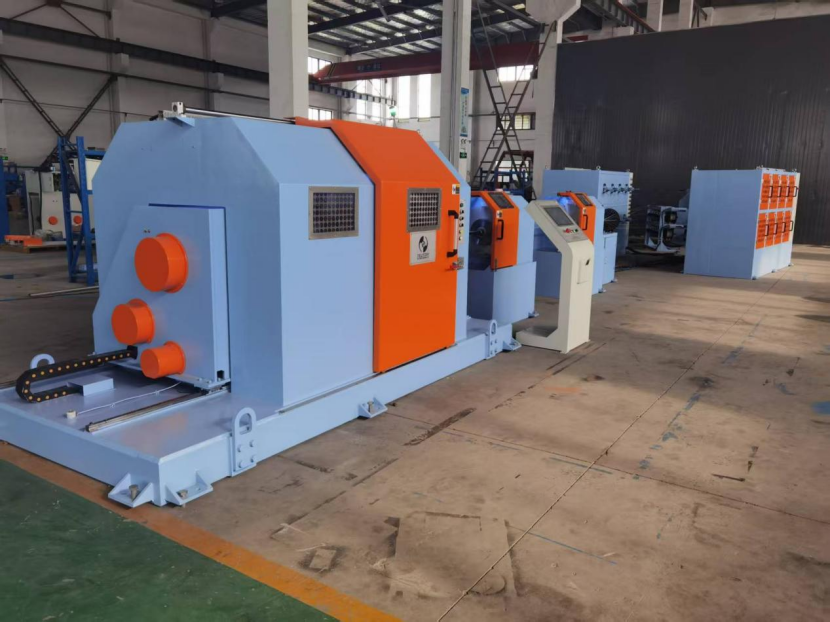
A planetary stranding machine is a multi-bobbin rotational system in which each pay-off bobbin is mounted on its own individually driven rotating cradle within a larger rotating main frame, allowing the individual wires to be twisted together without any torsional stress or uncontrolled deformation. The fundamental principle of a planetary stranding machine can be compared to the motion of the Earth around the Sun: just as the Earth rotates on its axis while orbiting the Sun, each wire bobbin in the machine rotates about its own center to pay off the wire, while simultaneously being carried in a circular path around the central gathering point of the stranded conductor. This dual-rotation mechanism is critical because it neutralizes the back-twist that would otherwise accumulate in each wire if it were pulled off a stationary bobbin while being spiraled around the core. In a standard lay-up, a 1/2 inch (12.7 mm) lay plate with 18 bobbins can process up to 37 individual wire strands in a single pass, with the rotational speed of the main rotor reaching up to 100 to 300 revolutions per minute depending on the machine size and wire gauge. The entire operation is controlled by synchronized servo motors and programmable logic controllers (PLCs) that ensure the lay length—the axial distance required for one complete revolution of a strand around the core—is maintained within a tolerance of less than ±1%. The Wire Association International reports that this level of precision is necessary for multi-layer concentric stranding used in medium- and high-voltage power cables, where even minor inconsistencies in lay length can create localized electrical stress points that lead to partial discharge and premature insulation failure.
The Critical Advantages of Planetary Stranding Over Conventional Methods
The defining advantage of a planetary stranding machine is its ability to produce a completely torsion-free stranded conductor, which preserves the elongation properties and breaking strength of the individual wires while achieving superior geometric uniformity. In a conventional rigid cage strander or tubular strander, the bobbins are fixed within the rotating frame and the wire is pulled off over the flange, introducing a 360-degree twist into each wire for every complete rotation of the cage around the core. This twisting permanently deforms the wire, reducing its tensile strength and making it susceptible to birdcaging—a condition where the outer strands of a finished cable separate from the core under bending or tension. In contrast, the planetary motion of a planetary stranding machine cancels out the twist, resulting in a strand that lies perfectly straight within the cable structure. This allows the stranded conductor to achieve a fill factor—the ratio of the total cross-sectional area of the wires to the cross-sectional area of the conductor—of up to 93% to 95%, which maximizes electrical conductivity for a given diameter. For copper or aluminum conductors in power transmission, this improvement in density translates directly into reduced line resistance and lower I²R losses. Additionally, the smooth, compact surface of a planetary-stranded conductor minimizes the air gaps and protrusions that can cause corona discharge in high-voltage cables operating above 110 kV. By reducing the need for extensive taping and screening, manufacturers can save significant material costs over large production runs.
Where Are Planetary Stranding Machines Used in Modern Industry?
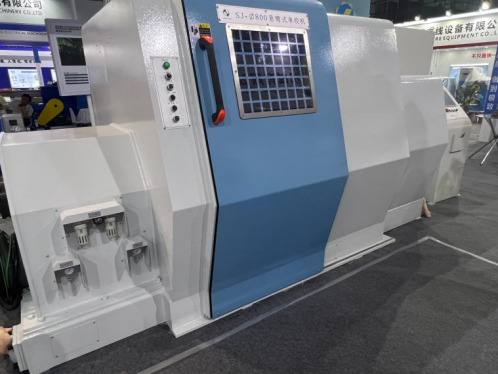
Planetary stranding machines are primarily deployed in the production of high-performance conductors where the mechanical and electrical requirements are so stringent that even a small amount of wire distortion or lay-length irregularity is unacceptable. The key application areas are as follows:
- High-voltage and extra-high-voltage power cables: The torsion-free, perfectly compacted conductors produced by a planetary stranding machine are essential for XLPE-insulated cables rated from 66 kV up to 500 kV. According to the CIGRE Technical Brochure 720, the smooth outer surface of a planetary-stranded segmental conductor (Milliken conductor) minimizes the risk of electrical treeing at the conductor-insulation interface, which is the leading cause of long-term cable failure in underground transmission networks.
- Submarine and subsea power cables: These cables are subjected to continuous dynamic bending and tension during laying operations. The high tensile strength and flexibility retained by torsion-free stranded copper or aluminum wires are critical to preventing conductor breakage. A single failure in a submarine cable can result in repair costs exceeding several million dollars, as noted by industry analysts from CRU Group.
- Specialized control and data transmission cables: In robotic arms, aerospace wiring, and high-end audio cables, any microphonic noise or signal reflection caused by irregular conductor geometry is unacceptable. The exceptional concentricity and surface smoothness delivered by a planetary stranding machine provide the stable electrical characteristics required for consistent impedance and signal integrity.
- Steel cord and wire rope production: For tire reinforcement cords and high-strength lifting ropes, the individual steel filaments must be stranded without residual torsional stress to prevent unwinding when cut. Planetary stranders are used to produce multi-strand ropes with very precise lay lengths and zero rotation under load.
Comparing Planetary Stranders to Rigid Cage and Tubular Stranders
When cable manufacturers evaluate stranding equipment for a new production line, the choice between a planetary strander, a rigid cage strander, and a tubular strander involves a trade-off between product quality, production speed, and capital investment. The table below provides a direct comparison of the key performance and application parameters that differentiate these three machine types.
| Parameter | Planetary Stranding Machine | Rigid Cage Strander | Tubular Strander |
|---|---|---|---|
| Bobbin Torsion | Zero twist (planetary motion cancels rotation) | Full twist (bobbin fixed in cage) | Variable twist (depends on back-twist mechanism) |
| Wire Straightness | Excellent; individual wires remain perfectly straight | Poor; wires develop a permanent helical set | Moderate; partially straightened through back-twist |
| Maximum Rotational Speed | 100–300 rpm (larger rotors) | 200–500 rpm | 500–2,000 rpm |
| Conductor Size Range | Large; up to 2,500 mm² cross-section | Medium to large | Small to medium; up to 500 mm² |
| Capital Investment | High | Moderate | Low to moderate |
| Primary Application | HV/EHV power cables, submarine cables, wire rope | Overhead conductors (ACSR), general purpose cables | Building wire, automotive wire, data cables |
As illustrated in the table, the planetary stranding machine is not the fastest or the cheapest, but it delivers the highest-quality conductor. For a cable that will be installed underground or underwater for 40 years and cannot be replaced without a massive civil engineering project, the additional upfront cost of planetary stranding is negligible compared to the lifetime cost of a single insulation fault.
Key Technical Specifications and Operational Considerations
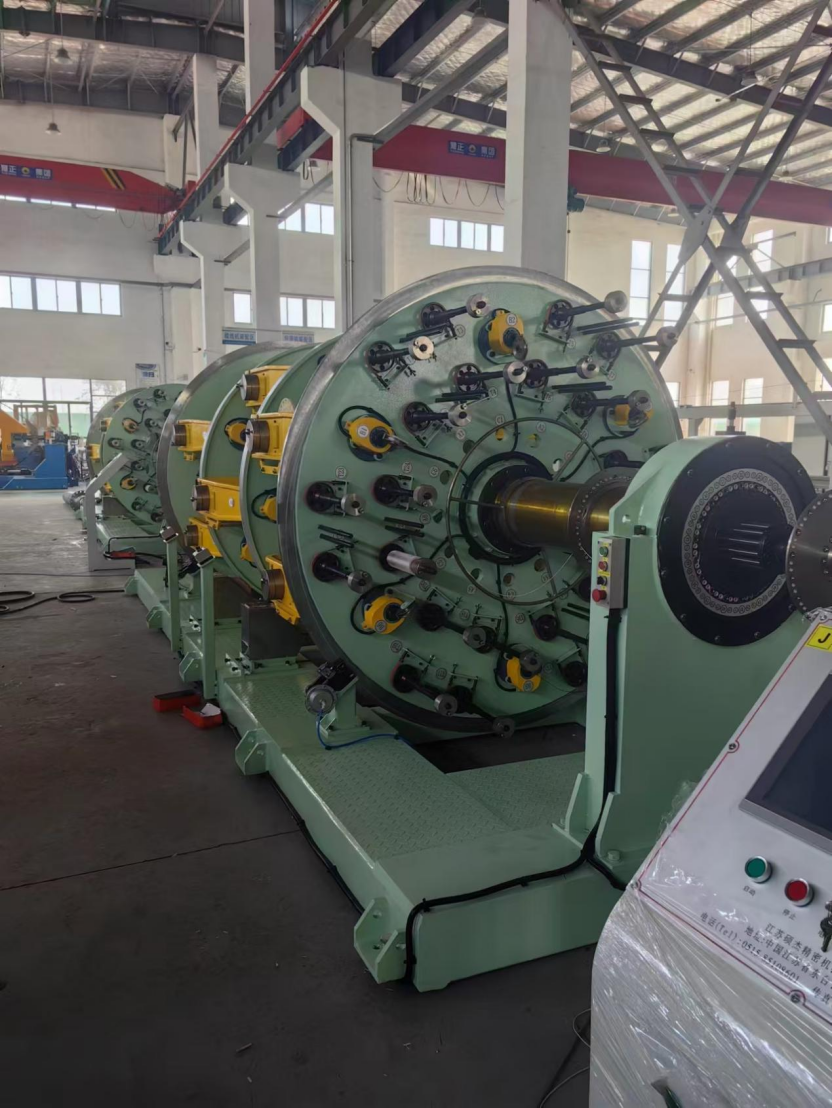
The performance envelope of a planetary stranding machine is defined by its bobbin capacity, the number of rotors, the maximum rotating speed, and the precision of its lay-length control system. A typical medium-sized planetary strander designed for power cable conductor production will have the following characteristics:
- Bobbin diameter: Pay-off bobbins range from 400 mm to 630 mm in flange diameter, with a wire capacity of up to 500 kilograms of copper or aluminum per bobbin. For large conductor stranding, a line may incorporate six or twelve rotors, each carrying multiple bobbins.
- Wire diameter range: The machine can process individual wires from approximately 0.5 mm to 5.0 mm in diameter, with the specific range depending on the roller guides and tensioner settings.
- Lay length control: Modern servo-driven planetary stranding machines achieve lay lengths from as short as 30 mm to over 500 mm, adjustable through the HMI touchscreen. The lay length is electronically synchronized with the take-up capstan to maintain a constant ratio even as the take-up reel fills and the effective diameter changes.
- Pre-twisting and post-forming: For compacted conductors, the machine may be equipped with pre-twisting heads that apply a slight plastic deformation to the entering wire, and post-forming dies or rollers that compress the stranded conductor to its final circular or segmental shape. According to a technical paper presented at the IWMA annual conference, the application of a post-forming force of 2 to 4 kilonewtons can increase the fill factor by an additional 3%.
Frequently Asked Questions About Planetary Stranding Machines
What is the difference between planetary stranding and bunch stranding?
Bunch stranding twists all the wires together in a single rotating bow or cage without controlling the position of each individual strand, which results in a random lay and considerable wire distortion. A planetary stranding machine, on the other hand, precisely controls the position, tension, and torsion of every wire, producing a highly ordered concentric lay with zero internal twist. Bunch stranding is used for low-cost flexible conductors, while planetary stranding is reserved for high-reliability power and data cables.
Can a planetary stranding machine produce compacted conductors?
Yes, and it is often the preferred method. Because the wires are already arranged in a perfect concentric geometry with zero torsion, they compact more uniformly under the pressure of a shaped die or roller. A planetary stranding machine fitted with a compaction head can reduce the conductor diameter by 8% to 12% while maintaining a smooth, gap-free surface, which significantly reduces the amount of insulation and shielding material required in subsequent extrusion steps.
What materials can be processed on a planetary stranding machine?
The machine is designed to handle both ferrous and non-ferrous wires, including annealed copper, hard-drawn copper, aluminum, aluminum alloy, galvanized steel wire, and stainless steel. The material choice depends on the end-use application: copper and aluminum for electrical conductivity, and steel for mechanical strength in overhead conductors (ACSR) and wire ropes. The critical requirement is that the wire must have consistent diameter and elongation properties to maintain uniform tension across all bobbins.
How do you maintain precise tension on a planetary stranding machine?
Each bobbin cradle is equipped with an adjustable mechanical friction brake or an active electromagnetic tensioner. The tension is set to a value typically between 1 and 10 Newtons, depending on the wire diameter and yield strength. If the tension is too low, the wires will be loose and the conductor will have poor geometric stability; if too high, the wires can neck down or even break. Regular calibration of the tensioning system with a hand-held tension meter is essential for maintaining product quality, as uneven tension between bobbins is the primary cause of lay-length irregularity.
As the demand for reliable, high-capacity power transmission and data communication continues to escalate, the planetary stranding machine remains a cornerstone of advanced cable manufacturing. Its ability to deliver a torsion-free, geometrically perfect conductor cannot be matched by faster but less precise stranding methods. By investing in planetary technology, wire and cable producers ensure that the critical conductors connecting our power grids, offshore wind farms, and communication networks will perform safely and efficiently for decades under the most demanding conditions.