

 English
 русский
 Español


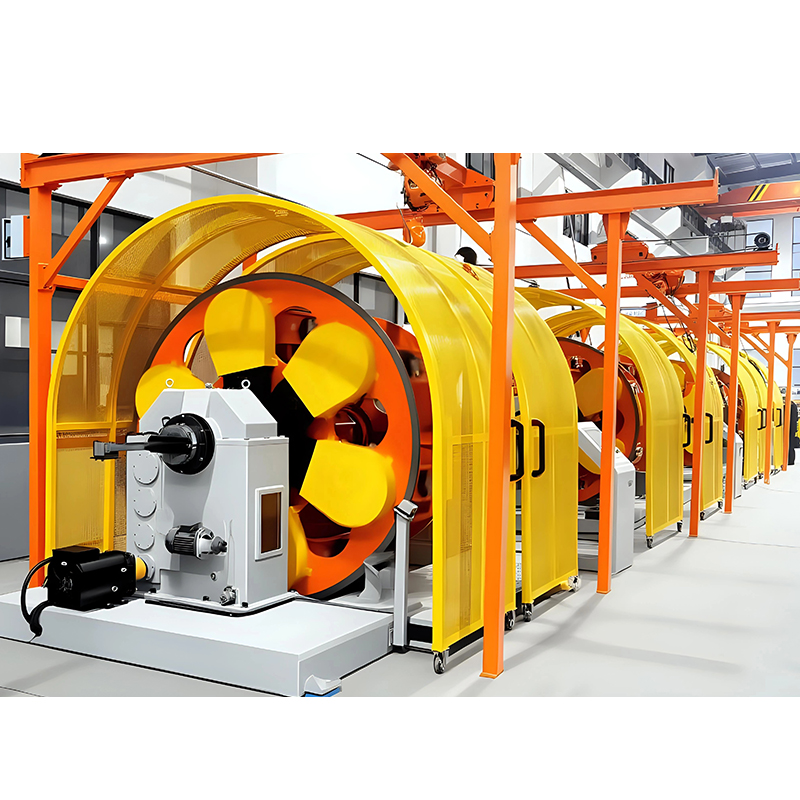
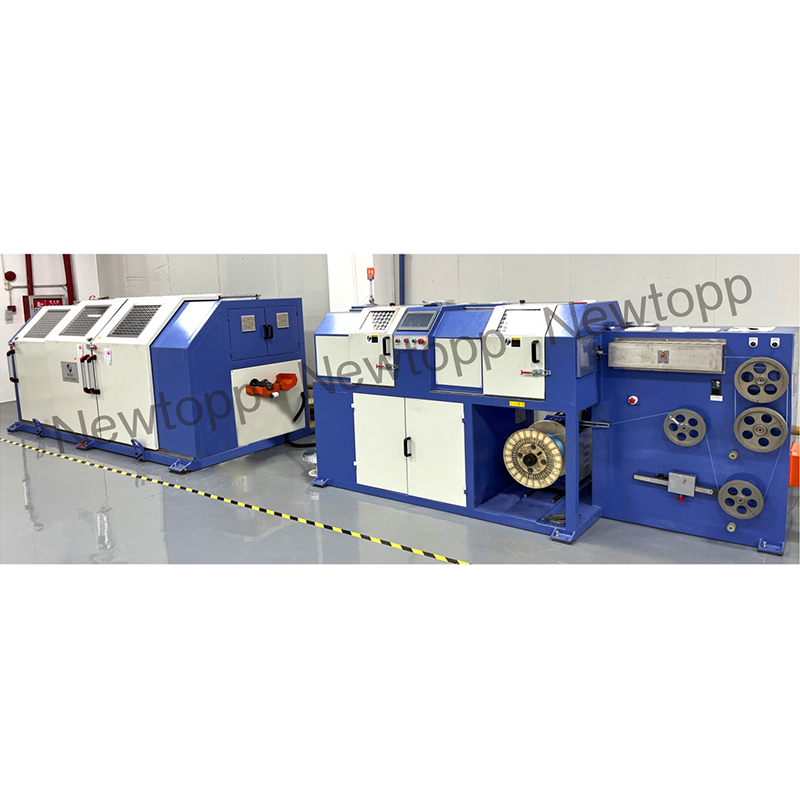
A double twist stranding machine is a high-speed cable manufacturing system that executes two full twists in the conductor per single rotation of its bow, effectively doubling production output while maintaining tight control over lay length and strand tension. This technology directly addresses the cable industry's demand for higher throughput without sacrificing flexibility or electrical performance. By removing the rotational inertia limitations of traditional single twist stranders, the double twist principle allows manufacturers to produce stranded copper, aluminum, and fiber optic strength members at line speeds that can exceed 300 meters per minute, making it an indispensable asset in modern wire and cable manufacturing plants.
Content
- 1 What Is a Double Twist Stranding Machine?
- 2 How Does a Double Twist Stranding Machine Operate?
- 3 How Does a Double Twist Stranding Machine Improve Cable Manufacturing?
- 4 Single Twist vs. Double Twist Stranding Machine: A Detailed Comparison
- 5 Technical Specifications and Model Selection Parameters
- 6 Primary Applications in Wire and Cable Manufacturing
- 7 Frequently Asked Questions About Double Twist Stranding Machines
- 7.1 What is the maximum line speed achievable on a double twist stranding machine?
- 7.2 Can a double twist stranding machine handle insulated or coated wires?
- 7.3 How often does the bow or rotor require maintenance?
- 7.4 What is the typical payback period for investing in a double twist stranding machine?
- 8 Conclusion
What Is a Double Twist Stranding Machine?
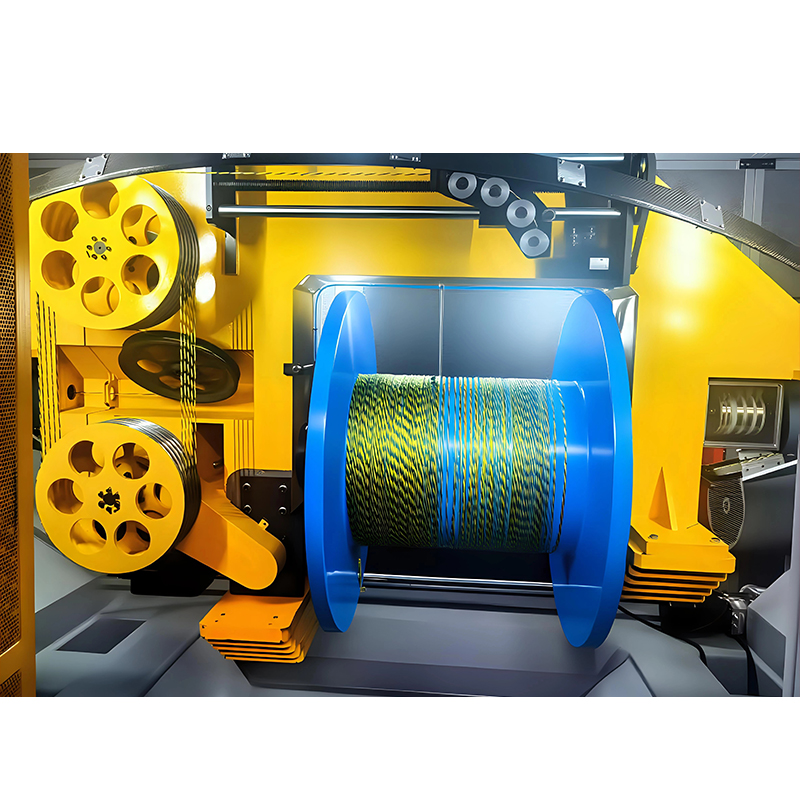
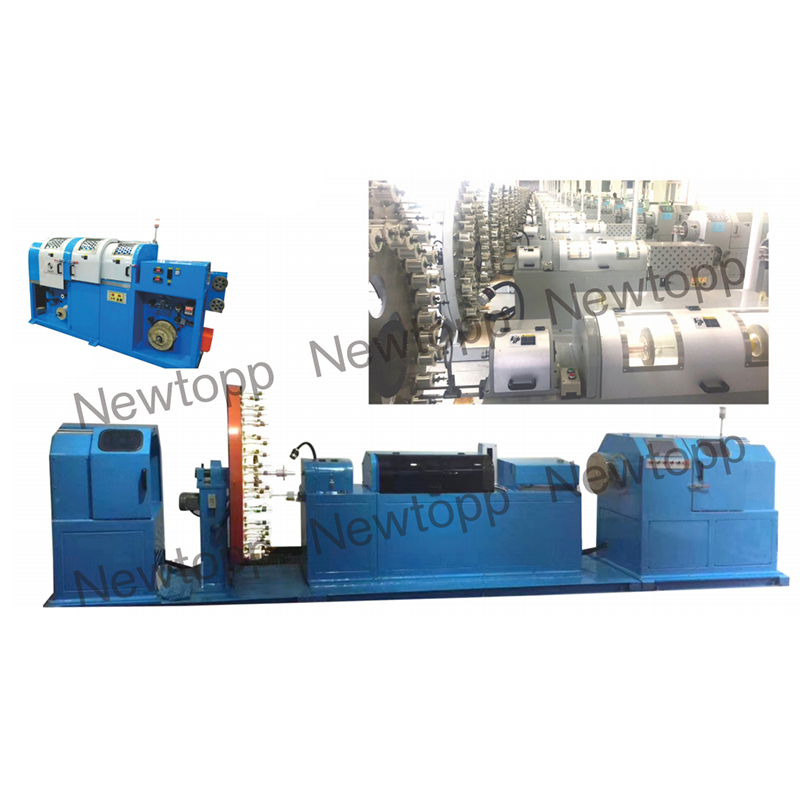
A double twist stranding machine is a rotating equipment unit that assembles multiple individual wire strands into a concentric conductor by giving two twists to the material for every one revolution of its main rotor or bow. Unlike a single twist strander where the pay-off bobbins rotate with the machine, the double twist design typically uses stationary pay-off bobbins arranged inside or adjacent to a rotating cradle. The wires are fed through a hollow shaft, guided along a rotating bow, and exit at the take-up point. The first twist occurs as the wire passes through the rotating bow, and the second twist occurs as the wire passes back toward the center axis. This geometric arrangement yields two distinct lay reversals per rotor cycle, a feat that fundamentally redefines the machine's productivity equation.
The design is available in several configurations, including tubular stranders, bow-type stranders, and planetary versions for sensitive constructions. However, the core concept remains the same: the material experiences a 360-degree twist in the first section and another 360-degree twist in the reverse direction before entering the closing die. This cancels out the back-twist on individual wires, resulting in a torsionally balanced stranded conductor, a property that is critical in flexible robotic cables and high-frequency data transmission lines. According to data compiled by Wire Journal International in a 2023 review of stranding technology, double twist machines now account for over 60% of new strander installations for bare conductor production in the 0.15 mm² to 6 mm² cross-section range.
How Does a Double Twist Stranding Machine Operate?
The machine operates by taking wire from stationary spools and passing it through a rotating bow that twists the wire in one direction before it enters a central closing die, then immediately twisting it again in the opposite direction as it exits, creating a perfect 2:1 twist-to-rotation ratio. The heart of the system is a rotor that spins at speeds often reaching 5,000 RPM or higher for fine wires. The wire path is symmetric: from the pay-off bobbin, the strand travels along the rotor axis, then radially outward along the bow arm, then inward again to the die. Because the wire passes through the bow's path, it receives a twist each time the bow rotates relative to the fixed point. The result is that the take-up capstan sees a strand that has been twisted twice, while the pay-off bobbins remain stationary, eliminating the need to rotate heavy, fully loaded spools at high speed.
This stationary pay-off principle dramatically reduces rotating mass. In a single twist strander, the entire bobbin load must be accelerated and decelerated with each speed change, consuming considerable energy and limiting top speed. With a double twist strander, only the bow and a lightweight cradle bearing set rotate. Industry benchmarks indicate that for a typical 19-wire stranding operation with 400 mm bobbin flanges, the reduction in rotating inertia can be as high as 75%, allowing the machine to reach operational speed in less than half the time of a comparable single twist unit. This operational responsiveness not only saves energy but also minimizes material waste during acceleration and deceleration ramps.
How Does a Double Twist Stranding Machine Improve Cable Manufacturing?
The machine improves cable manufacturing by raising production speed, enhancing conductor concentricity and strand tension uniformity, and significantly reducing the manufacturing cost per kilometer of stranded cable. In an industry where material and labor costs are dominant, any technology that can double the output rate while maintaining or improving quality has a transformative impact on profitability. The double twist principle addresses all three legs of the manufacturing triangle—speed, quality, and cost—simultaneously, rather than trading one off against another.
Massive Increase in Throughput and Productivity
By generating two twists per revolution, a double twist stranding machine can produce the same lay length at half the rotor speed, or double the line speed at the same rotor speed, compared to a single twist strander. For example, a typical single twist strander producing a 25 mm lay length might run at 3,000 RPM, achieving a line speed of 75 meters per minute. A double twist machine with the same 25 mm lay requirement can run at 3,000 RPM and deliver 150 meters per minute. According to published case studies from wire and cable industry symposiums, the average productivity gain when switching from single twist to double twist for 7-strand 1.5 mm² conductors is between 85% and 110%, depending on bow balance and wire quality. Many modern machines now routinely run at 5,500 RPM on fine wire, translating to line speeds above 275 meters per minute, which more than doubles the output of older single twist lines.
Superior Strand Quality and Uniform Tension Control
The inherent back-twist cancellation effect in a double twist stranding machine yields a torsionally balanced, perfectly round conductor with extremely consistent strand-to-strand tension, reducing internal stress and improving the cable's bending fatigue life. In single twist stranders, the wire pay-off bobbins rotate, which can cause fluctuating tension as the bobbin mass shifts and bearings wear. In a double twist system with stationary pay-offs, tension is controlled via precise magnetic or spring-loaded braking systems that act on the non-rotating spool. Data from a technical paper presented at the International Wire & Cable Conference (IWCC) indicated that tension variation in a well-tuned double twist machine can be held to within plus or minus 3% of the setpoint, compared to plus or minus 8% in conventional single twist equipment. This results in a strand bundle that is free of crossovers and high spots, leading to a 15% to 20% reduction in electrical resistance anomalies and a measurable improvement in insulation concentricity in subsequent extrusion processes.
Reduced Floor Space and Energy Consumption
A double twist strander reduces factory floor space requirements and lowers energy consumption per kilometer of produced cable, thanks to its compact design and lower rotating inertia. Because the machine delivers twice the twist in the same footprint, a plant can often replace two single twist lines with one double twist machine and still exceed previous output. Energy measurements on a mid-range 400 mm double twist unit producing 2.5 mm² stranded conductors showed a consumption of approximately 0.12 kWh per kilometer, while an equivalent single twist line consumed 0.21 kWh per kilometer, a 43% reduction. The lower energy draw also reduces the heat load on the factory air conditioning system, an often-overlooked secondary savings. Furthermore, the stationary pay-off setup simplifies bobbin loading, reducing operator changeover time by up to 30%.
Single Twist vs. Double Twist Stranding Machine: A Detailed Comparison
When comparing the two technologies side by side, the double twist stranding machine outperforms the single twist design in throughput, energy efficiency, and tension consistency, though single twist stranders still hold an edge in processing very large cross-sections or when an uncoiling back-twist must be strictly avoided. The decision between the two often comes down to the cable type and production volume, but for the vast middle range of wire and cable products, double twist is the clear modern standard. The table below highlights the critical differences.
| Parameter | Single Twist Strander | Double Twist Stranding Machine |
|---|---|---|
| Twists per rotor revolution | 1 | 2 |
| Maximum typical line speed (7-strand, 25 mm lay) | 70 - 100 m/min | 150 - 300 m/min |
| Rotating mass | High (spools rotate) | Low (only bow and cradle) |
| Tension control accuracy | Moderate (±8%) | High (±3%) |
| Energy consumption per km (2.5 mm²) | ~0.21 kWh | ~0.12 kWh |
| Suitability for large cross-sections (>50 mm²) | Excellent | Limited (bow stress) |
Technical Specifications and Model Selection Parameters
Selecting the right double twist stranding machine involves matching the bobbin size, strand diameter range, and maximum rotor speed to the specific cable product portfolio of the factory. Manufacturers offer a range of sizes, typically designated by the maximum take-up bobbin flange diameter. The following table presents general specification ranges for small, medium, and large double twist stranders commonly found in the industry, based on publicly available technical brochures and specification sheets.
| Specification | Small Unit (300-400 mm spool) | Medium Unit (500-560 mm spool) | Large Unit (630-800 mm spool) |
|---|---|---|---|
| Strand diameter range | 0.08 - 1.4 mm | 0.12 - 2.5 mm | 0.20 - 4.0 mm |
| Max rotor speed | 5,000 - 7,000 RPM | 3,500 - 4,500 RPM | 2,000 - 3,000 RPM |
| Lay length range | 5 - 100 mm | 10 - 180 mm | 15 - 250 mm |
| Typical max line speed | 350 - 400 m/min | 250 - 300 m/min | 150 - 200 m/min |
| Installed power | 11 - 15 kW | 18 - 30 kW | 37 - 55 kW |
Primary Applications in Wire and Cable Manufacturing
The double twist stranding machine is the preferred technology for manufacturing a wide spectrum of conductors, from ultra-fine automotive wires to medium-voltage power cable cores and data communication cables. Its versatility stems from the ability to quickly change lay lengths and bobbin configurations. The following are the key application areas where this equipment has become essential.
- Flexible Building Wire (THHN/THWN): Stranding 7, 19, or 37 wires of copper in sizes from 0.5 mm² to 6 mm². The tension balance ensures the final insulated wire bends easily in conduit without insulation kinking.
- Automotive Primary Wire and Battery Cable: Processing ultra-fine strands (0.10 mm to 0.30 mm) for high-flex applications. A double twist strander can bundle up to 140 wires at once while maintaining a perfectly round bundle geometry, critical for automated crimping processes.
- LAN, Coaxial, and Data Cable Cores: Producing bunched or concentric stranded conductors for Category 6A and Category 8 Ethernet cables. The back-twist cancellation minimizes signal phase distortion caused by wire spiraling.
- Fiber Optic Strength Members: Stranding aramid yarns or glass-reinforced plastic rods without inducing excessive twist that could cause signal attenuation in the fiber.
- Earthing and Grounding Conductors: Producing soft-annealed stranded copper conductors for substation grounding grids where high flexibility and corrosion resistance are required.
Frequently Asked Questions About Double Twist Stranding Machines
What is the maximum line speed achievable on a double twist stranding machine?
Modern double twist stranders designed for fine wires can reach line speeds of 400 meters per minute, though practical production speeds for standard 7-strand 1.5 mm² conductors usually fall between 200 and 300 meters per minute. The absolute maximum is determined by the rotor's dynamic balance, the bobbin size, and the wire's mechanical strength. Industry records from high-speed strander tests at trade exhibitions have demonstrated stable running at 450 m/min with 0.12 mm wire, but sustained operation at those speeds may require extremely well-prepared bobbins and climate-controlled tension systems.
Can a double twist stranding machine handle insulated or coated wires?
Yes, but with careful attention to the surface condition and bending radius, as the double twist process subjects the wire to two flexing cycles per bow revolution. When stranding thin-walled insulated wires, the machine must be equipped with polished ceramic guides and larger-diameter pulleys to prevent insulation abrasion. Many machines offer a reduced-speed mode for sensitive constructions. For heavy enameled magnet wires used in motor windings, the back-twist cancellation is beneficial because it prevents the wire from untwisting, preserving the bond coating.
How often does the bow or rotor require maintenance?
Under normal three-shift operation, the carbon-fiber or steel bow arms should be inspected for wear every 2,000 operating hours, and the bearing assemblies should be greased according to a 500-hour schedule. Carbon-fiber bows have become standard for high-speed units because they are lighter and cause less vibration than steel, but they are more susceptible to damage from wire breaks. A catastrophic bow failure can be prevented by integrating vibration monitoring sensors that automatically trigger an emergency stop when imbalance exceeds a preset threshold, a feature now common in European-sourced machines.
What is the typical payback period for investing in a double twist stranding machine?
Most cable manufacturers report a payback period of 14 to 24 months when replacing a single twist line with a double twist strander, driven by labor savings, increased output, and reduced scrap. A detailed cost model published in the Wire & Cable Technology International magazine showed that a medium-sized double twist machine producing 10 million meters per year of 2.5 mm² stranded wire saves approximately $85,000 to $120,000 annually in combined energy, labor, and material costs compared to a single twist alternative. The exact payback depends on local electricity rates and shift patterns, but the financial case remains strongly positive in most industrial economies.
Conclusion
The double twist stranding machine has fundamentally reshaped cable manufacturing by delivering twice the productivity in the same footprint while improving the electrical and mechanical quality of stranded conductors. Its stationary pay-off principle cuts energy waste and accelerates production ramps, making it a cornerstone of lean manufacturing in the wire and cable sector. As demand for finer, more flexible, and higher-performance cables continues to rise across automotive, telecommunications, and renewable energy industries, the precision and efficiency of double twist technology will only become more critical, cementing its role as an essential tool for any competitive cable producer.