

 English
 русский
 Español



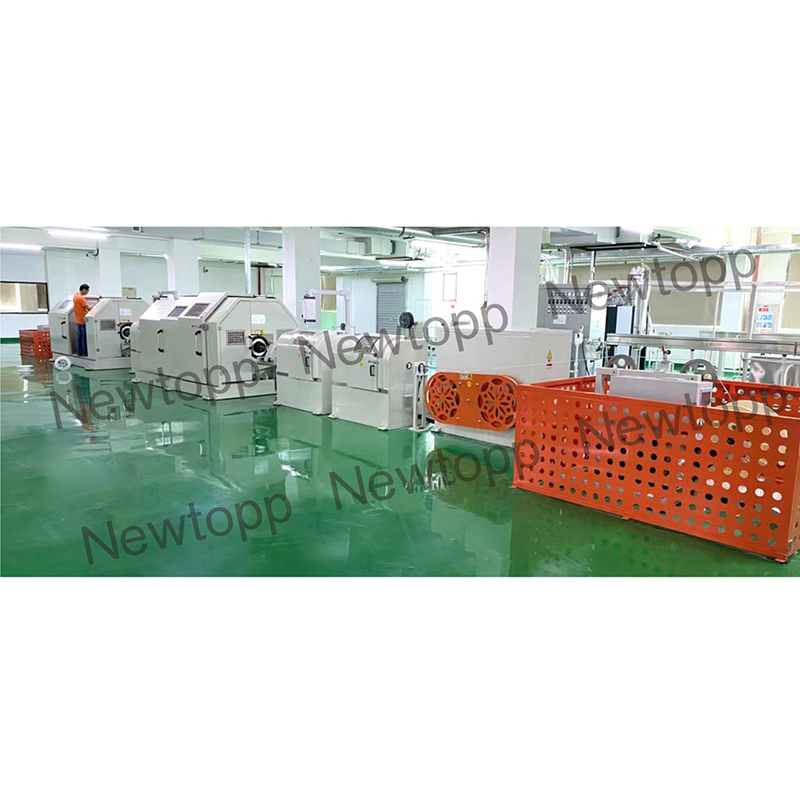
A copper wire stranding machine is a production system that twists multiple copper wires into a single stranded conductor. It is used in nearly every cable factory that makes power cables, data cables, automotive cables, or flexible industrial cables. The machine determines conductor flexibility, electrical stability, and production speed before any insulation or jacketing step begins.
If you are evaluating a stranding line for a new cable plant or upgrading an existing workshop, the practical question is not whether you need a stranding machine. It is which type, what specifications, and what features actually justify the investment. This article explains the types of copper wire stranding machines, what they do, how to compare them, and what to verify before ordering.
Content
- 1 What Is a Copper Wire Stranding Machine?
- 2 Types of Copper Wire Stranding Machines
- 3 Main Technical Specifications to Compare
- 4 How a Stranding Machine Improves Manufacturing Efficiency
- 5 Key Features to Look for Before Buying
- 6 Comparison of Twisting Mechanisms
- 7 Common Problems in Copper Stranding and How to Solve Them
- 8 Return on Investment Considerations
- 9 How to Choose a Reliable Copper Wire Stranding Machine Manufacturer
- 10 Frequently Asked Questions
- 10.1 What is the difference between a stranding machine and a bunching machine?
- 10.2 How many wires can a copper wire stranding machine handle?
- 10.3 Can the same machine produce copper wire and insulated core wire?
- 10.4 Which is better, single twist or double twist?
- 10.5 What is the production speed of a typical 1250 double-bow stranding machine?
- 11 Conclusion
What Is a Copper Wire Stranding Machine?
A copper wire stranding machine takes several individual copper wires and lays them together helically to form a conductor with a larger cross-section. It is defined by the number of wires it can handle, the maximum stranding diameter, the lay length range, and the rotational speed of the main bow or cage. The output is commonly called a stranded conductor, a bunched conductor, or a rope-lay conductor depending on the strand geometry.
The definition matters because the kind of conductor your product needs determines the machine class you should buy.
What a Stranding Machine Actually Does
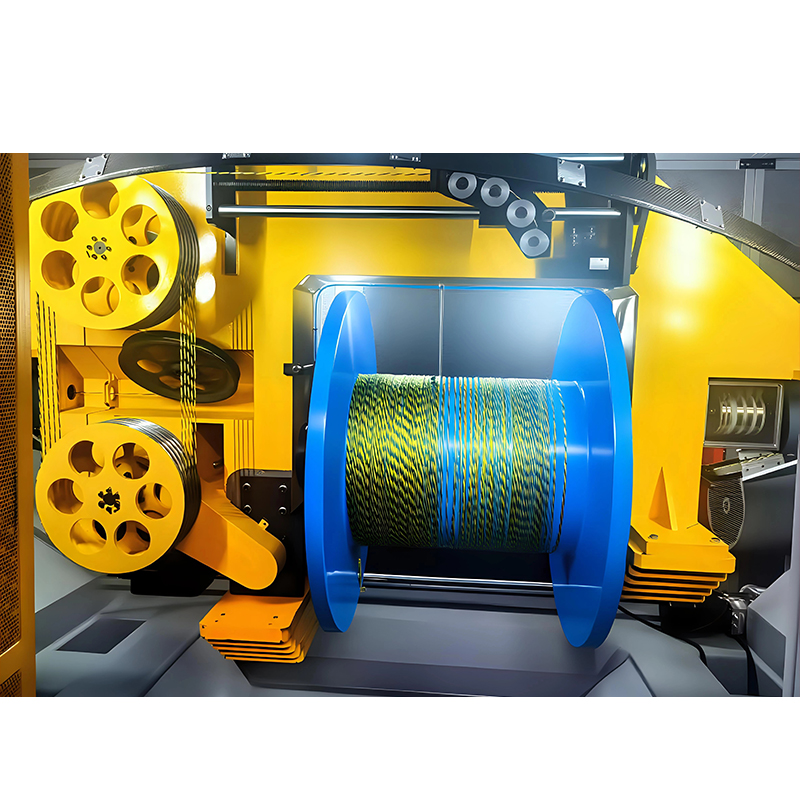
The machine feeds each individual wire from a payoff spool, guides them toward a central point, and rotates the entire group around the cable axis so that the wires wrap around each other in a uniform helix. The two most common mechanical principles are the bow-type and the cage-type.
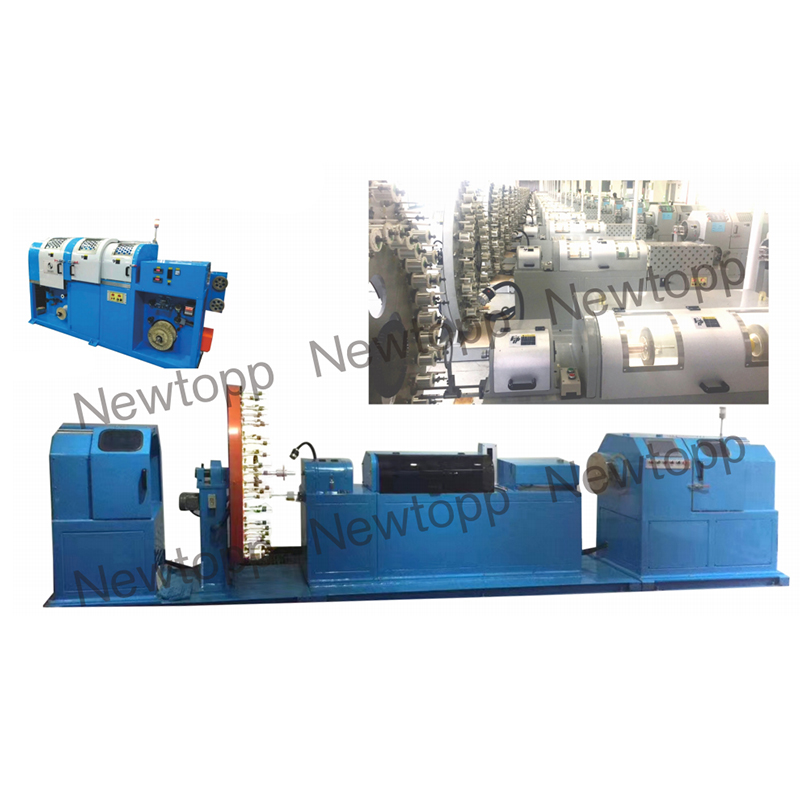
- Bow-type stranding machines: The wire spools stay stationary outside the rotating part. Only the bows rotate around the spool group. This design permits very high speeds and is common for telephone wires, data cable conductors, and fine stranded wire.
- Cage-type (planetary) stranding machines: The spools themselves revolve around the central axis. This method controls the strand geometry more precisely and is typically used for larger conductors, power cables, and rope-lay constructions.
- Double-twist and triple-twist machines: The wire passes through the rotating elements twice or even three times per revolution when required for pair twisting or very compact constructions.
There is no single machine that does everything well. The correct answer is based on conductor cross-section, production volume, and whether the downstream process requires a specific lay direction or strand pitch.
Types of Copper Wire Stranding Machines
The choice of machine type is the single most important decision in the purchasing process. Each type is optimized for a specific range of conductor sizes and production scenarios.
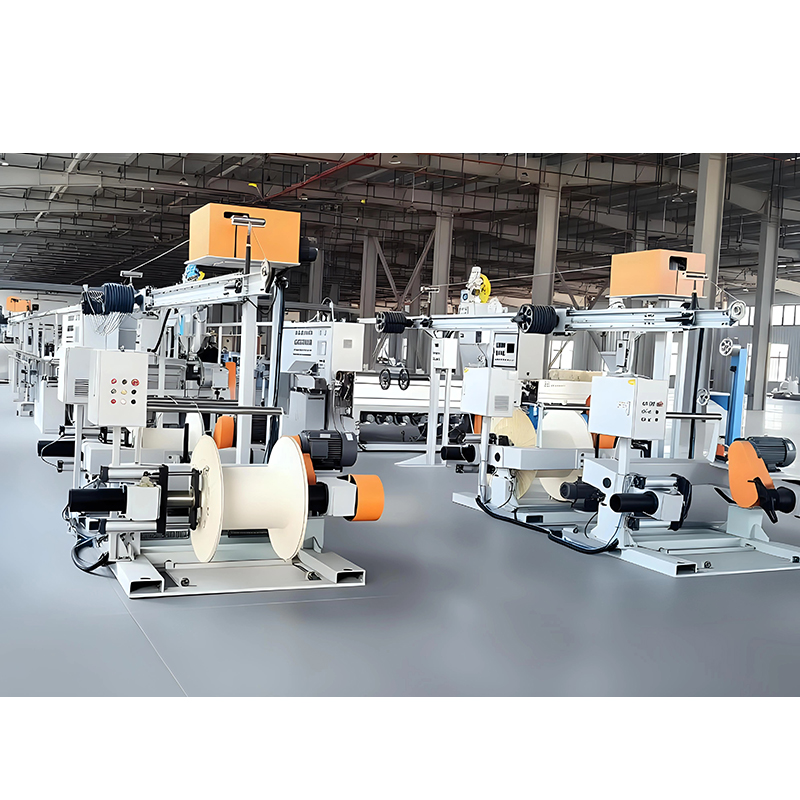
Double-Bow Stranding Machine
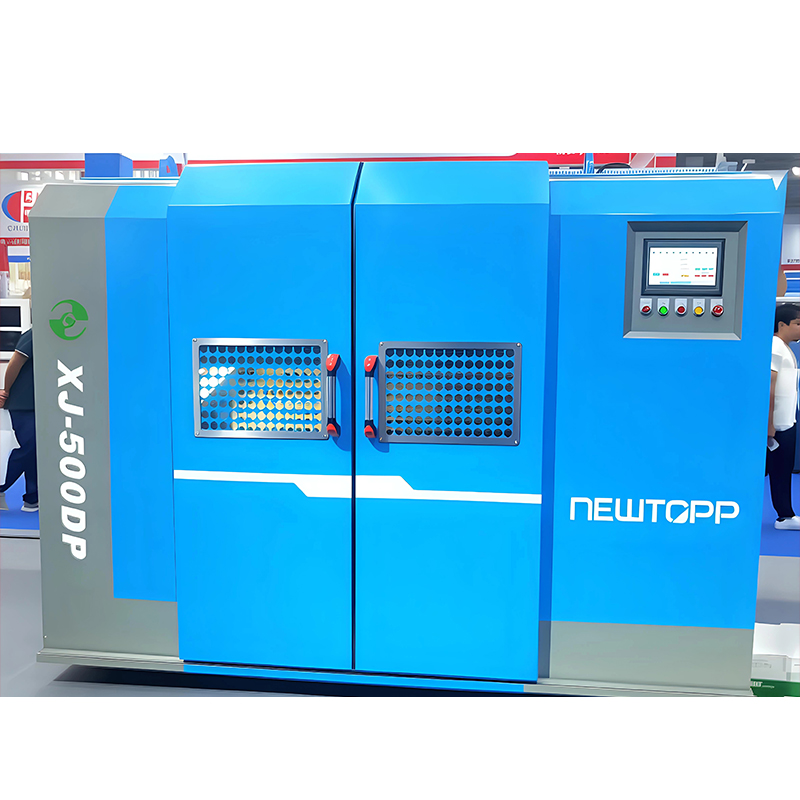
A double-bow stranding machine uses two rotating bows mounted on the same rotor, which creates two twists per rotor turn. For copper wire bunching and fine strand production, it provides higher output per unit of floor space than a single twist design. The 1250 double-bow stranding machine is a common size for medium-speed bunching of copper wires in the range of 0.15–0.80 mm single wires.
Use this machine when you need high efficiency, small conductor cross-sections, and high spool capacity. It is also useful for manufacturing flexible conductors for robot cables, trailing cables, and automotive wiring because the stranding process does not fold or kink the individual wires.
Planetary (Cage) Type Stranding Machine
A planetary type stranding machine carries the wire spools inside a rotating cage. The spools revolve around the conductor axis while the cage rotates, producing a very uniform and controlled lay length. This design is preferred for large cross-section conductors and for low-voltage power cables where strand geometry directly influences the cable diameter and electrical resistance.
It is the right choice when the conductor is round, has a definite direction of lay, and is intended for medium- or high-voltage applications, or when you regularly produce conductors above 10 mm2.
Cantilever Single Stranding Machine
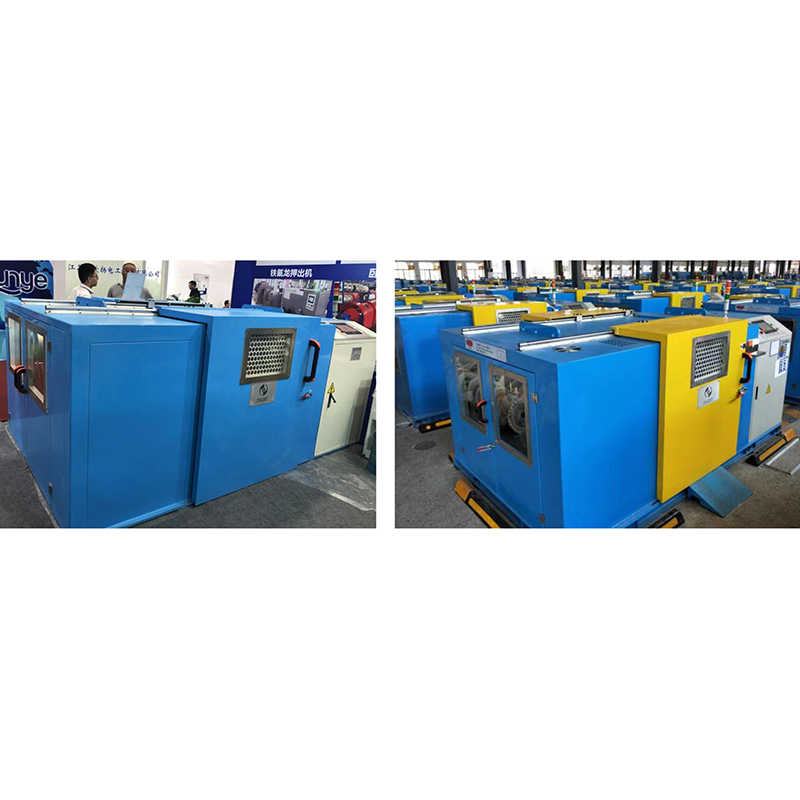
A cantilever type single stranding machine is a bow-type machine with the rotor supported on one side, making thread-up and spool replacement faster. It is used for insulated core wire twisting, pairs, and cable units where the single twist per revolution is sufficient.
Its advantage is simplicity, easy access, and lower maintenance cost. For a small cable workshop, a cantilever single stranding machine is often the first stranding investment because it can run both bare copper wire and insulated core wire.
Backtwist Pair Stranding Machine
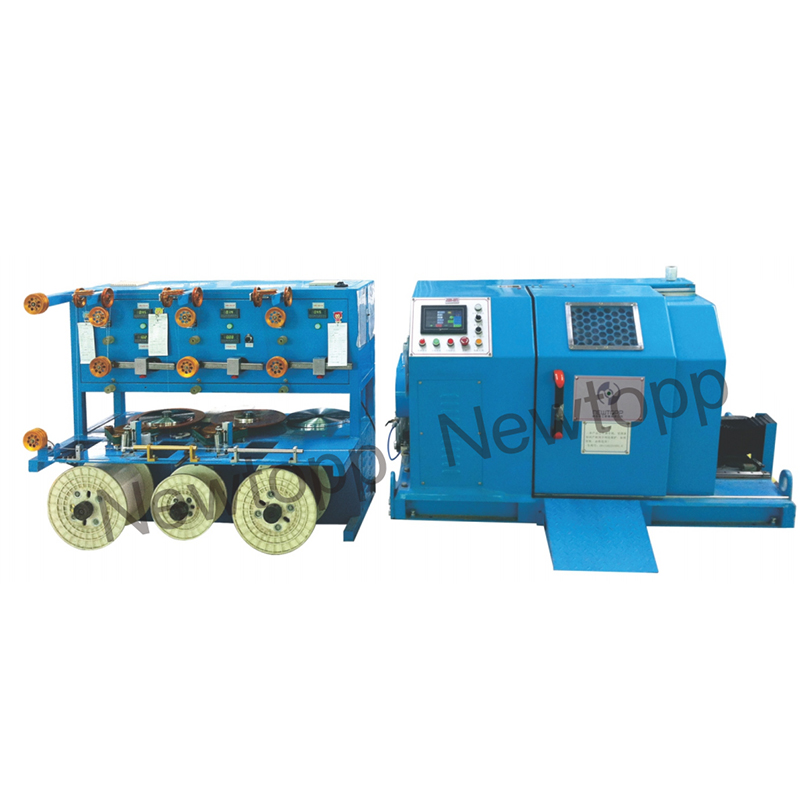
Horizontal or vertical backtwist pair stranding machines are used for twisting two insulated conductors together to form a pair. The backtwist function prevents elongation and maintains the electrical symmetry of the pair. This is important for data communication cables, instrumentation cables, and any other pair-twisted construction that must meet high electrical performance requirements.
Triple Stranding Machine
A triple stranding machine achieves three twists per rotor revolution by taking three rotations of the bow for each group of wires. It increases production speed for small pair twist applications. It is commonly used in data cable production lines when the demand is high and the number of twists per meter is high.
Main Technical Specifications to Compare
The specification sheet of a copper wire stranding machine is not just a list of optional data. It is the basis for calculating whether the machine can fulfil the intended production plan.
| Specification | What it determines | What to look for |
|---|---|---|
| Number of spools | Maximum number of individual wires that can be stranded in one pass | Match to the conductor construction you need, for example 7, 19, 37, or 61 wires |
| Maximum twist speed | Production output per shift | Measured in twists per minute; higher speed is not always beneficial if wire tension control is poor |
| Spool size | Length of run per spool, changeover frequency | Larger spools reduce downtime, but require more floor space and heavier handling equipment |
| Lay length range | Flexibility and electrical performance of the finished conductor | Check the minimum and maximum lay length and compare it to cable standards you produce |
| Wire diameter range | Range of conductors the machine can process | Match to both your current products and future product developments |
| Tension control system | Stranding quality and breakage rate | Dancer arms with feedback control are preferable when using fine copper wire |
| Brake system | Safety and emergency stopping | Ensure pneumatic or electromagnetic brakes are standard |
How a Stranding Machine Improves Manufacturing Efficiency
The efficiency gain of a copper wire stranding machine is not only about speed. It comes from reducing material waste, controlling the quality of the conductor, and lowering the labour requirement per kilometre of cable.
Higher Production Speed
A well-matched stranding machine can increase the output per hour by a factor of two to five when compared to an outdated single twist machine. For a 1250 double-bow stranding machine, the twist speed ranges from 600 to 1,400 twists per minute depending on the wire diameter and construction. This speed translates directly to more finished kilometres per day.
Better Conductor Quality
If the individual wires are not uniformly tensioned during stranding, the conductor will have high resistance variation and an irregular outer diameter. This leads to rejected cable at the insulation stage. Modern stranding machines with individual tension control for each spool can reduce scrap. This is especially true when processing fine copper wires in the 0.10–0.30 mm range.
Lower Labour Cost
A stranding machine with integrated tension control, centralised control panel, and quick load spool loading reduces the number of operators. Two operators can supervise several machines if the line is well configured.
Consistent Lay Length
The lay length is the distance along the cable axis required for one complete twist of the strand. When the lay length is short, the cable becomes more flexible but the resistance increases slightly. When the lay length is long, the cable is stiffer. A copper wire stranding machine with precise gearbox or servo control holds the lay length constant, and that consistency is what makes or breaks the cable quality.
Key Features to Look for Before Buying
Before comparing quotations from suppliers, you should define a short list of mandatory features that directly affect your production efficiency.
Dancer Roller Tension Control
The dancer roller system absorbs momentary differences between the feeding wire and the take-up speed. It keeps the wire tension constant even during acceleration and deceleration. Machines without dancer roller control are more prone to strand breakage and diameter variation.
Pneumatic or Electromagnetic Brakes
In the event of an emergency stop, every rotating part must stop quickly and simultaneously. Pneumatic brakes provide fast response and are easier to adjust. Electromagnetic brakes are simpler but may generate heat during long braking cycles.
Spool Loading and Unloading
The time required to replace full spools is a large part of the total production cost. Some machines are offered with a manual loading system, others with hydraulic or pneumatic lifting arms. Calculate how many spool changes you expect per shift and how much floor space is available for a lifting device.
Digital Counter and Lay Length Readout
A digital counter for twists, metres, and lay length is more than a convenience. It allows you to record the performance of each batch and to reproduce the same parameters the next time you run the same product. For production traceability, this is essential.
Comparison of Twisting Mechanisms
The twisting mechanism determines the maximum speed, the product range, and the level of quality you can achieve. The table below summarizes how the main types compare.
| Feature | Bow Type | Cage / Planetary | Backtwist Pair Machine |
|---|---|---|---|
| Typical product | Bunched conductors, flexible wires, fine strands | Round stranded conductors, power cables | Twisted pairs for data or instrument cables |
| Speed | High | Medium | Medium to high |
| Precision of lay length | Good | Very good | Excellent for pair twist consistency |
| Wire tension control | Individual dancer or magnetic brakes | Individual spool brakes | Individual tension control |
| Initial investment | Lower | Higher | Moderate |
| Best use case | High volume, small conductors | Medium to large conductors, rigid quality requirements | Data cables, LAN cables, bus cables |
Common Problems in Copper Stranding and How to Solve Them
Most operational issues in a stranding workshop are traced to wire tension, pay-off alignment, and spool quality. If your machine is running well but the conductor still fails the resistance test, check these points first.
Wire Breaks During Stranding
If the individual wires break too often, reduce the take-up speed and inspect the payoff spool flanges. Rough edges on flanges can damage copper wire. Use porcelain or ceramic guides at the payoff area.
Diameter Fluctuation on the Finished Conductor
Check the capstan wheel and take-up tension. A slight variation in line speed creates a variation in the overall conductor diameter. The machine needs a stable take-up tension to keep the outer diameter uniform.
Over-twisting or Under-twisting
If the lay length is shorter than required, the conductor will become hard and brittle, and handling during extrusion will be difficult. If the lay length is longer than specified, the conductor will not meet the flexibility test. Always verify the actual lay length by measuring at the beginning of each spool.
Untidy Stranding Geometry
The individual wires should lie without gaps or crossing. This requires that all wires meet the convergence point at exactly the same angle. Check whether the pre-twist device or the die position has shifted.
Scratches on the Copper Surface
Contact with sharp edges at the guide rollers is the usual cause. Replace steel rollers with ceramic-guide rollers when running bare copper for data cable conductors.
Return on Investment Considerations
To decide whether to buy a new copper wire stranding machine, compare the annual cost of the old process with the new machine cost, including tooling, installation, and operator training. The calculation must include scrap rate and quality-related rework, not only machine speed.
If your current production is 2,000 km of stranded conductor per year with a scrap rate of 4%, and a new machine can reduce that scrap to 1.5% while increasing speed by 80%, the payback period is usually between 18 and 30 months. This depends on the price of copper, the labour cost in your region, and the value added by your product.
| Factor | Existing Machine | New Double-Bow Machine |
|---|---|---|
| Twist speed (per minute) | 300 | 650 |
| Effective operating hours per day | 18 | 20 |
| Scrap rate | 4.5% | 1.5% |
| Operators required | 2 per machine | 1 per machine |
| Maintenance hours per month | 18 | 8 |
| Approximate output increase | +110% | |
How to Choose a Reliable Copper Wire Stranding Machine Manufacturer
The machine itself is only part of the purchase decision. Manufacturing capability, quality control, and after-sales support determine the long-term cost of operation. A reliable manufacturer should demonstrate several qualities.
Mechanical Machining Capability
A manufacturer that owns its own precision machining centre is preferable. It can control the quality of the rotor, the shaft, and the base frame. If the machine base is not rigid enough, vibration will appear and the strand geometry will suffer. Check whether the supplier has its own machining facility or buys all components externally.
Experience in Wire and Cable Equipment
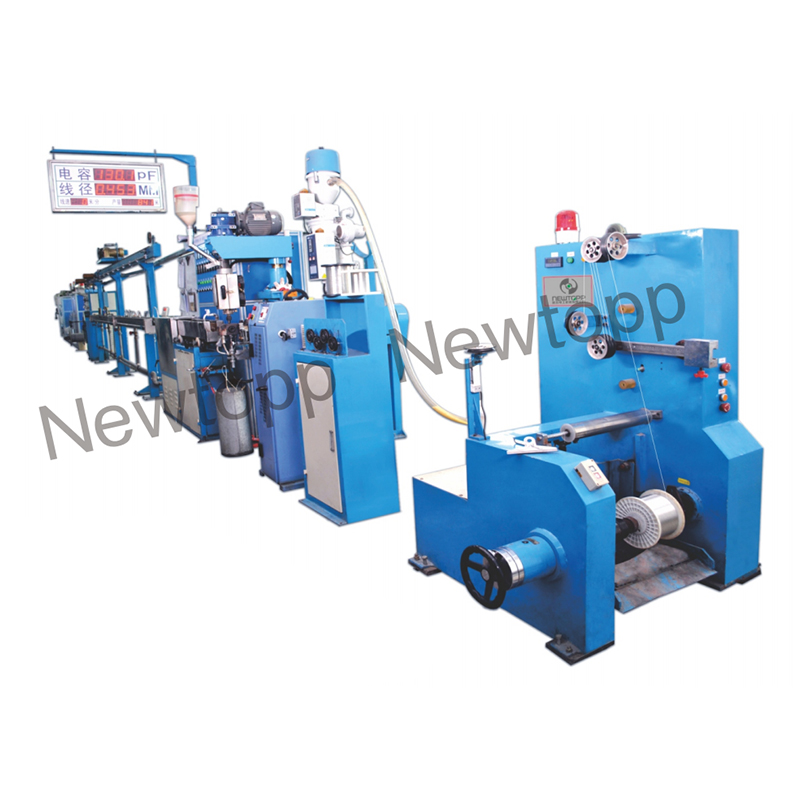
Companies that have produced cable extrusion lines and cabling machines for many years tend to build stranding machines with a better understanding of the whole cable production process. For example, integrated solutions for stranding and extrusion are easier to coordinate when one manufacturer handles both.
Reference to Existing Production Programs
Ask for the current production catalogue. A manufacturer with an extensive product line is likely to have a more complete engineering department. In addition, if they can offer the complete line including the extrusion part, the interface between stranding and downstream insulation is easier to manage.
Frequently Asked Questions
What is the difference between a stranding machine and a bunching machine?
Stranding machines lay wires helically around a centre with a controlled lay length. A bunching machine twists wires together without the same degree of geometric control. Bunching is faster but the result is less suited to high-quality round conductors.
How many wires can a copper wire stranding machine handle?
It depends on the machine model. Standard configurations handle 7, 12, 19, 24, 37, or 61 wires in one pass. For a rope-lay construction, you can strand multiple sub-groups first and then close them in a second operation.
Can the same machine produce copper wire and insulated core wire?
Yes. Bow-type double twist machines run both bare copper wire and insulated core wire as long as the wire diameter and spool size are within the machine specification. For rigid large-section power cable conductors, a cage-type machine is better.
Which is better, single twist or double twist?
Double twist is generally faster for the same diameter and lay length. A double-twist machine produces two twists per rotor revolution, so it is suitable for small and medium-sized conductors where output matters. Single twist is used for large conductors where the bending of the wire may provoke surface damage.
What is the production speed of a typical 1250 double-bow stranding machine?
The twist speed can range from 800 to 1,400 twists per minute for fine copper wire. The actual output in metres per minute depends on the lay length. A short lay length reduces the linear speed.
Conclusion
Choosing the right copper wire stranding machine means defining the conductor range you will produce, the lay length tolerance your cable standard demands, and the tension control quality your copper wire deserves. Match the machine type to the product, verify how the machine handles wire breaks and spool changes, and calculate the return based on scrap reduction and speed. A double-bow stranding machine fits most high-volume small and medium conductor plants, while a planetary cage type remains the standard for large power conductors. The right decision is not about buying the largest machine but about matching the stranding principle to the exact conductor design you intend to sell.