

 English
 русский
 Español


A rigid frame stranding machine is a rotating-frame cabling machine built for high-speed stranding of large-section copper and aluminum conductors. It is the preferred choice for multi-layer power cable construction because it holds lay length and tension tolerances better than planetary or tubular stranders while running at far higher speeds. In short, if your product range centers on power cables above 10 mm² or multi-layer stranded conductors, this is the machine family you should evaluate first.
This guide covers how a rigid frame strander works, how it compares with planetary, tubular, and double-bow machines, which selection criteria matter most, and how to prevent the common failures seen in daily operation. For a broader orientation, see our comprehensive guide to cable stranding machines.
Content
- 1 How a Rigid Frame Stranding Machine Works
- 2 Key Advantages of Rigid Frame Designs
- 3 Rigid Frame vs. Other Stranding Machine Types
- 4 Selection Criteria for a Rigid Frame Stranding Machine
- 5 Common Faults and How to Solve Them
- 6 Frequently Asked Questions
- 6.1 What is the difference between a rigid frame stranding machine and a planetary stranding machine?
- 6.2 What conductor sizes suit a rigid frame strander?
- 6.3 How fast can a rigid frame strander run?
- 6.4 Can a rigid frame machine handle multiple layers in one pass?
- 6.5 Is a rigid frame strander suitable for aluminum conductors?
- 7 Final Thoughts
How a Rigid Frame Stranding Machine Works
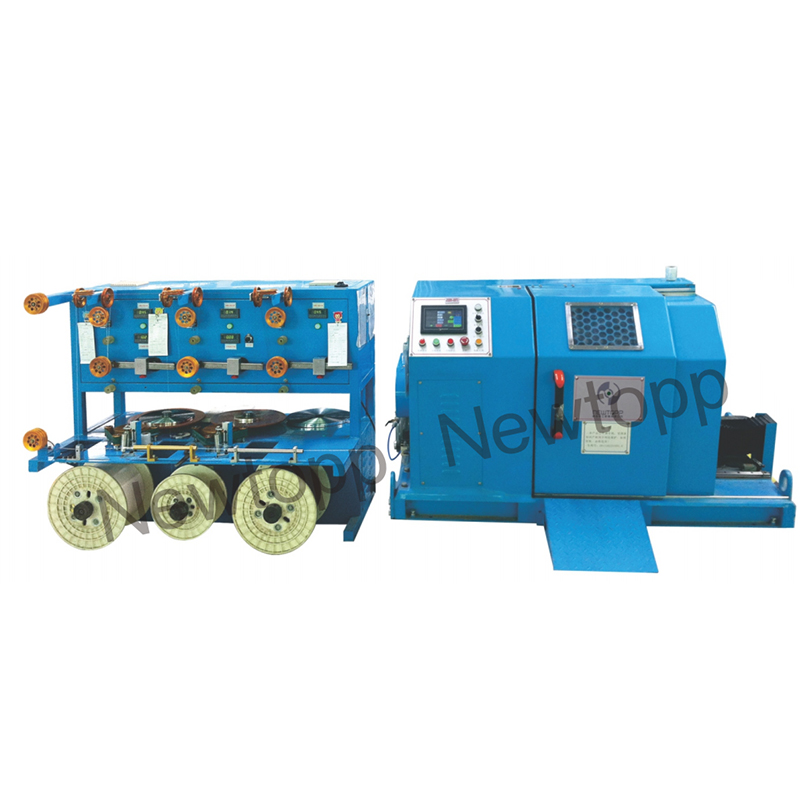
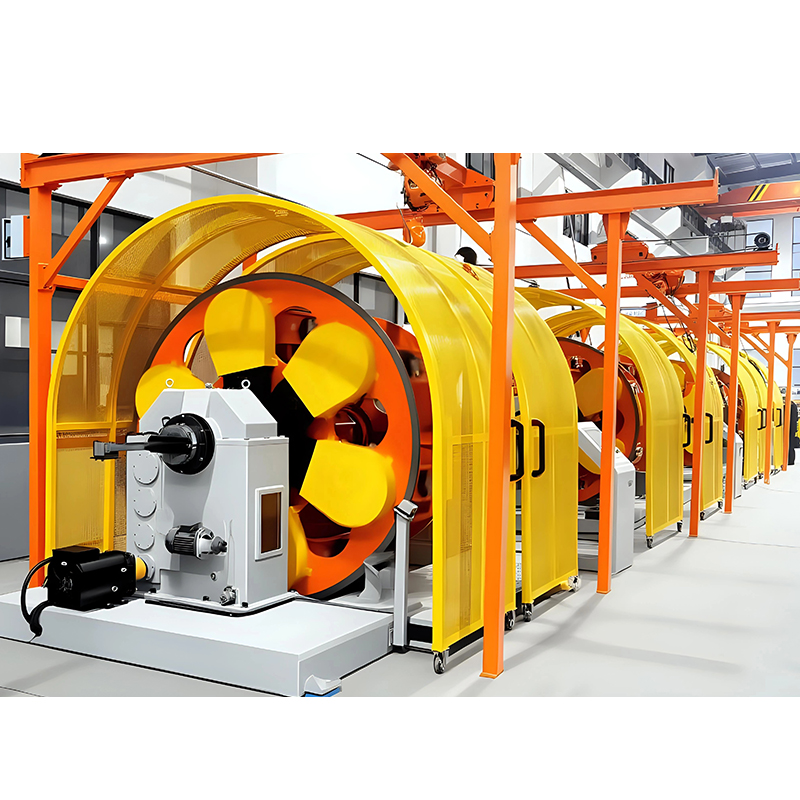
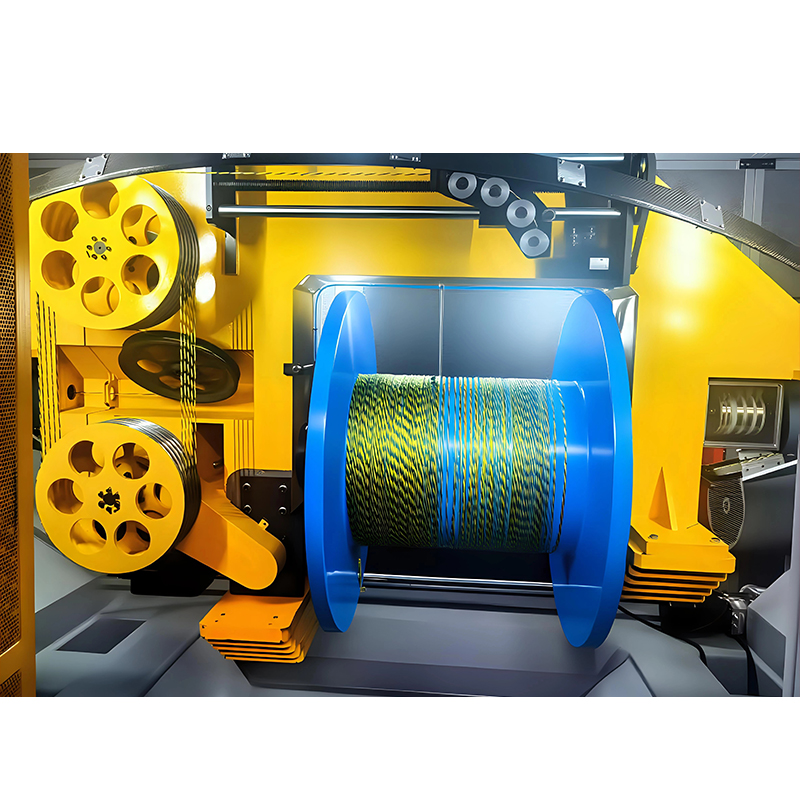
A rigid frame strander rotates the entire bobbin-carrying frame around a conductor that passes through the center. Each cage in the frame holds a set of bobbins loaded with wire; as the frame spins, the wire pays off the bobbins and wraps helically around the core. In a single pass, multiple cages can apply consecutive layers, each with a controlled lay length.
The main components you will find on any modern rigid frame machine include:
- Pay-off and tension control for the central core
- Rigid rotating cages with bobbins or spools
- Lay plate and guides that set the winding angle
- Traction capstan that pulls the stranded core
- Take-up unit with traversing system
- Braking system on each bobbin to maintain tension
Because the frame is rigid, there is less vibration and deflection than on a planetary machine. That rigidity is what makes higher rotation speeds possible without compromising cable quality.
Key Advantages of Rigid Frame Designs
Rigid frame stranders dominate power cable production because of a simple combination of advantages:
- High production speed: Rotating weights are balanced and supported on sturdy bearings, so speeds of 200–500 rpm are common, depending on bobbin weight.
- Precise lay control: Even at high speed, the rigid frame maintains a constant lay angle, which directly improves electrical performance.
- Stable tension: Individual bobbin brakes are more controllable than payout systems on flexible cage designs.
- Multi-layer stranding in one pass: You can build up several layers without transferring the core to another machine.
- Lower maintenance: Fewer moving parts than planetary or tubular designs.
Rigid Frame vs. Other Stranding Machine Types
To decide which type of stranding machine fits your plant, compare the four common families below. The right choice depends on your conductor range, speed requirements, and changeover frequency.
| Parameter | Rigid Frame | Planetary | Tubular | Double-Bow |
|---|---|---|---|---|
| Typical speed | High (200–500 rpm) | Low to medium (30–120 rpm) | Medium to high (150–400 rpm) | Very high (up to 1000 twists/min) |
| Conductor size | Medium to extra-large | Small to medium | Medium to large | Small to medium |
| Bobbin capacity | Large bobbin sizes | Small to medium | Medium | Medium |
| Lay control | Excellent | Very good | Good | Good |
| Best suited for | Power cables, multi-layer large-section conductors | Flexible cables, control cables, fine wires | Steel wire and large aluminum stranding | Telecom, data cable, and compact secondary stranding |
If your plant also runs flexible cable or smaller conductors, a planetary machine is a common complement to a rigid frame line. It allows faster changeovers and handles a wider variety of wire sizes. You should avoid a rigid frame strander if your production is dominated by very fine gauges or frequent recipe changes, because the large rotating mass makes changes slow and the minimum tension may be too high for fragile wires.
 Planetary Type Stranding Machine for Precision Multi-Core CablesThis planetary strander uses synchronized orbital motion to minimize residual torque and internal stress, making it ideal for high-performance cables like USB 3.1 and medical devices where consistency and flexibility are critical.View Product →
Selection Criteria for a Rigid Frame Stranding Machine
When you evaluate a rigid frame strander, start with five decision points: maximum conductor cross-section, lay range, bobbin size, tension control, and automation level. Getting these wrong causes the most expensive problems downstream.
| Selection factor | Why it matters |
|---|---|
| Maximum conductor cross-section | Determines frame size, number of bobbins, and motor power required. |
| Lay range | Your cable designs specify lay multiples; the machine must hold that range without constant re-adjustment. |
| Bobbin dimensions and weight | Larger bobbins mean fewer splices and higher productivity, but they increase rotating mass and machine cost. |
| Tension control system | Electronic tension control gives repeatable results across speeds and reduces breakage. |
| Automation and data collection | Modern plants benefit from line monitoring, recipe storage, and fault diagnostics. |
Beyond the machine itself, evaluate the supplier. A manufacturer with in-house machining, a research and development center, and a full line of extrusion, stranding, and taping equipment can provide better integration and after-sales support. Also ask for complete electrical diagrams, spare parts lists, and remote troubleshooting support. A machine that is easy to repair will save you many hours over its life.
For lower-volume applications where a full rigid frame line is not justified, a double-bow machine offers a smaller footprint and much faster setup.
 1250 Double Bow Stranding Machine for Low-Volume ProductionFeaturing a compact double-bow design, this machine balances tension across multiple strands during twisting, offering fast setup and precise pitch control—a practical choice when a full rigid frame line isn't justified.View Product →
Common Faults and How to Solve Them
Most rigid frame stranding machine failures are mechanical and avoidable. In our experience, the trouble areas are bearing wear, brake slippage, tension drift, and worn guides. Bearings are the most loaded component because the entire frame weight plus bobbin load rotates around them. High temperatures and unusual noises are early warning signals.
| Symptom | Likely cause | Corrective action |
|---|---|---|
| Unstable tension or wire breaks | Brake pads worn or brake pressure inconsistent | Inspect brakes each shift; replace pads and calibrate pressure settings. |
| Lay length varies | Capstan diameter wear or traction control drift | Measure capstan, inspect encoder, recalibrate drive parameters. |
| Vibration or noise | Bearing wear, loose frame bolts, or rotor unbalance | Run a vibration check, retighten bolts, replace damaged bearings. |
| Wire not wrapping evenly | Lay plate groove worn or guide misaligned | Replace lay plate or realign guides; check bobbin tension. |
Catching these issues begins with a simple daily checklist. The same logic applies to the drives and cooling systems on adjacent extrusion equipment.
Preventive Maintenance Checklist
- Check bobbin brakes and pads daily.
- Lubricate all rotating bearings according to the supplier’s schedule.
- Listen for abnormal vibration and noise during run-up.
- Verify sensors and tension readouts against a calibrated unit.
- Inspect wire path components for wear every 500 operating hours.
Safety and Operational Tips
- Never open guards while the machine is running.
- Verify that the rotor is stopped before loading or unloading bobbins.
- Set and test overspeed protection.
- Keep the brake release system free of oil and debris.
Frequently Asked Questions
What is the difference between a rigid frame stranding machine and a planetary stranding machine?
A planetary strander rotates the bobbin carriers around the core while the main frame remains fixed, giving very low tension variation but limiting speed and bobbin size. A rigid frame strander rotates the entire frame and bobbins, which allows much higher speeds and large bobbin capacities, at the cost of less flexibility for very fine wires.
What conductor sizes suit a rigid frame strander?
These machines are most commonly used for medium to extra-large copper and aluminum conductors, from around 10 mm² up to 1000 mm² and above. The exact range depends on the frame size and the number of bobbins.
How fast can a rigid frame strander run?
Typical rotation speeds are between 200 and 500 rpm for standard industrial machines. The actual line speed also depends on the lay length and the number of wires being stranded.
Can a rigid frame machine handle multiple layers in one pass?
Yes, most rigid frame stranders are designed with multiple cages, each applying one layer. A 4-cage machine can strand four layers of wires around a core in a single pass, eliminating intermediate take-up operations.
Is a rigid frame strander suitable for aluminum conductors?
Yes, it is widely used for aluminum stranded conductors in overhead lines and power cables. The machine’s large bobbin capacity and stable tension control are particularly beneficial for soft aluminum wires that would otherwise deform under erratic braking.
Final Thoughts
A rigid frame stranding machine is a high-output investment that pays off when matched to the right conductor portfolio. It offers speed, precision, and stability that no other stranding machine type can match for large power cables. Choose based on conductor size, lay range, and tension control, and pair the machine with a supplier who knows the full cable production process.
If you are defining a new production line, spend time comparing actual test data with your cable specifications. A reliable supplier will walk you through the trade-offs and help you avoid over- or undersizing the line.