

 English
 русский
 Español


Industry News
Home / News / Industry News / Aluminium Stranding Machine: Types, Specs and Buying Checks That Matter
Home / News / Industry News / Aluminium Stranding Machine: Types, Specs and Buying Checks That Matter
NEWS


Aluminium Stranding Machine: Types, Specs and Buying Checks That Matter
2026-11-03
An aluminium stranding machine twists several aluminium wires into a single conductor at a controlled lay length and tension. The factor that decides whether a machine earns its floor space is not the price list or the control brand, but how closely the stranding method matches your wire diameter, strand count and the flexibility class of the cable you sell.
That conclusion is worth stating first. Before requesting a quotation, fix three numbers:
- the aluminium wire diameter range, from the finest single wire to the largest;
- the maximum number of wires in one conductor, such as 7, 19, 37 or 61 strands, plus any compacted sector constructions;
- the flexibility class of the finished cable, because rigid overhead conductors and flexible Class 5 cords are built on very different machines.
Once those three are settled, drum size, motor power and automation level follow logically. Skip them, and no amount of servo control will recover the output.
Content
What an Aluminium Stranding Machine Does
It converts a group of individual aluminium wires into one stranded conductor by rotating the supply bobbins while pulling the assembled conductor forward at a fixed speed ratio, so every wire receives the same lay length.
The mechanics are simple; the effect on the product is not. Lay length sets how far a wire travels along the conductor axis during one complete revolution. A short lay gives a flexible conductor with better bending life, but it consumes more wire per metre and reduces line speed. A long lay gives a stiffer conductor suited to overhead and busbar work, and it lets the machine run faster.
Two equipment families do this work, and buyers often confuse them:
- Stranders — cage, planetary, tubular or drum designs — hold each wire on its own bobbin and suit larger, rigid aluminium conductors where individual wire tension must stay controlled.
- Bunchers — usually double-bow designs — pull many fine wires together at high speed and are the normal route for flexible aluminium and aluminium alloy conductors.
Which Machine Type Fits Your Conductor
For rigid aluminium conductors from roughly 10 mm2 upward, a planetary or tubular strander is the normal answer; for fine-strand flexible aluminium, a double-bow buncher wins on output per square metre of floor.
| Machine type | Typical aluminium work | Main strength | Watch out for |
|---|---|---|---|
| Planetary cage strander | 7 to 61 wires, large rigid and sector conductors | Very low twist stress, gentle on soft wire | Long loading time, large footprint, lower speed |
| Tubular strander | Medium and large rigid conductors, alloy overhead types | High output for a rigid strander | Threading takes skill; wire path must be well aligned |
| Drum twister | Medium conductors where floor space is tight | Compact layout with good tension control | Limited wire count per pass |
| Double-bow buncher | Fine and medium wires, flexible cords | High speed, high output per spindle revolution | Too much twist for large rigid conductors |
| Triple strander | Small conductors where lays per revolution matter | High efficiency in small sizes | Low upper size limit |
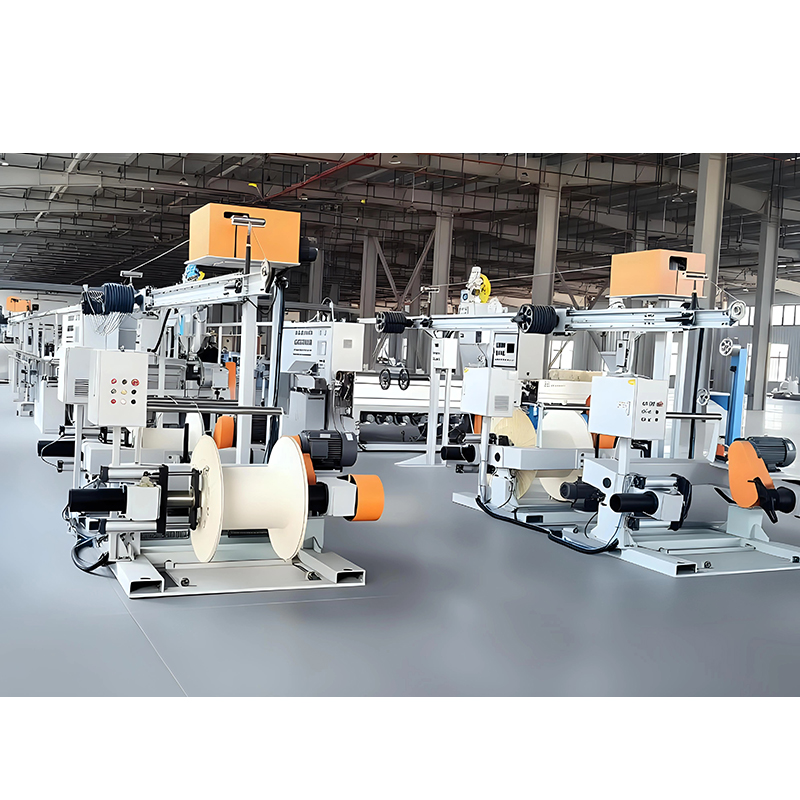
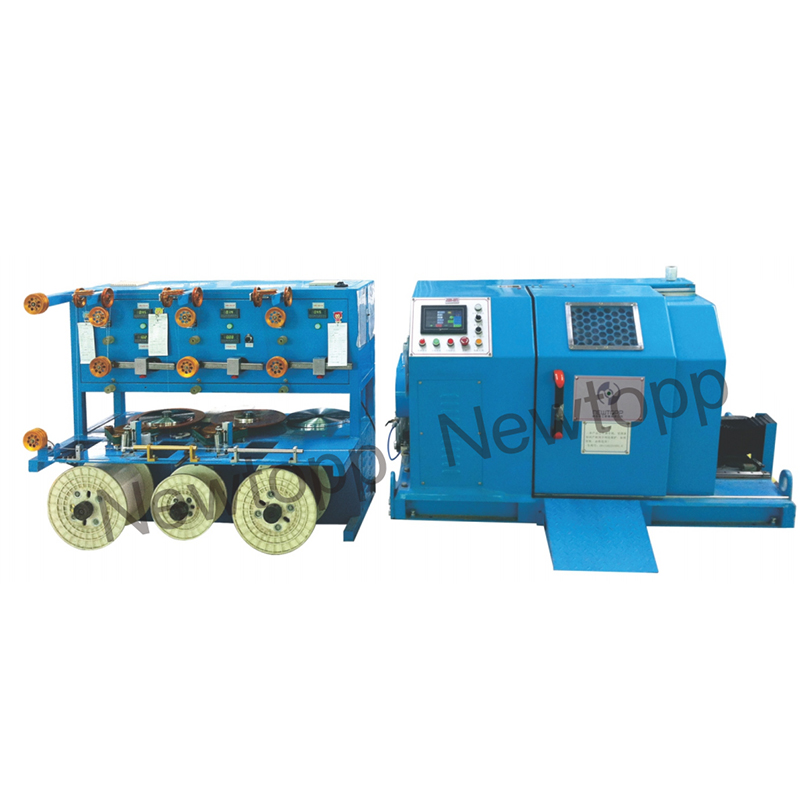
Rigid aluminium is where the planetary layout still earns its place: each cage bobbin rotates around the conductor axis, so a wire is never forced around a tight sheave at speed. That is the idea behind our planetary strander, and it is why the layout remains the default for large, low-strand-count conductors.
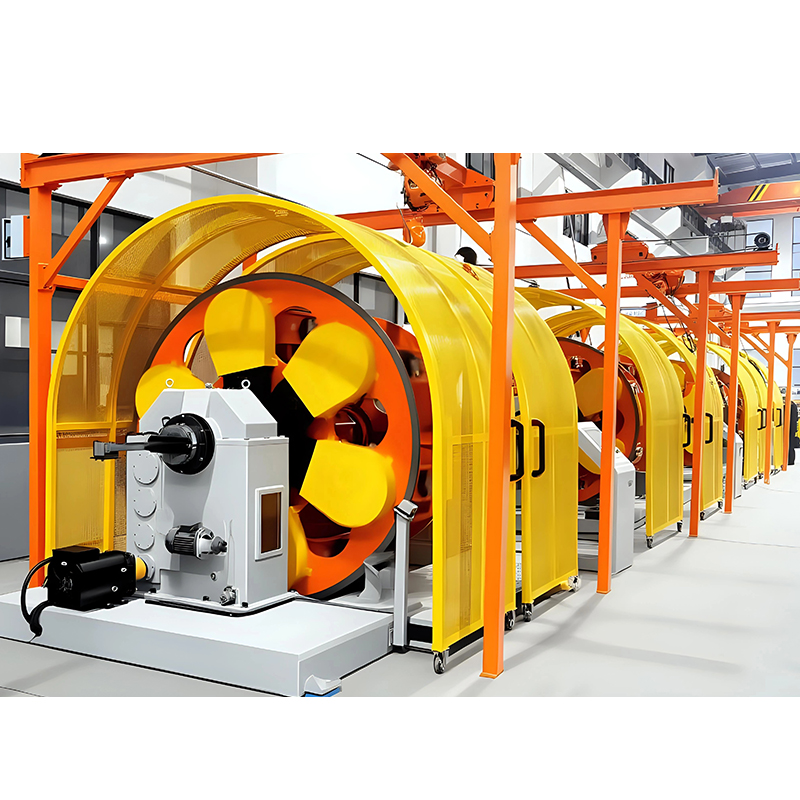 Planetary Type Stranding MachineThe Planetary Stranding/Pair Twisting Machine serves as core equipment for manufacturing high-performance, complex precision cables. It is specifically designed for th...View Product →
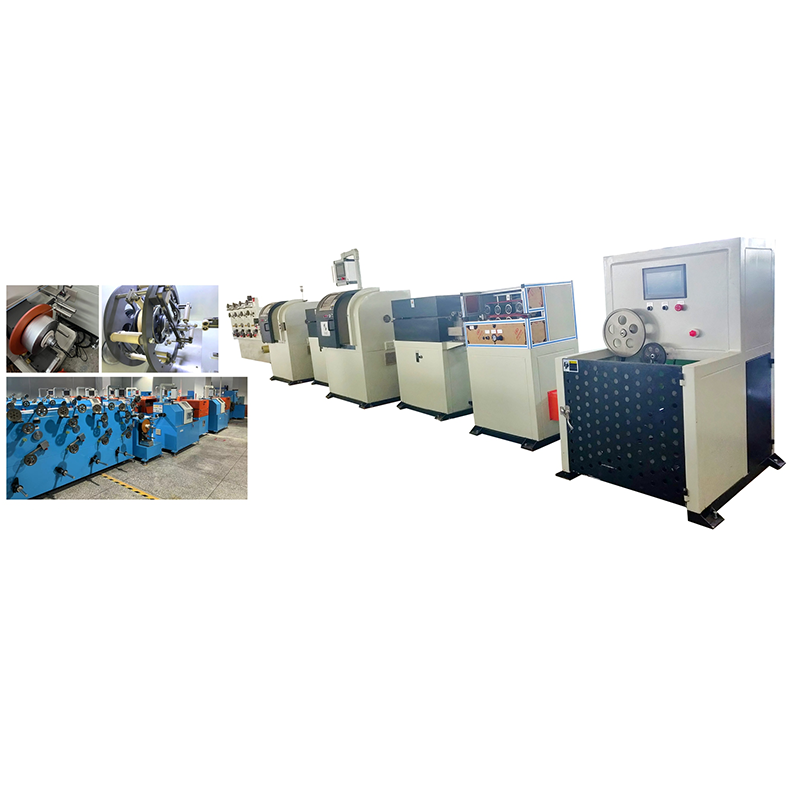
At the other end of the mix, fine-strand aluminium for welding cable, automotive and flexible cords is bunched rather than stranded. A large-drum double-bow machine such as the 1250 double-bow strander is built for that duty, trading gentle handling for raw speed.
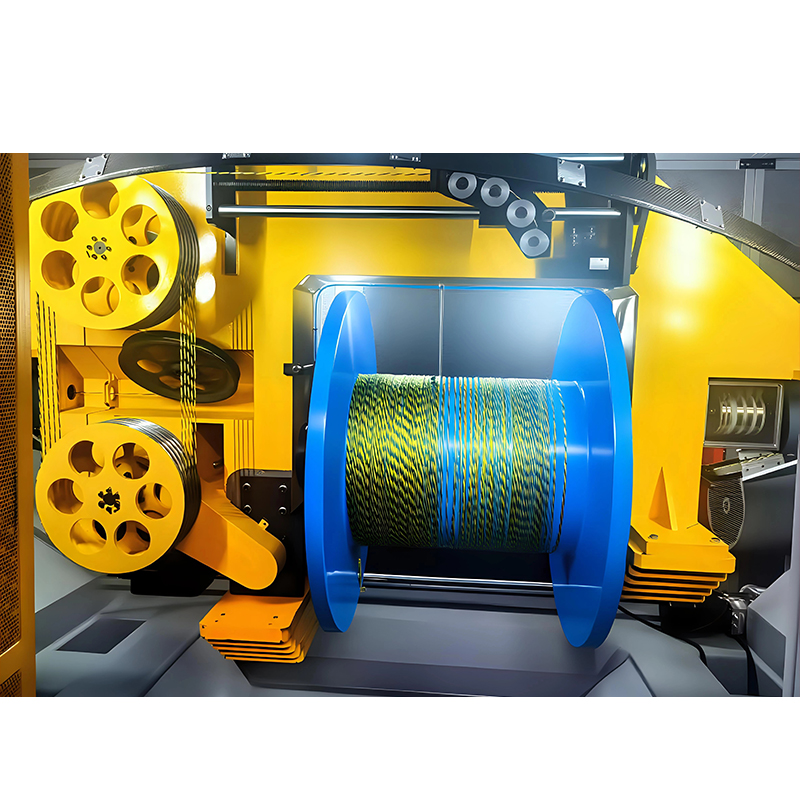 1250 Double Bow Stranding Machine for High-Speed Cable ProductionA large-drum double-bow strander for high-volume bunching and precise medium-diameter conductor stranding, offering balanced tension and faster output than tubular machines.View Product →
Between those extremes sit drum twisters and cantilever machines. The full cable stranding machine range shows how the sizes line up against conductor class.
Why Aluminium Behaves Differently From Copper
Aluminium work-hardens quickly, has lower elongation and carries a hard oxide skin, so a machine tuned for copper will over-tension aluminium, score the surface and break wires.
Three practical consequences follow in the workshop:
- Tension per wire must be lower. A dancer or servo-controlled tension arm reacts faster than a fixed mechanical brake, and that reaction time is what protects soft aluminium during acceleration.
- The wire path must be generous. Large-radius sheaves with ceramic or hardened inserts, aligned at every guide, prevent the fine scoring that later shows up as a failed bend test.
- Lay length needs a second look. Very short lays used on flexible copper conductors stress aluminium unless the wire is fully annealed, so confirm the temper before fixing the pitch range.
Density also matters commercially: aluminium weighs roughly a third of copper, so drums accelerate faster and lighter pay-offs are enough — but the lower conductivity means a larger cross-section for the same current, which in turn drives bigger drums and longer loading cycles.
Specifications Worth Comparing Line by Line
Ask every supplier for the same set of numbers, and the comparison stops being a matter of impression.
| Parameter | What to request | Why it changes the outcome |
|---|---|---|
| Wire diameter range | Minimum and maximum single-wire diameter in mm | Defines whether your finest and coarsest aluminium can run on one machine |
| Strand count | Maximum wires per conductor, plus sector capability | Sets the pay-off configuration and the loading time per drum |
| Lay length range | Minimum and maximum pitch in mm, with tolerance | Decides whether you can meet both rigid and flexible cable standards |
| Speed | Maximum spindle speed and resulting line speed | Line speed at your lay length is the only output figure that counts |
| Drum size | Pay-off and take-up drum diameters | Longer lengths per drum cut downtime and butt joints |
| Tension control | Mechanical, dancer or servo, and the adjustment range | The single largest factor in aluminium wire breakage |
| Drive and motor | Motor power, drive type, braking method | Affects acceleration ramp and stop accuracy at speed |
| Controls | PLC and HMI, recipe memory, fault logging | Shortens changeover between conductor sizes |
One figure deserves particular attention: lays per revolution. A single-twist machine produces one lay for every spindle revolution, while a triple layout produces three, matching three single-twist machines at the same speed in a slightly larger footprint. That is why a machine like our triple stranding machine pays off when your mix is dominated by small aluminium conductors.
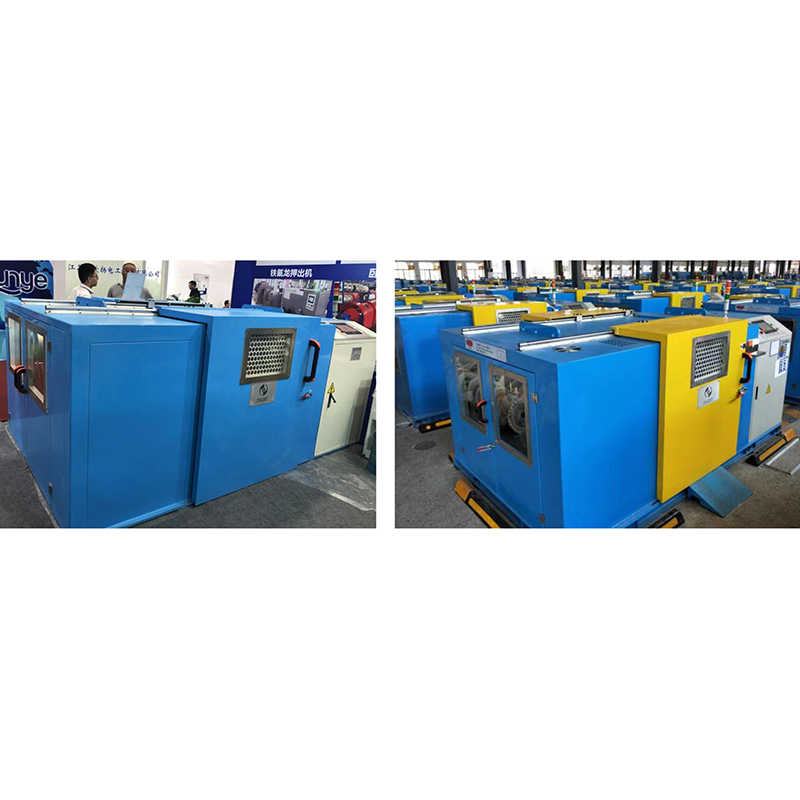 Triple Stranding Machine for CAT5E to CAT7 LAN CablesA triple-pitch pair-twisting solution for high-performance network cables, with servo pitch control and active take-up for stable tension and repeatable output.View Product →
Procurement Checks and Acceptance Tests
Write a witnessed trial run with your own wire into the purchase contract; it settles more arguments than any datasheet.
- Trial with your wire. Run the exact aluminium grade and temper used in production, not a sample chosen by the machine builder.
- Breakage rate. Count stoppages per tonne over several hours at rated speed.
- Elongation before and after. Test wire elongation at the pay-off and at the take-up; a large drop points to excessive tension.
- Lay length accuracy. Measure the lay at three points along the take-up and confirm it stays inside the stated tolerance.
- Surface condition. Inspect for scoring, flattening and embedded particles under low magnification.
- Noise and vibration. Vibration at maximum speed usually reappears later as lay variation and bearing wear.
- Documentation. Collect the spares list, electrical drawings, PLC backup and a written lead-time commitment.
- Commissioning and training. Agree who attends, for how many days, and what an operator is expected to handle alone afterwards.
Frequently Asked Questions
What is the difference between a strander and a buncher?
A strander keeps each wire on its own bobbin and controls individual wire tension, which suits rigid conductors. A buncher draws many fine wires from separate pay-offs and twists them together at high speed, which suits flexible conductors.
Can one machine run both aluminium and copper?
Usually yes, provided the wire range and tension control cover both metals, but the recipe changes. Aluminium needs lower back-tension, gentler wire paths and often a longer lay, so budget separate trials for each material.
Which lay length should I specify for aluminium?
Start from the standard for your cable type and the flexibility class you must meet, then confirm the machine holds that lay within tolerance across the full speed range. Rigid conductors take a long lay; flexible cords take a short one.
How do I stop soft aluminium from breaking during stranding?
Reduce back-tension per wire, increase sheave radius, align every guide and check that no wire is pulled around a small radius under load. Servo or dancer tension reacts faster than a fixed brake.
Where can I read more about stranding fundamentals?
The comprehensive guide to cable stranding covers terminology, lay length calculation and machine selection in more depth.
In short: choose the stranding method from your conductor class, size the drum and motor from your cross-sections, then judge the supplier on tension control, trial performance and documentation. Price becomes a meaningful comparison only after those three are equal.
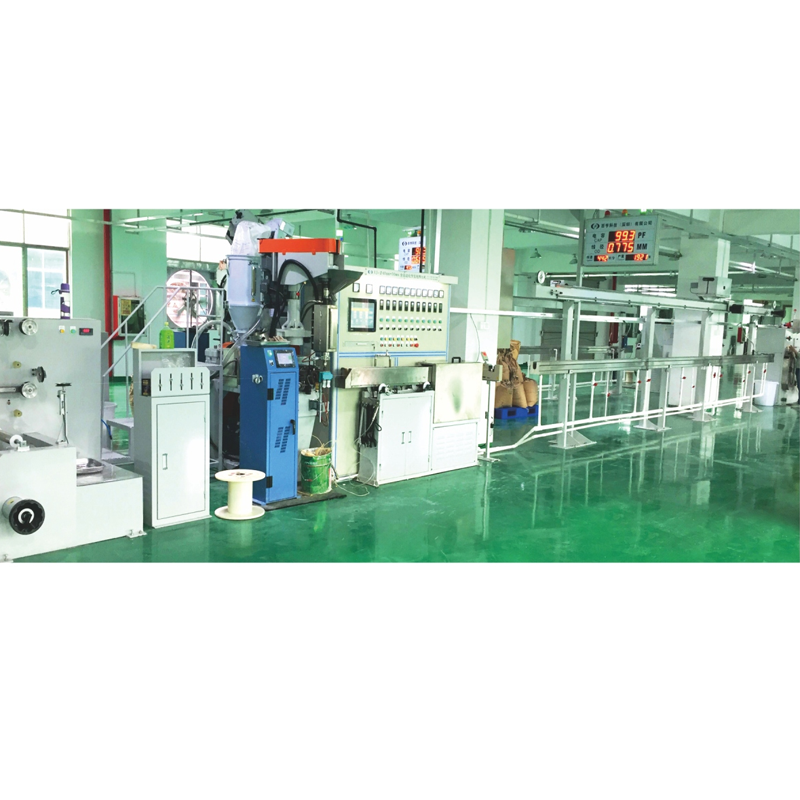
-
Phone
+86 188 2296 5630 +86-(0)515-8510 8601Email
[email protected]
[email protected]
[email protected]
[email protected]
[email protected]
[email protected]Address
No. 168 Haitai Road, Dongtai City, Jiangsu Province, China
Copyright © 2025 Jiangsu NewTopp Precision Machinery Co., Ltd. All Rights Reserved. Wire & Cable Equipment Manufacturer
Robot Cable Production Ancillary Equipment Factory
