

 English
 русский
 Español


The global wire and cable making machine industry is entering a new phase defined by intelligent automation, measurable energy savings, and adaptability to next-generation conductor materials. According to a 2025 analysis by MarketsandMarkets, the market for wire and cable making machine equipment and related automation systems is projected to reach USD 18.2 billion by 2030, expanding at a compound annual growth rate of 5.8%. This growth is propelled by grid modernization, surging electric vehicle production, and offshore wind farm expansions, all of which demand high-performance cable manufacturing equipment capable of producing conductors with tighter tolerances and higher voltage ratings.
Content
- 1 1. Automation Reshapes the Wire and Cable Making Machine Landscape
- 2 2. Energy Efficiency Becomes a Core Design Principle
- 3 3. Materials Innovation Demands Versatile Wire and Cable Making Machine Platforms
- 4 4. Comparative Analysis of Key Stranding Equipment in Wire and Cable Making
- 5 5. Smart Maintenance and Digital Twins Extend Cable Manufacturing Equipment Life
- 6 6. Selecting the Right Wire and Cable Making Machine: A Practical Guide
- 7 7. Frequently Asked Questions About Wire and Cable Making Machine Selection and Operation
- 7.1 What is the typical payback period for an automated wire and cable making machine?
- 7.2 Can one wire drawing machine process both copper and aluminum?
- 7.3 How does in-line annealing in a wire and cable making machine affect final conductor properties?
- 7.4 What maintenance practices maximize the lifespan of a cable extrusion line?
1. Automation Reshapes the Wire and Cable Making Machine Landscape
Smart automation has become the single most influential factor in reducing scrap rates and raising line speeds across modern wire and cable making machine installations. Plants that integrated Industry 4.0 modules into their wire drawing machine lines and extrusion lines in 2025 reported an average scrap reduction of 23% and an overall equipment effectiveness (OEE) improvement of 17%, based on benchmarks collected by the International Wire & Cable Manufacturers Alliance.
Today’s wire and cable making machine platforms use distributed servo drives, real-time diameter gauges, and closed-loop tension control that synchronizes the pay-off, drawing, stranding, and take-up stages. For example, a high-speed multi-wire drawing machine now continuously monitors elongation and lubricant temperature, automatically adjusting capstan speed to keep copper wire roundness within a 0.5 µm deviation. This level of control directly reduces conductor breaks, which historically accounted for 4–6% of material loss in conventional cable manufacturing equipment.
Edge computing nodes attached to wire and cable making machine lines further enable in-process quality prediction. Rather than waiting for post-production spark testing, algorithms detect micro-fluctuations in tension and concentricity, flagging potential insulation defects before they exceed 50 µm eccentricity. Users of such predictive quality systems have cut customer returns by 31% in the low- and medium-voltage cable segment, according to data from a 2026 European Cable Producers survey.
2. Energy Efficiency Becomes a Core Design Principle
The latest generation of wire and cable making machine designs cuts electrical energy consumption by 18–27% compared to legacy systems, primarily through regenerative drives and optimized heating zones. With energy representing up to 35% of the operational cost in a typical cable extrusion line, these savings translate directly into a lower levelized cost of cable production.
Specific improvements include induction-heated extruder barrels that reach processing temperature 40% faster and maintain thermal uniformity within ±1 °C, eliminating hot spots that degrade XLPE insulation quality. In tandem, high-efficiency IE4 motors on stranding machines and wire drawing machines recover braking energy and feed it back into the plant grid. A mid-sized facility running ten such cable manufacturing equipment lines reported an annual reduction of 1,200 MWh, equivalent to the electricity consumption of 270 average EU households, based on the 2025 EcoCable benchmark study.
Water and coolant management has also progressed. Closed-loop filtration systems paired with wire and cable making machine copper drawing lines now reuse 92% of process water, while cryogenic cooling in aluminum rod breakdown machines enables faster drawing speeds without the thermal softening issues that typically limit production throughput to under 25 m/s. Plants deploying these systems have pushed sustained drawing speeds to 32 m/s on 9.5 mm EC-grade aluminum rod.
3. Materials Innovation Demands Versatile Wire and Cable Making Machine Platforms
The expanding range of conductor materials—from ultra-fine copper alloys to aluminum-lithium composites and high-temperature superconductors—means a wire and cable making machine must now handle widely varying tensile strengths and surface sensitivities without mechanical changeovers. Modern wire drawing machines employ quick-change die boxes with ceramic or diamond dies that can accommodate copper (tensile strength 220–400 MPa), aluminum (70–180 MPa), and silver-plated copper-clad steel within a single shift.
The shift toward aluminum alloy conductors in automotive and aerospace cables has been particularly demanding. Because AA-8176 and AA-6101 alloys exhibit narrower processing windows, wire and cable making machine suppliers now integrate in-line eddy current testers and laser diameter sensors that sample 10,000 times per second. These systems automatically adjust stranding back-twist and capstan tension when deviations exceed 0.3% of the nominal diameter, preventing necking and ensuring a consistent 0.15 mm insulation wall thickness on 2.5 mm² automotive primary wire.
For high-voltage direct current (HVDC) applications, cable manufacturing equipment has been adapted to process cross-linked polyethylene with nanofillers and thermoplastic elastomer jackets. Triple-layer co-extrusion heads on extrusion lines now achieve thickness uniformity better than 1.8% at line speeds of 60 m/min on 320 kV DC cables, a capability that was limited to under 30 m/min a decade ago.
4. Comparative Analysis of Key Stranding Equipment in Wire and Cable Making
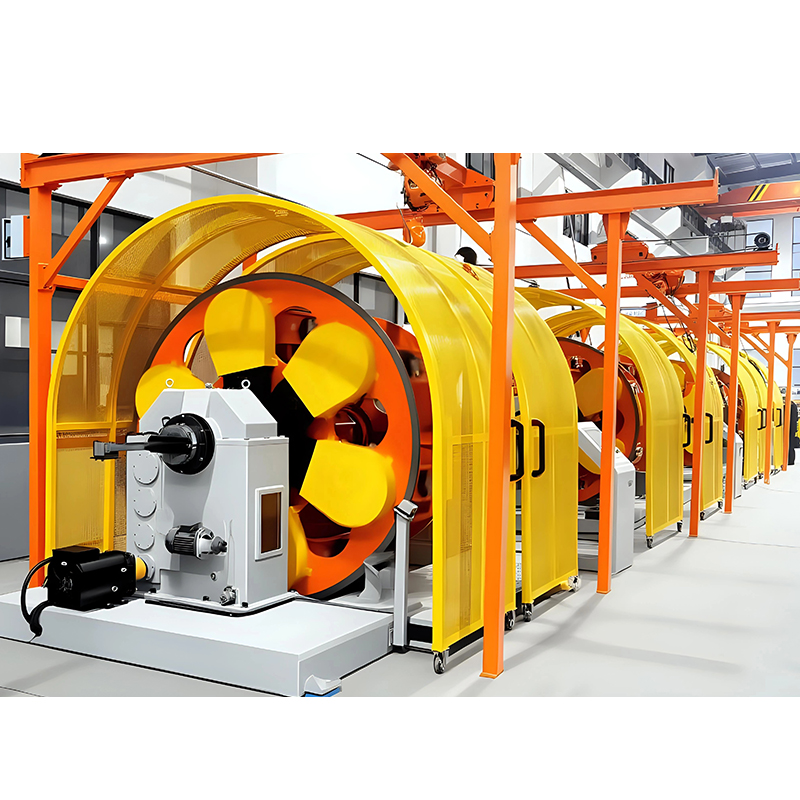
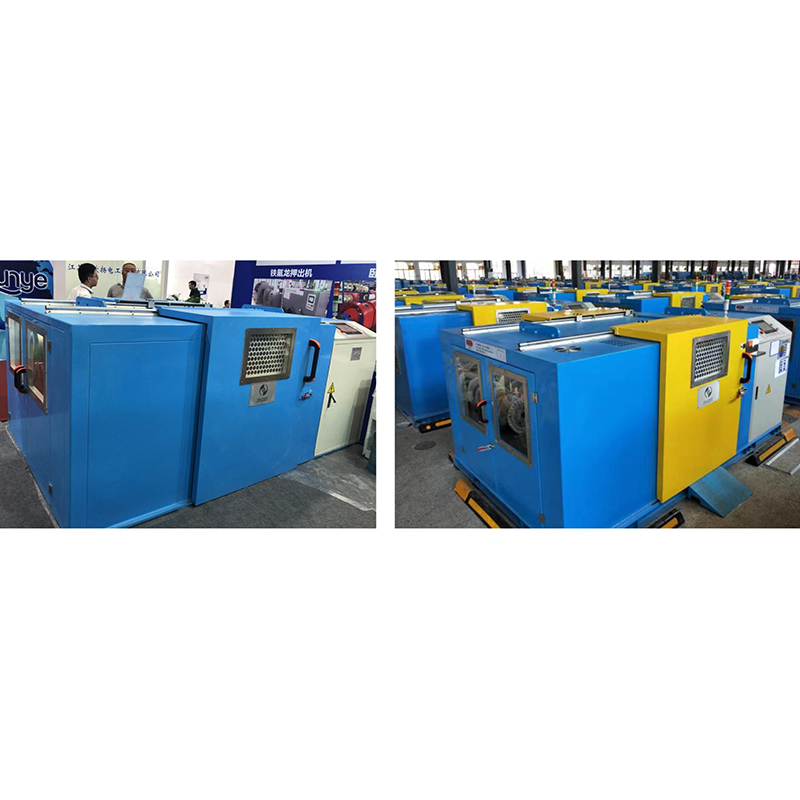
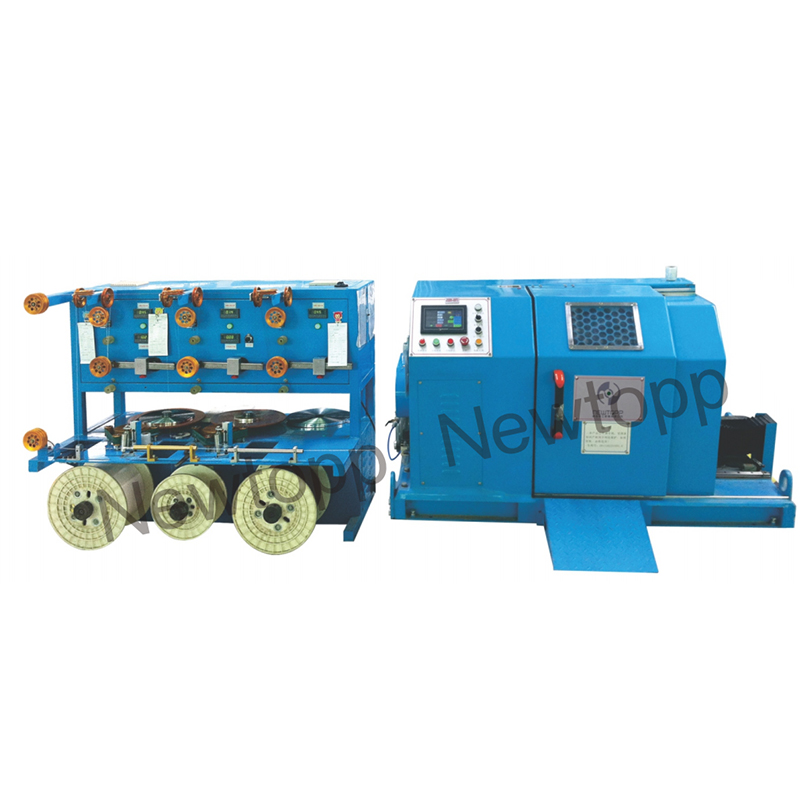
Selecting the correct stranding configuration directly affects conductor flexibility, production speed, and capital expenditure; the table below summarizes the three most widely used stranding machine types. Each category serves distinct segments of wire and cable making machine workflows and presents a different balance between rotational speed, conductor range, and back-twist precision.
| Machine Type | Max Linear Speed (m/min) | Conductor Range (mm²) | Typical Application | Key Advantage |
|---|---|---|---|---|
| Tubular Strander | 300 | 0.05 – 16 | Fine to medium flexible conductors | High-speed production with compact geometry |
| Rigid Cage Strander | 120 | 10 – 630 | Sector-shaped power cables, large cross-sections | Superior back-twist control for heavy conductors |
| Single Twist Strander | 600 | 0.08 – 6 | Data cables, LAN, automotive thin-wall | Exceptional speed for twisted pairs and small bundles |
Table: Performance comparison of common stranding machines used in wire and cable making machine operations. Speed values represent achievable maximums with optimized tension control and modern die geometries.
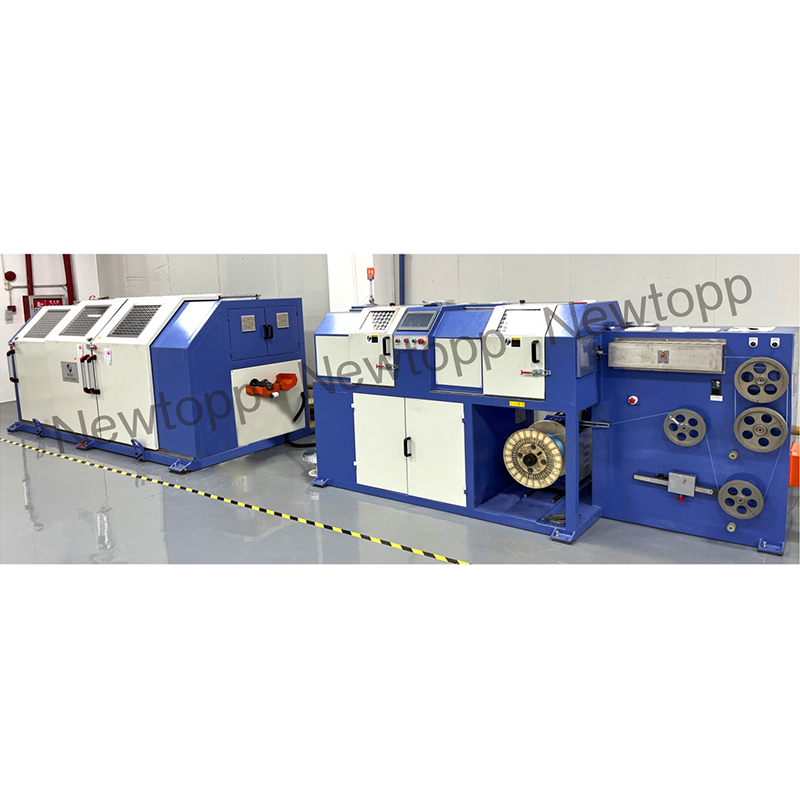
When integrating a wire and cable making machine for mixed production, many manufacturers now combine a tubular strander for sizes up to 16 mm² with a rigid cage strander for heavier industrial cables. This hybrid setup improves overall capacity utilization by 22% compared to running a single machine type across all product lines, according to a 2025 plant-level productivity study from CRU Group.
5. Smart Maintenance and Digital Twins Extend Cable Manufacturing Equipment Life
Predictive maintenance, powered by digital twin models of wire and cable making machine components, is moving the industry from reactive repairs to scheduled part replacement before failure occurs. Vibration sensors on drawing capstans, ultrasonic detectors on extruder screws, and thermal cameras on crossheads continuously feed data into physics-based simulation models that predict remaining useful life with 92% accuracy, as reported by a consortium of European cable machinery research institutes in 2026.
42%
reduction in unplanned downtime
6,400 hours
average bearing life extension on drawing capstans
19%
lower annual maintenance cost for extrusion lines
Digital twin technology is not limited to large-scale wire and cable making machine plants. Even compact wire drawing machines for fine copper can now integrate edge-based twins that simulate die wear progression. Operators receive alerts 30–50 production hours before a die change is needed, avoiding unplanned line stops that typically cost EUR 800–1,200 per hour in lost output, based on mid-tier European cable producer data. The same twins also optimize lubrication intervals, reducing lubricant consumption by 15% while maintaining surface finish below Ra 0.2 µm.
6. Selecting the Right Wire and Cable Making Machine: A Practical Guide
Specifying the appropriate wire and cable making machine hinges on matching conductor material properties, desired production speed, and end-product certification requirements—not simply on upfront equipment cost. The following factors should be evaluated in sequence:
- Conductor material and incoming rod quality. EC-grade copper, various aluminum alloys, and copper-clad steel each require specific die angles, lubricant viscosity, and maximum reduction per pass. A wire drawing machine optimized for 8 mm copper rod cannot efficiently process 9.5 mm AA-6101 without modified capstan geometry and cooling capacity.
- Target final diameter and tolerance. For sub-0.05 mm micro-coaxial conductors, a wire and cable making machine must offer dynamic tension control with nanometre-level resolution and integrated annealing. Acceptable eccentricity for LAN cables is typically less than 3%, demanding precise extrusion head alignment.
- Production volume and changeover frequency. High-mix, low-volume plants benefit from rapid-change extrusion lines with automatic screw retraction and push-button die exchange that cut changeover time from 45 minutes to under 12 minutes, raising machine availability above 78%.
- Energy consumption per kilogram of output. Compare the specific energy (kWh/kg) of different cable manufacturing equipment options. Modern tandem drawing-insulating lines achieve 0.38 kWh/kg for 1.5 mm² copper wire, whereas older separate lines may consume 0.55 kWh/kg.
- Certification and testing integration. If the final cable must meet IEC 60502, EN 50618, or UL 4703, the wire and cable making machine must support in-line spark testing, hot-set elongation measurement, and diameter recording for full traceability without compromising line speed.
- Remote support and digital connectivity. Look for OPC UA or MQTT interfaces that allow the wire and cable making machine to integrate with plant-level SCADA and cloud analytics, enabling remote parameter download and batch reporting.
7. Frequently Asked Questions About Wire and Cable Making Machine Selection and Operation
What is the typical payback period for an automated wire and cable making machine?
Most medium-voltage cable manufacturing equipment with integrated automation achieves a payback period of 2.1 to 3.4 years. The calculation assumes a 19% reduction in material waste, a 15% increase in line speed, and a 31% drop in labour per shift, as recorded in a 2025 industry ROI survey by Wire & Cable Technology International.
Can one wire drawing machine process both copper and aluminum?
Yes, provided the wire and cable making machine is equipped with quick-change die holders and a dual-cooling system. Aluminum requires lower drawing forces and a specialized lubricant with anti-weld additives; switching between materials typically takes less than 18 minutes on machines designed for mixed-metal production. However, dedicated lines still achieve 7–12% higher uptime, making them preferable for high-volume single-material operations.
How does in-line annealing in a wire and cable making machine affect final conductor properties?
Continuous electrical annealing, performed between the drawing and take-up stages, restores ductility by precisely controlling temperature and wire transit time. For 0.15 mm copper wire, a well-tuned wire and cable making machine annealing unit achieves elongation above 18% and resistivity below 0.017241 Ω·mm²/m. Real-time resistance monitors adjust annealing current within a 0.2 ms window to compensate for line speed variations, ensuring consistent mechanical and electrical properties across the entire reel.
What maintenance practices maximize the lifespan of a cable extrusion line?
Key practices include daily cleaning of the crosshead melt channels to prevent carbonized polymer build-up, monthly screw and barrel wear inspection using laser micrometers, and replacement of screen packs every 80–120 production hours depending on compound purity. Temperature calibration of barrel zones should be verified every 14 days with an external probe to maintain ±1 °C accuracy. Adhering to these intervals keeps a wire and cable making machine extrusion line operating above 92% OEE for at least 8 years.
The evolution of wire and cable making machine design is accelerating in response to clear market signals: higher voltage ratings, lighter-weight conductors, and a non-negotiable demand for energy transparency. Facilities that combine modular stranding machines with adaptive extrusion lines and AI-based quality prediction are recording double-digit improvements in output and cost efficiency. As the 2026 production environment continues to tighten tolerance windows—below 2 µm for some specialty fibers and below 0.08 mm eccentricity for automotive HV cables—the capability gap between modern cable manufacturing equipment and legacy systems will widen further. Investing in flexible, data-driven wire and cable making machine platforms today is not simply a technological upgrade; it is a structural hedge against tightening regulations and increasing competition across the entire wire and cable value chain.