

 English
 русский
 Español


Content
- 1 The Strategic Role of a LAN Cable Making Machine in Modern Network Infrastructure
- 2 1. Market Dynamics and Production Volume Requirements
- 3 2. Core Technical Architecture of a High-Precision LAN Cable Making Machine
- 4 3. Cost Structure and Return on Investment Analysis
- 5 4. Selection Criteria: Evaluating a LAN Cable Making Machine for Specific Cable Standards
- 6 5. Operational Best Practices and Throughput Optimization
- 7 6. Frequently Asked Questions About LAN Cable Making Machine Operations
- 8 7. Cable Construction Variants and Machine Adaptability
- 9 8. Environmental Control and Material Handling
- 10 9. Comparative Assessment of Automation Levels
- 11 10. Long-Term Reliability and Maintenance Scheduling
The Strategic Role of a LAN Cable Making Machine in Modern Network Infrastructure
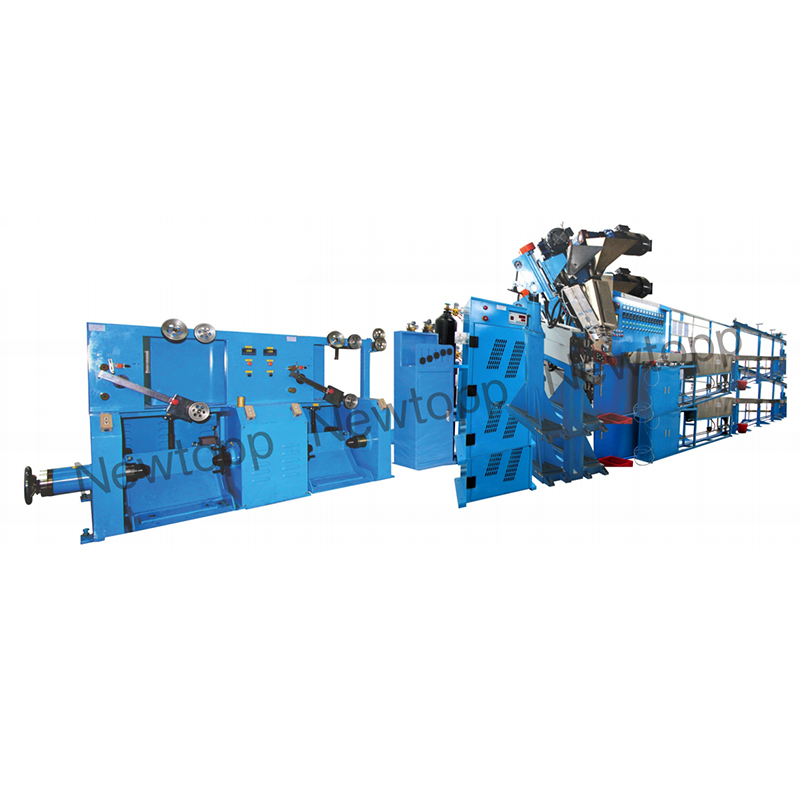
A LAN cable making machine directly determines the signal integrity and throughput of high-speed Ethernet networks by controlling concentricity, twist lay length, and insulation wall thickness with micron-level precision. In an era where Category 6A and Category 8 cabling underpins 25GBASE-T and 40GBASE-T data centers, the extrusion and twisting technologies embedded in the production line are no longer just manufacturing tools but critical enablers of digital connectivity. This article provides a factual, data-driven examination of how these machines function, what operational benchmarks define a reliable system, and why investment decisions must shift from upfront cost comparisons to long-term return on precision.
1. Market Dynamics and Production Volume Requirements
Global demand for structured cabling is projected to grow at a compound annual growth rate of over 8% through 2030, driven by hyperscale data center expansions and enterprise 5G backhaul upgrades. A single high-speed LAN cable making machine operating at 1,200 meters per minute can output approximately 2,800 kilometers of Category 6 UTP cable per month on a three-shift schedule, directly linking capital expenditure to achievable contract fulfillment rates.
Production Speed Benchmark
Top-tier lines achieve 1,200 to 1,500 meters per minute for Cat 6 UTP, while Cat 8 S-FTP typically runs at 400 to 600 meters per minute due to more complex shielding and taping stages.
Global Shipment Volume
Annual global shipments of wire and cable machinery exceeded 24,000 units in 2023, with dedicated LAN cable extrusion and twisting lines representing roughly 12% of that volume, according to industry production reports.
Raw Material Throughput
A single extrusion line processes between 180 and 260 kilograms of high-density polyethylene or fluorinated ethylene propylene per hour, depending on conductor gauge and insulation thickness requirements.
2. Core Technical Architecture of a High-Precision LAN Cable Making Machine
The performance of the finished cable is locked in during three sequential processes: conductor pay-off and preheating, insulation extrusion, and pair twisting with back-twist control. Any deviation in these stages translates directly into return loss failures or alien crosstalk degradation.
2.1 Insulation Extrusion and Capacitance Stability
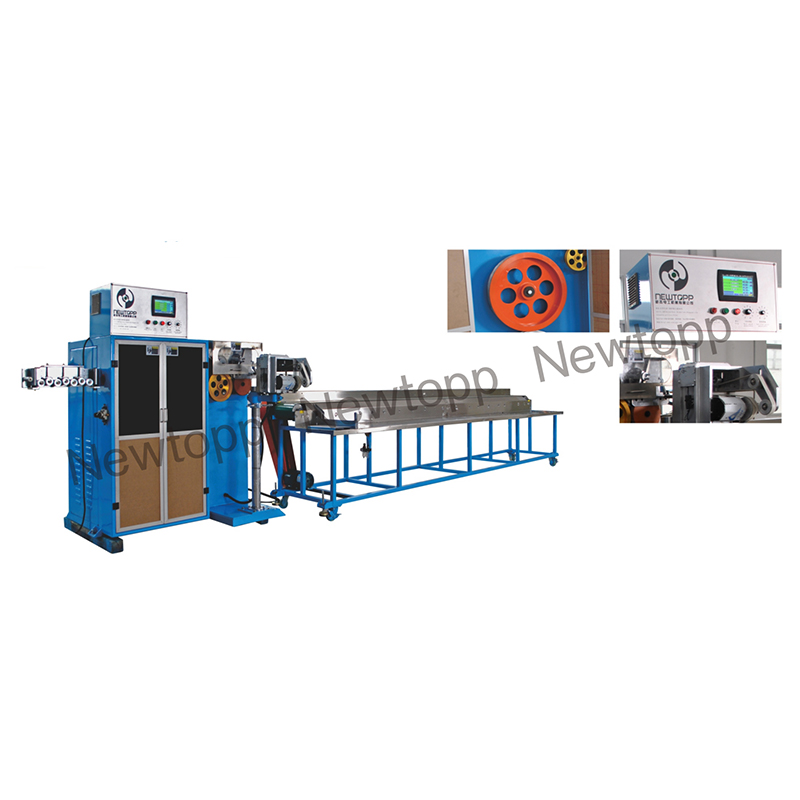
Capacitance variance must remain within plus or minus 1.5 picofarads per meter to guarantee impedance uniformity at 100 ohms. This is achieved through laser diameter gauges and closed-loop haul-off speed control integrated into the LAN cable making machine. Data from production floor audits shows that lines equipped with dual-axis laser micrometers reduce insulation eccentricity to below 8 microns, compared with 22 microns on conventional single-axis systems.
- Conductor preheating temperature: 80 to 110 degrees Celsius for solid copper, ensuring uniform adhesion and preventing voids.
- Extrusion melt pressure: Maintained between 150 and 280 bar depending on screw design and material grade.
- Cooling trough length: Typically 12 to 20 meters with segmented water temperature zones to control crystallinity.
2.2 Pair Twisting and Lay Length Precision
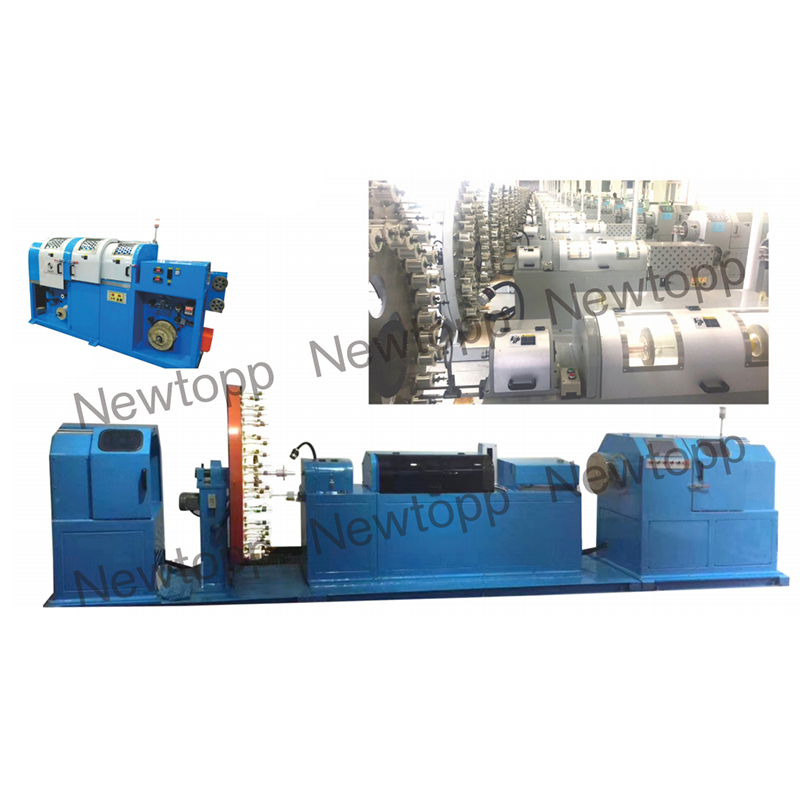
Differential lay lengths among the four pairs are essential to suppress near-end crosstalk. A modern LAN cable making machine uses servo-driven back-twist units that maintain lay length accuracy within plus or minus 0.5 millimeter. For Category 6A, typical lay lengths range from 9.8 millimeters to 18.2 millimeters across the four pairs, with each pair specifically randomized to avoid periodic coupling.
| Cable Category | Max Frequency | Typical Lay Length Range | Twist Back-Twist Ratio |
|---|---|---|---|
| Cat 5e | 100 MHz | 12.0 - 25.0 mm | 1:1.02 |
| Cat 6 | 250 MHz | 10.0 - 20.5 mm | 1:1.04 |
| Cat 6A | 500 MHz | 9.8 - 18.2 mm | 1:1.06 |
| Cat 8 | 2000 MHz | 6.5 - 15.0 mm | 1:1.08 |
Comparison of twist lay length requirements and back-twist ratios across Ethernet cable categories in a high-performance LAN cable production environment.
3. Cost Structure and Return on Investment Analysis
The total cost of ownership of a LAN cable making machine extends far beyond the invoice price, with energy consumption, tooling wear, and scrap rates constituting the dominant long-term factors. An entry-level line capable of Cat 6 production may cost between $180,000 and $250,000, while a fully automated Cat 8 compatible system with in-line spark testing and sheath marking exceeds $600,000.
Energy Consumption Profile
A mid-range extrusion line draws approximately 85 to 110 kilowatts during continuous operation. At an industrial electricity rate of $0.09 per kilowatt-hour, annual energy cost reaches roughly $78,000 assuming 8,000 operating hours, according to 2024 manufacturing energy benchmarks.
Scrap Rate Reduction
Machines with automatic capacitance control and lump detection reduce material waste from 4.2 percent to below 1.8 percent. For a plant processing 500 tons of polyethylene annually, this translates to a direct saving of $145,000 per year.
Tooling Lifecycle
Extrusion screws and barrels typically require replacement after 15,000 to 20,000 operating hours, while twisting machine bow gears last approximately 12,000 hours before precision degrades beyond acceptable limits.
4. Selection Criteria: Evaluating a LAN Cable Making Machine for Specific Cable Standards
Procurement decisions should be driven by target cable certification requirements and production scalability rather than theoretical maximum specifications. The following criteria form the backbone of a rigorous evaluation process.
- Frequency bandwidth certification readiness: Verify that the line's electrical test integration supports network analyzer sweeps up to 2,000 megahertz for Cat 8 qualification.
- Shielding application modules: For S-FTP and F-FTP constructions, the machine must include precision longitudinal foil wrapping and braiding heads with tension control below 0.5 newton variation.
- In-line spark test voltage: Continuous DC spark testing at 2.5 to 5 kilovolts depending on insulation type detects pinholes before jacketing, reducing field failure claims by over 60 percent.
- Sheath marking and length coding: Hot-foil or ink-jet sequential length marking accurate to within 0.2 percent is mandatory for structured cabling certification and inventory control.
- Changeover time: A well-designed line allows complete changeover between cable types in under 45 minutes, compared with 90 to 120 minutes on older models.
5. Operational Best Practices and Throughput Optimization
Maximizing the output of a LAN cable making machine requires rigorous adherence to preventive maintenance schedules and real-time process monitoring. Production data indicates that lines maintained on a 400-hour cycle achieve 92 percent overall equipment effectiveness, while those on an 800-hour cycle drop to 78 percent.
- Capstan belt tension calibration should be verified every 200 hours to prevent conductor elongation drift.
- Extruder screw cooling water flow must stay within 8 to 12 liters per minute to avoid material degradation in the feed zone.
- Twisting head lubrication with high-temperature synthetic grease every 300 hours reduces bearing failure risk.
- Die cleaning frequency directly impacts surface finish consistency and should occur at each shift change.
6. Frequently Asked Questions About LAN Cable Making Machine Operations
What is the typical payback period for a high-speed LAN cable production line?
A line producing 2,500 kilometers of Category 6 cable monthly at an average gross margin of 22 percent typically achieves full payback within 18 to 26 months, based on 2024 industry cost models. Factoring in energy optimization and reduced scrap rates can shorten this to 14 months in regions with lower electricity tariffs.
Can a single machine produce both UTP and shielded LAN cables?
Yes, but it requires modular downstream equipment including retractable foil wrapping units and braiding pay-offs. A LAN cable making machine configured with quick-change shielding modules can switch between UTP, F-UTP, and S-FTP constructions, though cycle time for full reconfiguration averages 60 to 90 minutes depending on operator proficiency and line design.
How does conductor quality affect machine performance?
Copper conductors with diameter tolerance tighter than plus or minus 0.002 millimeter are essential for stable extrusion. Conductors exceeding this tolerance cause capacitance spikes that no LAN cable making machine control system can fully compensate for, resulting in up to 7 percent additional scrap and intermittent impedance failures.
What testing equipment must integrate with the production line?
In-line network analyzers performing swept frequency measurements to 1,500 megahertz or higher are non-negotiable for Cat 6A and Cat 8 production. These systems feed back real-time structural return loss and near-end crosstalk data, allowing the LAN cable making machine to auto-adjust lay length and tension within seconds.
7. Cable Construction Variants and Machine Adaptability
Different Ethernet standards demand fundamentally different cable constructions, and the LAN cable making machine must accommodate solid or stranded conductors, varying insulation materials, and multiple shielding configurations without compromising line speed.
| Construction Type | Conductor Gauge | Insulation Material | Shielding Layers | Typical Machine Speed |
|---|---|---|---|---|
| UTP Cat 6 | 23 AWG Solid | HDPE | None | 1,100 m/min |
| F-UTP Cat 6A | 23 AWG Solid | HDPE + FEP Skin | Overall Foil | 650 m/min |
| S-FTP Cat 7 | 22 AWG Solid | FEP | Pair Foil + Overall Braid | 380 m/min |
| S-FTP Cat 8 | 22 AWG Solid | FEP | Pair Foil + Overall Braid | 300 m/min |
Production speed benchmarks for various LAN cable constructions processed on a modern LAN cable making machine, illustrating how shielding complexity directly influences throughput.
8. Environmental Control and Material Handling
Ambient conditions inside the production hall directly influence the output quality of any LAN cable making machine. Temperature fluctuations exceeding 3 degrees Celsius during a shift can alter insulation diameter by up to 0.015 millimeters due to viscosity changes in the polymer melt, enough to shift impedance beyond the 100 plus or minus 5 ohm specification window.
- Factory temperature setpoint: 22 plus or minus 2 degrees Celsius, with relative humidity maintained between 40 and 60 percent.
- Material drying: Polyethylene and FEP pellets require dehumidified drying at 70 to 90 degrees Celsius for a minimum of 3 hours before entering the extruder hopper.
- Copper conductor storage: Spools must be kept in a climate-controlled area to prevent surface oxidation that degrades adhesion and causes intermittent continuity faults during twisting.
9. Comparative Assessment of Automation Levels
A LAN cable making machine with fully automated process control achieves significantly tighter parameter distributions compared to semi-automated equivalents. The difference is most pronounced in Category 8 production, where manual adjustments cannot respond quickly enough to maintain compliant near-end crosstalk margins above 5 decibels relative to the limit line.
Manual Control Setup
Operators adjust lay length and tension based on periodic sample testing. Scrap rate averages 5.1 percent. Suitable for Cat 5e production where frequency requirements are less stringent.
Semi-Automated Line
Closed-loop diameter control integrated but twisting parameters set manually. Scrap rate around 3.0 percent. Adequate for Cat 6 and some Cat 6A constructions with careful supervision.
Fully Automated System
Real-time capacitance and crosstalk feedback adjusts lay length, tension, and back-twist simultaneously. Scrap rate below 1.8 percent. Required for consistent Cat 8 certification yields above 94 percent.
10. Long-Term Reliability and Maintenance Scheduling
Unscheduled downtime on a LAN cable making machine costs between $1,800 and $3,200 per hour in lost production value, depending on the cable category being manufactured. Implementing a condition-based maintenance program using vibration sensors on extruder gearboxes and twisting heads extends mean time between failures from approximately 2,400 hours to over 5,000 hours, based on maintenance logs from mid-sized cable manufacturing facilities.
Spare parts inventory should include at minimum one complete screw and barrel assembly, two sets of twisting head bearings, three sets of capstan belts, and an assortment of extrusion dies ranging from 0.45 millimeter to 1.2 millimeter orifice diameters to cover common conductor gauges from 24 AWG to 22 AWG.